<g id=”cross”>
<line class=”cls-1″ x1=”7″ x2=”25″ y1=”7″ y2=”25″ />
<line class=”cls-1″ x1=”7″ x2=”25″ y1=”25″ y2=”7″ />
</g>
A New Peace Process in the Kurdish Question in Turkiye
<circle cx=”10.5″ cy=”10.5″ r=”7.5″ />
<line x1=”21″ x2=”15.8″ y1=”21″ y2=”15.8″ />
<nav class=”fo-navigation pos-r” itemscope itemtype=”http://schema.org/Navigation”>
Login
Sections <circle cx=”10.5″ cy=”10.5″ r=”7.5″ />
<line x1=”21″ x2=”15.8″ y1=”21″ y2=”15.8″ />
Search
<circle cx=”10.5″ cy=”10.5″ r=”7.5″ />
<line x1=”21″ x2=”15.8″ y1=”21″ y2=”15.8″ />
Search


PUBLICATION
Support Fair Observer
We rely on your support for our independence, diversity and quality.
</nav>
</header>

<main id=”main” class=”site-main” role=”main”> 



Tuesday, December 16, 2025
<header class=”entry-header”>
A New Peace Process in the Kurdish Question in Turkiye
Turkish politics faces a historic shift as Kurdish leaders, state officials and nationalist figures seek an end to decades of conflict. The Kurdistan Workers’ Party (PKK) announced its dissolution and burned its weapons after its leader, Abdullah Öcalan, called for disarmament. This development has opened the path to constitutional reform and has forced each party to define its vision for peace.
By
Tuesday, December 16, 2025
</header>
Via Shutterstock.

December 16, 2025 05:21 EDT

Check out our comment feature!
Saved Successfully.
This article saved into your bookmarks. Click here to view your bookmarks.


Almost every day, political, economic and social issues of global significance affecting thousands of people worldwide come to the fore. These developments provide ample material for thousands of international TV news channels and websites. Under these conditions, important developments occurring in different parts of the world may not receive the attention they deserve in the international media and may be lost amid the chaos. In short, the global agenda is so intense that this turmoil can best be described by the phrase “everything solid melts into air,” used by Karl Marx and Friedrich Engels in the Communist Manifesto to characterize the destructive and rapidly transformative power of capitalism.
Among developments lost amid the busy global agenda is the ongoing process in Türkiye over the past year aimed at ending the Kurdistan Workers’ Party (PKK) movement and ultimately achieving a peaceful resolution to the Kurdish issue.
The human cost of the Kurdish conflict
The PKK, founded in 1978 under the leadership of Abdullah Öcalan, launched an armed struggle against the Turkish army to establish an independent Kurdish state. Since its first attack in 1984, thousands of Turkish soldiers and Kurdish militants have lost their lives. The clashes between the PKK and the army have affected not only the warring parties but, more significantly, the civilian population, and it goes without saying that the Kurds have paid the heaviest price.
As a result of the intensified clashes in the 1990s, thousands of Kurdish villages were forcibly evacuated and their inhabitants were subjected to compulsory migration to the cities. This event alone has been one of the historically profound developments that changed the rural-urban population balance of the country and shaped the population structure and spatial fabric of today’s metropolitan cities such as Istanbul, Ankara and Izmir.
It is also necessary to mention the thousands of Kurdish citizens who were imprisoned and spent their lives in jails because of the Kurdish issue. Among them, politicians, writers, artists and academics are, of course, at the forefront. Thousands of Kurds were also forced to leave Turkiye because of this issue and lived in exile, mostly in European countries, with most of them dying without ever returning to their homeland.
It may be considered a secondary consequence, but it should still be noted that the Kurdish issue has been a controversial topic in Turkish social sciences, a taboo that it has been considered in one’s best interest to avoid if possible. This has naturally prevented the subject from receiving the research it deserves in academic circles. Academics who refused to heed this and wrote on the subject have paid the price. This price has ranged from years of imprisonment to the loss of one’s job.
Ultimately, the greatest price and sorrow have undoubtedly been paid by Turkish and Kurdish mothers and fathers who have buried their young children due to the conflicts. Any attempt to summarize how important and structural the Kurdish issue is for the Turkish state and society would undoubtedly fall short.
The political breakthrough
Efforts to end the armed conflict of the Kurdish movement and resolve this issue within a political framework have been attempted in recent years but have failed. The most recent of these initiatives, launched in 2012 and named the “Solution Process,” ended in great disappointment in 2015.
Following talks between state officials — primarily from the National Intelligence Organization and Members of Parliament (MPs) from the pro-Kurdish Peoples’ Democratic Party (HDP) party of Öcalan, who is imprisoned on Imrali Island — a memorandum of understanding was drafted and read out at Dolmabahçe Palace on February 28, 2015. However, Turkish President Recep Tayyip Erdoğan later stated that no such agreement existed, and the attempt to resolve the Kurdish issue through politics ended in a major fiasco.
Subsequently, investigations were launched against the Kurdish representatives involved in this process, and some were sentenced to prison. At the same time, pressure on other Kurdish actors also increased. The period between 2016 and 2024 was generally a difficult time for Kurdish politicians, intellectuals and activists.
Then, on October 1, 2024, on the opening day of the new term of the Turkish Grand National Assembly (TBMM), Devlet Bahçeli, leader of the Nationalist Movement Party (MHP) — considered the main focus of Turkish nationalism — visited the seats of the People’s Equality and Democracy Party (DEM Party), the main representative of the Kurds, and shook hands with them. However, in previous years, the same Bahçeli had called for the closure of the HDP, the Kurdish party that preceded DEM.
Naturally, Bahçeli’s gesture surprised almost everyone, but it was interpreted as a sign of goodwill and a desire for peaceful politics from Bahçeli, who is known for his politeness. However, the truly groundbreaking step, perhaps a watershed moment in Turkish history, came on October 22, 2024. In his weekly group speech, Bahçeli essentially called for Öcalan to come to Parliament, call for the dissolution of the PKK and then take advantage of the right to hope (which would secure his release from prison). This was truly a revolutionary statement. It was a radical change in rhetoric that shocked everyone, as it opened the door to amnesty for the “terrorist leader” whom Bahçeli had called a “separatist leader” for years.
Everyone familiar with Turkish politics knows that if anyone other than Bahçeli, an absolute Turkish nationalist, had made this call, an investigation would have been launched the very next day on charges of “dividing the country and the nation.” That is precisely why only MHP leader Bahçeli could make this proposal regarding Öcalan, who plays a key role in resolving the Kurdish issue.
Erdoğan welcomed Bahçeli’s bold call, and the isolation imposed on Öcalan was lifted. From that day onward, visits by state officials and representatives of the DEM Party to Öcalan became more frequent. As a result of these meetings, on February 27, 2025, Öcalan called for the laying down of arms. This was the first time the PKK had come so close to disarmament, and it was the biggest step taken to date in the process towards a peaceful resolution of the Kurdish issue.
With this call, diplomatic traffic regarding the resolution of the Kurdish issue intensified. This process, dubbed “Terror-Free Turkiye” by the Turkish government, was referred to as the “Peace Process” by the Kurdish side. Thus, an irreversible path had been embarked upon.
Steps toward peace
While talks between the parties continued, Sırrı Süreyya Önder, a member of the Kurdish delegation who was respected by all sides, died on May 3, following a sudden heart attack. His death deeply saddened many people. The Speaker of the Assembly and other party leaders issued condolence messages. Bahçeli personally attended Önder’s funeral. His grief was evident.
On May 12, 2025, a development took place that would be considered a turning point in the Kurdish issue: the PKK organization announced that it had dissolved itself and ended its armed struggle. Following this, Bahçeli issued a statement in the language preferred by the Kurds, addressing Öcalan as the “founding leader” and thanking him. Bahçeli continued to surprise with his bold steps.
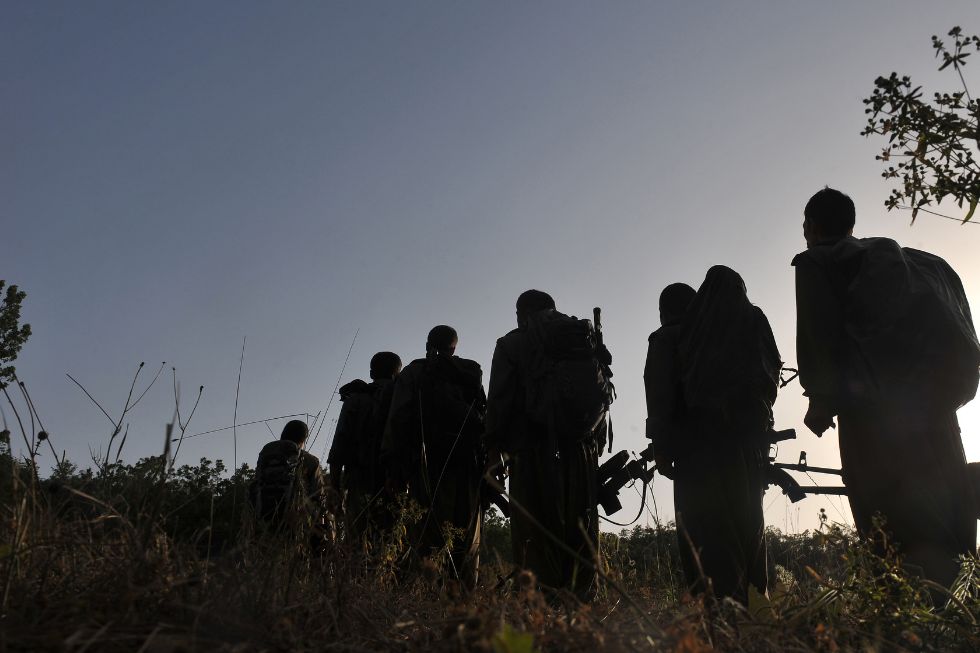
Then, on July 11, 2025, the PKK burned its weapons in a ceremony attended by a group of 30 militants. This ceremony was the most concrete sign that the PKK issue and the years of conflict had come to an end. Following this development, a commission was established within the Assembly, comprising representatives of the ruling and opposition parties, to draft the relevant bills for the legal reforms necessary to resolve the Kurdish issue. Chaired by Numan Kurtulmuş, Speaker of the Grand National Assembly of Turkiye, the commission held its first meeting on August 5, 2025.
The commission began by hearing from civil society organizations, individuals and government officials involved in the issue, and had heard from nearly 100 individuals by December 4. Subsequently, the commission members discussed visiting Imrali Island to meet with Öcalan.
The parties on the commission showed hesitation regarding this visit, which would be highly symbolic in terms of the state publicly acknowledging Öcalan as an interlocutor for the first time. Some shared the view that the public could interpret this as “the state going to Öcalan’s feet”, which could be problematic. (In fact, such an interpretation is technically impossible, because Öcalan has been imprisoned since 1999. Therefore, meeting with a prisoner is only possible by visiting him in prison. Otherwise, this person would have to be released from prison.)
The ruling party was also hesitant about this, but Bahçeli once again paved the way. On November 18, he stated, “If the parliamentary commission does not agree to this visit, if everyone insists on playing the three monkeys, I will openly say that I will take three friends with me, I will not hesitate or shy away from going to Imrali with our own resources, I will not refrain from sitting face to face [with Öcalan] around a table.” Erdoğan endorsed this statement, and, finally, the committee decided that the representatives selected to meet with Öcalan would travel to Imrali.
However, the opposition parties in the commission (except for the DEM Party) — primarily the main opposition party, the Republican People’s Party (CHP) — did not send representatives to the Imrali delegation. It should also be noted that there was hesitation about whether the CHP would participate in the commission during its formation.
In a written statement explaining its decision not to send a representative to the delegation meeting with Öcalan, the CHP cited repressive policies such as the ongoing detention of mayors and the case seeking to close the CHP. It was also noted that the meeting could easily be conducted online. The CHP’s decision not to send a representative to the meeting with Öcalan is of critical importance because, as a result of being the main opposition party, it is the most likely to come to power in the event of a change of government in Turkiye following the elections. Therefore, it serves as a precursor to the extent to which it can take bold steps towards resolving the Kurdish issue and produce realistic policies on this matter.
It is clear that a peace process that excludes Öcalan is not possible, and no new leader to replace him has yet emerged among the Kurds. Therefore, it is impossible to resolve the PKK issue and build peace while still referring to him as the “terrorist leader.” For this reason, Bahçeli has changed his rhetoric and prefers to use the title “founding leader” for Öcalan. Meanwhile, the CHP stated that it would continue to participate in the commission and contribute to the process. On October 26, the PKK announced in a statement made from Kandil that it had withdrawn all its forces from Turkiye.
What comes next
The developments recorded regarding the resolution of the issue, which has been a century-old problem for Turkiye and involves the struggle for Kurdish identity and the constitutional recognition of Kurds, are as follows:
First and foremost, it is necessary to discuss at length Bahçeli — who is described as Turkiye’s Frederik Willem de Klerk (former president of South Africa who worked with Nelson Mandela to end Apartheid), who initiated this process and who holds the title of Başbuğ as the leader of Turkish nationalism — and to examine why he may have resorted to such radical rhetoric and policy changes.
No owners, no ads, just global voices and first class editors. We’re a nonprofit that puts real journalism first. Join us — subscribe to our free newsletters — now.
<label for=”Your email will be shared with fairobserver and subject to its Privacy Policy”>I agree to receive emails and other content from Fair Observer. I understand that I may repeal my consent at any time. You can review our Privacy Policy and Terms of Use for further information…</label>
Knowing which potential legal regulations and changes are likely to be essential is also important, as is understanding the parties that oppose this process and their main arguments. Finally, we must examine how the public approaches this process and, of course, the possible developments and probabilities. However, that is best left for another day.
[Kaitlyn Diana edited this piece.]
The views expressed in this article are the author’s own and do not necessarily reflect Fair Observer’s editorial policy.
Comment
0 Comments
Newest
Oldest
Most Voted
Most Voted
Inline Feedbacks
View all comments
Commenting Guidelines
Please read our commenting guidelines before commenting.
1. Be Respectful: Please be polite to the author. Avoid hostility. The whole point of Fair Observer is openness to different perspectives from perspectives from around the world.
2. Comment Thoughtfully: Please be relevant and constructive. We do not allow personal attacks, disinformation or trolling. We will remove hate speech or incitement.
3. Contribute Usefully: Add something of value — a point of view, an argument, a personal experience or a relevant link if you are citing statistics and key facts.
<label style=”font-size: 18px;”>
I have read and agree to the above commenting guidelines.
</label>
Please agree to the guidelines before proceeding.
I
Agree, Proceed to Login
Cancel
Related Reading
Erdogan Condemns Netanyahu While Waging His Own War on the Kurds
President Recep Tayyip Erdogan positions Turkey as a moral voice by condemning Israeli actions in Gaza while facing accusations of…
by
Robin Fakhari,
November 6, 2025
Making of a Dictator: What the PKK’s Surrender Means for Turkey
On March 1, the insurgent Kurdish Workers’ Party (PKK) unilaterally announced that it was laying down arms against the Turkish…
by
Tara Yarwais,
June 8, 2025
Turkey Still Refuses Öcalan a Fair Trial After 25 Years
In 1999, Turkey convicted Kurdish leader Abdullah Öcalan of treason after depriving him of the right to speak with his…
by
Tara Yarwais,
August 19, 2024
Support Fair Observer
We rely on your support for our independence, diversity and quality.
For more than 10 years, Fair Observer has been free, fair and independent. No billionaire
owns us, no advertisers control us. We are a reader-supported nonprofit. Unlike many other
publications, we keep our content free for readers regardless of where they live or whether
they can afford to pay. We have no paywalls and no ads.
In the post-truth era of fake news, echo chambers and filter bubbles, we publish a plurality
of perspectives from around the world. Anyone can publish with us, but everyone goes through
a rigorous editorial process. So, you get fact-checked, well-reasoned content instead of
noise.
We publish 3,000+ voices from 90+ countries. We also conduct education and training programs
on subjects ranging from digital media and journalism to writing and critical thinking. This
doesn’t come cheap. Servers, editors, trainers and web developers cost
money.
Please consider supporting us on a regular basis as a recurring donor or a
sustaining member.
Will you support FO’s journalism?
We rely on your support for our independence, diversity and quality.
Donation Cycle
<label for=”donation_cycle_one_time”>One Time</label>
<label for=”donation_cycle_monthly”>Monthly</label>
<label for=”donation_cycle_yearly”>Yearly</label>
Donation Amount
<label for=”amount_11″>$11</label>
<label for=”amount_111″>$111</label>
<label for=”other”>Other</label>
$
The IRS recognizes Fair Observer as a section 501(c)(3) registered public charity
(EIN: 46-4070943), enabling you to claim a tax deduction.
Make Sense of the World
Unique Insights from 3,000+ Contributors in 90+ Countries
<label
for=”Your email will be shared with fairobserver and subject to its Privacy Policy”>I
agree to receive emails and other content from Fair Observer. I understand
that I
may repeal my consent at any time. You can review our Privacy Policy
and Terms of Use
for further
information .</label>
for=”Your email will be shared with fairobserver and subject to its Privacy Policy”>I
agree to receive emails and other content from Fair Observer. I understand
that I
may repeal my consent at any time. You can review our Privacy Policy
and Terms of Use
for further
information .</label>
We are a rare nonprofit in the world news space. Most other organizations are owned by billionaires or governments. We are bottom-up, not top-down and bring you perspectives from around the world. So, sign up now for our free newsletters to hear from our 3,000+ voices from 90+ countries.
<label for=”Your email will be shared with fairobserver and subject to its Privacy Policy”>I agree to receive emails and other content from Fair Observer. I understand that I may repeal my consent at any time. You can review our Privacy Policy and Terms of Use for further information…</label>
</main>
Fair Observer, 461 Harbor Blvd, Belmont, CA 94002, USA
<footer class=”mart70 fo-black-bg padt50 padb30″>
Sections
PUBLICATION
Support Fair Observer
We rely on your support for our independence, diversity and quality.


</footer>

<footer id=”fixed-footer” class=”support-footer”>


Support
independent, crowdsourced, nonprofit
journalism.
Fair Observer is a 501(c)(3) independent nonprofit. We are not owned by billionaires or controlled by
advertisers. We publish nearly 3,000 authors from over 90 countries after fact-checking and editing each
piece. We do not have a paywall and anyone can read us for free. With your vital donations, we can
continue
to do our work.
Please make a recurring (or even one-time) donation today. Even $1 goes a long way because
a
million donors
like you mean one million dollars. Thank you for keeping us independent, free and fair.
One Time
Monthly
Yearly
Monthly
Yearly
Continue 

</footer>

Sign into your Fair Observer Account
<label class=”tml-label” for=”user_login”>Username or Email Address</label>
<label class=”tml-label” for=”user_pass”>Password</label>
<label class=”tml-label” for=”rememberme”>Remember Me</label>
Log In
Forgot
Password
Forgot Password
Enter your registered email address or username. You will receive a
link to create a new password via email.
Please enter your username or email address. You will receive an email message with instructions on how to reset your password.
<label class=”tml-label” for=”user_login”>Username or Email Address</label>
Get New Password
Or
Return to
Login
Forgot Password
We have sent a link to your registered email address to reset your password.
<circle cx=”12.5″ cy=”12″ r=”12″ fill=”#414141″ />
Back to
Login
Become a Member & Enjoy Exclusive Benefits!
<circle cx=”12.5″ cy=”12″ r=”12″ fill=”#414141″ />
Access to comments feature
<circle cx=”12.5″ cy=”12″ r=”12″ fill=”#414141″ />
Bookmark your favorite articles
<circle cx=”12.5″ cy=”12″ r=”12″ fill=”#414141″ />
Exclusive invitations to FO° Talks & FO° Live
<circle cx=”12.5″ cy=”12″ r=”12″ fill=”#414141″ />
Access to all of our e-publications
Return to
Login
Login
NEWSLETTER
Make Sense of the World
Unique Insights from 2,500+ Contributors in 90+ Countries

<label
for=”Your email will be shared with fairobserver and subject to it’s Privacy Policy”>I
agree to receive emails and other content from Fair Observer. I understand
that I may repeal my consent at any time. You can review our Privacy Policy
and Terms of Use
for further information.</label>
for=”Your email will be shared with fairobserver and subject to it’s Privacy Policy”>I
agree to receive emails and other content from Fair Observer. I understand
that I may repeal my consent at any time. You can review our Privacy Policy
and Terms of Use
for further information.</label>
NEWSLETTER
Make Sense of the World
Unique Insights from 2,500+ Contributors in 90+ Countries
<label
for=”Your email will be shared with fairobserver and subject to it’s Privacy Policy”>I
agree to receive emails and other content from Fair Observer. I understand
that I may repeal my consent at any time. You can review our Privacy Policy
and Terms of Use
for further information.</label>
for=”Your email will be shared with fairobserver and subject to it’s Privacy Policy”>I
agree to receive emails and other content from Fair Observer. I understand
that I may repeal my consent at any time. You can review our Privacy Policy
and Terms of Use
for further information.</label>

Make Sense of the World
Unique Insights from 2,500+ Contributors in 90+ Countries
<label
for=”Your email will be shared with fairobserver and subject to its Privacy Policy”>I
agree to receive emails and other content from Fair Observer. I understand that I
may repeal my consent at any time. You can review our Privacy Policy and Terms of Use for further
information .</label>
for=”Your email will be shared with fairobserver and subject to its Privacy Policy”>I
agree to receive emails and other content from Fair Observer. I understand that I
may repeal my consent at any time. You can review our Privacy Policy and Terms of Use for further
information .</label>
We Need Your Consent
We use cookies to give you the best possible experience. Learn more about how we use cookies or edit your cookie preferences. Privacy Policy. My Options I Accept
Privacy & Cookies Policy
Close
Edit Cookie Preferences
The Fair Observer website uses digital cookies so it can collect statistics on how many visitors come to the site, what content is viewed and for how long, and the general location of the computer network of the visitor. These statistics are collected and processed using the Google Analytics service. Fair Observer uses these aggregate statistics from website visits to help improve the content of the website and to provide regular reports to our current and future donors and funding organizations. The type of digital cookie information collected during your visit and any derived data cannot be used or combined with other information to personally identify you. Fair Observer does not use personal data collected from its website for advertising purposes or to market to you.
As a convenience to you, Fair Observer provides buttons that link to popular social media sites, called social sharing buttons, to help you share Fair Observer content and your comments and opinions about it on these social media sites. These social sharing buttons are provided by and are part of these social media sites. They may collect and use personal data as described in their respective policies. Fair Observer does not receive personal data from your use of these social sharing buttons. It is not necessary that you use these buttons to read Fair Observer content or to share on social media.
Necessary
<label class=”form-check-label” for=”wt-cli-checkbox-necessary”>Necessary</label>
Always Enabled
These cookies essential for the website to function.
Social Media
<label for=”wt-cli-checkbox-social_media” class=”cli-slider” data-cli-enable=”Enabled” data-cli-disable=”Disabled”>Social Media</label>
These cookies are used to enable sharing or following of content that you find interesting on our website. These settings apply to third-party social networking and other websites.
Performance & Functionality
<label for=”wt-cli-checkbox-performance” class=”cli-slider” data-cli-enable=”Enabled” data-cli-disable=”Disabled”>Performance & Functionality</label>
These cookies are used to enhance the performance and functionality of our website. They provide statistics on how our website is used and help us improve by measuring errors. Certain functionalities on our website may become unavailable without these cookies.
Analytics
<label for=”wt-cli-checkbox-analytics” class=”cli-slider” data-cli-enable=”Enabled” data-cli-disable=”Disabled”>Analytics</label>
SAVE & ACCEPT
<textarea id=’wpd-editor-source-code’></textarea>Insert
</body>
</html>
Total Views:
Source: World Politics - fairobserver.com