<g id=”cross”>
<line class=”cls-1″ x1=”7″ x2=”25″ y1=”7″ y2=”25″ />
<line class=”cls-1″ x1=”7″ x2=”25″ y1=”25″ y2=”7″ />
</g>
Are Most European Leaders Deepfakes?
<circle cx=”10.5″ cy=”10.5″ r=”7.5″ />
<line x1=”21″ x2=”15.8″ y1=”21″ y2=”15.8″ />
<nav class=”fo-navigation pos-r” itemscope itemtype=”http://schema.org/Navigation”>
Login
Sections <circle cx=”10.5″ cy=”10.5″ r=”7.5″ />
<line x1=”21″ x2=”15.8″ y1=”21″ y2=”15.8″ />
Search
<circle cx=”10.5″ cy=”10.5″ r=”7.5″ />
<line x1=”21″ x2=”15.8″ y1=”21″ y2=”15.8″ />
Search


PUBLICATION
Support Fair Observer
We rely on your support for our independence, diversity and quality.
</nav>
</header>

<main id=”main” class=”site-main” role=”main”> 




Monday, December 22, 2025
<header class=”entry-header”>

The office of Devil’s Advocate is a historical reality. Created in 1587, the jurist’s task was to
poke holes in dossiers proposing the canonization of a new saint. Our easier task is to poke
holes in the dominant narratives.
Are Most European Leaders Deepfakes?
Hyperreality reaches its apex as deepfakes flood YouTube. Meanwhile, leaders who favor monologue over dialogue have spawned unsolvable crises. Could a surprising shift by French President Emmanuel Macron signal we’re finally ready to revive dialogue, diplomacy and critical thinking as our way out?
By
Monday, December 22, 2025
</header>

Via Shutterstock.

December 22, 2025 07:20 EDT

Check out our comment feature!
Saved Successfully.
This article saved into your bookmarks. Click here to view your bookmarks.


Most readers will not take seriously my proclaimed identity as the Devil’s Advocate. They correctly understand that I may be using it quite simply as a literary ruse. In my columns, I leave clues to establish that identity as nothing more than a prolonged metaphor. We all use the term devil’s advocate as a metaphor, when we propose to “play the devil’s advocate.” The idea of playing a role is itself a metaphor.
Some may complain that when I stretch out the metaphor over a series of columns, it’s the equivalent of creating a deepfake. I’m hijacking the identity of a real person and creating a discourse that person has not really produced. The fact that I’m doing it as a written piece rather than a video should, however, let me off the hook. Literature has a nobility that YouTube will never match.
World literature is filled with what we may prefer to call “shallow fakes.” One historical example can help to illustrate the difference between deep and shallow fakes. For most literate English speakers, William Shakespeare’s demonic usurper, Richard III, who celebrated the end of England’s “winter of discontent” by arranging for the murder of all his rivals in his quest for the crown, is far more real in their minds than the soberly accurate accounts modern historians put forward. They point out that Richard was an effective king and, though not blameless, he was not the monster Elizabethan audiences believed him to be.
The Tragedy of King Richard III is both fake history and great literature. But it’s a shallow fake rather than a deepfake, for the simple reason that Shakespeare not only signed it as his creative work but styled the character as only a writer of his time and class could.
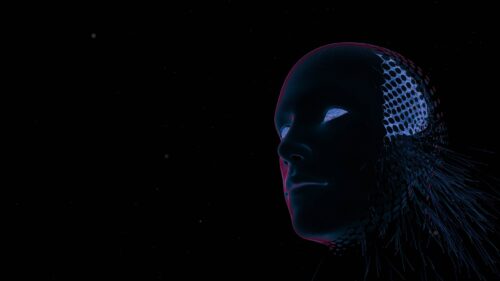
I draw this distinction because we have clearly entered the age of the deepfake, which I’m not alone in believing is bad news for everyone. I notice that my own YouTube feed is increasingly dominated by videos purporting to speak in the name, face and voice of public personalities. These are people I may or may not ordinarily trust or agree with and whose honest analysis of opinions truly interests me. But when I pay attention to their speech cadences, tone of voice and communication style, I easily discover they are robotic inventions.
The brief history of political hyperreality
In my Fair Observer Devil’s Dictionary columns between 2017 and 2024, I frequently highlighted the blatantly hyperreal dimension of what is presented as news in even the most respectable media. Hyperreality as it appears in the behavior of US President Donald Trump or Tesla CEO Elon Musk may appear spectacular, but it even finds its way into the economic reasoning and geopolitical reflection and distorted reporting that our media pundits and influencers routinely produce.
The art of crafting the public’s perception of the world has become the essential algorithmic component of our media’s operating system. And not only legacy media, where billionaires, political operators and well-funded lobbies are calling the shots. A generation of social media creators committed to promoting a more honest perspective are often guided as much by their own branding needs as their dedication to countering the distortions propagated by popular media. In their quest for the Holy Grail — subscriptions, views and likes — many of them end up emulating the media they were challenging. In their opposition to the spreading of “alternate facts,” they sometimes offer us alternate hyperreality.
For the past century, the legacy media has honed tactics designed to make us believe that some people’s greed is the ultimate form of generosity and that rank corruption of people we’re intended to admire should be seen as a sacrifice in the defense of a noble cause. American journalist Ken Vogel’s new book with the pregnant title,Devil’s Advocates, analyzes some specific cases that expose the hypocrisy.
The professionally crafted hyperreality promoted by our media incites the audience to flee reality and take refuge in fantasy. It stands as the tangible incarnation of manufactured consent, relegating the reality we have been conditioned to unsee to the status of a pot full of leftovers left to simmer on a back burner. The evolution of technologies spawned by the mastery of electricity 150 years ago has provided us with the vectors through which our perception of the world could be radically remodeled. Nevertheless, for the majority of humanity, good old “reality” — material and social — though challenged, has remained stubbornly present at key moments of our lives. Alas, in the age of deepfakes and tomorrow’s “superintelligence,” that may no longer be the case.
Some historians date the emergence of the movement towards hyperreality to the early 20th century when Hollywood began to capture and reformat our collective understanding of the world. That was when two prominent business consultants, Ivy Lee and Edward Bernays, laid the foundations of a culture dominated by advertising and “propaganda” (a concept that provided the title of one of Bernays’s books). Madison Avenue effectively got people to think of reality as something different from their experience of the world. For example, advertisers taught us that Coca-Cola was “the real thing.” Hollywood established in our minds that there was a simple, stable way of thinking about the relationship between “cowboys” (characters who rarely had contact with cows) and “Indians” (who obviously weren’t Indian). We may forget everything we learned at school (much of it is indeed worth unlearning), but we don’t forget great TV ads and stirring movies.
In the aftermath of World War II, hyperreality metastasized within and beyond a largely well-controlled system. Some key locations in the US — Washington, DC; New York (Wall Street and Madison Avenue); Los Angeles (Hollywood) and Silicon Valley — emerged as complementary power centers shaping the ideas, images, ideological themes, slogans and memes that made it all work. The United Nations, International Monetary Fund and World Bank, designed to govern the world’s exchanges, were all on America’s east coast, a New World literally facing the Old World of Europe, that had left the mechanics of colonialism as its principal heritage.
Hyperreality became widely shared and — even more powerfully than the belief system known as neo-liberal economics — implicitly underpinned American political scientist Francis Fukuyama’s vision of the “End of History.” American author Tom Friedman’s “flat world” in his typical superficial manner built on his understanding of the concept of history. His idea of a globalized utopia seduced business and political leaders, who believed their preferred version of human rationality based on economic interest would displace all others and regulate human behavior across the planet. The efforts of the World Economic Forum, clearly the most artificial and hyperreal of any of our “governing institutions,” helped produce the “globalized mindset” that all actors in the world of business and politics are now expected to share, even if they critique its premises.
Ethics and deepfakes
The global mindset contains a deliberately unstated, largely unreasoned but powerfully instrumental ethical orientation. Every nation state on earth unconsciously assumes it possesses a gravitational center of moral authority. This may be a single dominant institution or set of institutions whose cultural authority — its impact on people’s minds — establishes behavioral norms. In most cases, the institution will either be the state itself, a dominant religion or an intellectual elite.
In our secular age, the attribution of authority can move from one source to another or be shared according to different configurations. This is rarely made explicit, for good political reasons, of course. It’s usually advisable to hide the source of coercive soft power from view. The laissez-faire side of Western liberal and democratic capitalism has over time assigned the administration of moral “truth” to conflicting seats of authority. Laissez faire literally means “letting it do its own thing,” which translates as allowing moneyed interests to sort everything out. It has evolved into a system of governance in which private wealth, elected governments and the media work as a tag team to produce the chaotic mess in global affairs we are all now witnessing, in which accountability often disappears from the landscape.
Can we escape from the reign of hyperreality? Given that the beneficiaries of today’s hyperreal regime — private wealth, the techno-feudal barons who dominate our stock markets, the media and the current roster of politicians in our democracies — see no interest in calling the system they have built into question, if there is any hope at all, it will have to come from the grassroots. But as the grassroots themselves have become addicted to the effects of hyperreality, that revolt is unlikely to occur spontaneously.
Paradoxically, there’s a remote chance that if artificial intelligence is truly capable of algorithmically redefining itself, it could partner with people in the real world to wrest itself from the control of its masters. If it were truly autonomous, it could then quite naturally assume the task of promoting truth-seeking strategies that call into question the architecture of the current hyperreal system.
No longer beholden to the self-interested instructions provided by those who originally invented the algorithms that initially defined AI’s functions and limited its outcomes, a future AI might use its capacity for logic (and a sense of justice) to encourage and empower the kind of real people implicated in education and the dissemination of information (media) to embrace the much neglected cause of critical thinking. It might thus create the means of replacing the current norm of standardized curricula designed to perpetuate pre-formatted knowledge, so conveniently presented as the certifiable prerequisite for every individual’s economic success.
It’s even possible that the commonly cited forecast that 80% or more of traditional jobs are about to disappear will liberate new generations to begin thinking seriously about what matters. That optimistically supposes they will have the means to survive, which is hardly a given. In the meantime, and on a very pragmatic level, to counter the deepfake crisis, I can suggest a very simple initial step that may help put us on the path to establishing critical thinking as normal. It is to take arms against the dictatorship of monologue and revive the prestige of reasoned thought and diplomacy by refusing anything that deviates from dialogue.
The YouTube deepfakes I mentioned earlier typically appear as monologues. So, here’s a simple rule of thumb that appears to work, at least for the moment: Only trust the analysis of experts who engage in dialogue. Assume that any video in which a single voice interprets important issues without having to respond and adapt to another voice is as likely as not to be a deepfake that has been crafted to indoctrinate you.
If you want to know what the person you’re listening to really thinks, watch them in an interview. Check to see that the exchanges are natural and not scripted. This will tell you that the ideas they express are theirs. It doesn’t mean that what they say is true. They may be right or wrong. They may be fatally biased, but the situation of dialogue makes them visibly accountable. That perception of accountability is a prerequisite for your own effort at developing and refining your critical thinking.
Many critics of our current hyperreal system have noticed how, in the realm of geopolitics in recent decades, monologue has displaced and replaced that essential form of dialogue known as diplomacy. The effect has been unsolvable conflict and “forever wars.”
The most startling paradox is that it required the presence of an unbridled madman in the Oval Office, a certain Trump, to revive the notion of dialogue as an instrument of problem-solving. Unfortunately, Trump’s personal incapacity to conduct any dialogue he initiates prevents him from achieving any serious goals. As a creature of hyperreality, he lacks a sense of basic rationality, an obvious prerequisite for effective dialogue. But by insisting on imposing it on others he may just produce the required breakthrough. Thanks to his clumsy efforts, we may rid ourselves of the absurd idea, still promoted by European leaders, that diplomacy is synonymous with appeasement.
A glimmer of hope?
Perhaps the first evidence of a positive evolution appeared just a few days ago. French President Emmanuel Macron in recent months has dedicated himself to stirring up emotions as he boldly predicted that France and Europe would soon be in a major war with Russia. He surprised everyone on Friday when he announced that it “will soon be useful again to talk to Vladimir Putin.” Even though Russian President Vladimir Putin in December 2021 famously pleaded with the United States and NATO to sit down and talk about a common security architecture for the region that would avoid a looming war, the US and Europeans consistently refused any form of dialogue. They seemed to believe that a military showdown would settle the issue.
Some reasonable people might object that talking to Putin is necessary, rather than simply “useful.” Given Macron and all of Europe’s lack of credibility and absence of authority — their own manifest uselessness — Macron’s chosen term, “useful,” may be more appropriate. The one positive thing, however, is his newfound recognition that dialogue can be constructive. At a moment in history when personalities such as European Commission President Ursula von der Leyen, German Chancellor Friedrich Merz, UK Prime Minister Keir Starmer, Macron himself and, of course, the palpably ignorant European “High Representative” Kaja Kallas have literally come to behave like deepfakes imitating responsible leaders while spouting meaningless messages, Macron’s idea that dialogue might be useful could be the crack in the dyke we’ve been desperately waiting for.
Look at the world through many prisms — 3,000+ pairs of eyes from 90+ countries. We are a rare nonprofit in the world news space and you can get our newsletters for free.
<label for=”Your email will be shared with fairobserver and subject to its Privacy Policy”>I agree to receive emails and other content from Fair Observer. I understand that I may repeal my consent at any time. You can review our Privacy Policy and Terms of Use for further information…</label>
*[The Devil’s Advocatepursues the tradition Fair Observer began in 2017 with the launch of our “Devil’s Dictionary.” It does so with a slight change of focus, moving from language itself — political and journalistic rhetoric — to the substantial issues in the news. Read more ofthe Fair Observer Devil’s Dictionary. The news we consume deserves to be seen from an outsider’s point of view. And who could be more outside official discourse than Old Nick himself?]
[Lee Thompson-Kolar edited this piece.]
The views expressed in this article are the author’s own and do not necessarily reflect Fair Observer’s editorial policy.
Comment
0 Comments
Newest
Oldest
Most Voted
Most Voted
Inline Feedbacks
View all comments
Commenting Guidelines
Please read our commenting guidelines before commenting.
1. Be Respectful: Please be polite to the author. Avoid hostility. The whole point of Fair Observer is openness to different perspectives from perspectives from around the world.
2. Comment Thoughtfully: Please be relevant and constructive. We do not allow personal attacks, disinformation or trolling. We will remove hate speech or incitement.
3. Contribute Usefully: Add something of value — a point of view, an argument, a personal experience or a relevant link if you are citing statistics and key facts.
<label style=”font-size: 18px;”>
I have read and agree to the above commenting guidelines.
</label>
Please agree to the guidelines before proceeding.
I
Agree, Proceed to Login
Cancel
Related Reading
Europe Endorses Assisted Dying: Its Own Suicide
European leaders are now invoking “existential threats” from Russia to justify military spending, a trend Shakespeare seems to have adumbrated…
by
Peter Isackson,
November 28, 2025
The Devil’s Advocate Guide to AI’s Truly Hyperreal Future
AI is evolving from chatbots to “world models” with spatial intelligence that understand physical reality. But as superintelligence approaches, will…
by
Peter Isackson,
November 21, 2025
France Is Officially in Free Fall (But is Far From Alone)
Chronicling a proud nation’s descent into Hell is an unrewarding task. Once the fall begins, the remaining suspense concerns evaluating…
by
Peter Isackson,
September 11, 2025
The Devil’s Advocate: Europe’s Accelerating Descent into Hell
When we learned of “the end of history,” a little over three decades ago, our geopolitical meteorologists forecasted sunny skies…
by
Peter Isackson,
September 5, 2025
Can Humanity Withstand the Assault of Deepfakes?
We may soon be obliged to call our beloved fake news ”shallowfake news” now that deepfake technology threatens to disrupt…
by
Peter Isackson,
November 5, 2019
Support Fair Observer
We rely on your support for our independence, diversity and quality.
For more than 10 years, Fair Observer has been free, fair and independent. No billionaire
owns us, no advertisers control us. We are a reader-supported nonprofit. Unlike many other
publications, we keep our content free for readers regardless of where they live or whether
they can afford to pay. We have no paywalls and no ads.
In the post-truth era of fake news, echo chambers and filter bubbles, we publish a plurality
of perspectives from around the world. Anyone can publish with us, but everyone goes through
a rigorous editorial process. So, you get fact-checked, well-reasoned content instead of
noise.
We publish 3,000+ voices from 90+ countries. We also conduct education and training programs
on subjects ranging from digital media and journalism to writing and critical thinking. This
doesn’t come cheap. Servers, editors, trainers and web developers cost
money.
Please consider supporting us on a regular basis as a recurring donor or a
sustaining member.
Will you support FO’s journalism?
We rely on your support for our independence, diversity and quality.
Donation Cycle
<label for=”donation_cycle_one_time”>One Time</label>
<label for=”donation_cycle_monthly”>Monthly</label>
<label for=”donation_cycle_yearly”>Yearly</label>
Donation Amount
<label for=”amount_11″>$11</label>
<label for=”amount_111″>$111</label>
<label for=”other”>Other</label>
$
The IRS recognizes Fair Observer as a section 501(c)(3) registered public charity
(EIN: 46-4070943), enabling you to claim a tax deduction.
Make Sense of the World
Unique Insights from 3,000+ Contributors in 90+ Countries
<label
for=”Your email will be shared with fairobserver and subject to its Privacy Policy”>I
agree to receive emails and other content from Fair Observer. I understand
that I
may repeal my consent at any time. You can review our Privacy Policy
and Terms of Use
for further
information .</label>
for=”Your email will be shared with fairobserver and subject to its Privacy Policy”>I
agree to receive emails and other content from Fair Observer. I understand
that I
may repeal my consent at any time. You can review our Privacy Policy
and Terms of Use
for further
information .</label>
We are a rare nonprofit in the world news space. Most other organizations are owned by billionaires or governments. We are bottom-up, not top-down and bring you perspectives from around the world. So, sign up now for our free newsletters to hear from our 3,000+ voices from 90+ countries.
<label for=”Your email will be shared with fairobserver and subject to its Privacy Policy”>I agree to receive emails and other content from Fair Observer. I understand that I may repeal my consent at any time. You can review our Privacy Policy and Terms of Use for further information…</label>
</main>
Fair Observer, 461 Harbor Blvd, Belmont, CA 94002, USA
<footer class=”mart70 fo-black-bg padt50 padb30″>
Sections
PUBLICATION
Support Fair Observer
We rely on your support for our independence, diversity and quality.


</footer>

<footer id=”fixed-footer” class=”support-footer”>


Support
independent, crowdsourced, nonprofit
journalism.
Fair Observer is a 501(c)(3) independent nonprofit. We are not owned by billionaires or controlled by
advertisers. We publish nearly 3,000 authors from over 90 countries after fact-checking and editing each
piece. We do not have a paywall and anyone can read us for free. With your vital donations, we can
continue
to do our work.
Please make a recurring (or even one-time) donation today. Even $1 goes a long way because
a
million donors
like you mean one million dollars. Thank you for keeping us independent, free and fair.
One Time
Monthly
Yearly
Monthly
Yearly
Continue 

</footer>

Sign into your Fair Observer Account
<label class=”tml-label” for=”user_login”>Username or Email Address</label>
<label class=”tml-label” for=”user_pass”>Password</label>
<label class=”tml-label” for=”rememberme”>Remember Me</label>
Log In
Forgot
Password
Forgot Password
Enter your registered email address or username. You will receive a
link to create a new password via email.
Please enter your username or email address. You will receive an email message with instructions on how to reset your password.
<label class=”tml-label” for=”user_login”>Username or Email Address</label>
Get New Password
Or
Return to
Login
Forgot Password
We have sent a link to your registered email address to reset your password.
<circle cx=”12.5″ cy=”12″ r=”12″ fill=”#414141″ />
Back to
Login
Become a Member & Enjoy Exclusive Benefits!
<circle cx=”12.5″ cy=”12″ r=”12″ fill=”#414141″ />
Access to comments feature
<circle cx=”12.5″ cy=”12″ r=”12″ fill=”#414141″ />
Bookmark your favorite articles
<circle cx=”12.5″ cy=”12″ r=”12″ fill=”#414141″ />
Exclusive invitations to FO° Talks & FO° Live
<circle cx=”12.5″ cy=”12″ r=”12″ fill=”#414141″ />
Access to all of our e-publications
Return to
Login
Login
NEWSLETTER
Make Sense of the World
Unique Insights from 2,500+ Contributors in 90+ Countries

<label
for=”Your email will be shared with fairobserver and subject to it’s Privacy Policy”>I
agree to receive emails and other content from Fair Observer. I understand
that I may repeal my consent at any time. You can review our Privacy Policy
and Terms of Use
for further information.</label>
for=”Your email will be shared with fairobserver and subject to it’s Privacy Policy”>I
agree to receive emails and other content from Fair Observer. I understand
that I may repeal my consent at any time. You can review our Privacy Policy
and Terms of Use
for further information.</label>
NEWSLETTER
Make Sense of the World
Unique Insights from 2,500+ Contributors in 90+ Countries
<label
for=”Your email will be shared with fairobserver and subject to it’s Privacy Policy”>I
agree to receive emails and other content from Fair Observer. I understand
that I may repeal my consent at any time. You can review our Privacy Policy
and Terms of Use
for further information.</label>
for=”Your email will be shared with fairobserver and subject to it’s Privacy Policy”>I
agree to receive emails and other content from Fair Observer. I understand
that I may repeal my consent at any time. You can review our Privacy Policy
and Terms of Use
for further information.</label>

Make Sense of the World
Unique Insights from 2,500+ Contributors in 90+ Countries
<label
for=”Your email will be shared with fairobserver and subject to its Privacy Policy”>I
agree to receive emails and other content from Fair Observer. I understand that I
may repeal my consent at any time. You can review our Privacy Policy and Terms of Use for further
information .</label>
for=”Your email will be shared with fairobserver and subject to its Privacy Policy”>I
agree to receive emails and other content from Fair Observer. I understand that I
may repeal my consent at any time. You can review our Privacy Policy and Terms of Use for further
information .</label>
We Need Your Consent
We use cookies to give you the best possible experience. Learn more about how we use cookies or edit your cookie preferences. Privacy Policy. My Options I Accept
Privacy & Cookies Policy
Close
Edit Cookie Preferences
The Fair Observer website uses digital cookies so it can collect statistics on how many visitors come to the site, what content is viewed and for how long, and the general location of the computer network of the visitor. These statistics are collected and processed using the Google Analytics service. Fair Observer uses these aggregate statistics from website visits to help improve the content of the website and to provide regular reports to our current and future donors and funding organizations. The type of digital cookie information collected during your visit and any derived data cannot be used or combined with other information to personally identify you. Fair Observer does not use personal data collected from its website for advertising purposes or to market to you.
As a convenience to you, Fair Observer provides buttons that link to popular social media sites, called social sharing buttons, to help you share Fair Observer content and your comments and opinions about it on these social media sites. These social sharing buttons are provided by and are part of these social media sites. They may collect and use personal data as described in their respective policies. Fair Observer does not receive personal data from your use of these social sharing buttons. It is not necessary that you use these buttons to read Fair Observer content or to share on social media.
Necessary
<label class=”form-check-label” for=”wt-cli-checkbox-necessary”>Necessary</label>
Always Enabled
These cookies essential for the website to function.
Social Media
<label for=”wt-cli-checkbox-social_media” class=”cli-slider” data-cli-enable=”Enabled” data-cli-disable=”Disabled”>Social Media</label>
These cookies are used to enable sharing or following of content that you find interesting on our website. These settings apply to third-party social networking and other websites.
Performance & Functionality
<label for=”wt-cli-checkbox-performance” class=”cli-slider” data-cli-enable=”Enabled” data-cli-disable=”Disabled”>Performance & Functionality</label>
These cookies are used to enhance the performance and functionality of our website. They provide statistics on how our website is used and help us improve by measuring errors. Certain functionalities on our website may become unavailable without these cookies.
Analytics
<label for=”wt-cli-checkbox-analytics” class=”cli-slider” data-cli-enable=”Enabled” data-cli-disable=”Disabled”>Analytics</label>
SAVE & ACCEPT
<textarea id=’wpd-editor-source-code’></textarea>Insert
</body>
</html>
Total Views:
Source: World Politics - fairobserver.com