<g id=”cross”>
<line class=”cls-1″ x1=”7″ x2=”25″ y1=”7″ y2=”25″ />
<line class=”cls-1″ x1=”7″ x2=”25″ y1=”25″ y2=”7″ />
</g>
Pakistan Army’s Strategic Posture: Why Our War Will Never End
<circle cx=”10.5″ cy=”10.5″ r=”7.5″ />
<line x1=”21″ x2=”15.8″ y1=”21″ y2=”15.8″ />
<nav class=”fo-navigation pos-r” itemscope itemtype=”http://schema.org/Navigation”>
Login
Sections <circle cx=”10.5″ cy=”10.5″ r=”7.5″ />
<line x1=”21″ x2=”15.8″ y1=”21″ y2=”15.8″ />
Search
<circle cx=”10.5″ cy=”10.5″ r=”7.5″ />
<line x1=”21″ x2=”15.8″ y1=”21″ y2=”15.8″ />
Search


PUBLICATION
Support Fair Observer
We rely on your support for our independence, diversity and quality.
</nav>
</header>

<main id=”main” class=”site-main” role=”main”> 



Saturday, November 29, 2025
<header class=”entry-header”>
Pakistan Army’s Strategic Posture: Why Our War Will Never End
Pakistan’s army advances a doctrine rooted in history that uses nuclear threats and proxy forces to pressure India. Over the years, Pakistan has caused friction along the Line of Control and pain elsewhere, demonstrating its intent and ability to cause India trouble. Indian policymakers must act strategically to reduce Pakistan’s leverage.
By
Saturday, November 29, 2025
</header>

Via Shutterstock.

November 29, 2025 05:26 EDT

Check out our comment feature!
Saved Successfully.
This article saved into your bookmarks. Click here to view your bookmarks.


As the general officer commanding the Kargil Sector, I remember standing on the 13620 ridge in December 2012, overlooking the Line of Control (LoC) with Pakistan, feeling the wind bite through the high-altitude cold and realizing that what we faced was not simply a military opponent. I realized then that we faced a doctrine that came from an institutional mindset forged over decades.
Pakistan’s army does not fight for the moment; it fights for continuity.
Over years of operational service — Uri in 1983, Siachen in 1984 and many more times on the LoC — I came to understand that the enemy’s approach was never impulsive. Each infiltration, each raid, each proxy operation was part of a calculated strategy, designed to perpetuate friction and extract maximum advantage with minimal direct risk.
American political scientist and professor Christine Fair has captured this institutional logic succinctly: “For the Pakistan Army, simply retaining the ability to challenge India is victory. To acquiesce is tantamount to eroding the legitimacy of the Pakistani state”. Standing on the ridge, I understood what she meant: the army’s focus is less about conquering territory than about maintaining the perpetual war posture, the option to continue conflict indefinitely.
Origins of a permanent conflict
The seeds of Pakistan’s strategic posture were sown in the trauma of 1947. The Partition of India (the division of British India into India and Pakistan) left a country preoccupied with survival, acutely conscious of its size, geography and neighbors.
The first Kashmir War reinforced the perception of India as an existential threat, while the 1971 debacle — the loss of East Pakistan, which is now the independent nation of Bangladesh — instilled a permanent mistrust of civilian leadership. As a soldier observing these developments, it became clear that Pakistan’s army had internalized the lesson: political weakness in the country must never compromise military primacy.
The doctrine of “strategic depth” emerged from this context. It was not merely about geography; it was about institutional survival. The army positioned itself as the guarantor of national survival, irrespective of constitutional norms. General Zia-ul-Haq in the 1980s institutionalized this approach further by combining Islamization with proxy strategies in Kashmir and Afghanistan, creating a template for controlled irregular warfare that persists today.
As Fair notes: “Even though Pakistan has failed to make even modest progress toward attaining Kashmir, its revisionist goals toward India have actually increased rather than retracted in scope”.
From my operational perspective, this has meant facing opponents whose strategy is predictable in principle but adaptable in execution, relying on low-cost, deniable instruments to achieve disproportionate political leverage.
The doctrine of controlled instability
Pakistan’s strategic design vis-à-vis India operates along several mutually reinforcing axes. First, it maintains credible nuclear deterrence. Second, it employs proxy warfare through nonstate actors and militias to impose high costs on India without provoking a full-scale war. Third, it uses psychological operations to cultivate a narrative of Indian aggression, reinforcing domestic legitimacy for Pakistan’s army.
Historically, this model was evident in Kargil (1999), the Mumbai attacks (2008), Pulwama (2019) and Pahalgam (2025). Each episode served multiple objectives: signaling capability, extracting diplomatic leverage and justifying domestic military dominance. The underlying principle is the stability–instability paradox: nuclear deterrence prevents all-out war while enabling continued low-intensity conflict.
As Fair emphasizes, “Because the army defines defeat in terms of being unable to mount a challenge to India … the army will prefer to take risks than to do nothing at all, which is synonymous with defeat”.
On the ground, I repeatedly witnessed the operational manifestation of this doctrine. Patrols would intercept enemy infiltration teams who were lightly armed yet trained for psychological as well as tactical effect. Every cross-border raid was a calculated gamble, designed to impose maximum strategic confusion with minimal cost.
The US connection and the China alliance
Pakistan’s strategic calculus extends beyond India. Since the Cold War, Pakistan’s army has leveraged its relationship with the US to enhance its capabilities while retaining autonomy in critical decisions. During the Afghan Jihad, the US funded conventional buildup and intelligence expansion. In the post-9/11 era, Pakistan maintained counterterrorism cooperation while simultaneously nurturing proxies in Kashmir and Afghanistan.
This duality ensures strategic flexibility: Pakistan’s army can align with Washington on select initiatives while continuing to work on its own long-term strategic objectives. It also makes Pakistan uniquely dangerous.
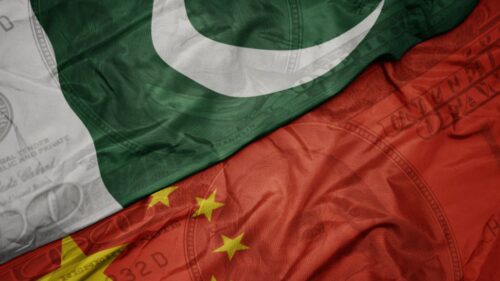
Parallel to its engagement with the US, Pakistan’s army has cultivated a deep partnership with China. From the 1960s onward, China provided advanced weaponry, training and diplomatic cover to Pakistan. The China–Pakistan Economic Corridor (CPEC) exemplifies the material and strategic interdependence between Beijing and Rawalpindi, the general headquarters of Pakistan’s army. Yet this alliance is instrumental and cautious. Pakistan extracts maximum advantage while managing dependency risks.
As I observed in the study of various joint exercises and intelligence assessments, Chinese advisers prioritize operational discipline, while the Pakistan Army leverages these partnerships to sustain its asymmetric approach against India. Unlike Pakistan, China is a responsible actor, calculated in its pursuit of influence, wary of internal instability and far less willing to risk economic or military overreach.
The logic of perpetual war and its costs
The persistence of Pakistan’s strategy rests on a central logic: perpetual war preserves institutional authority. Proxy networks, psychological operations and cross-border raids sustain attention and diplomatic leverage disproportionate to the resources expended. In Kashmir, for instance, Pakistan’s army ensures that any negotiation or ceasefire is always accompanied by episodic escalation, reinforcing its indispensability in the domestic narrative.
From my vantage point on the field, I could see this calculus in every patrol, infiltration attempt and cross-border firing. Rawalpindi’s objective was not a decisive victory but continuous friction. As Fair puts it: “Pakistan’s conflict with India cannot be reduced simply to resolving the Kashmir dispute. Its problems with India are much more capacious than the territorial conflict over Kashmir”.
Reliance on irregular warfare carries high internal costs. Blowback from militant networks threatens domestic security, economic growth is undermined and international credibility suffers. Civil-military tensions occasionally erupt, as politicians attempt to reclaim autonomy from an army entrenched in the state apparatus.
Yet Pakistan’s army manages these contradictions with remarkable resilience, prioritizing institutional continuity over immediate stability. In operational terms, this means that even when local insurgencies or economic shocks occur, the army maintains a strategic posture, a testament to the depth of its planning and adaptability.
India’s security dilemma, managing both Pakistan and China
India has long borders with both Pakistan and China. Delhi faces a grave danger if it neglects India’s western border with Pakistan when pouring resources into its northern border with China. From years of counterinsurgency operations and border patrols, I can say with certainty that Pakistan’s army counts on India’s divided attention. India must maintain credible deterrence, which involves integrating intelligence, conventional forces and rapid-response capabilities across multiple domains.
While India often frames China as a potential “enemy number one,” operational experience suggests otherwise. Beijing pursues strategic influence through economic and institutional leverage, unlike Rawalpindi, which actively destabilizes to maintain relevance. China’s behavior is predictable, disciplined and fundamentally transactional. By contrast, Pakistan’s pursuit of perpetual conflict is ideologically and institutionally driven, creating enduring volatility.
You can read the CIA Factbook and listen to MI6 people for your analysis, or you could read perspectives from our 3,000+ authors from 90+ countries and make sense of the world. Sign up for our free newsletters now.
<label for=”Your email will be shared with fairobserver and subject to its Privacy Policy”>I agree to receive emails and other content from Fair Observer. I understand that I may repeal my consent at any time. You can review our Privacy Policy and Terms of Use for further information…</label>
As a soldier, I would caution against conflating these two very different threats. Pakistan is the immediate, persistent hazard. China is a long-term, disciplined competitor. Strategic planning must reflect this distinction.
[Shokin Chauhan first published a version of this piece on Substack.]
[Kaitlyn Diana edited this piece.]
The views expressed in this article are the author’s own and do not necessarily reflect Fair Observer’s editorial policy.
Comment
0 Comments
Newest
Oldest
Most Voted
Most Voted
Inline Feedbacks
View all comments
Commenting Guidelines
Please read our commenting guidelines before commenting.
1. Be Respectful: Please be polite to the author. Avoid hostility. The whole point of Fair Observer is openness to different perspectives from perspectives from around the world.
2. Comment Thoughtfully: Please be relevant and constructive. We do not allow personal attacks, disinformation or trolling. We will remove hate speech or incitement.
3. Contribute Usefully: Add something of value — a point of view, an argument, a personal experience or a relevant link if you are citing statistics and key facts.
<label style=”font-size: 18px;”>
I have read and agree to the above commenting guidelines.
</label>
Please agree to the guidelines before proceeding.
I
Agree, Proceed to Login
Cancel
Related Reading
From Roads to Reform: China and Pakistan’s Expanding Economic Alliance
Pakistan’s Vision 2035, which aims to build a $1 trillion economy, is closely tied to its deepening friendship with China….
by
Dr. Sahibzada Muhammad Usman,
October 10, 2025
FO° Talks: Pakistan Develops Closer Ties with US and China After May’s Clashes with India
In this episode of FO° Talks, Rohan Khattar Singh and retired Lieutenant General Cherish Mathson analyze India’s military posture after…
by
Cherish Mathson & Rohan Khattar Singh,
October 1, 2025
Making Sense of the Latest India–Pakistan Tensions
Fair Observer Editor-in-Chief Atul Singh and retired CIA Officer Glenn Carle discuss the latest escalation in the India–Pakistan conflict following…
by
Glenn Carle & Atul Singh,
June 5, 2025
Support Fair Observer
We rely on your support for our independence, diversity and quality.
For more than 10 years, Fair Observer has been free, fair and independent. No billionaire
owns us, no advertisers control us. We are a reader-supported nonprofit. Unlike many other
publications, we keep our content free for readers regardless of where they live or whether
they can afford to pay. We have no paywalls and no ads.
In the post-truth era of fake news, echo chambers and filter bubbles, we publish a plurality
of perspectives from around the world. Anyone can publish with us, but everyone goes through
a rigorous editorial process. So, you get fact-checked, well-reasoned content instead of
noise.
We publish 3,000+ voices from 90+ countries. We also conduct education and training programs
on subjects ranging from digital media and journalism to writing and critical thinking. This
doesn’t come cheap. Servers, editors, trainers and web developers cost
money.
Please consider supporting us on a regular basis as a recurring donor or a
sustaining member.
Will you support FO’s journalism?
We rely on your support for our independence, diversity and quality.
Donation Cycle
<label for=”donation_cycle_one_time”>One Time</label>
<label for=”donation_cycle_monthly”>Monthly</label>
<label for=”donation_cycle_yearly”>Yearly</label>
Donation Amount
<label for=”amount_11″>$11</label>
<label for=”amount_111″>$111</label>
<label for=”other”>Other</label>
$
The IRS recognizes Fair Observer as a section 501(c)(3) registered public charity
(EIN: 46-4070943), enabling you to claim a tax deduction.
Make Sense of the World
Unique Insights from 3,000+ Contributors in 90+ Countries
<label
for=”Your email will be shared with fairobserver and subject to its Privacy Policy”>I
agree to receive emails and other content from Fair Observer. I understand
that I
may repeal my consent at any time. You can review our Privacy Policy
and Terms of Use
for further
information .</label>
for=”Your email will be shared with fairobserver and subject to its Privacy Policy”>I
agree to receive emails and other content from Fair Observer. I understand
that I
may repeal my consent at any time. You can review our Privacy Policy
and Terms of Use
for further
information .</label>
We are a rare nonprofit in the world news space. Most other organizations are owned by billionaires or governments. We are bottom-up, not top-down and bring you perspectives from around the world. So, sign up now for our free newsletters to hear from our 3,000+ voices from 90+ countries.
<label for=”Your email will be shared with fairobserver and subject to its Privacy Policy”>I agree to receive emails and other content from Fair Observer. I understand that I may repeal my consent at any time. You can review our Privacy Policy and Terms of Use for further information…</label>
</main>
Fair Observer, 461 Harbor Blvd, Belmont, CA 94002, USA
<footer class=”mart70 fo-black-bg padt50 padb30″>
Sections
PUBLICATION
Support Fair Observer
We rely on your support for our independence, diversity and quality.


</footer>

<footer id=”fixed-footer” class=”support-footer”>


Support
independent, crowdsourced, nonprofit
journalism.
Fair Observer is a 501(c)(3) independent nonprofit. We are not owned by billionaires or controlled by
advertisers. We publish nearly 3,000 authors from over 90 countries after fact-checking and editing each
piece. We do not have a paywall and anyone can read us for free. With your vital donations, we can
continue
to do our work.
Please make a recurring (or even one-time) donation today. Even $1 goes a long way because
a
million donors
like you mean one million dollars. Thank you for keeping us independent, free and fair.
One Time
Monthly
Yearly
Monthly
Yearly
Continue 

</footer>

Sign into your Fair Observer Account
<label class=”tml-label” for=”user_login”>Username or Email Address</label>
<label class=”tml-label” for=”user_pass”>Password</label>
<label class=”tml-label” for=”rememberme”>Remember Me</label>
Log In
Forgot
Password
Forgot Password
Enter your registered email address or username. You will receive a
link to create a new password via email.
Please enter your username or email address. You will receive an email message with instructions on how to reset your password.
<label class=”tml-label” for=”user_login”>Username or Email Address</label>
Get New Password
Or
Return to
Login
Forgot Password
We have sent a link to your registered email address to reset your password.
<circle cx=”12.5″ cy=”12″ r=”12″ fill=”#414141″ />
Back to
Login
Become a Member & Enjoy Exclusive Benefits!
<circle cx=”12.5″ cy=”12″ r=”12″ fill=”#414141″ />
Access to comments feature
<circle cx=”12.5″ cy=”12″ r=”12″ fill=”#414141″ />
Bookmark your favorite articles
<circle cx=”12.5″ cy=”12″ r=”12″ fill=”#414141″ />
Exclusive invitations to FO° Talks & FO° Live
<circle cx=”12.5″ cy=”12″ r=”12″ fill=”#414141″ />
Access to all of our e-publications
Return to
Login
Login
NEWSLETTER
Make Sense of the World
Unique Insights from 2,500+ Contributors in 90+ Countries

<label
for=”Your email will be shared with fairobserver and subject to it’s Privacy Policy”>I
agree to receive emails and other content from Fair Observer. I understand
that I may repeal my consent at any time. You can review our Privacy Policy
and Terms of Use
for further information.</label>
for=”Your email will be shared with fairobserver and subject to it’s Privacy Policy”>I
agree to receive emails and other content from Fair Observer. I understand
that I may repeal my consent at any time. You can review our Privacy Policy
and Terms of Use
for further information.</label>
NEWSLETTER
Make Sense of the World
Unique Insights from 2,500+ Contributors in 90+ Countries
<label
for=”Your email will be shared with fairobserver and subject to it’s Privacy Policy”>I
agree to receive emails and other content from Fair Observer. I understand
that I may repeal my consent at any time. You can review our Privacy Policy
and Terms of Use
for further information.</label>
for=”Your email will be shared with fairobserver and subject to it’s Privacy Policy”>I
agree to receive emails and other content from Fair Observer. I understand
that I may repeal my consent at any time. You can review our Privacy Policy
and Terms of Use
for further information.</label>

Make Sense of the World
Unique Insights from 2,500+ Contributors in 90+ Countries
<label
for=”Your email will be shared with fairobserver and subject to its Privacy Policy”>I
agree to receive emails and other content from Fair Observer. I understand that I
may repeal my consent at any time. You can review our Privacy Policy and Terms of Use for further
information .</label>
for=”Your email will be shared with fairobserver and subject to its Privacy Policy”>I
agree to receive emails and other content from Fair Observer. I understand that I
may repeal my consent at any time. You can review our Privacy Policy and Terms of Use for further
information .</label>
We Need Your Consent
We use cookies to give you the best possible experience. Learn more about how we use cookies or edit your cookie preferences. Privacy Policy. My Options I Accept
Privacy & Cookies Policy
Close
Edit Cookie Preferences
The Fair Observer website uses digital cookies so it can collect statistics on how many visitors come to the site, what content is viewed and for how long, and the general location of the computer network of the visitor. These statistics are collected and processed using the Google Analytics service. Fair Observer uses these aggregate statistics from website visits to help improve the content of the website and to provide regular reports to our current and future donors and funding organizations. The type of digital cookie information collected during your visit and any derived data cannot be used or combined with other information to personally identify you. Fair Observer does not use personal data collected from its website for advertising purposes or to market to you.
As a convenience to you, Fair Observer provides buttons that link to popular social media sites, called social sharing buttons, to help you share Fair Observer content and your comments and opinions about it on these social media sites. These social sharing buttons are provided by and are part of these social media sites. They may collect and use personal data as described in their respective policies. Fair Observer does not receive personal data from your use of these social sharing buttons. It is not necessary that you use these buttons to read Fair Observer content or to share on social media.
Necessary
<label class=”form-check-label” for=”wt-cli-checkbox-necessary”>Necessary</label>
Always Enabled
These cookies essential for the website to function.
Social Media
<label for=”wt-cli-checkbox-social_media” class=”cli-slider” data-cli-enable=”Enabled” data-cli-disable=”Disabled”>Social Media</label>
These cookies are used to enable sharing or following of content that you find interesting on our website. These settings apply to third-party social networking and other websites.
Performance & Functionality
<label for=”wt-cli-checkbox-performance” class=”cli-slider” data-cli-enable=”Enabled” data-cli-disable=”Disabled”>Performance & Functionality</label>
These cookies are used to enhance the performance and functionality of our website. They provide statistics on how our website is used and help us improve by measuring errors. Certain functionalities on our website may become unavailable without these cookies.
Analytics
<label for=”wt-cli-checkbox-analytics” class=”cli-slider” data-cli-enable=”Enabled” data-cli-disable=”Disabled”>Analytics</label>
SAVE & ACCEPT
<textarea id=’wpd-editor-source-code’></textarea>Insert
</body>
</html>
Total Views:
Source: World Politics - fairobserver.com