<g id=”cross”>
<line class=”cls-1″ x1=”7″ x2=”25″ y1=”7″ y2=”25″ />
<line class=”cls-1″ x1=”7″ x2=”25″ y1=”25″ y2=”7″ />
</g>
Republicans Test the Limits of Gerrymandering and Voter Suppression
<circle cx=”10.5″ cy=”10.5″ r=”7.5″ />
<line x1=”21″ x2=”15.8″ y1=”21″ y2=”15.8″ />
<nav class=”fo-navigation pos-r” itemscope itemtype=”http://schema.org/Navigation”>
Login
Sections <circle cx=”10.5″ cy=”10.5″ r=”7.5″ />
<line x1=”21″ x2=”15.8″ y1=”21″ y2=”15.8″ />
Search
<circle cx=”10.5″ cy=”10.5″ r=”7.5″ />
<line x1=”21″ x2=”15.8″ y1=”21″ y2=”15.8″ />
Search


PUBLICATION

Support Fair Observer
We rely on your support for our independence, diversity and quality.
</nav>
</header>

<main id=”main” class=”site-main” role=”main”> 





Friday, November 14, 2025
<header class=”entry-header”>
Republicans Test the Limits of Gerrymandering and Voter Suppression
Republican lawmakers seek to retain power through aggressive gerrymandering and voter suppression in the US Congress. Their strategy risks backfiring as shifting voter behavior and wave elections could undermine their assumptions as to how safe reshaped districts may be. This approach may weaken Republican control and create electoral losses that reshape American politics in the next national election cycle.
By
Friday, November 14, 2025
</header>
Via Shutterstock.

November 14, 2025 05:31 EDT

Check out our comment feature!
Saved Successfully.
This article saved into your bookmarks. Click here to view your bookmarks.


The math is tricky, but Republican gerrymandering (the political manipulation of electoral district boundaries to benefit a party, group or socioeconomic class within the constituency) in the US Congress could be setting Republicans up for an electoral catastrophe.
Assuming they cannot perform sufficient, effective and non-counterproductive vote suppression, there is a risk with extreme gerrymandering (apart from the ethical issues) that you might end up creating more seats vulnerable in a wave election against you than any that you might gain.
How gerrymandering works
Although there isn’t active gerrymandering in the UK, as in the United States, the UK uses first-past-the-post electoral districts, and the last elections there are illustrative of what might happen in the US. In the UK in 2019 and 2024, relatively small swings in the popular vote led to a remarkable number of “safe seats” changing hands, first Labour, then Conservative.
To break it down, the Conservatives in 2019 surged to 365 seats (of 650), a majority of 35 based on 43.6% of the popular vote, which imploded to 121 with 23.7% losing two-thirds of their seats for a less than half collapse in their vote. Meanwhile, Labour fell to 202 in 2019 with 32.1%, then more than recovered to 411 in 2024 with just 33.7%, more than doubling their seat haul for a mere 1.6% increase in their vote, i.e., a 5% increase in their total. Thus, a small increase in Labour’s vote share propelled Labour to a substantial majority, surpassing what the Tories secured in 2019 — indeed, 46 more seats with 10% fewer votes. The central factor, of course, was the collapse of the Tories’ vote, magnified by first-past-the-post; Labour didn’t have to be popular, just not as unpopular as the Tories. It’s not who voters love, it’s who the voters are angriest with.
Back in the US, the danger in the Republicans’ mathematics is part of how gerrymandering works — it tries to create districts with enough reliable voters for one party, say reliable Republican voters, to ensure that the seat is noncompetitive, that it will only ever return a Republican.
Gerrymandering works by “packing and cracking” — pushing many of the (presumed) consistently Democratic voting demographics into just one potential House-seat of several, and spreading (presumed) reliable Republicans out to create majorities in as many of the remaining districts as possible — the latter also with supposed to be low-propensity Democratic voting groups. The data that gerrymandering depends on is the decennial census combined with voter behavior in the most recent elections.
Dependence on voter behavior — what if the Republicans are very unpopular?
The problem is that the more extreme the gerrymandering, the thinner you have to spread the presumed-to-be-reliable Republican voters, and the more you depend on Democratic voters not turning out. This inevitably reduces many of their “safe majorities.” But it also depends on how consistently voters will repeat their previous behavior in the next election — it assumes stability from one election to the next.
In a wave election, those assumptions can break down — gerrymandering might have turned what were believed to be safe Republican seats into marginal ones during a big wave; the “sea-wall/levee is overtopped,” leading to electoral collapse.
Moreover, assumptions predicated on voter behavior in previous elections are “carrying a lot of freight,” but if something happens to change that behavior — boom! It also raises the question of whether voter behavior in past elections was atypical or a durable trend — say Hispanics in 2024…
In Texas, a lot seems to be riding on Republican assumptions about how the Hispanic population will vote; in the this month’s general and special elections, the gains in Hispanic votes that US President Donald Trump and Republicans secured in 2024 appears to have collapsed (this too may be a long-term problem — running against the Catholicism of former Presidential Candidate Al Smith in 1928 cost Republicans Catholic voters all the way into the 1950s and 60s. How badly and permanently have Hispanics been alienated by the Make America Great Again [MAGA] Republicans’ actions and rhetoric?)
In addition to 2024 voting patterns, the gerrymander is also based heavily on data from the 2010 census, which will be six years old by November 2026, in a state with large and rapid population and demographic shifts. Moreover, Texas has historically had unusually low turnout, 56.6% in 2024 versus 63.9% in the US as a whole — were something to “goose” that turnout, such as voter anger at Trump and the Republicans…
Republican strategy and Trump’s influence
Although it appears extreme, Republican gerrymandering has, until now, been cautious and carefully calculated to limit the impact of a wave election, but, spurred by Trump’s demands, they may be going too far and have massively exposed themselves. That may leave few options except for blatant voter suppression — but this too brings its own risk of backlash, of spiking angry turnout amongst the groups targeted for suppression.
Historically, incumbents — especially those in safe seats — have had a lot of influence over districting and gerrymandering (state parties, too, are happy to keep their safely gerrymandered majorities). They are, in fact, a key effective, if not very visible, opponent of overly increased gerrymandering because it necessarily reduces their safe majority, makes them work harder in elections and puts their seat at greater risk. But Republican incumbents are more terrified of Trump and his backing a primary candidate in their district than they are of their natural antipathy and caution about excessive gerrymandering.
Anyone remotely familiar with, say, Texas politics, or North Carolina (to cite two heavily gerrymandered states) would say that in 2001, the Republicans there already seemed to have pushed the gerrymandering math as far as they safely could get away with.
Trump, in his demand for increased gerrymandering, has nullified and silenced incumbent objections while paying little attention to the mathematics — but those Republicans are obviously more scared of a Trump-backed primary opponent than the general election. That may cost them.
Voter suppression’s limits
Notably, a lot of voter suppression relies on making voting more logistically and bureaucratically difficult — through obstacles such as voter identification requirements, registration hurdles, voter record purges and logistical challenges like limiting or banning mail-in ballots or having polling stations that are poorly located with limited hours (which can be hard for hourly workers to find time to vote).
The problem with these voter suppression efforts is that they could disproportionately affect MAGA constituencies, making it harder for Republican voters to cast their ballots. This is especially true because the Republican base within that group tends to include older voters, hourly workers, workers without a college education and people who will find voter suppression obstacles harder to navigate than younger, increasingly more educated voters who are breaking heavily Democrat.
Moreover, despite Trump’s preening, voter suppression has mostly to be instituted at the state level — and, if there is a wave election in 2026, Republican losses in statehouses might preclude effective voter suppression measures by 2028 — even more so if Republicans lose the national House and Senate. Under current law and voting arrangements, states organize and administer elections, even Federal elections, and within those states, municipalities (cities) and counties play a significant role. Even with the current Republican control of Congress and, despite the Supreme Court disgracing itself with obvious political partisanship, voter suppression would be very hard to do at the national level.
A national infrastructure usable for voter suppression simply does not exist and would take time to create (Trump has largely gutted the Federal Election Commission, by firing the Democratic Commissioner and driving two relatively moderate Republicans to resign, it no longer has a quorum, it can’t do anything). Ideas Trump is militantly pressing for, like say banning postal voting at the federal level would:
— Likely have to be executed at the state level and predominantly in Republican states;
— Fall heavily on elderly, infirm and rural voters, constituencies Republicans rely on.
— Risk a backlash amongst regular postal voters, like say the US military.
Efforts to intimidate by, say, deploying Immigration & Customs Enforcement (ICE) to polling stations would be predicated on the myth of noncitizens voting; they’d be ineffectual at suppressing these nonexistent votes, but very effective at enraging Latino, Black and other voters. The Army, the National Guard and even the Federal Bureau of Investigation (FBI) are not likely to be sufficiently partisan to be effective or willing to engage in intimidation.
No owners, no ads, just global voices and first class editors. We’re a nonprofit that puts real journalism first. Join us — subscribe to our free newsletters — now.
<label for=”Your email will be shared with fairobserver and subject to its Privacy Policy”>I agree to receive emails and other content from Fair Observer. I understand that I may repeal my consent at any time. You can review our Privacy Policy and Terms of Use for further information…</label>
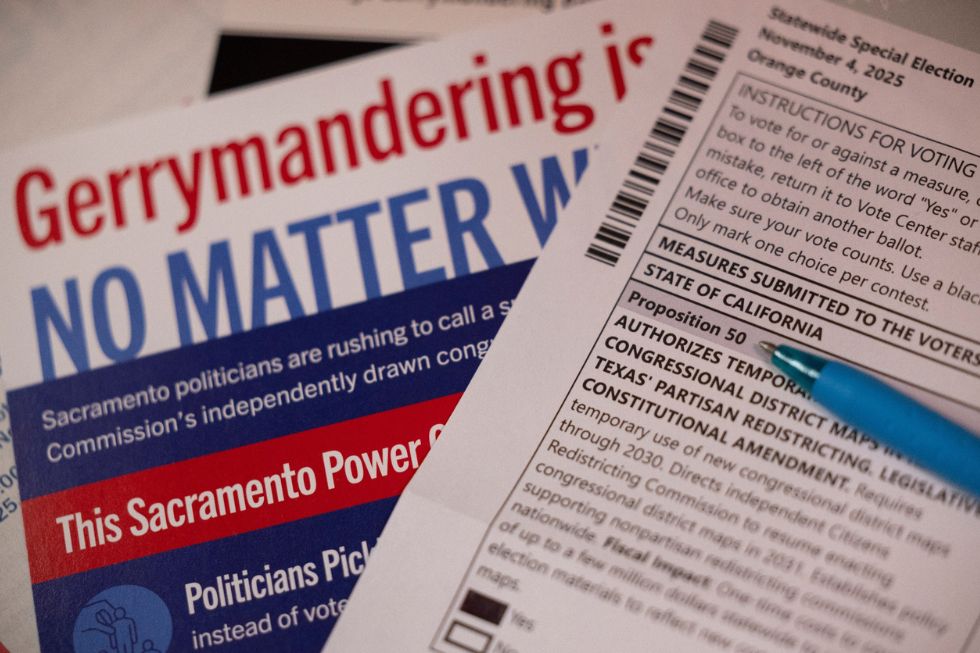
Indeed, the central risk of obvious, clumsy efforts at voter suppression is that it’d turn voting Democratic into an act of defiance, a middle finger extended to the Grand Old Party (GOP). Meanwhile, crude voter suppression and gross gerrymandering may antagonize independent voters — witness the huge majority the “Proposition 50” retaliatory redrawing of California’s districts in response to Texas unexpectedly secured — in August 2025, almost two-thirds of those asked in opinion polls opposed it, but it secured a vote of almost two-thirds by November. Voters are angry, but are they particularly angry at Republicans more than Democrats?
[Kaitlyn Diana edited this piece.]
The views expressed in this article are the author’s own and do not necessarily reflect Fair Observer’s editorial policy.
Comment
0 Comments
Newest
Oldest
Most Voted
Most Voted
Inline Feedbacks
View all comments
Commenting Guidelines
Please read our commenting guidelines before commenting.
1. Be Respectful: Please be polite to the author. Avoid hostility. The whole point of Fair Observer is openness to different perspectives from perspectives from around the world.
2. Comment Thoughtfully: Please be relevant and constructive. We do not allow personal attacks, disinformation or trolling. We will remove hate speech or incitement.
3. Contribute Usefully: Add something of value — a point of view, an argument, a personal experience or a relevant link if you are citing statistics and key facts.
<label style=”font-size: 18px;”>
I have read and agree to the above commenting guidelines.
</label>
Please agree to the guidelines before proceeding.
I
Agree, Proceed to Login
Cancel
Related Reading
Shadow Politics, Citizen Media and Frayed Nerves
An increasingly radical Republican Party is highjacking state governments to push, not the will of its constituents, but the ideology…
by
Dr. Rod Berger,
March 6, 2024
The Science of Voter Suppression
Election rigging happens to be a hallowed tradition in the United States, so what’s all the fuss about?
by
Peter Isackson,
September 30, 2020
Understanding Racial and Partisan Gerrymandering
by
Fair Observer,
July 25, 2017
Support Fair Observer
We rely on your support for our independence, diversity and quality.
For more than 10 years, Fair Observer has been free, fair and independent. No billionaire
owns us, no advertisers control us. We are a reader-supported nonprofit. Unlike many other
publications, we keep our content free for readers regardless of where they live or whether
they can afford to pay. We have no paywalls and no ads.
In the post-truth era of fake news, echo chambers and filter bubbles, we publish a plurality
of perspectives from around the world. Anyone can publish with us, but everyone goes through
a rigorous editorial process. So, you get fact-checked, well-reasoned content instead of
noise.
We publish 3,000+ voices from 90+ countries. We also conduct education and training programs
on subjects ranging from digital media and journalism to writing and critical thinking. This
doesn’t come cheap. Servers, editors, trainers and web developers cost
money.
Please consider supporting us on a regular basis as a recurring donor or a
sustaining member.
Will you support FO’s journalism?
We rely on your support for our independence, diversity and quality.
Donation Cycle
<label for=”donation_cycle_one_time”>One Time</label>
<label for=”donation_cycle_monthly”>Monthly</label>
<label for=”donation_cycle_yearly”>Yearly</label>
Donation Amount
<label for=”amount_11″>$11</label>
<label for=”amount_111″>$111</label>
<label for=”other”>Other</label>
$
The IRS recognizes Fair Observer as a section 501(c)(3) registered public charity
(EIN: 46-4070943), enabling you to claim a tax deduction.
Make Sense of the World
Unique Insights from 3,000+ Contributors in 90+ Countries
<label
for=”Your email will be shared with fairobserver and subject to its Privacy Policy”>I
agree to receive emails and other content from Fair Observer. I understand
that I
may repeal my consent at any time. You can review our Privacy Policy
and Terms of Use
for further
information .</label>
for=”Your email will be shared with fairobserver and subject to its Privacy Policy”>I
agree to receive emails and other content from Fair Observer. I understand
that I
may repeal my consent at any time. You can review our Privacy Policy
and Terms of Use
for further
information .</label>
You can read the CIA Factbook and listen to MI6 people for your analysis, or you could read perspectives from our 3,000+ authors from 90+ countries and make sense of the world. Sign up for our free newsletters now.
<label for=”Your email will be shared with fairobserver and subject to its Privacy Policy”>I agree to receive emails and other content from Fair Observer. I understand that I may repeal my consent at any time. You can review our Privacy Policy and Terms of Use for further information…</label>
</main>
Fair Observer, 461 Harbor Blvd, Belmont, CA 94002, USA
<footer class=”mart70 fo-black-bg padt50 padb30″>
Sections
PUBLICATION
Support Fair Observer
We rely on your support for our independence, diversity and quality.


</footer>

<footer id=”fixed-footer” class=”support-footer”>


Support
independent, crowdsourced, nonprofit
journalism.
Fair Observer is a 501(c)(3) independent nonprofit. We are not owned by billionaires or controlled by
advertisers. We publish nearly 3,000 authors from over 90 countries after fact-checking and editing each
piece. We do not have a paywall and anyone can read us for free. With your vital donations, we can
continue
to do our work.
Please make a recurring (or even one-time) donation today. Even $1 goes a long way because
a
million donors
like you mean one million dollars. Thank you for keeping us independent, free and fair.
One Time
Monthly
Yearly
Monthly
Yearly
Continue 

</footer>

Sign into your Fair Observer Account
<label class=”tml-label” for=”user_login”>Username or Email Address</label>
<label class=”tml-label” for=”user_pass”>Password</label>
<label class=”tml-label” for=”rememberme”>Remember Me</label>
Log In
Forgot
Password
Forgot Password
Enter your registered email address or username. You will receive a
link to create a new password via email.
Please enter your username or email address. You will receive an email message with instructions on how to reset your password.
<label class=”tml-label” for=”user_login”>Username or Email Address</label>
Get New Password
Or
Return to
Login
Forgot Password
We have sent a link to your registered email address to reset your password.
<circle cx=”12.5″ cy=”12″ r=”12″ fill=”#414141″ />
Back to
Login
Become a Member & Enjoy Exclusive Benefits!
<circle cx=”12.5″ cy=”12″ r=”12″ fill=”#414141″ />
Access to comments feature
<circle cx=”12.5″ cy=”12″ r=”12″ fill=”#414141″ />
Bookmark your favorite articles
<circle cx=”12.5″ cy=”12″ r=”12″ fill=”#414141″ />
Exclusive invitations to FO° Talks & FO° Live
<circle cx=”12.5″ cy=”12″ r=”12″ fill=”#414141″ />
Access to all of our e-publications
Return to
Login
Login
NEWSLETTER
Make Sense of the World
Unique Insights from 2,500+ Contributors in 90+ Countries

<label
for=”Your email will be shared with fairobserver and subject to it’s Privacy Policy”>I
agree to receive emails and other content from Fair Observer. I understand
that I may repeal my consent at any time. You can review our Privacy Policy
and Terms of Use
for further information.</label>
for=”Your email will be shared with fairobserver and subject to it’s Privacy Policy”>I
agree to receive emails and other content from Fair Observer. I understand
that I may repeal my consent at any time. You can review our Privacy Policy
and Terms of Use
for further information.</label>
NEWSLETTER
Make Sense of the World
Unique Insights from 2,500+ Contributors in 90+ Countries
<label
for=”Your email will be shared with fairobserver and subject to it’s Privacy Policy”>I
agree to receive emails and other content from Fair Observer. I understand
that I may repeal my consent at any time. You can review our Privacy Policy
and Terms of Use
for further information.</label>
for=”Your email will be shared with fairobserver and subject to it’s Privacy Policy”>I
agree to receive emails and other content from Fair Observer. I understand
that I may repeal my consent at any time. You can review our Privacy Policy
and Terms of Use
for further information.</label>

Make Sense of the World
Unique Insights from 2,500+ Contributors in 90+ Countries
<label
for=”Your email will be shared with fairobserver and subject to its Privacy Policy”>I
agree to receive emails and other content from Fair Observer. I understand that I
may repeal my consent at any time. You can review our Privacy Policy and Terms of Use for further
information .</label>
for=”Your email will be shared with fairobserver and subject to its Privacy Policy”>I
agree to receive emails and other content from Fair Observer. I understand that I
may repeal my consent at any time. You can review our Privacy Policy and Terms of Use for further
information .</label>
We Need Your Consent
We use cookies to give you the best possible experience. Learn more about how we use cookies or edit your cookie preferences. Privacy Policy. My Options I Accept
Privacy & Cookies Policy
Close
Edit Cookie Preferences
The Fair Observer website uses digital cookies so it can collect statistics on how many visitors come to the site, what content is viewed and for how long, and the general location of the computer network of the visitor. These statistics are collected and processed using the Google Analytics service. Fair Observer uses these aggregate statistics from website visits to help improve the content of the website and to provide regular reports to our current and future donors and funding organizations. The type of digital cookie information collected during your visit and any derived data cannot be used or combined with other information to personally identify you. Fair Observer does not use personal data collected from its website for advertising purposes or to market to you.
As a convenience to you, Fair Observer provides buttons that link to popular social media sites, called social sharing buttons, to help you share Fair Observer content and your comments and opinions about it on these social media sites. These social sharing buttons are provided by and are part of these social media sites. They may collect and use personal data as described in their respective policies. Fair Observer does not receive personal data from your use of these social sharing buttons. It is not necessary that you use these buttons to read Fair Observer content or to share on social media.
Necessary
<label class=”form-check-label” for=”wt-cli-checkbox-necessary”>Necessary</label>
Always Enabled
These cookies essential for the website to function.
Social Media
<label for=”wt-cli-checkbox-social_media” class=”cli-slider” data-cli-enable=”Enabled” data-cli-disable=”Disabled”>Social Media</label>
These cookies are used to enable sharing or following of content that you find interesting on our website. These settings apply to third-party social networking and other websites.
Performance & Functionality
<label for=”wt-cli-checkbox-performance” class=”cli-slider” data-cli-enable=”Enabled” data-cli-disable=”Disabled”>Performance & Functionality</label>
These cookies are used to enhance the performance and functionality of our website. They provide statistics on how our website is used and help us improve by measuring errors. Certain functionalities on our website may become unavailable without these cookies.
Analytics
<label for=”wt-cli-checkbox-analytics” class=”cli-slider” data-cli-enable=”Enabled” data-cli-disable=”Disabled”>Analytics</label>
SAVE & ACCEPT
<textarea id=’wpd-editor-source-code’></textarea>Insert
</body>
</html>
Total Views:
Source: World Politics - fairobserver.com