<g id=”cross”>
<line class=”cls-1″ x1=”7″ x2=”25″ y1=”7″ y2=”25″ />
<line class=”cls-1″ x1=”7″ x2=”25″ y1=”25″ y2=”7″ />
</g>
The Blast in Delhi: Lessons, Warnings and India’s Strategic Crossroads
<circle cx=”10.5″ cy=”10.5″ r=”7.5″ />
<line x1=”21″ x2=”15.8″ y1=”21″ y2=”15.8″ />
<nav class=”fo-navigation pos-r” itemscope itemtype=”http://schema.org/Navigation”>
Login
Sections <circle cx=”10.5″ cy=”10.5″ r=”7.5″ />
<line x1=”21″ x2=”15.8″ y1=”21″ y2=”15.8″ />
Search
<circle cx=”10.5″ cy=”10.5″ r=”7.5″ />
<line x1=”21″ x2=”15.8″ y1=”21″ y2=”15.8″ />
Search


PUBLICATION
Support Fair Observer
We rely on your support for our independence, diversity and quality.
</nav>
</header>

<main id=”main” class=”site-main” role=”main”> 





Tuesday, November 18, 2025
<header class=”entry-header”>
The Blast in Delhi: Lessons, Warnings and India’s Strategic Crossroads
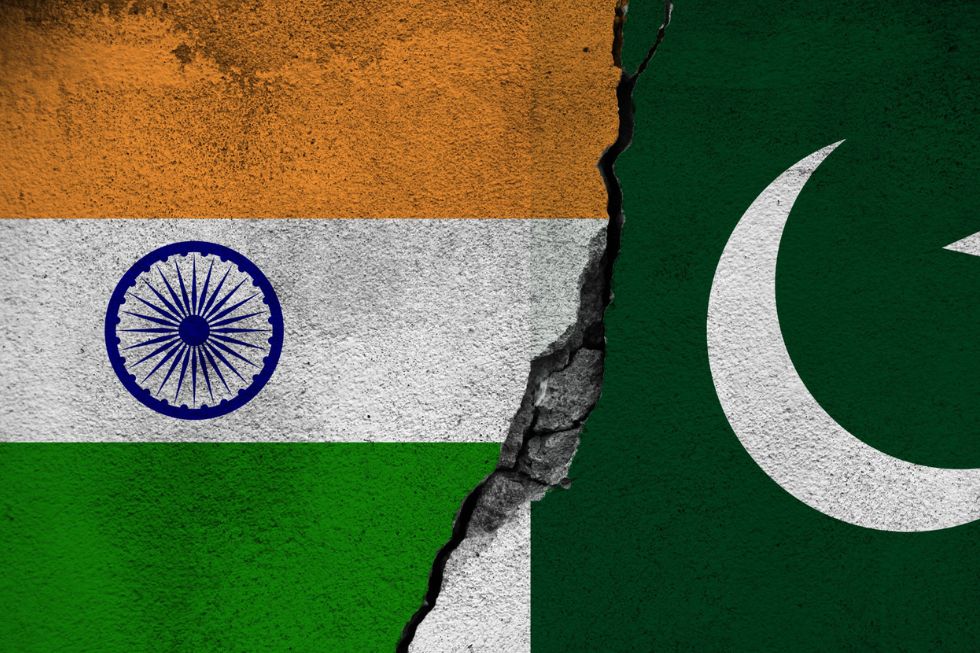
On November 10, 2025, a deadly blast in Delhi killed at least eight people, injured over 20 more and shocked India’s capital. Investigators link the attack to growing radicalization and Pakistan-backed proxy networks that threaten national stability. India must have stronger coordination among security agencies and political unity to prevent future attacks and strengthen resilience.
By
Tuesday, November 18, 2025
</header>
Via Shutterstock.

November 18, 2025 06:41 EDT

Check out our comment feature!
Saved Successfully.
This article saved into your bookmarks. Click here to view your bookmarks.


“Terrorists choose their moments with precision; nations fall only when they fail to read the message hidden in those moments.”
The blast in Delhi at 7 pm on November 10, 2025, arrived without warning, tearing through the rhythm of an ordinary day, killing at least eight to 13 people and injuring 20 to 30 others, and reminding the nation once again that its capital is always a living target in the crosshairs of those who wish to destabilize India.
What we know so far, pieced together from television coverage and a series of selective police leaks, is troubling but still far from complete. An improvised explosive device was placed inside a moving Hyundai i20 driven by Dr Umar Un Nabi, an assistant Professor at Al Falah University, Faridabad in Haryana. The car exploded near a traffic signal in Delhi’s densely packed Red Fort area, timed with deliberate precision for maximum psychological shock.
Initial forensic assessments shared off-record suggest the device had been assembled with a degree of expertise uncommon in amateur operations. Some officers have hinted that DNA traces recovered from the vehicle may belong to Dr. Nabi, who has been missing for several days, an unsettling possibility that ties into the larger pattern of professional radicalization we have been witnessing in recent years. Yet none of this is definitive, and much of it is being revealed in fragments, shaping public expectations without providing clarity.
What remains unknown is far more consequential. We still do not know whether this was the work of a lone radicalized individual, a fledgling urban module or a node connected to a wider terror architecture operating out of the Valley or across the border. Investigators are probing encrypted communication channels and financial trails, but no single narrative has yet emerged.
There are whispers about cross-border handlers, suggestions of a sleeper module being activated after a long dormancy and speculation that the blast may have been a test run to assess Delhi’s response grid. We do not yet know whether this was a standalone strike, a symbolic message or the first tremor of a larger campaign waiting to unfold. And it is within this uncertain space, between what the police are selectively confirming, what they are deliberately withholding and what still lies completely obscured, that the real danger resides.
From a soldier’s instincts to a national pattern
These first images of the Delhi blast pulled me back into a world I thought I had left behind when I hung up my uniform, almost eight years ago. Even after years of retirement, the instinct to assess, to connect dots, to question the unseen motives behind an explosion comes back with a force that feels almost physical. You never really stop being a soldier in this line of work; you simply move further away from the noise, as I did when I moved away to settle in Pune, and yet the noise followed me.
As I watched the smoke rising in the nation’s capital on my television screen, I realized again that these shocks do not merely wound the city; they bring back decades of memories for those of us who have operated in the shadows of similar crises. This latest incident in Delhi is not just another attack. It is part of a continuing arc of threats that have evolved, multiplied and adapted since the first organized terrorist strikes on Indian soil.
“I have stood at blast sites as a young officer and as an old one. The smell of explosives never changes, but the lessons we fail to learn always return.”
When I joined the Army in the late seventies, terrorism against India was still a regional phenomenon; Punjab would soon erupt, Bengal was dealing with Naxalism and the Northeast fire, which started in 1956, was still very much raging. But it was in the nineties that we saw the shape of a new enemy emerging. It was no longer about insurgency; it was about terrorism backed by a hostile state, Pakistan, trained in its camps, guided by its intelligence services and inserted into our cities with clear strategic aims.
The 1996 Lajpat Nagar attack, the 1993 Delhi bomb blasts and the serial train bombings of the same year showed us that Delhi was not beyond reach. But it was the 2001 Parliament Attack that changed everything.
I remember that day vividly. Many of us in uniform knew instantly that this was not an improvised plan; it carried the trademark of Lashkar-e-Taiba and Jaish-e-Mohammed, groups that were trained, funded and directed by Pakistan’s state machinery. The audacity of attacking the heart of Indian democracy was meant to send a signal: the enemy could strike at will.
“In counterterrorism, nothing is random. Not the blast, not the timing, not the silence before it.”
After 2001, Delhi became a focal point of their terror architecture. The 2005 Diwali-eve blasts that tore through Sarojini Nagar, Paharganj and Govindpuri reminded us that terrorists understood how to exploit crowds and festivities.
In 2008, when serial blasts rocked Delhi again, we saw a shift. Indian Mujahideen had begun to emerge as a decentralized, ideologically driven network of radicalized youth operating within Indian cities, guided by handlers abroad but functioning semi-independently. That was a warning sign. It showed us that terrorism had seeped into the urban fabric, exploiting social fractures, anonymity and the immense complexity of a megacity.
This new blast in Delhi fits into that lineage, but with a contemporary twist. The timing suggests deliberation. The choice of location suggests a probing action, something designed to test the response grid, not provoke a massive counterstrike. And the nature of the device indicates a level of access and planning that small, self-radicalized cells often possess today.
I have noticed over the years that terrorists rarely strike for spectacle alone. They strike when they want to pressure the political system, when they need to reassert relevance or when their external handlers want to shift public attention. This attack feels like part of that larger psychological game.
“If you trace the blasts from Lajpat Nagar to Parliament, from Sarojini Nagar to Pulwama, the pattern is unmistakable: the enemy adapts because we allow ourselves the luxury of forgetting.”
Pakistan’s proxy war, radicalization and institutional gaps
What most civilians do not realize is that terrorism, especially the kind we face, is never just about ideology. It is about strategy. Every bomb, every blast, every unexpected violent act is a message from the network that sponsors and sustains it. And those networks have a long history.
Pakistan’s Inter-Services Intelligence (ISI) has not changed its doctrine of proxy warfare in 40 years. What changed instead was the nature of the proxies. After the United States’ pressure post-9/11, Pakistan did not dismantle its terror infrastructure; it diversified it. Lashkar and Jaish remained the core, but numerous splinter groups, front organizations, ideological charities and hybrid radical collectives began to grow.
Pathankot in 2016 showed us how Pakistan continued to use infiltration from across the international border (IB). Uri later that year showed the same intent. Pulwama in 2019 demonstrated the degree to which radicalization had penetrated the local population, where even educated young men could be co-opted by a combination of ideological indoctrination and psychological manipulation. We may have struck back at Balakot, but the adversary’s long-term strategy remained intact: keep India on edge, spread fear and continue to exploit our political and sectarian divides.
“Our agencies do not lack courage or competence. What they lack is a shared battlefield map.”
Delhi, as the capital, has always been their preferred testing ground. A small blast in Delhi carries more symbolic weight than a larger attack elsewhere. And that is why this incident matters. It signals not just the persistence of the threat but the evolution of the adversary. What troubles me the most, though, is the internal dimension. When a blast occurs in the capital, it means someone slipped through the surveillance net, someone avoided detection despite multiple intelligence organizations operating in overlapping jurisdictions.
Over the decades, I have seen how interagency rivalry, bureaucratic lethargy and the lack of a centralized real-time intelligence grid repeatedly create exploitable gaps. Delhi Police may have the strength, the IB may have the informants, the National Investigation Agency (NIA) may have the expertise, but unless they act in a single, integrated rhythm, a determined adversary will always find the seam.
We learned this the hard way after the 2008 Mumbai attacks. We studied the incident in detail, and it was evident that multiple warnings had been missed or ignored. The same happened before Pathankot — the same before Pulwama. And if we are honest about it, the same dynamics are likely at play now. The fact that the adversary has managed to strike again in Delhi indicates both persistence on their part and complacency on ours. But the more worrying shift, in my view, is the changing face of radicalization.
Every generation of soldiers has had to confront a different version of the same threat, but today’s version is subtler and more dangerous. Radicalization no longer occurs only in mosques, madrasas or foreign camps. It occurs online, in closed chat groups, in professional networks and increasingly, among individuals who outwardly appear educated, integrated and stable.
“When a doctor is radicalised, he does not pick up a gun, but he can create dozens who might. That is the true danger of ideological infection.”
In recent years, even the security establishment has been surprised by the ideological drift among some Kashmiri professionals, particularly doctors, engineers and academics. I remember interacting with young Kashmiri medical officers during my service, and they were some of the brightest minds; disciplined, compassionate and dedicated. Yet the current generation faces a different environment.
Online propaganda, curated victimhood narratives, doctored videos and sophisticated psychological warfare campaigns emanating from across the border have specifically targeted Kashmiri youth. When you weaponize grievance and identity and then combine it with external facilitation and digital anonymity, you create fertile ground for radicalization even among society’s most educated layers.
Radicalization’s new face: educated minds, digital networks
The involvement of Kashmiri doctors in the online dissemination of ideological content is a matter of grave concern. These are individuals with influence, social respect and access. A radicalized doctor can spread ideology quietly and convincingly within peer networks, far more effectively than a militant on the street. I know the medical fraternity in Kashmir well enough to say that the vast majority remain committed professionals, but even a small minority slipping toward extremism poses long-term challenges.
Counterradicalization in Kashmir must now move beyond conventional deradicalization centers and police outreach. It must penetrate institutions, universities, hospitals, coaching centers, private clinics and build relationships that go deeper than surveillance. Radicalization is a psychological process, and it must be countered psychologically.
The Delhi blast must be seen in this expanded context. Terror modules today can be run by individuals who never set foot in Pakistan, who never meet a handler physically, who never cross a border. Professional radicalization creates nodes of influence that are invisible to traditional intelligence. And that is why our way ahead must evolve. For India’s future security, the most important shift must occur in our mindset.
Rethinking India’s counterterror response
We often talk about “intelligence failure,” but the truth is that intelligence in India still functions in compartments. The IB collects. The state police monitor. The central agencies investigate. But the enemy does not operate in so many fragments. They operate as one organism, adapting continually. India must develop an integrated counterterror architecture that is real-time, centralized and flexible.
Delhi needs a fusion center where intelligence from IB, Delhi Police, NIA, the Research & Analysis Wing (RAW), the National Technical Research Organisation (NTRO) and other agencies is not merely pooled but analyzed jointly by teams sitting together. Every major country facing persistent terror threats — Israel, the UK, the US — has adopted this model. We continue to treat it as an aspiration rather than a necessity.
“A small blast in Delhi sends a louder message than a big blast anywhere else. The enemy understands symbolism far better than we give them credit for.”
Additionally, our human intelligence (HUMINT) networks must be rebuilt. Technology can detect patterns, but humans detect intent. In my years in counterinsurgency operations, I learned that there is no substitute for local networks, community engagement and psychological mapping of vulnerable clusters. Delhi’s migrant belts, dense rental localities and transient populations must be monitored through live, dynamic human networks that supplement technology, not replace it.
Next comes the need for counterradicalization. The radicalization of Kashmiri youth, particularly professionals, requires a more sophisticated approach. Outreach programs must be designed with psychological insight, not bureaucratic stiffness. We need to engage influencers from within the community, including respected senior doctors, educators and civil society voices who can counter extremist messaging with credibility. The state must invest in digital monitoring cells that identify patterns early rather than react after indoctrination is complete.
India’s response to the Delhi blast must begin with clear strategic signalling backed by quiet but firm military readiness. Although this incident does not warrant immediate kinetic retaliation, the message must be unmistakable: India’s threshold for proxy terrorism remains low, and any escalation by Pakistan-backed networks will invite a proportionate and pre-calibrated military response. Strengthening counterinfiltration grids along the western front, increasing Intelligence, Surveillance and Reconnaissance (ISR) assets over vulnerable corridors and raising the alert posture of select formations sends a strategic signal without crossing into open confrontation.
At the same time, India must deepen covert intelligence operations aimed at dismantling the handlers and facilitators who guide urban modules. A terror strike in Delhi is not merely a law-and-order issue; it is an attack on national sovereignty. Quiet, precise pressure on the networks across the border and their intermediaries creates deterrence far more effectively than public sabre-rattling.
Diplomatically, India must seize the narrative early and define the incident for the international community before Pakistan attempts to muddy the waters with denials. The world’s appetite for Pakistan’s duplicity has already thinned after Pulwama, 26/11 and repeated Financial Action Task force (FATF) warnings.
India should push for renewed scrutiny of the terror financing chains, highlight the hybrid radicalization ecosystem that Pakistan’s intelligence services continue to cultivate, and rally partners, especially the US, EU and Gulf states, to tighten pressure on Islamabad’s military–intelligence establishment.
Simultaneously, India must intensify its regional diplomacy with Bangladesh, Nepal and Sri Lanka to choke off logistical and recruitment pathways. A calibrated, confident diplomatic offensive ensures that the Delhi blast does not become another routine incident in global eyes but a part of a long, documented pattern that the world can no longer afford to ignore.
Externally, India must continue to maintain pressure on Pakistan, not through routine diplomatic statements but through a long-term strategy of exposing the linkages between their state apparatus and terrorist groups. After 26/11, the world finally saw what we had been saying for decades. But global attention is fickle. We must ensure that every attack on Indian soil is linked publicly, factually and strategically to the ecosystem that nurtures it. The more Pakistan is exposed, the harder it becomes for them to operate openly.
Remembering the true enemy
The Delhi blast is also a reminder that India’s political class must be more united in moments like this. Terrorism thrives in polarization. When politicians fight, the enemy celebrates. When political narratives blur the line between national security and electoral convenience, the security grid fractures. As someone who has served through multiple governments, I say this not as an ideological statement but as a strategic truth: the enemy watches our political weaknesses with forensic precision.
In my years on the Line of Control, in Kashmir, in counterterror operations and later in strategic planning roles, I have seen personally how terrorism morphs but never disappears. We neutralized top commanders, dismantled modules, sealed infiltration routes and even after all that, the threat would return, sometimes smaller, sometimes bigger, but always persistent.
The Delhi blast is another reminder of that persistence. It may not be large in scale, but it carries the same strategic intent that lay behind the Parliament Attack, the 2005 Delhi blasts, the 2008 serial blasts, Pathankot, Uri and Pulwama. What we must do now is refuse to repeat history.
We must stop treating each incident as isolated. We must stop allowing interagency hierarchy to override coordination. We must expand counterradicalization into every layer of society, including those we once considered immune, professionals, students, even doctors. And we must remember that a nation’s security does not depend only on soldiers or agencies; it depends on the readiness of the entire system to evolve.
“As a soldier, I learned long ago: victory is not the elimination of the enemy, but the elimination of his opportunity.”
As I reflect on the latest blast, I am reminded of an incident in 2008, when I was commanding a brigade in Shopian, Pulwama and Kulgam. We had just survived a particularly difficult ambush when one of my commanding officers told me, “The enemy is not the man who fires at you. The enemy is the idea that made him pick up that gun.” That statement has stayed with me for decades. Today, when radicalization spreads through smartphones more effectively than pamphlets, when terror handlers operate from behind digital masks and when educated minds fall prey to ideological distortion, that wisdom has never been more relevant.
“If we treat every blast as a lesson, not a headline, we may finally deny the enemy the one thing he counts on: our silence between the attacks.”
Delhi will recover; it always does. But recovery alone is not victory. Our victory will lie in ensuring that such attempts grow rarer, costlier and ultimately futile. The enemy must realize that India’s patience is not weakness, its restraint is not timidity and its openness is not vulnerability.
Look at the world through many prisms — 3,000+ pairs of eyes from 90+ countries. We are a rare nonprofit in the world news space and you can get our newsletters for free.
<label for=”Your email will be shared with fairobserver and subject to its Privacy Policy”>I agree to receive emails and other content from Fair Observer. I understand that I may repeal my consent at any time. You can review our Privacy Policy and Terms of Use for further information…</label>
For those of us who have served a lifetime guarding this nation, blasts like these are not just moments of sorrow; they are reminders that vigilance is not seasonal. It must be a permanent state of mind. And if we learn from history, not just remember it, we will ensure that the tragedies of the past become the foundations of a stronger, more secure future.
[Kaitlyn Diana edited this piece.]
The views expressed in this article are the author’s own and do not necessarily reflect Fair Observer’s editorial policy.
Comment
0 Comments
Newest
Oldest
Most Voted
Most Voted
Inline Feedbacks
View all comments
Commenting Guidelines
Please read our commenting guidelines before commenting.
1. Be Respectful: Please be polite to the author. Avoid hostility. The whole point of Fair Observer is openness to different perspectives from perspectives from around the world.
2. Comment Thoughtfully: Please be relevant and constructive. We do not allow personal attacks, disinformation or trolling. We will remove hate speech or incitement.
3. Contribute Usefully: Add something of value — a point of view, an argument, a personal experience or a relevant link if you are citing statistics and key facts.
<label style=”font-size: 18px;”>
I have read and agree to the above commenting guidelines.
</label>
Please agree to the guidelines before proceeding.
I
Agree, Proceed to Login
Cancel
Related Reading
Modi at the Red Fort: An Address to Islamabad, Washington and Beijing
Prime Minister Narendra Modi marked India’s 79th Independence Day with his longest speech, linking national unity, foreign policy and economic…
by
Om Gupta,
August 29, 2025
FO° Talks: The New Strategic Landscape in India–Pakistan Relations
Fair Observer Editor-in-Chief Atul Singh speaks with Major General BK Sharma about the recent Islamist terrorist attack in Pahalgam, India’s…
by
BK Sharma & Atul Singh,
June 12, 2025
Making Sense of the Latest India–Pakistan Tensions
Fair Observer Editor-in-Chief Atul Singh and retired CIA Officer Glenn Carle discuss the latest escalation in the India–Pakistan conflict following…
by
Glenn Carle & Atul Singh,
June 5, 2025
Operation Sindoor: India Demonstrates Credible Deterrence Deep Inside Pakistani Territory
After a terrorist attack on Pahalgam, India launched cross-border strikes targeting militant camps in Pakistan and Pakistan-Occupied Kashmir. The strikes…
by
Srijan Sharma,
June 1, 2025
Support Fair Observer
We rely on your support for our independence, diversity and quality.
For more than 10 years, Fair Observer has been free, fair and independent. No billionaire
owns us, no advertisers control us. We are a reader-supported nonprofit. Unlike many other
publications, we keep our content free for readers regardless of where they live or whether
they can afford to pay. We have no paywalls and no ads.
In the post-truth era of fake news, echo chambers and filter bubbles, we publish a plurality
of perspectives from around the world. Anyone can publish with us, but everyone goes through
a rigorous editorial process. So, you get fact-checked, well-reasoned content instead of
noise.
We publish 3,000+ voices from 90+ countries. We also conduct education and training programs
on subjects ranging from digital media and journalism to writing and critical thinking. This
doesn’t come cheap. Servers, editors, trainers and web developers cost
money.
Please consider supporting us on a regular basis as a recurring donor or a
sustaining member.
Will you support FO’s journalism?
We rely on your support for our independence, diversity and quality.
Donation Cycle
<label for=”donation_cycle_one_time”>One Time</label>
<label for=”donation_cycle_monthly”>Monthly</label>
<label for=”donation_cycle_yearly”>Yearly</label>
Donation Amount
<label for=”amount_11″>$11</label>
<label for=”amount_111″>$111</label>
<label for=”other”>Other</label>
$
The IRS recognizes Fair Observer as a section 501(c)(3) registered public charity
(EIN: 46-4070943), enabling you to claim a tax deduction.
Make Sense of the World
Unique Insights from 3,000+ Contributors in 90+ Countries
<label
for=”Your email will be shared with fairobserver and subject to its Privacy Policy”>I
agree to receive emails and other content from Fair Observer. I understand
that I
may repeal my consent at any time. You can review our Privacy Policy
and Terms of Use
for further
information .</label>
for=”Your email will be shared with fairobserver and subject to its Privacy Policy”>I
agree to receive emails and other content from Fair Observer. I understand
that I
may repeal my consent at any time. You can review our Privacy Policy
and Terms of Use
for further
information .</label>
You can read the CIA Factbook and listen to MI6 people for your analysis, or you could read perspectives from our 3,000+ authors from 90+ countries and make sense of the world. Sign up for our free newsletters now.
<label for=”Your email will be shared with fairobserver and subject to its Privacy Policy”>I agree to receive emails and other content from Fair Observer. I understand that I may repeal my consent at any time. You can review our Privacy Policy and Terms of Use for further information…</label>
</main>
Fair Observer, 461 Harbor Blvd, Belmont, CA 94002, USA
<footer class=”mart70 fo-black-bg padt50 padb30″>
Sections
PUBLICATION
Support Fair Observer
We rely on your support for our independence, diversity and quality.


</footer>

<footer id=”fixed-footer” class=”support-footer”>


Support
independent, crowdsourced, nonprofit
journalism.
Fair Observer is a 501(c)(3) independent nonprofit. We are not owned by billionaires or controlled by
advertisers. We publish nearly 3,000 authors from over 90 countries after fact-checking and editing each
piece. We do not have a paywall and anyone can read us for free. With your vital donations, we can
continue
to do our work.
Please make a recurring (or even one-time) donation today. Even $1 goes a long way because
a
million donors
like you mean one million dollars. Thank you for keeping us independent, free and fair.
One Time
Monthly
Yearly
Monthly
Yearly
Continue 

</footer>

Sign into your Fair Observer Account
<label class=”tml-label” for=”user_login”>Username or Email Address</label>
<label class=”tml-label” for=”user_pass”>Password</label>
<label class=”tml-label” for=”rememberme”>Remember Me</label>
Log In
Forgot
Password
Forgot Password
Enter your registered email address or username. You will receive a
link to create a new password via email.
Please enter your username or email address. You will receive an email message with instructions on how to reset your password.
<label class=”tml-label” for=”user_login”>Username or Email Address</label>
Get New Password
Or
Return to
Login
Forgot Password
We have sent a link to your registered email address to reset your password.
<circle cx=”12.5″ cy=”12″ r=”12″ fill=”#414141″ />
Back to
Login
Become a Member & Enjoy Exclusive Benefits!
<circle cx=”12.5″ cy=”12″ r=”12″ fill=”#414141″ />
Access to comments feature
<circle cx=”12.5″ cy=”12″ r=”12″ fill=”#414141″ />
Bookmark your favorite articles
<circle cx=”12.5″ cy=”12″ r=”12″ fill=”#414141″ />
Exclusive invitations to FO° Talks & FO° Live
<circle cx=”12.5″ cy=”12″ r=”12″ fill=”#414141″ />
Access to all of our e-publications
Return to
Login
Login
NEWSLETTER
Make Sense of the World
Unique Insights from 2,500+ Contributors in 90+ Countries

<label
for=”Your email will be shared with fairobserver and subject to it’s Privacy Policy”>I
agree to receive emails and other content from Fair Observer. I understand
that I may repeal my consent at any time. You can review our Privacy Policy
and Terms of Use
for further information.</label>
for=”Your email will be shared with fairobserver and subject to it’s Privacy Policy”>I
agree to receive emails and other content from Fair Observer. I understand
that I may repeal my consent at any time. You can review our Privacy Policy
and Terms of Use
for further information.</label>
NEWSLETTER
Make Sense of the World
Unique Insights from 2,500+ Contributors in 90+ Countries
<label
for=”Your email will be shared with fairobserver and subject to it’s Privacy Policy”>I
agree to receive emails and other content from Fair Observer. I understand
that I may repeal my consent at any time. You can review our Privacy Policy
and Terms of Use
for further information.</label>
for=”Your email will be shared with fairobserver and subject to it’s Privacy Policy”>I
agree to receive emails and other content from Fair Observer. I understand
that I may repeal my consent at any time. You can review our Privacy Policy
and Terms of Use
for further information.</label>

Make Sense of the World
Unique Insights from 2,500+ Contributors in 90+ Countries
<label
for=”Your email will be shared with fairobserver and subject to its Privacy Policy”>I
agree to receive emails and other content from Fair Observer. I understand that I
may repeal my consent at any time. You can review our Privacy Policy and Terms of Use for further
information .</label>
for=”Your email will be shared with fairobserver and subject to its Privacy Policy”>I
agree to receive emails and other content from Fair Observer. I understand that I
may repeal my consent at any time. You can review our Privacy Policy and Terms of Use for further
information .</label>
We Need Your Consent
We use cookies to give you the best possible experience. Learn more about how we use cookies or edit your cookie preferences. Privacy Policy. My Options I Accept
Privacy & Cookies Policy
Close
Edit Cookie Preferences
The Fair Observer website uses digital cookies so it can collect statistics on how many visitors come to the site, what content is viewed and for how long, and the general location of the computer network of the visitor. These statistics are collected and processed using the Google Analytics service. Fair Observer uses these aggregate statistics from website visits to help improve the content of the website and to provide regular reports to our current and future donors and funding organizations. The type of digital cookie information collected during your visit and any derived data cannot be used or combined with other information to personally identify you. Fair Observer does not use personal data collected from its website for advertising purposes or to market to you.
As a convenience to you, Fair Observer provides buttons that link to popular social media sites, called social sharing buttons, to help you share Fair Observer content and your comments and opinions about it on these social media sites. These social sharing buttons are provided by and are part of these social media sites. They may collect and use personal data as described in their respective policies. Fair Observer does not receive personal data from your use of these social sharing buttons. It is not necessary that you use these buttons to read Fair Observer content or to share on social media.
Necessary
<label class=”form-check-label” for=”wt-cli-checkbox-necessary”>Necessary</label>
Always Enabled
These cookies essential for the website to function.
Social Media
<label for=”wt-cli-checkbox-social_media” class=”cli-slider” data-cli-enable=”Enabled” data-cli-disable=”Disabled”>Social Media</label>
These cookies are used to enable sharing or following of content that you find interesting on our website. These settings apply to third-party social networking and other websites.
Performance & Functionality
<label for=”wt-cli-checkbox-performance” class=”cli-slider” data-cli-enable=”Enabled” data-cli-disable=”Disabled”>Performance & Functionality</label>
These cookies are used to enhance the performance and functionality of our website. They provide statistics on how our website is used and help us improve by measuring errors. Certain functionalities on our website may become unavailable without these cookies.
Analytics
<label for=”wt-cli-checkbox-analytics” class=”cli-slider” data-cli-enable=”Enabled” data-cli-disable=”Disabled”>Analytics</label>
SAVE & ACCEPT
<textarea id=’wpd-editor-source-code’></textarea>Insert
</body>
</html>
Total Views:
Source: World Politics - fairobserver.com