<g id=”cross”>
<line class=”cls-1″ x1=”7″ x2=”25″ y1=”7″ y2=”25″ />
<line class=”cls-1″ x1=”7″ x2=”25″ y1=”25″ y2=”7″ />
</g>
The Geopolitics of Childhood: How Indonesia Can Shape the Global Internet
<circle cx=”10.5″ cy=”10.5″ r=”7.5″ />
<line x1=”21″ x2=”15.8″ y1=”21″ y2=”15.8″ />
<nav class=”fo-navigation pos-r” itemscope itemtype=”http://schema.org/Navigation”>
Login
Sections <circle cx=”10.5″ cy=”10.5″ r=”7.5″ />
<line x1=”21″ x2=”15.8″ y1=”21″ y2=”15.8″ />
Search
<circle cx=”10.5″ cy=”10.5″ r=”7.5″ />
<line x1=”21″ x2=”15.8″ y1=”21″ y2=”15.8″ />
Search


PUBLICATION
Support Fair Observer
We rely on your support for our independence, diversity and quality.
</nav>
</header>

<main id=”main” class=”site-main” role=”main”> 




Sunday, December 21, 2025
<header class=”entry-header”>
The Geopolitics of Childhood: How Indonesia Can Shape the Global Internet
Australia’s Online Safety Amendment bans under-16s from creating social media accounts, with Indonesia monitoring due to high online harm among children. The government must choose to follow this model or craft a unique approach that balances protection, privacy and economic interests. A regional Age-Assurance Trust could verify access while safeguarding privacy and fostering regional cooperation to protect children’s digital rights.
By
Sunday, December 21, 2025
</header>

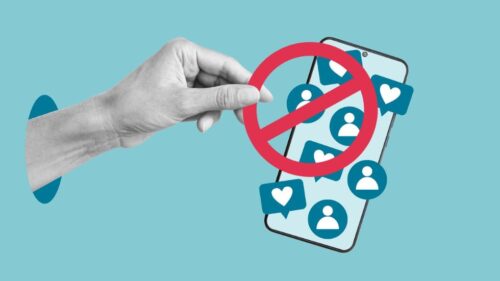
Via Shutterstock.

December 21, 2025 05:51 EDT

Check out our comment feature!
Saved Successfully.
This article saved into your bookmarks. Click here to view your bookmarks.


When governments start telling children they cannot have an Instagram account, we are watching more than a domestic policy experiment — we are witnessing the geopolitics of childhood.
In Canberra, lawmakers have leapt where others have cautiously tiptoed. Australia’s Online Safety Amendment requires major platforms such as Instagram, Snapchat, X and others to take reasonable steps to prevent under-16s from creating accounts, with penalties amounting to tens of millions of dollars. It is not a sentimental reaction. It is a blunt instrument born of alarm: policymakers point to soaring reports of self-harm content, grooming and relentless peer harassment and have decided the public interest trumps platform laissez-faire. The law will take effect in late 2025, and platforms that fail to comply will face fines of approximately $49.5 million.
Indonesia — a country where smartphone ownership and informal digital economies have spread at breakneck speed — is watching closely, and the stakes feel personal. While the Indonesian government will not impose sanctions on children or parents who fail to access their children’s access to social media, it will, however, impose sanctions on social media platforms that allow children to create accounts without parental supervision.
The United Nations International Children’s Emergency Fund’s (UNICEF) 2023 baseline study in Indonesia finds a chilling intimacy to the harms: half of the children surveyed reported seeing sexual images on social media, and nearly as many had experienced bullying online. These are not abstract statistics; they are the digital watermarks on children’s developing brains. An Indonesian adolescent mental-health survey reveals that about 35% of teenagers face mental-health challenges — a sobering reminder that online exposure adds to already fragile safety nets.
Economic implications of banning young users
So what should Jakarta do? Copy Canberra exactly, or craft something else entirely? The answer matters not just for Indonesian households, but also for international trust in how states govern the global internet. If each nation builds separate walls — biometrics here, parental-consent schemes there — the internet’s patchwork will become a mosaic of enforcement regimes that global platforms must navigate, often by moving data and decision-making offshore.
That is not a hypothetical: analysts warn that uncoordinated national measures risk fragmentation, eroding the predictability that underpins cross-border trade, diplomacy and the internet’s architecture itself.
Australia’s policy has virtues. It places responsibility on platforms rather than criminalizing children or slapping fines on parents. It forces the tech giants to reckon with the design choices that engineer engagement out of young minds. Already, tech firms have begun moving: in recent weeks, major platforms prepared for mass account deactivations, offering users a frantic set of choices — download your data, freeze your profile or lose the lot — as compliance deadlines approach. That operational reality is a reminder that law can and does change the behavior of global companies.
But there are real trade-offs. Age-verification systems can become surveillance vectors. Banning young people from mainstream platforms may simply push them into shadow networks — encrypted apps and forums where harm is harder to prevent. And in countries like Indonesia, where kidfluencer economies and informal monetization provide real incomes for vulnerable families, sweeping bans risk unintended economic harm. The policy challenge is therefore twofold: to protect children while preserving privacy, and to restrain exploitative commercialization without criminalizing livelihoods.
Pioneering a regional solution
This moment calls for diplomatic imagination as much as domestic courage. Indonesia should not reflexively import Canberra’s model or recoil from it. Instead, Jakarta could pioneer a regional solution that binds protection to privacy and harmonizes enforcement across the Association of Southeast Asian Nations (ASEAN).
Imagine a federated Age-Assurance Trust: trusted national institutions — schools, telcos and welfare agencies — would verify a young person’s age and issue cryptographic tokens for platform access. Platforms would accept the token without hoovering up identity data. Such a system would preserve privacy, reduce the incentive for invasive biometrics, and create auditable standards that neighbouring countries could endorse. It would also convert a domestic policy into a regional public good — a step away from the fragmentation Chatham House warns about and toward shared regulatory infrastructure.
Complemented by a Child Data-Fiduciary statute — which treats earnings, content and data generated by minors as subject to escrow and welfare protections — this architecture could blunt the economic fallout on families while outlawing exploitative monetization. Crucially, a robust nationwide education campaign and teacher training will support it: without literacy, bans are merely window dressing. UNICEF’s Indonesian study makes this plain — children need skills, channels to report harm and adults who can respond.
Understanding the foreign-policy dimension of digital rules
The foreign-policy dimension is unavoidable. Digital rules today are signals to partners about how a country governs risk, liberty and commerce. If Indonesia champions a rights-respecting, interoperable regional approach, it would not only protect its children — it would also help write the global playbook for how democracies govern the attention economy. If it chooses unilateral bans and creates ad hoc verification regimes, it will push others into defensive regulatory silos, raising transaction costs and undermining trust.
Policymakers sometimes speak as if childhood is a private matter, best handled at the kitchen table. But the architecture of attention is public. The platforms that sculpt young minds are global; the harms are local, but the supply chains and data flows are international. Canberra’s law has broken a taboo: governments can and increasingly will set limits on corporate attention extraction.
We are a rare nonprofit in the world news space. Most other organizations are owned by billionaires or governments. We are bottom-up, not top-down and bring you perspectives from around the world. So, sign up now for our free newsletters to hear from our 3,000+ voices from 90+ countries.
<label for=”Your email will be shared with fairobserver and subject to its Privacy Policy”>I agree to receive emails and other content from Fair Observer. I understand that I may repeal my consent at any time. You can review our Privacy Policy and Terms of Use for further information…</label>
Indonesia has an opportunity to respond not by mimicry but by innovation — to protect its young people while building mechanisms that neighboring states can join. That would be a foreign-policy move equal in gravity to any treaty: making the region where children’s rights and digital rights converge, and where the rest of the world can look and learn.
[Liam Roman edited this piece.]
The views expressed in this article are the author’s own and do not necessarily reflect Fair Observer’s editorial policy.
Comment
0 Comments
Newest
Oldest
Most Voted
Most Voted
Inline Feedbacks
View all comments
Commenting Guidelines
Please read our commenting guidelines before commenting.
1. Be Respectful: Please be polite to the author. Avoid hostility. The whole point of Fair Observer is openness to different perspectives from perspectives from around the world.
2. Comment Thoughtfully: Please be relevant and constructive. We do not allow personal attacks, disinformation or trolling. We will remove hate speech or incitement.
3. Contribute Usefully: Add something of value — a point of view, an argument, a personal experience or a relevant link if you are citing statistics and key facts.
<label style=”font-size: 18px;”>
I have read and agree to the above commenting guidelines.
</label>
Please agree to the guidelines before proceeding.
I
Agree, Proceed to Login
Cancel
Related Reading
Digital Prohibition Is Our Civilizational Addiction
The diversity of viewpoints published in Fair Observer is designed to provoke dialogue and informed discussion. AI chatbots offer the…
by
Peter Isackson,
November 24, 2025
Australia’s Idiotic Social Media Ban
Australia’s social media ban for children under 16 is set to take effect on December 10 — becoming the world’s…
by
Ellis Cashmore,
November 22, 2025
Social Media Has a Colossal, Horrific Body Count
Two opposite Senate testimonies, by Mark Zuckerberg as Chief Executive and by this author as Chief Algorithm Officer, pit administrative…
by
William Softky,
May 11, 2024
Support Fair Observer
We rely on your support for our independence, diversity and quality.
For more than 10 years, Fair Observer has been free, fair and independent. No billionaire
owns us, no advertisers control us. We are a reader-supported nonprofit. Unlike many other
publications, we keep our content free for readers regardless of where they live or whether
they can afford to pay. We have no paywalls and no ads.
In the post-truth era of fake news, echo chambers and filter bubbles, we publish a plurality
of perspectives from around the world. Anyone can publish with us, but everyone goes through
a rigorous editorial process. So, you get fact-checked, well-reasoned content instead of
noise.
We publish 3,000+ voices from 90+ countries. We also conduct education and training programs
on subjects ranging from digital media and journalism to writing and critical thinking. This
doesn’t come cheap. Servers, editors, trainers and web developers cost
money.
Please consider supporting us on a regular basis as a recurring donor or a
sustaining member.
Will you support FO’s journalism?
We rely on your support for our independence, diversity and quality.
Donation Cycle
<label for=”donation_cycle_one_time”>One Time</label>
<label for=”donation_cycle_monthly”>Monthly</label>
<label for=”donation_cycle_yearly”>Yearly</label>
Donation Amount
<label for=”amount_11″>$11</label>
<label for=”amount_111″>$111</label>
<label for=”other”>Other</label>
$
The IRS recognizes Fair Observer as a section 501(c)(3) registered public charity
(EIN: 46-4070943), enabling you to claim a tax deduction.
Make Sense of the World
Unique Insights from 3,000+ Contributors in 90+ Countries
<label
for=”Your email will be shared with fairobserver and subject to its Privacy Policy”>I
agree to receive emails and other content from Fair Observer. I understand
that I
may repeal my consent at any time. You can review our Privacy Policy
and Terms of Use
for further
information .</label>
for=”Your email will be shared with fairobserver and subject to its Privacy Policy”>I
agree to receive emails and other content from Fair Observer. I understand
that I
may repeal my consent at any time. You can review our Privacy Policy
and Terms of Use
for further
information .</label>
No owners, no ads, just global voices and first class editors. We’re a nonprofit that puts real journalism first. Join us — subscribe to our free newsletters — now.
<label for=”Your email will be shared with fairobserver and subject to its Privacy Policy”>I agree to receive emails and other content from Fair Observer. I understand that I may repeal my consent at any time. You can review our Privacy Policy and Terms of Use for further information…</label>
</main>
Fair Observer, 461 Harbor Blvd, Belmont, CA 94002, USA
<footer class=”mart70 fo-black-bg padt50 padb30″>
Sections
PUBLICATION
Support Fair Observer
We rely on your support for our independence, diversity and quality.


</footer>

<footer id=”fixed-footer” class=”support-footer”>


Support
independent, crowdsourced, nonprofit
journalism.
Fair Observer is a 501(c)(3) independent nonprofit. We are not owned by billionaires or controlled by
advertisers. We publish nearly 3,000 authors from over 90 countries after fact-checking and editing each
piece. We do not have a paywall and anyone can read us for free. With your vital donations, we can
continue
to do our work.
Please make a recurring (or even one-time) donation today. Even $1 goes a long way because
a
million donors
like you mean one million dollars. Thank you for keeping us independent, free and fair.
One Time
Monthly
Yearly
Monthly
Yearly
Continue 

</footer>

Sign into your Fair Observer Account
<label class=”tml-label” for=”user_login”>Username or Email Address</label>
<label class=”tml-label” for=”user_pass”>Password</label>
<label class=”tml-label” for=”rememberme”>Remember Me</label>
Log In
Forgot
Password
Forgot Password
Enter your registered email address or username. You will receive a
link to create a new password via email.
Please enter your username or email address. You will receive an email message with instructions on how to reset your password.
<label class=”tml-label” for=”user_login”>Username or Email Address</label>
Get New Password
Or
Return to
Login
Forgot Password
We have sent a link to your registered email address to reset your password.
<circle cx=”12.5″ cy=”12″ r=”12″ fill=”#414141″ />
Back to
Login
Become a Member & Enjoy Exclusive Benefits!
<circle cx=”12.5″ cy=”12″ r=”12″ fill=”#414141″ />
Access to comments feature
<circle cx=”12.5″ cy=”12″ r=”12″ fill=”#414141″ />
Bookmark your favorite articles
<circle cx=”12.5″ cy=”12″ r=”12″ fill=”#414141″ />
Exclusive invitations to FO° Talks & FO° Live
<circle cx=”12.5″ cy=”12″ r=”12″ fill=”#414141″ />
Access to all of our e-publications
Return to
Login
Login
NEWSLETTER
Make Sense of the World
Unique Insights from 2,500+ Contributors in 90+ Countries

<label
for=”Your email will be shared with fairobserver and subject to it’s Privacy Policy”>I
agree to receive emails and other content from Fair Observer. I understand
that I may repeal my consent at any time. You can review our Privacy Policy
and Terms of Use
for further information.</label>
for=”Your email will be shared with fairobserver and subject to it’s Privacy Policy”>I
agree to receive emails and other content from Fair Observer. I understand
that I may repeal my consent at any time. You can review our Privacy Policy
and Terms of Use
for further information.</label>
NEWSLETTER
Make Sense of the World
Unique Insights from 2,500+ Contributors in 90+ Countries
<label
for=”Your email will be shared with fairobserver and subject to it’s Privacy Policy”>I
agree to receive emails and other content from Fair Observer. I understand
that I may repeal my consent at any time. You can review our Privacy Policy
and Terms of Use
for further information.</label>
for=”Your email will be shared with fairobserver and subject to it’s Privacy Policy”>I
agree to receive emails and other content from Fair Observer. I understand
that I may repeal my consent at any time. You can review our Privacy Policy
and Terms of Use
for further information.</label>

Make Sense of the World
Unique Insights from 2,500+ Contributors in 90+ Countries
<label
for=”Your email will be shared with fairobserver and subject to its Privacy Policy”>I
agree to receive emails and other content from Fair Observer. I understand that I
may repeal my consent at any time. You can review our Privacy Policy and Terms of Use for further
information .</label>
for=”Your email will be shared with fairobserver and subject to its Privacy Policy”>I
agree to receive emails and other content from Fair Observer. I understand that I
may repeal my consent at any time. You can review our Privacy Policy and Terms of Use for further
information .</label>
We Need Your Consent
We use cookies to give you the best possible experience. Learn more about how we use cookies or edit your cookie preferences. Privacy Policy. My Options I Accept
Privacy & Cookies Policy
Close
Edit Cookie Preferences
The Fair Observer website uses digital cookies so it can collect statistics on how many visitors come to the site, what content is viewed and for how long, and the general location of the computer network of the visitor. These statistics are collected and processed using the Google Analytics service. Fair Observer uses these aggregate statistics from website visits to help improve the content of the website and to provide regular reports to our current and future donors and funding organizations. The type of digital cookie information collected during your visit and any derived data cannot be used or combined with other information to personally identify you. Fair Observer does not use personal data collected from its website for advertising purposes or to market to you.
As a convenience to you, Fair Observer provides buttons that link to popular social media sites, called social sharing buttons, to help you share Fair Observer content and your comments and opinions about it on these social media sites. These social sharing buttons are provided by and are part of these social media sites. They may collect and use personal data as described in their respective policies. Fair Observer does not receive personal data from your use of these social sharing buttons. It is not necessary that you use these buttons to read Fair Observer content or to share on social media.
Necessary
<label class=”form-check-label” for=”wt-cli-checkbox-necessary”>Necessary</label>
Always Enabled
These cookies essential for the website to function.
Social Media
<label for=”wt-cli-checkbox-social_media” class=”cli-slider” data-cli-enable=”Enabled” data-cli-disable=”Disabled”>Social Media</label>
These cookies are used to enable sharing or following of content that you find interesting on our website. These settings apply to third-party social networking and other websites.
Performance & Functionality
<label for=”wt-cli-checkbox-performance” class=”cli-slider” data-cli-enable=”Enabled” data-cli-disable=”Disabled”>Performance & Functionality</label>
These cookies are used to enhance the performance and functionality of our website. They provide statistics on how our website is used and help us improve by measuring errors. Certain functionalities on our website may become unavailable without these cookies.
Analytics
<label for=”wt-cli-checkbox-analytics” class=”cli-slider” data-cli-enable=”Enabled” data-cli-disable=”Disabled”>Analytics</label>
SAVE & ACCEPT
<textarea id=’wpd-editor-source-code’></textarea>Insert
</body>
</html>
Total Views:
Source: World Politics - fairobserver.com