<g id=”cross”>
<line class=”cls-1″ x1=”7″ x2=”25″ y1=”7″ y2=”25″ />
<line class=”cls-1″ x1=”7″ x2=”25″ y1=”25″ y2=”7″ />
</g>
The Silent Waters: Rebuilding a Nation Amid Loss, Failure and Rising Climate Threats
<circle cx=”10.5″ cy=”10.5″ r=”7.5″ />
<line x1=”21″ x2=”15.8″ y1=”21″ y2=”15.8″ />
<nav class=”fo-navigation pos-r” itemscope itemtype=”http://schema.org/Navigation”>
Login
Sections <circle cx=”10.5″ cy=”10.5″ r=”7.5″ />
<line x1=”21″ x2=”15.8″ y1=”21″ y2=”15.8″ />
Search
<circle cx=”10.5″ cy=”10.5″ r=”7.5″ />
<line x1=”21″ x2=”15.8″ y1=”21″ y2=”15.8″ />
Search


PUBLICATION
Support Fair Observer
We rely on your support for our independence, diversity and quality.
</nav>
</header>

<main id=”main” class=”site-main” role=”main”> 


Friday, December 12, 2025
<header class=”entry-header”>
The Silent Waters: Rebuilding a Nation Amid Loss, Failure and Rising Climate Threats
Recent flooding across South and Southeast Asia has claimed over a thousand lives. Sri Lanka, in particular, lost 627 people, with another 336 still missing, making this the largest disaster the country has faced since 2004. Regional cooperation offers a path toward stronger preparedness and more disciplined recovery for Sri Lanka and other nations facing rising climate threats today.
By
Friday, December 12, 2025
</header>

Via Shutterstock.

December 12, 2025 07:23 EDT

Check out our comment feature!
Saved Successfully.
This article saved into your bookmarks. Click here to view your bookmarks.


In the days after the waters withdrew, the island of Sri Lanka felt strangely suspended between breath and silence. The mud had not yet dried, the broken roads still glistened under a pale sun and the smell of loss lingered in the air like a memory that refused to fade. People moved quietly among the wreckage — not out of fear, but out of a certain understanding: nature does not explain itself, and suffering arrives without justification. What remained was the simple, stubborn will to stand again, even as the land around us seemed to exhale the last traces of its grief.
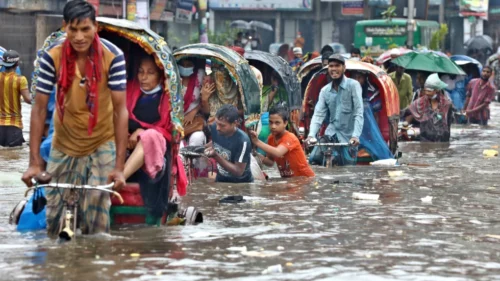
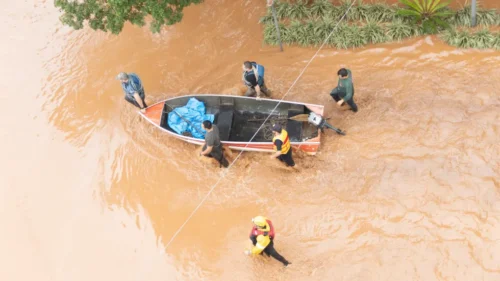
The recent flooding and landslides across South and Southeast Asia claimed at least 1,812 lives: 921 in Indonesia, 627 in Sri Lanka, more than 150 in Thailand and a few in Malaysia. With 627 dead and 336 still missing in Sri Lanka, this disaster is the largest our island has faced since the Asian Tsunami. The loss extends beyond lives to roads, bridges, farmlands, plantations, vehicles and factories — everything that anchors a society to its daily rhythm. From the central hills to the river plains, through villages and towns, and reaching the edge of Colombo, the destruction carved a path from the inside out. Unlike the tsunami that struck from the sea, this catastrophe rose from the heart of the island and spread outward, indifferent to borders or names.
The weight of past devastation
The last time I witnessed devastation of this scale was in December 2004. Nearly 36,000 lives were lost, and the entire coastline was torn apart. I spent four years among broken harbors and shattered livelihoods as part of the government administration, serving as Chair of the Ceylon Fishery Harbours Corporation (CFHC). I learned then that after disaster comes a profound silence — not only around us, but within us — a stillness in which we confront what has vanished. And yet from that silence, strength rises slowly. We rebuilt because life demands continuation.
Rebuild we did. The US Agency for International Development (USAID) was one of the largest donors, with Ambassador Robert O. Blake Jr playing a steady, crucial role. China, Japan, Greece and many smaller donors joined in, each offering a stone for the reconstruction of a wounded nation. Ten harbors and hundreds of anchorage points were completed ahead of schedule. What made this possible was not charity alone, but a synergetic relationship among institutions, governments and local communities — multiple layers of cooperation forming something larger than the sum of their parts.
Synergy, as American philosopher Buckminster Fuller once wrote, is like placing a wheel beneath a box: the parts remain the same, yet their relationship creates a new entity capable of movement. Jerome Glenn of the Millennium Project reminds us that this kind of thinking is essential when confronting forces larger than any single nation.
In 2023, we scanned South and Southeast Asia and saw climate threats rising like dark tides across the region. The article “Synergetic Thinking for the Absence of Multilateralism in South Asia”, written by Glenn, Joshua Bowes and me, warned that Pakistan’s floods — affecting over 30 million people — were a sign of what was to come.
With 750 million South Asians affected by climate disasters in the last 20 years, we argued for evacuation training, stronger infrastructure and a multilateral vision — without which the region’s poorest will always bear the highest cost. Bangladesh’s cyclone-shelter network demonstrated what clarity of purpose can achieve. A similar call for coordinated action had been emphasized in an analysis published by Fair Observer following the Myanmar earthquake, highlighting the urgent need for collective regional preparedness.
The cost of forgotten preparedness
Sri Lanka once understood the value of preparedness. On November 11, 2019, the Cabinet approved the National Defence Policy (NDP). Alongside it stood another document — the National Security Policy (NSP) — developed over four years with contributions from armed forces officials, along with myself. Only one policy saw the light of day, while the NSP remained shelved.
That document spoke with clarity about the very disaster we face today. It stated plainly: “Special emphasis has to be given in respect of mitigating natural and manmade disasters, since Sri Lanka is more vulnerable to floods and droughts more often, and it drastically affects the economy of the country.” It outlined structural reforms, resource-based capacities and long-term strategies for resilience.
In moments like this, when the island is wounded again, we are reminded that forgotten policies have consequences. Citizens should request these documents, update them and ensure they are enacted. A nation cannot rebuild if it ignores the very foundations it once intended to strengthen. It is the right time to prepare for the next.
During the 2004 recovery, Sri Lanka built layers of synergy. Government administrations coordinated, local champions were empowered and international donors worked through structured channels. A hybrid network emerged, guided by leaders who understood the weight of urgency.
Ernst & Young, during its external audit of the Fisheries Harbours Corporation, recognized this model as an innovative and transparent mechanism of public participation. There were several large-scale corruption cases highlighted by the auditor general, as in any national effort of such scale, but they did not derail the broader system. What mattered was the discipline of institutions. Without such discipline, recovery falters — just as nearly $2 billion disappeared in the Philippines under the guise of flood-control projects.
The need for disciplined recovery today
Disaster recovery requires a senior advisory body of experienced administrators, divisional secretaries and foreign service officers who know how to stand between chaos and order. It is not a stage on which the wealthy or business conglomerates parade their goodwill, but a system where institutions, public servants, opposition parties and local networks align in a single synergetic relationship. That is the wheel beneath the box.
And yet today’s world is not the world of 2004. Then, social media was a distant echo. Now, truth and falsehood move side by side, indistinguishable in their speed. Confusion spreads faster than the waters that destroyed our homes. Some voices may twist this tragedy for political gain. Such impulses are familiar everywhere, but a nation emerging from the 2022 economic collapse cannot afford new fractures.
No owners, no ads, just global voices and first class editors. We’re a nonprofit that puts real journalism first. Join us — subscribe to our free newsletters — now.
<label for=”Your email will be shared with fairobserver and subject to its Privacy Policy”>I agree to receive emails and other content from Fair Observer. I understand that I may repeal my consent at any time. You can review our Privacy Policy and Terms of Use for further information…</label>
This is not the hour for chaos. It is the hour for clarity, for solidarity and for the simple truth that we rise only when we rise together. The waters have receded, but the silence remains. In that silence lies our choice: division or reconstruction. Let us choose to rebuild — patiently, honestly and together.
[Kaitlyn Diana edited this piece.]
The views expressed in this article are the author’s own and do not necessarily reflect Fair Observer’s editorial policy.
Comment
0 Comments
Newest
Oldest
Most Voted
Most Voted
Inline Feedbacks
View all comments
Commenting Guidelines
Please read our commenting guidelines before commenting.
1. Be Respectful: Please be polite to the author. Avoid hostility. The whole point of Fair Observer is openness to different perspectives from perspectives from around the world.
2. Comment Thoughtfully: Please be relevant and constructive. We do not allow personal attacks, disinformation or trolling. We will remove hate speech or incitement.
3. Contribute Usefully: Add something of value — a point of view, an argument, a personal experience or a relevant link if you are citing statistics and key facts.
<label style=”font-size: 18px;”>
I have read and agree to the above commenting guidelines.
</label>
Please agree to the guidelines before proceeding.
I
Agree, Proceed to Login
Cancel
Related Reading
Climate Change: An Existential Threat to Developing Nations
Since the period of industrialization, the climate has changed at an accelerated rate. Developing countries, relying heavily on natural resources,…
by
Abubakar Iqbal Sheikh,
November 29, 2025
Bangladesh Holds the World Accountable to Secure Climate Justice
Low-lying and hot Bangladesh is heavily affected by climate change. The nation thus advocates for climate justice and action. However,…
by
Sadia Korobi,
August 27, 2024
Great Compassion Shines in Brazil Following Its Horrific Floods
Faced with its largest catastrophe, Brazil is uniting thousands of volunteers to help the devastated southern state of Rio Grande…
by
Luiz Cesar Pimentel,
June 19, 2024
Support Fair Observer
We rely on your support for our independence, diversity and quality.
For more than 10 years, Fair Observer has been free, fair and independent. No billionaire
owns us, no advertisers control us. We are a reader-supported nonprofit. Unlike many other
publications, we keep our content free for readers regardless of where they live or whether
they can afford to pay. We have no paywalls and no ads.
In the post-truth era of fake news, echo chambers and filter bubbles, we publish a plurality
of perspectives from around the world. Anyone can publish with us, but everyone goes through
a rigorous editorial process. So, you get fact-checked, well-reasoned content instead of
noise.
We publish 3,000+ voices from 90+ countries. We also conduct education and training programs
on subjects ranging from digital media and journalism to writing and critical thinking. This
doesn’t come cheap. Servers, editors, trainers and web developers cost
money.
Please consider supporting us on a regular basis as a recurring donor or a
sustaining member.
Will you support FO’s journalism?
We rely on your support for our independence, diversity and quality.
Donation Cycle
<label for=”donation_cycle_one_time”>One Time</label>
<label for=”donation_cycle_monthly”>Monthly</label>
<label for=”donation_cycle_yearly”>Yearly</label>
Donation Amount
<label for=”amount_11″>$11</label>
<label for=”amount_111″>$111</label>
<label for=”other”>Other</label>
$
The IRS recognizes Fair Observer as a section 501(c)(3) registered public charity
(EIN: 46-4070943), enabling you to claim a tax deduction.
Make Sense of the World
Unique Insights from 3,000+ Contributors in 90+ Countries
<label
for=”Your email will be shared with fairobserver and subject to its Privacy Policy”>I
agree to receive emails and other content from Fair Observer. I understand
that I
may repeal my consent at any time. You can review our Privacy Policy
and Terms of Use
for further
information .</label>
for=”Your email will be shared with fairobserver and subject to its Privacy Policy”>I
agree to receive emails and other content from Fair Observer. I understand
that I
may repeal my consent at any time. You can review our Privacy Policy
and Terms of Use
for further
information .</label>
We are a rare nonprofit in the world news space. Most other organizations are owned by billionaires or governments. We are bottom-up, not top-down and bring you perspectives from around the world. So, sign up now for our free newsletters to hear from our 3,000+ voices from 90+ countries.
<label for=”Your email will be shared with fairobserver and subject to its Privacy Policy”>I agree to receive emails and other content from Fair Observer. I understand that I may repeal my consent at any time. You can review our Privacy Policy and Terms of Use for further information…</label>
</main>
Fair Observer, 461 Harbor Blvd, Belmont, CA 94002, USA
<footer class=”mart70 fo-black-bg padt50 padb30″>
Sections
PUBLICATION
Support Fair Observer
We rely on your support for our independence, diversity and quality.


</footer>

<footer id=”fixed-footer” class=”support-footer”>


Support
independent, crowdsourced, nonprofit
journalism.
Fair Observer is a 501(c)(3) independent nonprofit. We are not owned by billionaires or controlled by
advertisers. We publish nearly 3,000 authors from over 90 countries after fact-checking and editing each
piece. We do not have a paywall and anyone can read us for free. With your vital donations, we can
continue
to do our work.
Please make a recurring (or even one-time) donation today. Even $1 goes a long way because
a
million donors
like you mean one million dollars. Thank you for keeping us independent, free and fair.
One Time
Monthly
Yearly
Monthly
Yearly
Continue 

</footer>

Sign into your Fair Observer Account
<label class=”tml-label” for=”user_login”>Username or Email Address</label>
<label class=”tml-label” for=”user_pass”>Password</label>
<label class=”tml-label” for=”rememberme”>Remember Me</label>
Log In
Forgot
Password
Forgot Password
Enter your registered email address or username. You will receive a
link to create a new password via email.
Please enter your username or email address. You will receive an email message with instructions on how to reset your password.
<label class=”tml-label” for=”user_login”>Username or Email Address</label>
Get New Password
Or
Return to
Login
Forgot Password
We have sent a link to your registered email address to reset your password.
<circle cx=”12.5″ cy=”12″ r=”12″ fill=”#414141″ />
Back to
Login
Become a Member & Enjoy Exclusive Benefits!
<circle cx=”12.5″ cy=”12″ r=”12″ fill=”#414141″ />
Access to comments feature
<circle cx=”12.5″ cy=”12″ r=”12″ fill=”#414141″ />
Bookmark your favorite articles
<circle cx=”12.5″ cy=”12″ r=”12″ fill=”#414141″ />
Exclusive invitations to FO° Talks & FO° Live
<circle cx=”12.5″ cy=”12″ r=”12″ fill=”#414141″ />
Access to all of our e-publications
Return to
Login
Login
NEWSLETTER
Make Sense of the World
Unique Insights from 2,500+ Contributors in 90+ Countries

<label
for=”Your email will be shared with fairobserver and subject to it’s Privacy Policy”>I
agree to receive emails and other content from Fair Observer. I understand
that I may repeal my consent at any time. You can review our Privacy Policy
and Terms of Use
for further information.</label>
for=”Your email will be shared with fairobserver and subject to it’s Privacy Policy”>I
agree to receive emails and other content from Fair Observer. I understand
that I may repeal my consent at any time. You can review our Privacy Policy
and Terms of Use
for further information.</label>
NEWSLETTER
Make Sense of the World
Unique Insights from 2,500+ Contributors in 90+ Countries
<label
for=”Your email will be shared with fairobserver and subject to it’s Privacy Policy”>I
agree to receive emails and other content from Fair Observer. I understand
that I may repeal my consent at any time. You can review our Privacy Policy
and Terms of Use
for further information.</label>
for=”Your email will be shared with fairobserver and subject to it’s Privacy Policy”>I
agree to receive emails and other content from Fair Observer. I understand
that I may repeal my consent at any time. You can review our Privacy Policy
and Terms of Use
for further information.</label>

Make Sense of the World
Unique Insights from 2,500+ Contributors in 90+ Countries
<label
for=”Your email will be shared with fairobserver and subject to its Privacy Policy”>I
agree to receive emails and other content from Fair Observer. I understand that I
may repeal my consent at any time. You can review our Privacy Policy and Terms of Use for further
information .</label>
for=”Your email will be shared with fairobserver and subject to its Privacy Policy”>I
agree to receive emails and other content from Fair Observer. I understand that I
may repeal my consent at any time. You can review our Privacy Policy and Terms of Use for further
information .</label>
We Need Your Consent
We use cookies to give you the best possible experience. Learn more about how we use cookies or edit your cookie preferences. Privacy Policy. My Options I Accept
Privacy & Cookies Policy
Close
Edit Cookie Preferences
The Fair Observer website uses digital cookies so it can collect statistics on how many visitors come to the site, what content is viewed and for how long, and the general location of the computer network of the visitor. These statistics are collected and processed using the Google Analytics service. Fair Observer uses these aggregate statistics from website visits to help improve the content of the website and to provide regular reports to our current and future donors and funding organizations. The type of digital cookie information collected during your visit and any derived data cannot be used or combined with other information to personally identify you. Fair Observer does not use personal data collected from its website for advertising purposes or to market to you.
As a convenience to you, Fair Observer provides buttons that link to popular social media sites, called social sharing buttons, to help you share Fair Observer content and your comments and opinions about it on these social media sites. These social sharing buttons are provided by and are part of these social media sites. They may collect and use personal data as described in their respective policies. Fair Observer does not receive personal data from your use of these social sharing buttons. It is not necessary that you use these buttons to read Fair Observer content or to share on social media.
Necessary
<label class=”form-check-label” for=”wt-cli-checkbox-necessary”>Necessary</label>
Always Enabled
These cookies essential for the website to function.
Social Media
<label for=”wt-cli-checkbox-social_media” class=”cli-slider” data-cli-enable=”Enabled” data-cli-disable=”Disabled”>Social Media</label>
These cookies are used to enable sharing or following of content that you find interesting on our website. These settings apply to third-party social networking and other websites.
Performance & Functionality
<label for=”wt-cli-checkbox-performance” class=”cli-slider” data-cli-enable=”Enabled” data-cli-disable=”Disabled”>Performance & Functionality</label>
These cookies are used to enhance the performance and functionality of our website. They provide statistics on how our website is used and help us improve by measuring errors. Certain functionalities on our website may become unavailable without these cookies.
Analytics
<label for=”wt-cli-checkbox-analytics” class=”cli-slider” data-cli-enable=”Enabled” data-cli-disable=”Disabled”>Analytics</label>
SAVE & ACCEPT
<textarea id=’wpd-editor-source-code’></textarea>Insert
</body>
</html>
Total Views:
Source: World Politics - fairobserver.com