<g id=”cross”>
<line class=”cls-1″ x1=”7″ x2=”25″ y1=”7″ y2=”25″ />
<line class=”cls-1″ x1=”7″ x2=”25″ y1=”25″ y2=”7″ />
</g>
The Sudan War: Why It Cannot Be Resolved
<circle cx=”10.5″ cy=”10.5″ r=”7.5″ />
<line x1=”21″ x2=”15.8″ y1=”21″ y2=”15.8″ />
<nav class=”fo-navigation pos-r” itemscope itemtype=”http://schema.org/Navigation”>
Login
Sections <circle cx=”10.5″ cy=”10.5″ r=”7.5″ />
<line x1=”21″ x2=”15.8″ y1=”21″ y2=”15.8″ />
Search
<circle cx=”10.5″ cy=”10.5″ r=”7.5″ />
<line x1=”21″ x2=”15.8″ y1=”21″ y2=”15.8″ />
Search


PUBLICATION
Support Fair Observer
We rely on your support for our independence, diversity and quality.
</nav>
</header>

<main id=”main” class=”site-main” role=”main”> 



Tuesday, November 11, 2025
<header class=”entry-header”>
The Sudan War: Why It Cannot Be Resolved
The Sudanese Armed Forces (SAF) and the Rapid Support Forces (RSF) are fighting for power amid deep ethnic and regional divisions. Foreign powers fuel the war through weapons, funding and strategic alliances. Western dependence on the United Arab Emirates (UAE) ensures that outside pressure will not end the conflict, leaving Sudan trapped in a prolonged humanitarian disaster.
By
Tuesday, November 11, 2025
</header>
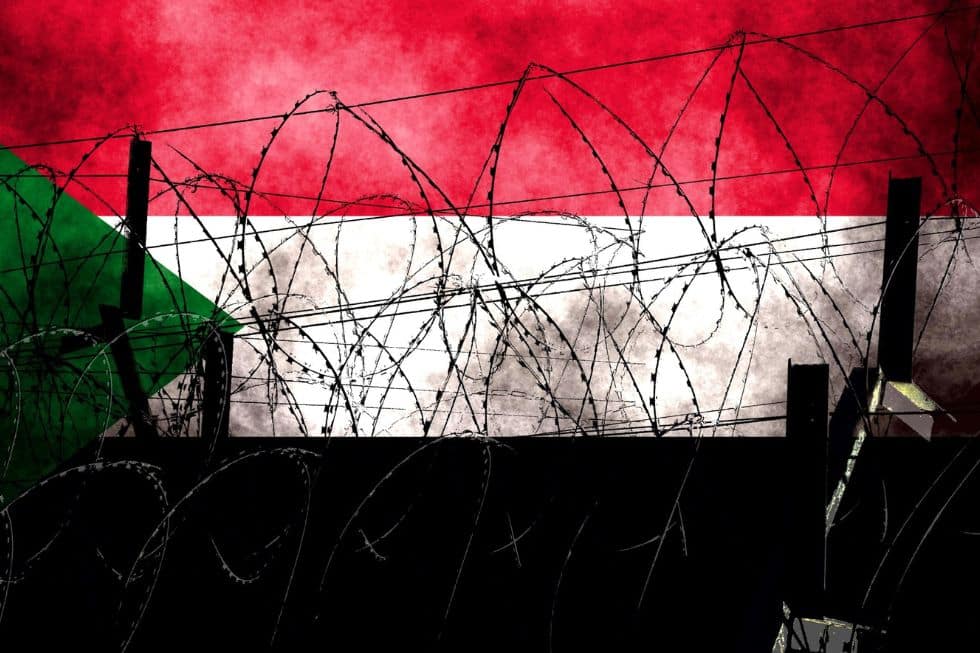
Via Shutterstock.

November 11, 2025 06:44 EDT

Check out our comment feature!
Saved Successfully.
This article saved into your bookmarks. Click here to view your bookmarks.


The war in Sudan, which pits the Sudanese Armed Forces (SAF), led by General Abel Fattah al-Burhan, against the Rapid Support Forces (RSF), led by General Muhammad Hamdan Dagalo — best known as Hemedti — shows no signs of ending.
This, despite intense international efforts to halt the fighting.
The “Quad,” which has been trying to resolve the Sudan crisis, consists of the United States, Egypt, Saudi Arabia and the United Arab Emirates (UAE). This coalition proposed a roadmap in September 2025 aimed at ending the conflict in Sudan through a three-month humanitarian truce, followed by a permanent ceasefire and then a nine-month transitional process to establish civilian-led governance. The Quad’s plan calls for an immediate ceasefire, a humanitarian truce to allow aid delivery and an inclusive political process.
There is little sign of progress.
Why the war can’t be halted — level one
The war, which erupted on April 15, 2023, has pushed millions to the brink of survival, according to the UN: “Over 30 million people now need urgent humanitarian assistance, among them 9.6 million displaced from their homes and nearly 15 million children caught in a struggle for daily survival.”
It has left most of western Sudan, bordering on Chad, Libya and the Central African Republic in the hands of Hemedti and the RSF. The center and much of the east is held by the SAF and al-Burhan.
In one sense, this reflects long-standing tensions: between the people living along the Nile, who generally look northwards to Egypt, and the people of the periphery, whom the Sudanese elite has traditionally marginalized.
Why the war can’t be halted – level two
If the war is horrific, it has also drawn in too many actors to allow a resolution. The SAF — and al-Burhan — rely on Egypt, Iran, Turkey and Saudi Arabia.
Egypt is a significant ally of the SAF, recognizing the Sudanese army’s leadership as the legitimate government, and is reported to have provided training for SAF pilots and supplied drones, although Egypt officially denies some of these claims.
Iran has supplied drones to the SAF and seeks to use Sudan as a strategic logistical base related to its interests in the Red Sea region. Turkey has also supported the SAF with drones and various warheads, aiming to maintain influence and secure access to the Red Sea. Saudi Arabia leans toward supporting the SAF, given its interest in the region’s stability.
Hemedti and the RSF are backed by the warlord in eastern Libya, General Khalifa Haftar. The area Haftar controls allows the UAE to fly vast quantities of aid — military and humanitarian — to Hemedti. The UAE is his most important backer. “The RSF is but one of the nodes in a network of non-state actors the UAE has curated over the past decade,” wrote Associate Professor and Strategic Risk Consultant Andreas Krige.
Middle East Eye published a detailed article outlining how the UAE flies in supplies via Puntland in Somalia, but other routes, including Uganda, have been used. In return, Hemedti pays the UAE from the gold he extracts from mines he controls along the border.
These gold mines have provided the RSF with a steady source of revenue, allowing it to buy weapons, pay fighters and sustain its military operations, thereby prolonging the war. Once a camel trader, Hemedti has become immensely rich. In the past, the Russians supported the RSF via the Wagner Group, but this appears to have fallen away.
There is also a racial element that underlies the RSF: African ethnic groups in the Darfur area are regarded by the Barggara, of whom Hemedti is one, as “enslaveable”.
The Baggara Arabs traditionally regarded certain African tribes in Darfur and surrounding regions as “enslavable,” particularly those groups who were non-Arab and often of darker skin and different cultural backgrounds. Key tribes that were targeted for enslavement by the Baggara included various Nilotic and other indigenous African groups in the region.
This included groups such as the Fur (though also rulers of Darfur), Zaghawa and especially the Fur’s southern neighbors and more peripheral groups in Dar Fertit, who were often labeled as “Fertit” or people from the forest zone, seen as more vulnerable to enslavement.
The Baggara, as nomadic Arab cattle herders, traditionally practiced slave raids primarily targeting African farming and village communities, whom they viewed as inferior and socially subordinate. These slave raids were a longstanding practice connected to the economic system and social hierarchy of the region, reinforced over centuries by warfare, raiding and trade.
Thus, the “enslavable” groups were primarily African ethnic groups living in Darfur’s southern and peripheral zones, typically those who were non-Arab and who had less political power or military strength, making them vulnerable to capture and enslavement by the Baggara.
In this, the Baggara are little different from the Fulani, who are spread across much of the Sahel, and who founded the Sokoto Caliphate in Niger and Nigeria, which had at least two million slaves when it was finally destroyed by Britain in 1903.
There is strong evidence that the RSF has taken out and butchered men and women purely because of their race.
Why the war can’t be halted — level three
If the West really wanted to end the war, it could. But many nations are too engaged with the UAE to take on the powerful families who control the emirates.
The UAE’s western allies, particularly the United States and the UK, have made several significant commitments and promises to the UAE centered around security, economic partnership and technological cooperation:
— The UAE is a close and capable military partner for the United States in the Arab world. This includes deployments alongside US forces in coalition counterterrorism, stabilization and peacekeeping missions, provision of logistical support for US troops, aircraft and naval vessels, and hosting joint training exercises.
— The UAE hosts the Joint Air Warfare Center and contributes to combating extremist groups like Al Qaeda and Al-Qaeda in the Arabian Peninsula (AQAP), as well as supporting a peaceful transition in Yemen and fighting terrorist finance networks.
— The US-UAE defense cooperation agreement, renewed for 15 years, includes the stationing of thousands of American soldiers and massive arms contracts to enhance the UAE’s military capabilities.
— France also remains a significant military ally with a base in Abu Dhabi and arms supply relationships.
— The UAE-US bilateral trade is robust, exceeding $34.4 billion in 2024, supporting over 161,000 US jobs in sectors like aviation, healthcare and infrastructure.
— The UAE remains committed to the Abraham Accords, promoting peace and cooperation in the Middle East, while condemning terrorism and extremism. It has taken a firm stance supporting peace initiatives in the region, including calls for a ceasefire and humanitarian aid in Gaza.
Britain and the UAE also have long-standing security and defense collaborations. Since the signing of a Defence Cooperation Accord in 1996, their armed forces have worked closely to ensure stability in the Arabian Gulf region. The UK provides military training, defense technology and intelligence-sharing, which bolster the UAE’s security capabilities.
In summary, Western allies have promised strategic military support, deepened economic ties, advanced technological cooperation and sustained diplomatic backing aimed at regional stability and prosperity with the UAE as a central partner.
No owners, no ads, just global voices and first class editors. We’re a nonprofit that puts real journalism first. Join us — subscribe to our free newsletters — now.
<label for=”Your email will be shared with fairobserver and subject to its Privacy Policy”>I agree to receive emails and other content from Fair Observer. I understand that I may repeal my consent at any time. You can review our Privacy Policy and Terms of Use for further information…</label>
Putting these ties at risk to pressure the UAE into ending its support for the RSF appears implausible. For all of these reasons, it is difficult to see the war in Sudan ending: too many forces are involved and too many futures are at stake.
[Martin Plaut first published this piece on WordPress.]
[Kaitlyn Diana edited this piece.]
The views expressed in this article are the author’s own and do not necessarily reflect Fair Observer’s editorial policy.
Comment
0 Comments
Newest
Oldest
Most Voted
Most Voted
Inline Feedbacks
View all comments
Commenting Guidelines
Please read our commenting guidelines before commenting.
1. Be Respectful: Please be polite to the author. Avoid hostility. The whole point of Fair Observer is openness to different perspectives from perspectives from around the world.
2. Comment Thoughtfully: Please be relevant and constructive. We do not allow personal attacks, disinformation or trolling. We will remove hate speech or incitement.
3. Contribute Usefully: Add something of value — a point of view, an argument, a personal experience or a relevant link if you are citing statistics and key facts.
<label style=”font-size: 18px;”>
I have read and agree to the above commenting guidelines.
</label>
Please agree to the guidelines before proceeding.
I
Agree, Proceed to Login
Cancel
Related Reading
The Cost of Silence: Why Global Inaction Is Betraying the People of Sudan
After three years of civil war in Sudan between the Sudanese Armed Forces and the Rapid Support Forces military groups,…
by
Fernando Carvajal,
July 28, 2025
The World Must Act Now to End Sudan’s Devastating Conflict
War in Sudan is raging between two rival factions: the Sudanese Armed Forces and the Rapid Support Forces. The conflict…
by
Cristian Gherasim,
April 20, 2025
FO° Talks: Sudan, a Regional Intractable Conflict
Sudan’s military leaders, General Abdel Fattah al-Burhan and General Mohamed Hamdan Dagalo, have turned against each other in a fight…
by
Dr. Giorgio Musso & Roberta Artemisia Campani,
February 28, 2025
Support Fair Observer
We rely on your support for our independence, diversity and quality.
For more than 10 years, Fair Observer has been free, fair and independent. No billionaire
owns us, no advertisers control us. We are a reader-supported nonprofit. Unlike many other
publications, we keep our content free for readers regardless of where they live or whether
they can afford to pay. We have no paywalls and no ads.
In the post-truth era of fake news, echo chambers and filter bubbles, we publish a plurality
of perspectives from around the world. Anyone can publish with us, but everyone goes through
a rigorous editorial process. So, you get fact-checked, well-reasoned content instead of
noise.
We publish 3,000+ voices from 90+ countries. We also conduct education and training programs
on subjects ranging from digital media and journalism to writing and critical thinking. This
doesn’t come cheap. Servers, editors, trainers and web developers cost
money.
Please consider supporting us on a regular basis as a recurring donor or a
sustaining member.
Will you support FO’s journalism?
We rely on your support for our independence, diversity and quality.
Donation Cycle
<label for=”donation_cycle_one_time”>One Time</label>
<label for=”donation_cycle_monthly”>Monthly</label>
<label for=”donation_cycle_yearly”>Yearly</label>
Donation Amount
<label for=”amount_11″>$11</label>
<label for=”amount_111″>$111</label>
<label for=”other”>Other</label>
$
The IRS recognizes Fair Observer as a section 501(c)(3) registered public charity
(EIN: 46-4070943), enabling you to claim a tax deduction.
Most Popular
The Middle East 2025: The Good, the Bad and the Tragically Ugly
In the last hundred years, the Middle East has been persistently unstable, shaped by shifting power dynamics and external interference….
by
Gary Grappo,
May 3, 2025
Make Sense of the World
Unique Insights from 3,000+ Contributors in 90+ Countries
<label
for=”Your email will be shared with fairobserver and subject to its Privacy Policy”>I
agree to receive emails and other content from Fair Observer. I understand
that I
may repeal my consent at any time. You can review our Privacy Policy
and Terms of Use
for further
information .</label>
for=”Your email will be shared with fairobserver and subject to its Privacy Policy”>I
agree to receive emails and other content from Fair Observer. I understand
that I
may repeal my consent at any time. You can review our Privacy Policy
and Terms of Use
for further
information .</label>
You can read the CIA Factbook and listen to MI6 people for your analysis, or you could read perspectives from our 3,000+ authors from 90+ countries and make sense of the world. Sign up for our free newsletters now.
<label for=”Your email will be shared with fairobserver and subject to its Privacy Policy”>I agree to receive emails and other content from Fair Observer. I understand that I may repeal my consent at any time. You can review our Privacy Policy and Terms of Use for further information…</label>
</main>
Fair Observer, 461 Harbor Blvd, Belmont, CA 94002, USA
<footer class=”mart70 fo-black-bg padt50 padb30″>
Sections
PUBLICATION
Support Fair Observer
We rely on your support for our independence, diversity and quality.


</footer>

<footer id=”fixed-footer” class=”support-footer”>


Support
independent, crowdsourced, nonprofit
journalism.
Fair Observer is a 501(c)(3) independent nonprofit. We are not owned by billionaires or controlled by
advertisers. We publish nearly 3,000 authors from over 90 countries after fact-checking and editing each
piece. We do not have a paywall and anyone can read us for free. With your vital donations, we can
continue
to do our work.
Please make a recurring (or even one-time) donation today. Even $1 goes a long way because
a
million donors
like you mean one million dollars. Thank you for keeping us independent, free and fair.
One Time
Monthly
Yearly
Monthly
Yearly
Continue 

</footer>

Sign into your Fair Observer Account
<label class=”tml-label” for=”user_login”>Username or Email Address</label>
<label class=”tml-label” for=”user_pass”>Password</label>
<label class=”tml-label” for=”rememberme”>Remember Me</label>
Log In
Forgot
Password
Forgot Password
Enter your registered email address or username. You will receive a
link to create a new password via email.
Please enter your username or email address. You will receive an email message with instructions on how to reset your password.
<label class=”tml-label” for=”user_login”>Username or Email Address</label>
Get New Password
Or
Return to
Login
Forgot Password
We have sent a link to your registered email address to reset your password.
<circle cx=”12.5″ cy=”12″ r=”12″ fill=”#414141″ />
Back to
Login
Become a Member & Enjoy Exclusive Benefits!
<circle cx=”12.5″ cy=”12″ r=”12″ fill=”#414141″ />
Access to comments feature
<circle cx=”12.5″ cy=”12″ r=”12″ fill=”#414141″ />
Bookmark your favorite articles
<circle cx=”12.5″ cy=”12″ r=”12″ fill=”#414141″ />
Exclusive invitations to FO° Talks & FO° Live
<circle cx=”12.5″ cy=”12″ r=”12″ fill=”#414141″ />
Access to all of our e-publications
Return to
Login
Login
NEWSLETTER
Make Sense of the World
Unique Insights from 2,500+ Contributors in 90+ Countries

<label
for=”Your email will be shared with fairobserver and subject to it’s Privacy Policy”>I
agree to receive emails and other content from Fair Observer. I understand
that I may repeal my consent at any time. You can review our Privacy Policy
and Terms of Use
for further information.</label>
for=”Your email will be shared with fairobserver and subject to it’s Privacy Policy”>I
agree to receive emails and other content from Fair Observer. I understand
that I may repeal my consent at any time. You can review our Privacy Policy
and Terms of Use
for further information.</label>
NEWSLETTER
Make Sense of the World
Unique Insights from 2,500+ Contributors in 90+ Countries
<label
for=”Your email will be shared with fairobserver and subject to it’s Privacy Policy”>I
agree to receive emails and other content from Fair Observer. I understand
that I may repeal my consent at any time. You can review our Privacy Policy
and Terms of Use
for further information.</label>
for=”Your email will be shared with fairobserver and subject to it’s Privacy Policy”>I
agree to receive emails and other content from Fair Observer. I understand
that I may repeal my consent at any time. You can review our Privacy Policy
and Terms of Use
for further information.</label>

Make Sense of the World
Unique Insights from 2,500+ Contributors in 90+ Countries
<label
for=”Your email will be shared with fairobserver and subject to its Privacy Policy”>I
agree to receive emails and other content from Fair Observer. I understand that I
may repeal my consent at any time. You can review our Privacy Policy and Terms of Use for further
information .</label>
for=”Your email will be shared with fairobserver and subject to its Privacy Policy”>I
agree to receive emails and other content from Fair Observer. I understand that I
may repeal my consent at any time. You can review our Privacy Policy and Terms of Use for further
information .</label>
We Need Your Consent
We use cookies to give you the best possible experience. Learn more about how we use cookies or edit your cookie preferences. Privacy Policy. My Options I Accept
Privacy & Cookies Policy
Close
Edit Cookie Preferences
The Fair Observer website uses digital cookies so it can collect statistics on how many visitors come to the site, what content is viewed and for how long, and the general location of the computer network of the visitor. These statistics are collected and processed using the Google Analytics service. Fair Observer uses these aggregate statistics from website visits to help improve the content of the website and to provide regular reports to our current and future donors and funding organizations. The type of digital cookie information collected during your visit and any derived data cannot be used or combined with other information to personally identify you. Fair Observer does not use personal data collected from its website for advertising purposes or to market to you.
As a convenience to you, Fair Observer provides buttons that link to popular social media sites, called social sharing buttons, to help you share Fair Observer content and your comments and opinions about it on these social media sites. These social sharing buttons are provided by and are part of these social media sites. They may collect and use personal data as described in their respective policies. Fair Observer does not receive personal data from your use of these social sharing buttons. It is not necessary that you use these buttons to read Fair Observer content or to share on social media.
Necessary
<label class=”form-check-label” for=”wt-cli-checkbox-necessary”>Necessary</label>
Always Enabled
These cookies essential for the website to function.
Social Media
<label for=”wt-cli-checkbox-social_media” class=”cli-slider” data-cli-enable=”Enabled” data-cli-disable=”Disabled”>Social Media</label>
These cookies are used to enable sharing or following of content that you find interesting on our website. These settings apply to third-party social networking and other websites.
Performance & Functionality
<label for=”wt-cli-checkbox-performance” class=”cli-slider” data-cli-enable=”Enabled” data-cli-disable=”Disabled”>Performance & Functionality</label>
These cookies are used to enhance the performance and functionality of our website. They provide statistics on how our website is used and help us improve by measuring errors. Certain functionalities on our website may become unavailable without these cookies.
Analytics
<label for=”wt-cli-checkbox-analytics” class=”cli-slider” data-cli-enable=”Enabled” data-cli-disable=”Disabled”>Analytics</label>
SAVE & ACCEPT
<textarea id=’wpd-editor-source-code’></textarea>Insert
</body>
</html>
Total Views:
Source: World Politics - fairobserver.com