<g id=”cross”>
<line class=”cls-1″ x1=”7″ x2=”25″ y1=”7″ y2=”25″ />
<line class=”cls-1″ x1=”7″ x2=”25″ y1=”25″ y2=”7″ />
</g>
Why Putin Is Not a Conservative: The Destruction of Integrity
<circle cx=”10.5″ cy=”10.5″ r=”7.5″ />
<line x1=”21″ x2=”15.8″ y1=”21″ y2=”15.8″ />
<nav class=”fo-navigation pos-r” itemscope itemtype=”http://schema.org/Navigation”>
Login
Sections <circle cx=”10.5″ cy=”10.5″ r=”7.5″ />
<line x1=”21″ x2=”15.8″ y1=”21″ y2=”15.8″ />
Search
<circle cx=”10.5″ cy=”10.5″ r=”7.5″ />
<line x1=”21″ x2=”15.8″ y1=”21″ y2=”15.8″ />
Search


PUBLICATION
Support Fair Observer
We rely on your support for our independence, diversity and quality.
</nav>
</header>

<main id=”main” class=”site-main” role=”main”> 



Reply to
Reply to

Sunday, November 23, 2025
<header class=”entry-header”>
Why Putin Is Not a Conservative: The Destruction of Integrity
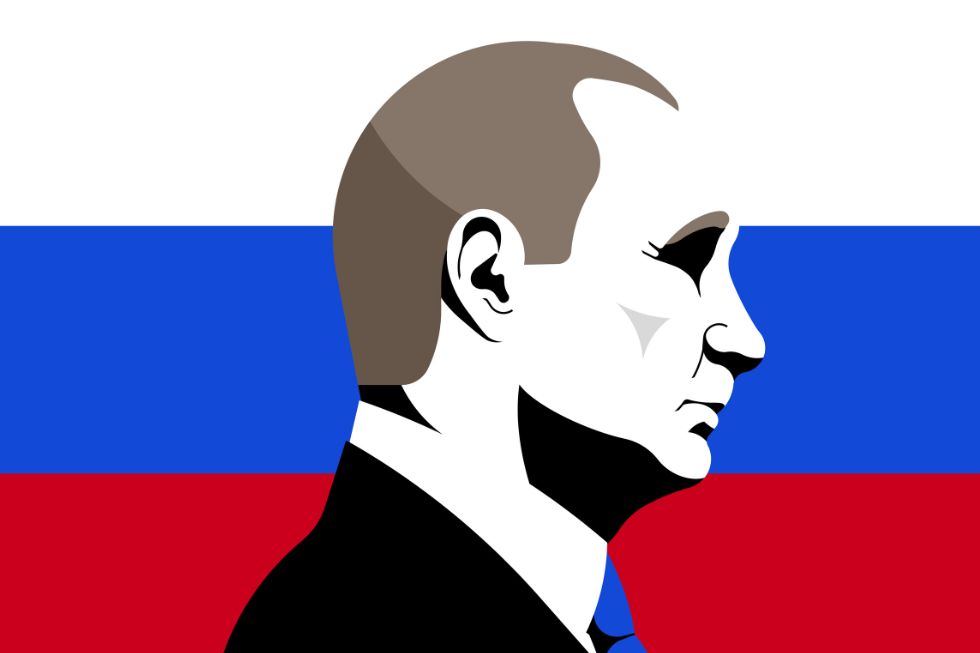
Since first obtaining Russia’s highest office to start the new millennium, President Vladimir Putin has evolved in many ways, excluding his political sensibilities. Promoting a philosophy of economic reconstruction and government authority, Putin has always been more liberal than conservative, especially considering the right-wing definitions of scholar Roger Scruton that outline this argument.
By
Sunday, November 23, 2025
</header>
Via Shutterstock.

November 23, 2025 05:48 EDT

Check out our comment feature!
Saved Successfully.
This article saved into your bookmarks. Click here to view your bookmarks.


We have often heard Western right-wing politicians describe Russian President Vladimir Putin’s regime as “conservative.” They justify this by pointing to his proclaimed defense of traditional family values and his resistance to left-wing lesbian, gay, bisexual and transgender (LGBT) protests in Russia.
Yet, does Putin’s conservatism truly rest on any genuine philosophical foundation — the kind laid down and developed by serious political thinkers such as Sir Roger Scruton, the English philosopher and one of the leading theorists of modern conservatism? To examine whether Putin’s so-called conservatism is authentic, I will turn to one of Scruton’s most renowned works, How to Be a Conservative.
Biography and conservatism
One day in May 1968, Cambridge postgraduate Roger Scruton was staying in Paris when he looked out the window of his apartment and saw police dispersing a student demonstration. Watching as “spoiled members of the middle class” set fire to “cars earned by honest labor” and smashed shop windows in the name of the “proletariat,” he decided to become a conservative.
Against this backdrop, Scruton formed his conservatism as a defense of law and order — seeking to preserve rather than to overthrow — in contrast to the revolutionary suppression of authority. Thus, in his view, had those young activists of 1968 supported the positive laws of the state created for the public good, rather than dubious and supposedly “natural” human rights, society would have flourished over time.
However, Scruton’s ideas soon faced new trials after Margaret Thatcher became Prime Minister of the United Kingdom. Conservatism in Britain was increasingly associated with free-market policies and economic pragmatism. Scruton, by contrast, insisted that the true mission of conservatism lay not in economic gain but in preserving moral order and cultural continuity.
The new millennium proved even less favorable for Scruton’s conservatism. The right-wing program of UK Prime Minister John Major, in the eyes of some, lacked the “programmatic clarity” that Thatcher had possessed in abundance. In 1997, Labour candidate Tony Blair won a decisive electoral victory. As Scruton witnessed the decline of British conservatism, an obscure figure named Vladimir Putin in Russia was beginning his audacious ascent to power.
The goal above all
At the dawn of the new millennium, in his political debut, Putin pledged to ensure Russia’s economic and political stability — presenting himself as a pro-Western politician. Through what were described as “surprisingly liberal” market reforms, he nearly halved the unemployment rate and increased Russia’s gross domestic product by about 7% by 2008.
Yet, this period of prosperity proved short-lived: it was followed by economic recession and conflicts in Georgia and Ukraine. This interweaving of events and decisions was perceived by many in Russia as the beginning of a dictatorship.
The fragmentation of wholeness
“Society is a shared inheritance, for the preservation of which we learn to restrain our demands, to see our place in the world as a link in a continuous chain of giving and receiving and to recognize that the good we have inherited must not be spoiled.” — Sir Roger Scruton, How to Be a Conservative.
By destroying the common heritage of peoples, Putin violated the very conservative idea Scruton upheld — the duty to preserve what was created before us. With his invasion of Ukraine, Putin annihilated the shared heritage that once united the Ukrainian and Russian peoples — a heritage built upon common language, culture and history; upon social and familial bonds; upon financial and cooperative projects.
In its place, Ukraine experienced an accelerated rise in national self-awareness and the historical process of nation-building. Ukraine began to distance itself ever more sharply from the now-hostile post-Soviet cultural sphere dominated by Russia. The Ukrainian language displaced Russian, while social and professional connections were severed in the crucible of war.
This process of separation may rightly be called historical, for it is precisely what constitutes the birth of a nation, much like “growth for a child.” And although this brought about positive developments in Ukraine — the strengthening of national identity and territorial loyalty (which, in Scruton’s conservative view, are far more genuine foundations than faith in cosmopolitanism, partially present after the collapse of the Union of Soviet Socialist Republics [USSR]) — Ukraine simultaneously suffered a rapid rupture of its social, cultural and academic ties. This outcome certainly weakened its political tradition, rendering it more susceptible to the spread of multicultural ideologies.
Through the trauma of war, Ukraine continues to drift away from the Russian-speaking cultural sphere. Putin, in his attempt to “defend” Russian speakers in Ukraine and to preserve the region’s common heritage, instead alienated the second-largest Russian-speaking nation after Russia itself.
He stripped the concept of the Russkiy Mir (“Russian World”) of its meaning — a project once meant to unite Russian-speaking nations within a shared cultural space, preserving it as a civilizational achievement.
In Scruton’s view, common values should deepen mutual understanding and facilitate cooperation in solving problems. Yet Putin shattered this cultural connection and deprived the “Russian World” not only of its meaning, but also of its spirituality. He transformed it from a concept of cultural coexistence into one of military expansion — shifting its essence from creation and the pursuit of the good through shared values to the expansion of violence.
Its ontological core was inverted: coercive promotion of Russian political culture replaced the preservation of the living, shared heritage of the USSR. Was it worth it for Putin to tear apart the established order of the region, only to later hide behind the banner of “defending traditional values,” dancing to the tune of Europe’s right-wing populists?
For the world strives toward wholeness. And when Putin destroyed the unity among Slavic nations, that very wholeness was reconstituted at the national level in the states harmed by Russia, not only directly by war, but also on a metaphysical level, through the rupture of the unity and equality among Slavic peoples that had survived the fall of the Soviet Union.
“There is a line of obligation that binds us to those who passed on to us what we have and our care for the future is a continuation of that line. We care for the future of our society not through fictitious calculations of costs and benefits, but by inheriting the goods created by previous generations and passing them on in turn,” wrote Sir Roger Scruton. Instead of continuing that line of continuity Scruton described, Putin severed it — replacing genuine care for the future with war and propaganda.
Philosophy in a cage
Putin seeks to expand the cultural concept of the “Russian World” by filling it with philosophical depth — turning it into a supposed civilizational project. The idea is presented as follows: the search for and realization of one’s “Russian essence” as a supra-national concept.
According to Putin, to be Russian is to possess a soul and consciousness that transcend nationality. In his speeches, one often hears phrases like “civilizational project” and “a special path.” Yet, what exactly has Putin prepared for the ordinary person in this philosophical project of his? And how did this concept ultimately become a tool that ensures his popular support against external threats, while simultaneously distancing Russians from genuine reflection?
National self-knowledge can pose questions that give the full spectrum of self-identification. Two of these are particularly important: Who are we in the face of our complete opposite? And who are we in relation to those who, in some respects, resemble us?
But Putin has created a situation in which the second question disappears entirely. Russia is already part of European civilization — and naturally, Russians feel this. Yet, Putin rejects even the premise of this fact, replacing the nation’s search for self-understanding with an abstract notion of a “special path” toward his “civilizational project.”
The essence of this idea, however, does not lie in genuine creation, but in antagonism — in opposition to the European idea of the national quest. In Putin’s Russia, a war has been declared on one of the fundamental principles of European civilization: the idea of national loyalty, which, according to conservatives, is the chief source of strength in European states.
Putin’s “special path” removes the second question of self-identification — the one that ultimately leads to the most intimate reflection: the awareness of oneself before oneself. The chain — I before the opposite, I before the friend, I before myself — is broken.
And even if Russians, freed from propaganda, manage to pass through this entire chain and reach the final question — Who am I before myself? — for them, the authorities destroy not only the chain but life itself. Putin’s contempt for freedom of speech and the existence of hundreds of political prisoners make the national idea impossible. Without self-determination and self-realization, individuals eventually vanish, and the nation loses its face, dissolving into an atomized mass.
In essence, Putin’s “special path” for the individual is a project of perpetual striving toward a goal, where only the goal has value. Meanwhile, the path itself — i.e., the life of ordinary Russians — plays little role. This repeats the story of the USSR and its race toward the cloudlike vision of communism. Extending Roger Scruton’s philosophy: when state control leads to a politics of goals, society loses the capacity for free associations — the associations it forms when it begins to ask questions about national self-identity:
When a civic association is destroyed in the name of progress, when some idea of the future becomes the judge of the present and the past, when a great goal is set and the state or the party leads all citizens toward it, then everything is reduced to mere means — and the true ends of human life retreat into darkness and the underground.
Theory of elites – an introduction
In a society free from resentment, power must rest upon intellectual elites while remaining attentive to the broader masses. Such a concept of democracy allows the rational voice of the elite to advance the most well-argued ideas and address the concerns of ordinary people. Here, elites are those who embody Russia’s spiritual wholeness and philosophy. Their purpose is to point the way toward a future in which as many citizens as possible can love and take pride in their country. The mission of the true elite is to strengthen love for the homeland — within themselves and in others.
By contrast, pseudo-elites pursue goals of personal enrichment, status-building and social dominance without regard for the intellectual and philosophical development of Russian society — or even hindering it through corruption and clan systems. The true elites are the creative minds of culture and science — individuals who, having reached great heights, attain a philosophical understanding of their role.
A fitting example can be found in the lectures of the Leningrad literary scholar, Pushkinist and semiotician, Yuri Lotman. Though a man of science — albeit in the humanities — his lectures, even those like “Conversations on Russian Culture” (1988), which at first glance appear to be mere historical accounts, reveal to the perceptive listener a deep philosophical undercurrent.
This depth was forged under Soviet isolation and pressure, imposed by representatives of the pseudo-elites. Yet Lotman’s creative philosophy endured, and it remains focused on the act of creation itself.
Ultimately, the weak-spirited — opportunists and conformists — learned to benefit from an old system built upon the deprivation of their country’s potential for growth. They are not conservatives but preservatives — suffocating rather than safeguarding.
And although pseudo-elites exist in every state and cannot be entirely eliminated, their paradoxical role — both harmful and beneficial — is that they create the difficult conditions from which the strongest representatives of the true elites emerge.
Yuri Lotman can rightfully be regarded as a representative of cultural conservatism, characterized by ethical integrity, skepticism toward utopian ideals and a profound view of social relations.
Putin and decaying love
At the start of the war, Putin — by means of repression and the threat of punishment for antiwar sentiment — forced hundreds of true elites to leave Russia. Putin is the antagonist of my concept of spiritual harmony, a harmony that democratic institutions can foster, where pseudo-elites create harsh conditions that, once overcome, give rise to genuine elites.
Putin interpreted this differently. For him, elites are not an intellectual support but a group with business interests whom he satisfies and who, in return, offer popular loyalty. Putin places the role of spiritual support on the broad masses.
Through propaganda and the influence of pseudo-elites, the people become atomized and no longer seek a conscious love of the homeland. The dominant quality of the masses becomes an unjustified pride, often fueled by military myths.
Russian historian Evgeny Ponasenkov demonstrates this in his magnum opus. Intimidated scholars — for example, during the years of Stalinist repressions — were compelled to write falsehoods on demand and to fabricate the myth of a “great victory,” abandoning genuine scholarly inquiry.
And when the system allowed a degree to be awarded in 2017 for a dissertation about Vlasov’s army (the Russian Liberation Army), only to have it later revoked, this merely confirmed its totalitarian character.
In place of the idea of preserving Russia’s real, grand history — which certainly exists — comes a resentful desire: to prove, to avenge, to repeat. Such masses can be rallied to war, but it is impossible to find with them a new path to the future that seeks genuine love for Russia.
Putin’s political culture
When asking whether Putin is a conservative, we must first recognize that we are speaking about a man devoid of creative or constructive consciousness. Putin is one of the few Western-style politicians who emerged from a closed system of service. He served in the security apparatus, later as an official under Yeltsin, and subsequently reinterpreted the very model of “service” as the foundation of his rule. He serves, but does not create.
Many with artistic backgrounds have noted the similarity between Putin’s psychology and that of author Julian Semyonov’s fictional, James Bond-esque character Max Otto von Stierlitz, whose spy story arc supposedly inspired Putin to join the Soviet Union’s Komitet Gosudarstvennoy Bezopasnosti (KGB) security agency in 1975.
This ultra-masculine association may lend Putin a certain air of respectability as a politician, but it simultaneously reveals a lack of the lofty, poetic sensibility that has always been intrinsic to Russia.
One of the most prominent Russian-speaking philosophers of the 21st century, Andrii Baumeister, once called Putin a “sophist” during a broadcast, noting that his tactics are to draw others in and that his instruments are: “to persuade, to seduce — and only secondly, to threaten.”
Putin is non-creative on a personal level. Yet his attempt to construct an illusion of “persuasion and seduction” is itself a path of threats — threats disguised as strength and as a theatrical respect for “cooperation,” which in reality leads to the absorption of the opponent’s individual will.
Philosophical conclusion
Putin cannot be justified — for the moment we attempt to justify him, he strips our values of their meaning. He reshapes them within our own words: conservative, right-wing, fascist. Even the word Russia, which once carried a civilizational spirit, now signifies the rule of a dictator — one without ideology, yet with an overpowering personality.
The truth is that conservatism means the preservation of values and a pragmatic striving for peace — a peace that expands the possibilities for citizens to realize themselves. The attempt of dictators to “protect” traditional family relations through laws and prohibitions is, in fact, the path to suppressing both the future and love itself.
You can read the CIA Factbook and listen to MI6 people for your analysis, or you could read perspectives from our 3,000+ authors from 90+ countries and make sense of the world. Sign up for our free newsletters now.
<label for=”Your email will be shared with fairobserver and subject to its Privacy Policy”>I agree to receive emails and other content from Fair Observer. I understand that I may repeal my consent at any time. You can review our Privacy Policy and Terms of Use for further information…</label>
Conservatives preserve traditions and values not by freezing them under control. The true path lies in remaining modern — so that our ideas and values may live on in the future, unburdened by blind reverence for the past. Roger Scruton also wrote about this: “We must be modern while defending the past and creative while defending tradition.”
The views expressed in this article are the author’s own and do not necessarily reflect Fair Observer’s editorial policy.
Comment
3 Comments
Newest
Oldest
Most Voted
Most Voted
Inline Feedbacks
View all comments
Admin
One assertion I found seriously surprising: “Putin annihilated the shared heritage that once united the Ukrainian and Russian peoples — a heritage built upon common language, culture and history; upon social and familial bonds; upon financial and cooperative projects.”
My understanding of the events is that it was the Poroschenko government that banned Russian and fomented a spirit of civil war between the shared traditions. If anyone sought to annihilate that shared heritage — and succeeded in doing so — it was Victoria Nuland and Joe Biden. As an American having lived through the Vietnam war, Yougoslavia, Iraq and Libya (to mention only those), I find that propensity for cultural annihilation of other nations to be a kind of historical constant.
As for the events of 2008, there’s some serious context worth recalling: Bush’s declaration on NATO expansion at the Bucharest conference and the Great Recession Bush conveniently delivered to help destablize the nations of the world’s economies. US presidents tend to be bulldozers, intent not on conservation but on crushing the cultures and economies they meddle in.
1
Author
Reply to
Peter Isackson
Thank you for your comment.
I fully agree with your thesis that the Poroshenko government, on its part, also began to ban the Russian language and destroy traditions.
However, the trends against the Russian language and the first major wave of nationalism began with Viktor Yushchenko and the “Orange Revolution”. At that time, USAID and the Western intervention you mention played a significant role. Yet Yushchenko, with all these efforts, did not remain in power for more than one presidential term. Even Poroshenko lost the election to Zelensky, who gave interviews in Russian and pursued a conciliatory rhetoric.
Western-funded anti-Russian, nationalist movements never had overwhelming power or broad support among the Ukrainian people, neither on their own nor with U.S backing.
However, Russia’s military invasion is already more than U.S humanitarian involvement in Ukraine. When the Russian army shells houses and people die, it naturally provokes Ukrainian hostility toward Russia.
It was, however, precisely Putin’s military invasion that played a key role in making it possible to justify the course of “banning the Russian language and persecuting the Church”, which has been disastrous for Ukraine.
Respectfully,
Ganpantsura
0
Admin
Reply to
Ilya Ganpantsura
I would never try to justify Putin’s invasion, which surely created an irremediable rift within Ukrainian society and will inevitably lead to the fracturing of the nation. I sympathize with Roger Scruton’s notion of conservatism, without adhering to the various conclusions he may draw from it. It is precisely for that reason that, as a US citizen I deplore the damage my native country has done to other cultures in the world, including France, my current home and second nationality. In some very real and direct sense, Putin is a creation of the US. I would even maintain that he has been crafted by the US to play a role that serves a very real purpose. But at the same time this highlights a deeper problem that is currently undermining the integrity of US society itself.
The real moral of the story is a very Christian (and deeply conservative) one: those who live by the military-industrial complex die by the military-industrial complex. Especially cultures. I personally find it appalling that Europe, in its desperation following the realization that all of its cultures are compromised, has now converted to that same philosophy.
Last edited 21 days ago by Peter Isackson
1
Commenting Guidelines
Please read our commenting guidelines before commenting.
1. Be Respectful: Please be polite to the author. Avoid hostility. The whole point of Fair Observer is openness to different perspectives from perspectives from around the world.
2. Comment Thoughtfully: Please be relevant and constructive. We do not allow personal attacks, disinformation or trolling. We will remove hate speech or incitement.
3. Contribute Usefully: Add something of value — a point of view, an argument, a personal experience or a relevant link if you are citing statistics and key facts.
<label style=”font-size: 18px;”>
I have read and agree to the above commenting guidelines.
</label>
Please agree to the guidelines before proceeding.
I
Agree, Proceed to Login
Cancel
Related Reading
The UN at 80: The Superpowers Have No Clothes
Global leaders mark the 80th anniversary of the UN as its founding powers face political turmoil and declining credibility. The…
by
Cathleen Jeanty,
October 26, 2025
Resilient Liberalism: Reimagining Freedom in an Age of Disruption
The liberal international order faces decline amid authoritarianism, ecological crisis and social fragmentation. Resilient liberalism advocates adaptable continuity, emphasizing individual…
by
Maciej Bazela,
September 25, 2025
How Donald Trump Will Unravel the Global Order and Weaken America
Donald Trump returned to the presidency in 2024 with backing from a Republican base that opposes global institutions and supports…
by
Glenn Carle,
August 12, 2025
Support Fair Observer
We rely on your support for our independence, diversity and quality.
For more than 10 years, Fair Observer has been free, fair and independent. No billionaire
owns us, no advertisers control us. We are a reader-supported nonprofit. Unlike many other
publications, we keep our content free for readers regardless of where they live or whether
they can afford to pay. We have no paywalls and no ads.
In the post-truth era of fake news, echo chambers and filter bubbles, we publish a plurality
of perspectives from around the world. Anyone can publish with us, but everyone goes through
a rigorous editorial process. So, you get fact-checked, well-reasoned content instead of
noise.
We publish 3,000+ voices from 90+ countries. We also conduct education and training programs
on subjects ranging from digital media and journalism to writing and critical thinking. This
doesn’t come cheap. Servers, editors, trainers and web developers cost
money.
Please consider supporting us on a regular basis as a recurring donor or a
sustaining member.
Will you support FO’s journalism?
We rely on your support for our independence, diversity and quality.
Donation Cycle
<label for=”donation_cycle_one_time”>One Time</label>
<label for=”donation_cycle_monthly”>Monthly</label>
<label for=”donation_cycle_yearly”>Yearly</label>
Donation Amount
<label for=”amount_11″>$11</label>
<label for=”amount_111″>$111</label>
<label for=”other”>Other</label>
$
The IRS recognizes Fair Observer as a section 501(c)(3) registered public charity
(EIN: 46-4070943), enabling you to claim a tax deduction.
Make Sense of the World
Unique Insights from 3,000+ Contributors in 90+ Countries
<label
for=”Your email will be shared with fairobserver and subject to its Privacy Policy”>I
agree to receive emails and other content from Fair Observer. I understand
that I
may repeal my consent at any time. You can review our Privacy Policy
and Terms of Use
for further
information .</label>
for=”Your email will be shared with fairobserver and subject to its Privacy Policy”>I
agree to receive emails and other content from Fair Observer. I understand
that I
may repeal my consent at any time. You can review our Privacy Policy
and Terms of Use
for further
information .</label>
We are a nonprofit, truly independent media organization committed to delivering diverse, fact-based global analysis. If you like what you are reading, sign up for our free newsletters now.
<label for=”Your email will be shared with fairobserver and subject to its Privacy Policy”>I agree to receive emails and other content from Fair Observer. I understand that I may repeal my consent at any time. You can review our Privacy Policy and Terms of Use for further information…</label>
</main>
Fair Observer, 461 Harbor Blvd, Belmont, CA 94002, USA
<footer class=”mart70 fo-black-bg padt50 padb30″>
Sections
PUBLICATION
Support Fair Observer
We rely on your support for our independence, diversity and quality.


</footer>

<footer id=”fixed-footer” class=”support-footer”>


Support
independent, crowdsourced, nonprofit
journalism.
Fair Observer is a 501(c)(3) independent nonprofit. We are not owned by billionaires or controlled by
advertisers. We publish nearly 3,000 authors from over 90 countries after fact-checking and editing each
piece. We do not have a paywall and anyone can read us for free. With your vital donations, we can
continue
to do our work.
Please make a recurring (or even one-time) donation today. Even $1 goes a long way because
a
million donors
like you mean one million dollars. Thank you for keeping us independent, free and fair.
One Time
Monthly
Yearly
Monthly
Yearly
Continue 

</footer>

Sign into your Fair Observer Account
<label class=”tml-label” for=”user_login”>Username or Email Address</label>
<label class=”tml-label” for=”user_pass”>Password</label>
<label class=”tml-label” for=”rememberme”>Remember Me</label>
Log In
Forgot
Password
Forgot Password
Enter your registered email address or username. You will receive a
link to create a new password via email.
Please enter your username or email address. You will receive an email message with instructions on how to reset your password.
<label class=”tml-label” for=”user_login”>Username or Email Address</label>
Get New Password
Or
Return to
Login
Forgot Password
We have sent a link to your registered email address to reset your password.
<circle cx=”12.5″ cy=”12″ r=”12″ fill=”#414141″ />
Back to
Login
Become a Member & Enjoy Exclusive Benefits!
<circle cx=”12.5″ cy=”12″ r=”12″ fill=”#414141″ />
Access to comments feature
<circle cx=”12.5″ cy=”12″ r=”12″ fill=”#414141″ />
Bookmark your favorite articles
<circle cx=”12.5″ cy=”12″ r=”12″ fill=”#414141″ />
Exclusive invitations to FO° Talks & FO° Live
<circle cx=”12.5″ cy=”12″ r=”12″ fill=”#414141″ />
Access to all of our e-publications
Return to
Login
Login
NEWSLETTER
Make Sense of the World
Unique Insights from 2,500+ Contributors in 90+ Countries

<label
for=”Your email will be shared with fairobserver and subject to it’s Privacy Policy”>I
agree to receive emails and other content from Fair Observer. I understand
that I may repeal my consent at any time. You can review our Privacy Policy
and Terms of Use
for further information.</label>
for=”Your email will be shared with fairobserver and subject to it’s Privacy Policy”>I
agree to receive emails and other content from Fair Observer. I understand
that I may repeal my consent at any time. You can review our Privacy Policy
and Terms of Use
for further information.</label>
NEWSLETTER
Make Sense of the World
Unique Insights from 2,500+ Contributors in 90+ Countries
<label
for=”Your email will be shared with fairobserver and subject to it’s Privacy Policy”>I
agree to receive emails and other content from Fair Observer. I understand
that I may repeal my consent at any time. You can review our Privacy Policy
and Terms of Use
for further information.</label>
for=”Your email will be shared with fairobserver and subject to it’s Privacy Policy”>I
agree to receive emails and other content from Fair Observer. I understand
that I may repeal my consent at any time. You can review our Privacy Policy
and Terms of Use
for further information.</label>

Make Sense of the World
Unique Insights from 2,500+ Contributors in 90+ Countries
<label
for=”Your email will be shared with fairobserver and subject to its Privacy Policy”>I
agree to receive emails and other content from Fair Observer. I understand that I
may repeal my consent at any time. You can review our Privacy Policy and Terms of Use for further
information .</label>
for=”Your email will be shared with fairobserver and subject to its Privacy Policy”>I
agree to receive emails and other content from Fair Observer. I understand that I
may repeal my consent at any time. You can review our Privacy Policy and Terms of Use for further
information .</label>
We Need Your Consent
We use cookies to give you the best possible experience. Learn more about how we use cookies or edit your cookie preferences. Privacy Policy. My Options I Accept
Privacy & Cookies Policy
Close
Edit Cookie Preferences
The Fair Observer website uses digital cookies so it can collect statistics on how many visitors come to the site, what content is viewed and for how long, and the general location of the computer network of the visitor. These statistics are collected and processed using the Google Analytics service. Fair Observer uses these aggregate statistics from website visits to help improve the content of the website and to provide regular reports to our current and future donors and funding organizations. The type of digital cookie information collected during your visit and any derived data cannot be used or combined with other information to personally identify you. Fair Observer does not use personal data collected from its website for advertising purposes or to market to you.
As a convenience to you, Fair Observer provides buttons that link to popular social media sites, called social sharing buttons, to help you share Fair Observer content and your comments and opinions about it on these social media sites. These social sharing buttons are provided by and are part of these social media sites. They may collect and use personal data as described in their respective policies. Fair Observer does not receive personal data from your use of these social sharing buttons. It is not necessary that you use these buttons to read Fair Observer content or to share on social media.
Necessary
<label class=”form-check-label” for=”wt-cli-checkbox-necessary”>Necessary</label>
Always Enabled
These cookies essential for the website to function.
Social Media
<label for=”wt-cli-checkbox-social_media” class=”cli-slider” data-cli-enable=”Enabled” data-cli-disable=”Disabled”>Social Media</label>
These cookies are used to enable sharing or following of content that you find interesting on our website. These settings apply to third-party social networking and other websites.
Performance & Functionality
<label for=”wt-cli-checkbox-performance” class=”cli-slider” data-cli-enable=”Enabled” data-cli-disable=”Disabled”>Performance & Functionality</label>
These cookies are used to enhance the performance and functionality of our website. They provide statistics on how our website is used and help us improve by measuring errors. Certain functionalities on our website may become unavailable without these cookies.
Analytics
<label for=”wt-cli-checkbox-analytics” class=”cli-slider” data-cli-enable=”Enabled” data-cli-disable=”Disabled”>Analytics</label>
SAVE & ACCEPT
<textarea id=’wpd-editor-source-code’></textarea>Insert
</body>
</html>
Total Views:
Source: World Politics - fairobserver.com