<g id=”cross”>
<line class=”cls-1″ x1=”7″ x2=”25″ y1=”7″ y2=”25″ />
<line class=”cls-1″ x1=”7″ x2=”25″ y1=”25″ y2=”7″ />
</g>
Australia’s Idiotic Social Media Ban
<circle cx=”10.5″ cy=”10.5″ r=”7.5″ />
<line x1=”21″ x2=”15.8″ y1=”21″ y2=”15.8″ />
<nav class=”fo-navigation pos-r” itemscope itemtype=”http://schema.org/Navigation”>
Login
Sections <circle cx=”10.5″ cy=”10.5″ r=”7.5″ />
<line x1=”21″ x2=”15.8″ y1=”21″ y2=”15.8″ />
Search
<circle cx=”10.5″ cy=”10.5″ r=”7.5″ />
<line x1=”21″ x2=”15.8″ y1=”21″ y2=”15.8″ />
Search


PUBLICATION
Support Fair Observer
We rely on your support for our independence, diversity and quality.
</nav>
</header>

<main id=”main” class=”site-main” role=”main”> 




Saturday, November 22, 2025
<header class=”entry-header”>
Australia’s Idiotic Social Media Ban
Australia’s social media ban for children under 16 is set to take effect on December 10 — becoming the world’s first prohibition on youth accounts across major platforms. According to lawmakers, the ban is rooted in concerns over online harms and promises relief for parents. The ban fuels moral panic, sparks teenage resistance and calls for targeted policy.
By
Saturday, November 22, 2025
</header>

Via Shutterstock.

November 22, 2025 05:15 EDT

Check out our comment feature!
Saved Successfully.
This article saved into your bookmarks. Click here to view your bookmarks.


“More moral panics will be generated … our society as presently structured will continue to generate problems for some of its members … and then condemn whatever solution these groups find”
— Stanley Cohen, Folk Devils and Moral Panics (1972)
Cohen might have been writing about Australia in 2025. By banning every child under 16 from social media — the world’s first, due to take effect on December 10 — the Australian government is not protecting youth. It is spooking its own population, provoking widespread anxiety and amplifying scrutiny over teenage behavior.
In attempting to regulate digital life, policymakers have sparked the very fears they claim to contain. This is textbook moral panic, in which misconceived legislative overreaction has generated attention, consternation and, of course, resistance. There are bound to be unintended consequences.
Rationale
Australia’s legislation is the culmination of a year-long political build-up of concern over online harms, including cyberbullying, sexual predation, self-harm content, algorithmic manipulation and addictive scrolling. Ministers sold the new legislation as a lifeline for parents. Prime Minister Anthony Albanese puzzlingly suggested the law is about “letting kids be kids.” Communications Minister Anika Wells added that parents deserve “peace of mind.”
Publicized cases of teenage suicide linked to online abuse, combined with national apprehension about the wider digital world’s opacity, created an open goal for decisive intervention. But the intervention was as crude as it will be ineffective.
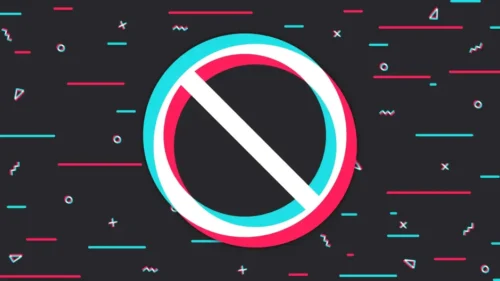
Nine platforms are affected: Facebook, Instagram, TikTok, Snapchat, Threads, X, YouTube, Reddit and Kick. They must block new accounts for under-16s and deactivate existing ones. Noncompliance carries fines of up to 49.5 million Australian dollars ($32 million).
Platforms had initially protested, warning that mandatory age verification would be intrusive, inaccurate and pretty easy for a teenager to circumvent. The compromise relies on behavioral age-estimation tools, using engagement metrics such as “likes,” with third-party age-assurance apps invoked only for disputes. Teens will receive notices inviting them to download their data, freeze accounts or lose them entirely. The government reckons the measure is fail-safe.
Interestingly, public opinion largely agrees: a poll last November found that 77% of Australians over 18 support the ban. Internationally, the legislation is being watched closely: New Zealand is considering similar restrictions, Florida attempted a comparable law and European countries are experimenting with age checks on social media.
Australia has become a global crucible, potentially setting a precedent for future restrictions elsewhere, though It is unlikely that such a contentious measure would receive comparably emphatic support elsewhere: analogous research from the USA and Europe reinforces the sense that Australia is out of step with global opinion (55% of Americans favor banning children under 16 from using social media platforms, while 42% of Brits aged 18-27 would support, relative to 50% who would oppose such a ban).
Forbidden fruit
The ban rests on a naïve assumption: that teenagers will quietly accept exclusion. History suggests otherwise. Adolescents grow up in a culture in which a ban is not so much a prohibition as a challenge. You don’t have to be familiar with Genesis 2:17 to know that anything becomes more desirable once it’s not allowed. It’s called forbidden fruit.
Young people are wired for risk-taking and boundary-pushing, culturally inclined to resist adult overreach and technologically literate enough to bypass nearly any restriction. Cohen’s spiral is already becoming evident: officialdom suppresses, youth respond by circumventing and media attention magnifies both behavior and, by implication, anxiety.
Every generation of adults seems either to forget or ignore what youth entails. This is a developmentally crucial period: experimentation, novelty-seeking and testing limits are essential to forming adult judgement (or at least they were mine). Social media is not simply the communication toy adults assume it to be: It is an organic space, a venue for the formation of identities, connecting with peers and performativity — by which I mean presenting to audiences. Policymakers’ assumption of adolescent passivity, that young people are childlike innocents who need to be insulated from “danger,” is patronizing and just plain wrong.
Savvy teenagers are inevitably going to find ways around blocks using virtual private networks (VPNs), multiple accounts, peer sharing or app workarounds. Attempts at enforcement will generate not compliance, nor even frustration, but clandestine use, probably promoting the very thing the Australian government is trying to curb. The ban, while intended as a protective measure, will inadvertently amplify attention, defiance and risk.
Australia’s discourse around the online dangers of youth often exaggerates risk while underestimating teens’ capacity for ingenuity and critical engagement. Social media is an uneven terrain: simultaneously treacherous and empowering, unintelligent and educational. By understanding it only as a hazard in the hands of the young, policymakers manufacture fear and fuel anxiety, rather than addressing specific harms in a targeted manner.
Wonderworld
Let me declare an interest: as I see it, the internet has introduced us — and I mean everyone with access to a functioning keyboard — to a wonderworld. It might at times appear dystopian, but it is a beguiling, exploratory, shapeshifting encyclopedia-cum-almanac that fascinates us and will continue to fascinate, no matter how hard misguided politicians try to put young people off.
What Australian legislators have ignored is the immense educational and cultural value of social media and the broader internet. For many adolescents, these platforms are not booby-traps but jetpacks to the stars, taking them to places where they can explore identity, pursue interests and access knowledge unavailable in school.
YouTube hosts Massachusetts Institute of Technology (MIT) lectures on physics, creators offer language lessons from Seoul to São Paulo and online communities nurture everything from coding to calligraphy. Teenagers today learn, connect and experiment in ways literally unimaginable to previous generations.
For all the scares surrounding it, social media is not merely a funfair of distraction; it is a gargantuan archive of human knowledge, a site of peer support, creative collaboration and social cohesion. Adolescents do not merely consume content; they negotiate, reinterpret and contribute. The internet has become a vast, decentralized educational system that surrounds and inhabits us. To cordon off adolescents from this is not protection; it is denial, cutting them off from resources essential to their development.
We humans have historically reacted to new technologies with suspicion: the telephone was once accused of distracting women from productive endeavors (like housework); radio of corrupting the young; television of shortening attention spans; film of unleashing delinquency. Every trepidation now seems ludicrous. The hostility to social media follows the same script: a mix of fear of novelty, fondness for stability and conviction that younger generations must be defended from innovation.
We are a nonprofit, truly independent media organization committed to delivering diverse, fact-based global analysis. If you like what you are reading, sign up for our free newsletters now.
<label for=”Your email will be shared with fairobserver and subject to its Privacy Policy”>I agree to receive emails and other content from Fair Observer. I understand that I may repeal my consent at any time. You can review our Privacy Policy and Terms of Use for further information…</label>
Australia’s ban will do little to stop young people from navigating the wonderworld. It will only make that navigation more secretive, more fragmented and potentially more hazardous. In attempting to “let kids be kids,” lawmakers risk stunting the curiosity so integral to growing up. As Stanley Cohen warned in 1972, “Moral panics, once launched, develop a life of their own, becoming more about the panic than the actual event that started it.” Australia is about to learn this.
[Ellis Cashmore is co-author of Screen Society (Macmillan).]
[Kaitlyn Diana edited this piece.]
The views expressed in this article are the author’s own and do not necessarily reflect Fair Observer’s editorial policy.
Comment
0 Comments
Newest
Oldest
Most Voted
Most Voted
Inline Feedbacks
View all comments
Commenting Guidelines
Please read our commenting guidelines before commenting.
1. Be Respectful: Please be polite to the author. Avoid hostility. The whole point of Fair Observer is openness to different perspectives from perspectives from around the world.
2. Comment Thoughtfully: Please be relevant and constructive. We do not allow personal attacks, disinformation or trolling. We will remove hate speech or incitement.
3. Contribute Usefully: Add something of value — a point of view, an argument, a personal experience or a relevant link if you are citing statistics and key facts.
<label style=”font-size: 18px;”>
I have read and agree to the above commenting guidelines.
</label>
Please agree to the guidelines before proceeding.
I
Agree, Proceed to Login
Cancel
Related Reading
Social Media Has a Colossal, Horrific Body Count
Two opposite Senate testimonies, by Mark Zuckerberg as Chief Executive and by this author as Chief Algorithm Officer, pit administrative…
by
William Softky,
May 11, 2024
The TikTok Ban: Unpacking the Battle for Advertising Dollars
The US has passed a law that will make TikTok unavailable to download for American users unless its Chinese parent…
by
Alex Gloy,
May 9, 2024
Are Addiction-Inducing Algorithms in Social Media Lawful?
Studies have revealed the harmful effects of social media. This is not just a coincidence. Social media companies intentionally craft…
by
Iván Farías Pelcastre & Yusuf Önçirak,
January 4, 2024
Support Fair Observer
We rely on your support for our independence, diversity and quality.
For more than 10 years, Fair Observer has been free, fair and independent. No billionaire
owns us, no advertisers control us. We are a reader-supported nonprofit. Unlike many other
publications, we keep our content free for readers regardless of where they live or whether
they can afford to pay. We have no paywalls and no ads.
In the post-truth era of fake news, echo chambers and filter bubbles, we publish a plurality
of perspectives from around the world. Anyone can publish with us, but everyone goes through
a rigorous editorial process. So, you get fact-checked, well-reasoned content instead of
noise.
We publish 3,000+ voices from 90+ countries. We also conduct education and training programs
on subjects ranging from digital media and journalism to writing and critical thinking. This
doesn’t come cheap. Servers, editors, trainers and web developers cost
money.
Please consider supporting us on a regular basis as a recurring donor or a
sustaining member.
Will you support FO’s journalism?
We rely on your support for our independence, diversity and quality.
Donation Cycle
<label for=”donation_cycle_one_time”>One Time</label>
<label for=”donation_cycle_monthly”>Monthly</label>
<label for=”donation_cycle_yearly”>Yearly</label>
Donation Amount
<label for=”amount_11″>$11</label>
<label for=”amount_111″>$111</label>
<label for=”other”>Other</label>
$
The IRS recognizes Fair Observer as a section 501(c)(3) registered public charity
(EIN: 46-4070943), enabling you to claim a tax deduction.
Make Sense of the World
Unique Insights from 3,000+ Contributors in 90+ Countries
<label
for=”Your email will be shared with fairobserver and subject to its Privacy Policy”>I
agree to receive emails and other content from Fair Observer. I understand
that I
may repeal my consent at any time. You can review our Privacy Policy
and Terms of Use
for further
information .</label>
for=”Your email will be shared with fairobserver and subject to its Privacy Policy”>I
agree to receive emails and other content from Fair Observer. I understand
that I
may repeal my consent at any time. You can review our Privacy Policy
and Terms of Use
for further
information .</label>
We are a nonprofit, truly independent media organization committed to delivering diverse, fact-based global analysis. If you like what you are reading, sign up for our free newsletters now.
<label for=”Your email will be shared with fairobserver and subject to its Privacy Policy”>I agree to receive emails and other content from Fair Observer. I understand that I may repeal my consent at any time. You can review our Privacy Policy and Terms of Use for further information…</label>
</main>
Fair Observer, 461 Harbor Blvd, Belmont, CA 94002, USA
<footer class=”mart70 fo-black-bg padt50 padb30″>
Sections
PUBLICATION
Support Fair Observer
We rely on your support for our independence, diversity and quality.


</footer>

<footer id=”fixed-footer” class=”support-footer”>


Support
independent, crowdsourced, nonprofit
journalism.
Fair Observer is a 501(c)(3) independent nonprofit. We are not owned by billionaires or controlled by
advertisers. We publish nearly 3,000 authors from over 90 countries after fact-checking and editing each
piece. We do not have a paywall and anyone can read us for free. With your vital donations, we can
continue
to do our work.
Please make a recurring (or even one-time) donation today. Even $1 goes a long way because
a
million donors
like you mean one million dollars. Thank you for keeping us independent, free and fair.
One Time
Monthly
Yearly
Monthly
Yearly
Continue 

</footer>

Sign into your Fair Observer Account
<label class=”tml-label” for=”user_login”>Username or Email Address</label>
<label class=”tml-label” for=”user_pass”>Password</label>
<label class=”tml-label” for=”rememberme”>Remember Me</label>
Log In
Forgot
Password
Forgot Password
Enter your registered email address or username. You will receive a
link to create a new password via email.
Please enter your username or email address. You will receive an email message with instructions on how to reset your password.
<label class=”tml-label” for=”user_login”>Username or Email Address</label>
Get New Password
Or
Return to
Login
Forgot Password
We have sent a link to your registered email address to reset your password.
<circle cx=”12.5″ cy=”12″ r=”12″ fill=”#414141″ />
Back to
Login
Become a Member & Enjoy Exclusive Benefits!
<circle cx=”12.5″ cy=”12″ r=”12″ fill=”#414141″ />
Access to comments feature
<circle cx=”12.5″ cy=”12″ r=”12″ fill=”#414141″ />
Bookmark your favorite articles
<circle cx=”12.5″ cy=”12″ r=”12″ fill=”#414141″ />
Exclusive invitations to FO° Talks & FO° Live
<circle cx=”12.5″ cy=”12″ r=”12″ fill=”#414141″ />
Access to all of our e-publications
Return to
Login
Login
NEWSLETTER
Make Sense of the World
Unique Insights from 2,500+ Contributors in 90+ Countries

<label
for=”Your email will be shared with fairobserver and subject to it’s Privacy Policy”>I
agree to receive emails and other content from Fair Observer. I understand
that I may repeal my consent at any time. You can review our Privacy Policy
and Terms of Use
for further information.</label>
for=”Your email will be shared with fairobserver and subject to it’s Privacy Policy”>I
agree to receive emails and other content from Fair Observer. I understand
that I may repeal my consent at any time. You can review our Privacy Policy
and Terms of Use
for further information.</label>
NEWSLETTER
Make Sense of the World
Unique Insights from 2,500+ Contributors in 90+ Countries
<label
for=”Your email will be shared with fairobserver and subject to it’s Privacy Policy”>I
agree to receive emails and other content from Fair Observer. I understand
that I may repeal my consent at any time. You can review our Privacy Policy
and Terms of Use
for further information.</label>
for=”Your email will be shared with fairobserver and subject to it’s Privacy Policy”>I
agree to receive emails and other content from Fair Observer. I understand
that I may repeal my consent at any time. You can review our Privacy Policy
and Terms of Use
for further information.</label>

Make Sense of the World
Unique Insights from 2,500+ Contributors in 90+ Countries
<label
for=”Your email will be shared with fairobserver and subject to its Privacy Policy”>I
agree to receive emails and other content from Fair Observer. I understand that I
may repeal my consent at any time. You can review our Privacy Policy and Terms of Use for further
information .</label>
for=”Your email will be shared with fairobserver and subject to its Privacy Policy”>I
agree to receive emails and other content from Fair Observer. I understand that I
may repeal my consent at any time. You can review our Privacy Policy and Terms of Use for further
information .</label>
We Need Your Consent
We use cookies to give you the best possible experience. Learn more about how we use cookies or edit your cookie preferences. Privacy Policy. My Options I Accept
Privacy & Cookies Policy
Close
Edit Cookie Preferences
The Fair Observer website uses digital cookies so it can collect statistics on how many visitors come to the site, what content is viewed and for how long, and the general location of the computer network of the visitor. These statistics are collected and processed using the Google Analytics service. Fair Observer uses these aggregate statistics from website visits to help improve the content of the website and to provide regular reports to our current and future donors and funding organizations. The type of digital cookie information collected during your visit and any derived data cannot be used or combined with other information to personally identify you. Fair Observer does not use personal data collected from its website for advertising purposes or to market to you.
As a convenience to you, Fair Observer provides buttons that link to popular social media sites, called social sharing buttons, to help you share Fair Observer content and your comments and opinions about it on these social media sites. These social sharing buttons are provided by and are part of these social media sites. They may collect and use personal data as described in their respective policies. Fair Observer does not receive personal data from your use of these social sharing buttons. It is not necessary that you use these buttons to read Fair Observer content or to share on social media.
Necessary
<label class=”form-check-label” for=”wt-cli-checkbox-necessary”>Necessary</label>
Always Enabled
These cookies essential for the website to function.
Social Media
<label for=”wt-cli-checkbox-social_media” class=”cli-slider” data-cli-enable=”Enabled” data-cli-disable=”Disabled”>Social Media</label>
These cookies are used to enable sharing or following of content that you find interesting on our website. These settings apply to third-party social networking and other websites.
Performance & Functionality
<label for=”wt-cli-checkbox-performance” class=”cli-slider” data-cli-enable=”Enabled” data-cli-disable=”Disabled”>Performance & Functionality</label>
These cookies are used to enhance the performance and functionality of our website. They provide statistics on how our website is used and help us improve by measuring errors. Certain functionalities on our website may become unavailable without these cookies.
Analytics
<label for=”wt-cli-checkbox-analytics” class=”cli-slider” data-cli-enable=”Enabled” data-cli-disable=”Disabled”>Analytics</label>
SAVE & ACCEPT
<textarea id=’wpd-editor-source-code’></textarea>Insert
</body>
</html>
Total Views:
Source: World Politics - fairobserver.com