<g id=”cross”>
<line class=”cls-1″ x1=”7″ x2=”25″ y1=”7″ y2=”25″ />
<line class=”cls-1″ x1=”7″ x2=”25″ y1=”25″ y2=”7″ />
</g>
Houthi Ambitions and the Southern State: A Regional Flashpoint
<circle cx=”10.5″ cy=”10.5″ r=”7.5″ />
<line x1=”21″ x2=”15.8″ y1=”21″ y2=”15.8″ />
<nav class=”fo-navigation pos-r” itemscope itemtype=”http://schema.org/Navigation”>
Login
Sections <circle cx=”10.5″ cy=”10.5″ r=”7.5″ />
<line x1=”21″ x2=”15.8″ y1=”21″ y2=”15.8″ />
Search
<circle cx=”10.5″ cy=”10.5″ r=”7.5″ />
<line x1=”21″ x2=”15.8″ y1=”21″ y2=”15.8″ />
Search


PUBLICATION
Support Fair Observer
We rely on your support for our independence, diversity and quality.
</nav>
</header>

<main id=”main” class=”site-main” role=”main”> 



Saturday, December 20, 2025
<header class=”entry-header”>
Houthi Ambitions and the Southern State: A Regional Flashpoint
The Southern Transitional Council has expanded its reach in southern Yemen and shifted the balance of power in the war. The Houthi movement rejects southern ambitions and vows to hold national territory. Regional actors press for restraint while the UN confronts a splintered political map that threatens economic stability and any hope of a broad peace effort.
By
Saturday, December 20, 2025
</header>

Via Shutterstock.

December 20, 2025 05:54 EDT

Check out our comment feature!
Saved Successfully.
This article saved into your bookmarks. Click here to view your bookmarks.


Yemen’s protracted civil war — now more than a decade old — continues to reshape the political fabric of the Arabian Peninsula. Since the Iran-aligned Houthi movement seized Sanaa in 2014, the conflict has fractured the country into rival centers of power and competing visions of statehood, creating a landscape that analysts at the Council on Foreign Relations describe as one of the region’s most complex and enduring crises.
Southern power consolidation
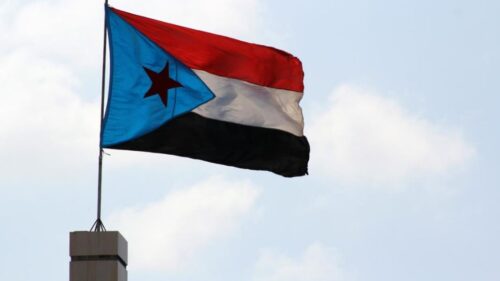
Against this backdrop, the Southern Transitional Council (STC) has, in recent weeks, expanded its authority across large parts of southern Yemen, asserting military and security control in key governorates such as Hadramawt and Mahra, according to Reuters. The STC argues that southern regions have suffered decades of marginalization and that their political future should reflect longstanding grievances, a sentiment that echoes historical aspirations predating Yemeni unification in 1990. Observers from Middle East Monitor note that for many in the South, these grievances have taken on fresh urgency as the STC solidifies its administrative and security influence.
Although the STC maintains that it remains committed to opposing the Houthis, its recent territorial consolidation has raised new questions about Yemen’s trajectory. Analysts cited by AP News caution that the STC’s growing hold over the South may lay the groundwork for a future bid for independence. Such a development would not only upend existing political calculations but also place enormous strain on the Presidential Leadership Council (PLC), the internationally recognized authority formed to unify anti-Houthi forces.
The PLC now faces a profound internal challenge, as its ability to project authority and maintain cohesion is tested by the emergence of overlapping power centers on the ground. The STC is now by far the dominant partner within the PLC.
Houthi resistance to southern ambitions
The Houthis, meanwhile, have made clear through their broader ideological posture — through recent public statements with the specific hard-line language attributed to them — that they reject any move toward southern secession and will reclaim every inch of territory. Analysts at Trends Research & Advisory note that the movement frames its struggle as one for national integrity and sovereignty, rooted in resistance to both fragmentation and external influence.
From the Houthis’ perspective, the rise of a powerful southern political entity would weaken the central state they seek to control, embolden separatist tendencies and undermine their claims to national legitimacy. This presents a genuine challenge to the region and the world, which one would expect would not want to see any further expansion of the Houthis in Yemen.
Regional and international repercussions
Regional observers warn that these shifts in territorial control have wide-reaching implications. Saudi Arabia has urged southern actors to avoid unilateral decisions that could derail efforts to negotiate a nationwide peace framework or divert resources from the broader fight against the Houthis. Diplomats say the regional picture is becoming more complicated as local actors pursue divergent political agendas that no longer neatly align under the umbrella of the anti-Houthi coalition.
For the United Nations and the wider international community, the new realities on the ground present a major challenge. The UN’s diplomatic architecture for Yemen has long depended on assumptions about the cohesion of the internationally recognized government and the possibility of negotiating a comprehensive nationwide settlement. Yet as the political map splinters and competing authorities entrench themselves, these assumptions no longer hold.
Humanitarian access, economic coordination, security reform and ceasefire negotiations all become more difficult when power is fragmented, and state institutions remain contested. International officials quoted by Yahoo News warn that without a unified political framework, economic collapse, localized violence and wider regional instability could intensify.
A country at a crossroads
The developments unfolding in the South mark what Newsweek has described as a potential turning point in Yemen’s civil war. Instead of moving toward reconciliation, the country appears to be drifting into a more entrenched fragmentation: A Houthi-dominated North asserting its authority, a rapidly consolidating STC-led South developing its own political and security architecture, and a weakened PLC struggling to maintain relevance.
Diplomats fear that unless international efforts adapt to the fast-changing landscape — acknowledging both southern aspirations and the realities of Houthi control — Yemen may be heading toward a long-term division that complicates all existing peace initiatives. In these circumstances, one would think that international partners should rethink the peace strategy in accordance with the realities on the ground.
For now, Yemen stands at a critical juncture. Whether the country moves toward negotiated political compromise or deeper fragmentation will depend not only on the calculations of local actors but on the ability of the international community — and particularly the United Nations — to respond effectively to a conflict that is defined by geography and competing aspirations.
A political vacuum
The absence of the Prime Minister of the internationally recognized government and the Chairman of the Presidential Leadership Council from Aden has created a serious political vacuum in governance, directly affecting citizens’ daily lives and the delivery of public services. This political vacuum risks turning into a service vacuum, with severe consequences for basic governance and public welfare.
We’re independent, nonprofit and powered by 3,000+ voices from around the world — not billionaires or governments. Enjoy real journalism, sign up for our free newsletters.
<label for=”Your email will be shared with fairobserver and subject to its Privacy Policy”>I agree to receive emails and other content from Fair Observer. I understand that I may repeal my consent at any time. You can review our Privacy Policy and Terms of Use for further information…</label>
In their statement, the STC states that their position is clear: they must return to Aden and engage in dialogue, particularly with the Prime Minister. They need to understand that any negative consequences to the economy and service sector in their absence are their responsibility.
STC is actively working to contain and manage this unfortunate vacuum in order to prevent further deterioration in the economy.
[Kaitlyn Diana edited this piece.]
The views expressed in this article are the author’s own and do not necessarily reflect Fair Observer’s editorial policy.
Comment
0 Comments
Newest
Oldest
Most Voted
Most Voted
Inline Feedbacks
View all comments
Commenting Guidelines
Please read our commenting guidelines before commenting.
1. Be Respectful: Please be polite to the author. Avoid hostility. The whole point of Fair Observer is openness to different perspectives from perspectives from around the world.
2. Comment Thoughtfully: Please be relevant and constructive. We do not allow personal attacks, disinformation or trolling. We will remove hate speech or incitement.
3. Contribute Usefully: Add something of value — a point of view, an argument, a personal experience or a relevant link if you are citing statistics and key facts.
<label style=”font-size: 18px;”>
I have read and agree to the above commenting guidelines.
</label>
Please agree to the guidelines before proceeding.
I
Agree, Proceed to Login
Cancel
Related Reading
Yemen’s Economy Is Built on Imports: The STC Must Lead the Shift to Production
Yemen’s economy suffers from heavy reliance on imports and political instability that undermine development efforts led by the Southern Transitional…
by
Abdul Galil Shaif,
December 15, 2025
The Southern Transitional Council: Countering Extremism and Securing Maritime Stability in Yemen
Southern forces fight extremists across Yemen’s south as Al Qaeda and the Islamic State target security units allied with the…
by
Abdul Galil Shaif,
November 19, 2025
Yemen’s Southern Front: The Strategic Fault Line the World Cannot Ignore
Iran strengthens its alliance with the Houthis as it loses influence in Syria, Lebanon and Gaza. Houthi forces expand attacks…
by
Abdul Galil Shaif,
November 13, 2025
Support Fair Observer
We rely on your support for our independence, diversity and quality.
For more than 10 years, Fair Observer has been free, fair and independent. No billionaire
owns us, no advertisers control us. We are a reader-supported nonprofit. Unlike many other
publications, we keep our content free for readers regardless of where they live or whether
they can afford to pay. We have no paywalls and no ads.
In the post-truth era of fake news, echo chambers and filter bubbles, we publish a plurality
of perspectives from around the world. Anyone can publish with us, but everyone goes through
a rigorous editorial process. So, you get fact-checked, well-reasoned content instead of
noise.
We publish 3,000+ voices from 90+ countries. We also conduct education and training programs
on subjects ranging from digital media and journalism to writing and critical thinking. This
doesn’t come cheap. Servers, editors, trainers and web developers cost
money.
Please consider supporting us on a regular basis as a recurring donor or a
sustaining member.
Will you support FO’s journalism?
We rely on your support for our independence, diversity and quality.
Donation Cycle
<label for=”donation_cycle_one_time”>One Time</label>
<label for=”donation_cycle_monthly”>Monthly</label>
<label for=”donation_cycle_yearly”>Yearly</label>
Donation Amount
<label for=”amount_11″>$11</label>
<label for=”amount_111″>$111</label>
<label for=”other”>Other</label>
$
The IRS recognizes Fair Observer as a section 501(c)(3) registered public charity
(EIN: 46-4070943), enabling you to claim a tax deduction.
Make Sense of the World
Unique Insights from 3,000+ Contributors in 90+ Countries
<label
for=”Your email will be shared with fairobserver and subject to its Privacy Policy”>I
agree to receive emails and other content from Fair Observer. I understand
that I
may repeal my consent at any time. You can review our Privacy Policy
and Terms of Use
for further
information .</label>
for=”Your email will be shared with fairobserver and subject to its Privacy Policy”>I
agree to receive emails and other content from Fair Observer. I understand
that I
may repeal my consent at any time. You can review our Privacy Policy
and Terms of Use
for further
information .</label>
Read more, think deeper and become smarter, perhaps even wiser, one article at a time. Sign up for our free newsletters now.
<label for=”Your email will be shared with fairobserver and subject to its Privacy Policy”>I agree to receive emails and other content from Fair Observer. I understand that I may repeal my consent at any time. You can review our Privacy Policy and Terms of Use for further information…</label>
</main>
Fair Observer, 461 Harbor Blvd, Belmont, CA 94002, USA
<footer class=”mart70 fo-black-bg padt50 padb30″>
Sections
PUBLICATION
Support Fair Observer
We rely on your support for our independence, diversity and quality.


</footer>

<footer id=”fixed-footer” class=”support-footer”>


Support
independent, crowdsourced, nonprofit
journalism.
Fair Observer is a 501(c)(3) independent nonprofit. We are not owned by billionaires or controlled by
advertisers. We publish nearly 3,000 authors from over 90 countries after fact-checking and editing each
piece. We do not have a paywall and anyone can read us for free. With your vital donations, we can
continue
to do our work.
Please make a recurring (or even one-time) donation today. Even $1 goes a long way because
a
million donors
like you mean one million dollars. Thank you for keeping us independent, free and fair.
One Time
Monthly
Yearly
Monthly
Yearly
Continue 

</footer>

Sign into your Fair Observer Account
<label class=”tml-label” for=”user_login”>Username or Email Address</label>
<label class=”tml-label” for=”user_pass”>Password</label>
<label class=”tml-label” for=”rememberme”>Remember Me</label>
Log In
Forgot
Password
Forgot Password
Enter your registered email address or username. You will receive a
link to create a new password via email.
Please enter your username or email address. You will receive an email message with instructions on how to reset your password.
<label class=”tml-label” for=”user_login”>Username or Email Address</label>
Get New Password
Or
Return to
Login
Forgot Password
We have sent a link to your registered email address to reset your password.
<circle cx=”12.5″ cy=”12″ r=”12″ fill=”#414141″ />
Back to
Login
Become a Member & Enjoy Exclusive Benefits!
<circle cx=”12.5″ cy=”12″ r=”12″ fill=”#414141″ />
Access to comments feature
<circle cx=”12.5″ cy=”12″ r=”12″ fill=”#414141″ />
Bookmark your favorite articles
<circle cx=”12.5″ cy=”12″ r=”12″ fill=”#414141″ />
Exclusive invitations to FO° Talks & FO° Live
<circle cx=”12.5″ cy=”12″ r=”12″ fill=”#414141″ />
Access to all of our e-publications
Return to
Login
Login
NEWSLETTER
Make Sense of the World
Unique Insights from 2,500+ Contributors in 90+ Countries

<label
for=”Your email will be shared with fairobserver and subject to it’s Privacy Policy”>I
agree to receive emails and other content from Fair Observer. I understand
that I may repeal my consent at any time. You can review our Privacy Policy
and Terms of Use
for further information.</label>
for=”Your email will be shared with fairobserver and subject to it’s Privacy Policy”>I
agree to receive emails and other content from Fair Observer. I understand
that I may repeal my consent at any time. You can review our Privacy Policy
and Terms of Use
for further information.</label>
NEWSLETTER
Make Sense of the World
Unique Insights from 2,500+ Contributors in 90+ Countries
<label
for=”Your email will be shared with fairobserver and subject to it’s Privacy Policy”>I
agree to receive emails and other content from Fair Observer. I understand
that I may repeal my consent at any time. You can review our Privacy Policy
and Terms of Use
for further information.</label>
for=”Your email will be shared with fairobserver and subject to it’s Privacy Policy”>I
agree to receive emails and other content from Fair Observer. I understand
that I may repeal my consent at any time. You can review our Privacy Policy
and Terms of Use
for further information.</label>

Make Sense of the World
Unique Insights from 2,500+ Contributors in 90+ Countries
<label
for=”Your email will be shared with fairobserver and subject to its Privacy Policy”>I
agree to receive emails and other content from Fair Observer. I understand that I
may repeal my consent at any time. You can review our Privacy Policy and Terms of Use for further
information .</label>
for=”Your email will be shared with fairobserver and subject to its Privacy Policy”>I
agree to receive emails and other content from Fair Observer. I understand that I
may repeal my consent at any time. You can review our Privacy Policy and Terms of Use for further
information .</label>
We Need Your Consent
We use cookies to give you the best possible experience. Learn more about how we use cookies or edit your cookie preferences. Privacy Policy. My Options I Accept
Privacy & Cookies Policy
Close
Edit Cookie Preferences
The Fair Observer website uses digital cookies so it can collect statistics on how many visitors come to the site, what content is viewed and for how long, and the general location of the computer network of the visitor. These statistics are collected and processed using the Google Analytics service. Fair Observer uses these aggregate statistics from website visits to help improve the content of the website and to provide regular reports to our current and future donors and funding organizations. The type of digital cookie information collected during your visit and any derived data cannot be used or combined with other information to personally identify you. Fair Observer does not use personal data collected from its website for advertising purposes or to market to you.
As a convenience to you, Fair Observer provides buttons that link to popular social media sites, called social sharing buttons, to help you share Fair Observer content and your comments and opinions about it on these social media sites. These social sharing buttons are provided by and are part of these social media sites. They may collect and use personal data as described in their respective policies. Fair Observer does not receive personal data from your use of these social sharing buttons. It is not necessary that you use these buttons to read Fair Observer content or to share on social media.
Necessary
<label class=”form-check-label” for=”wt-cli-checkbox-necessary”>Necessary</label>
Always Enabled
These cookies essential for the website to function.
Social Media
<label for=”wt-cli-checkbox-social_media” class=”cli-slider” data-cli-enable=”Enabled” data-cli-disable=”Disabled”>Social Media</label>
These cookies are used to enable sharing or following of content that you find interesting on our website. These settings apply to third-party social networking and other websites.
Performance & Functionality
<label for=”wt-cli-checkbox-performance” class=”cli-slider” data-cli-enable=”Enabled” data-cli-disable=”Disabled”>Performance & Functionality</label>
These cookies are used to enhance the performance and functionality of our website. They provide statistics on how our website is used and help us improve by measuring errors. Certain functionalities on our website may become unavailable without these cookies.
Analytics
<label for=”wt-cli-checkbox-analytics” class=”cli-slider” data-cli-enable=”Enabled” data-cli-disable=”Disabled”>Analytics</label>
SAVE & ACCEPT
<textarea id=’wpd-editor-source-code’></textarea>Insert
</body>
</html>
Total Views:
Source: World Politics - fairobserver.com