<g id=”cross”>
<line class=”cls-1″ x1=”7″ x2=”25″ y1=”7″ y2=”25″ />
<line class=”cls-1″ x1=”7″ x2=”25″ y1=”25″ y2=”7″ />
</g>
Jakarta and Doha Keep Talks Alive
<circle cx=”10.5″ cy=”10.5″ r=”7.5″ />
<line x1=”21″ x2=”15.8″ y1=”21″ y2=”15.8″ />
<nav class=”fo-navigation pos-r” itemscope itemtype=”http://schema.org/Navigation”>
Login
Sections <circle cx=”10.5″ cy=”10.5″ r=”7.5″ />
<line x1=”21″ x2=”15.8″ y1=”21″ y2=”15.8″ />
Search
<circle cx=”10.5″ cy=”10.5″ r=”7.5″ />
<line x1=”21″ x2=”15.8″ y1=”21″ y2=”15.8″ />
Search


PUBLICATION
Support Fair Observer
We rely on your support for our independence, diversity and quality.
</nav>
</header>

<main id=”main” class=”site-main” role=”main”> 



Thursday, December 04, 2025
<header class=”entry-header”>
Jakarta and Doha Keep Talks Alive
Indonesia’s diplomatic outreach to Qatar highlights the importance of quiet mediation in a conflict-ridden world. Indonesia’s President Prabowo Subianto’s visit led to a Strategic Dialogue and economic agreements, highlighting Indonesia’s role in maintaining neutral dialogue spaces amid increasing tensions. As mediation opportunities decrease, Indonesia and Qatar strive to promote humanitarian efforts and protect diplomatic sanctuaries, fostering stability for conflict resolution.
By
Thursday, December 04, 2025
</header>

Via Shutterstock.

December 04, 2025 06:48 EDT

Check out our comment feature!
Saved Successfully.
This article saved into your bookmarks. Click here to view your bookmarks.


When tanks and missiles steal the headlines, the quieter tools of diplomacy — a phone call, a modest memorandum or a principled public statement — can feel faint by comparison. Yet those quieter tools are doing the world’s heaviest lifting right now.
Indonesia’s recent outreach to Qatar is a vivid demonstration: a maritime, pluralist democracy with the world’s largest Muslim population stepped into Doha’s bruised salon of mediation not to grandstand, but to shore up the fragile scaffolding that keeps talks alive. That matters for lives on the ground, for the credibility of small-state mediation, and for the health of a rules-based diplomacy the world urgently needs to salvage.
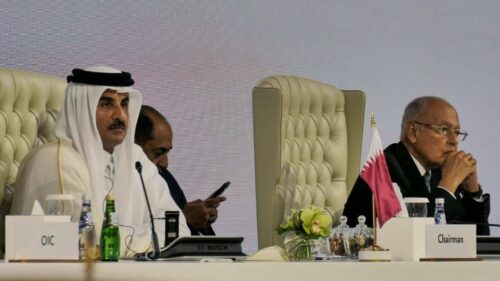
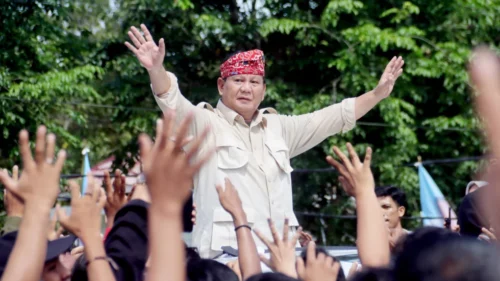
Indonesian President Prabowo Subianto’s September visit to Lusail Palace with Qatari Emir Tamim bin Hamad Al Thani was not merely ceremonial. Jakarta and Doha agreed to launch a formal Strategic Dialogue and signed Memorandums of Understanding (MoUs) that signal new economic ties.
These economic ties included a reported $2 billion commitment to Indonesian infrastructure — but the political subtext was clear: Indonesia is buying influence through patience and partnership, not weaponry. It is an investment in convening capacity and in the fragile habit of maintaining neutral space, where enemies can be encouraged to talk.
That posture is Indonesia’s comparative advantage: it can simultaneously leverage Muslim-majority legitimacy and Association of Southeast Asian Nations (ASEAN)-style discretion.
Diminished back-channels for diplomacy
Why does this matter now? Because mediation is a fragile capital — easily squandered, painfully hard to rebuild. Qatar has for years been one of the few states able to talk to Hamas, to Israel’s interlocutors and to Western and regional capitals simultaneously. The Israeli strike on Qatari soil in early September shattered that immunity. It prompted Doha to pause parts of its mediation work — a dramatic, costly response that shows how quickly sanctuary can evaporate.
The result is predictable: fewer back-channels, more diplomatic paralysis, and greater risk that conflicts calcify into perpetual violence. In that void, great-power rivalry deepens and civilians pay the price.
Indonesia’s “free and active” (bebas-aktif) diplomacy and ASEAN’s quiet, consensus-driven approach are not flash-in-the-pan doctrines. They are institutional habits — patient, low-profile, sometimes maddeningly slow, but often effective at keeping dialogue alive where loud condemnation drives parties further apart.
The ASEAN Way’s emphasis on noninterference and private consultation buys endurance, not immediate headlines; Jakarta’s strength is converting that endurance into something operational in the Middle East: convening second-track dialogues, cosponsoring humanitarian corridors or hosting technical talks on prisoner releases and ceasefire mechanics. Those are the small, essential things that make a ceasefire stick.
But perks and principles alone are not enough. If Indonesia wants to meaningfully augment Doha’s tapering role, it must be strategic and inventive. First: protect negotiation sanctuaries. International law still treats sanctuaries for diplomacy as sacrosanct; practice often does not. Jakarta should champion an ASEAN-Gulf compact — a multilateral statement, practical and enforceable — that establishes clear protocols for protecting host-state venues, mediators and humanitarian couriers.
This compact could be modest — rapid fact-finding mechanisms, agreed “no-strike” notification channels for high-risk meetings, and joint diplomatic demarches that raise the political cost of violations. A pledge does not stop bullets; it makes the political fallout for attackers immediate and collective.
The Indonesia-Qatar partnership
Second: institutionalize two-track diplomacy with teeth. Indonesia and Qatar make a credible pairing: Doha brings access to armed nonstate actors; Jakarta brings multilateral legitimacy and Southeast Asian convening power. Together, they could underwrite an “Inclusive Track” secretariat — small, agile and designed to keep negotiators talking even when capitals shout.
Funded by Gulf and ASEAN donors and housed in a neutral location, it would stabilize the very back-channels that prevent escalation. Australia, the EU and middle powers should seed this organ as a practical alternative to the zero-sum politics that now paralyze the UN Security Council.
Third: convert moral solidarity into durable humanitarian architecture. Indonesia has used its UN platform to cosponsor ceasefire language and demands for aid access; now it should push for protected humanitarian corridors under multilateral supervision, with donor-backed rapid response financing.
When mediators lose leverage, civilians die — and that must not be the bill for failed diplomacy. A simple rule: where a mediator can secure a humanitarian route, a pooled fund activates within 72 hours to keep aid flowing. That is operational charity, not rhetorical condolence.
Indonesia’s role as a middle power in global diplomacy
This will be politically uncomfortable. ASEAN’s preference for quiet diplomacy will chafe against louder calls for immediate accountability. Some Gulf partners will resist anything that feels like external interference.
Yet the cost of inaction is higher: shrinking mediation space invites unilateral military solutions, drives proxy escalations and shifts the regional balance toward securitized blocs. Indonesia’s skill — modest but durable — is precisely the kind of middle-power resource the world needs if wartime bargaining is to have any chance at peacetime outcomes.
Indonesia cannot rebuild Doha’s unique access on its own. But it can be the coal that keeps the embers alive: offering platforms, underwriting small, technical talks and convening coalitions that translate solidarity into safeguards for diplomacy. That is a practical power: not the dramatic thrust of aircraft carriers, but the patient craft of keeping channels open until politics catches up with humanity. In a time when great powers posture, middle powers must deliver the quieter instruments of survival.
We are a nonprofit, truly independent media organization committed to delivering diverse, fact-based global analysis. If you like what you are reading, sign up for our free newsletters now.
<label for=”Your email will be shared with fairobserver and subject to its Privacy Policy”>I agree to receive emails and other content from Fair Observer. I understand that I may repeal my consent at any time. You can review our Privacy Policy and Terms of Use for further information…</label>
Indonesia and Qatar, together, can — if the international community supports them — transform the devastation of a struck capital into the foundation of lasting negotiation. The alternative is to watch the last hospitable spaces close, one by one and for diplomacy that prevents war from dying in the silence that follows the guns.
[Liam Roman edited this piece.]
The views expressed in this article are the author’s own and do not necessarily reflect Fair Observer’s editorial policy.
Comment
0 Comments
Newest
Oldest
Most Voted
Most Voted
Inline Feedbacks
View all comments
Commenting Guidelines
Please read our commenting guidelines before commenting.
1. Be Respectful: Please be polite to the author. Avoid hostility. The whole point of Fair Observer is openness to different perspectives from perspectives from around the world.
2. Comment Thoughtfully: Please be relevant and constructive. We do not allow personal attacks, disinformation or trolling. We will remove hate speech or incitement.
3. Contribute Usefully: Add something of value — a point of view, an argument, a personal experience or a relevant link if you are citing statistics and key facts.
<label style=”font-size: 18px;”>
I have read and agree to the above commenting guidelines.
</label>
Please agree to the guidelines before proceeding.
I
Agree, Proceed to Login
Cancel
Related Reading
Between Neutrality & Security, Indonesia Treads a Tight Rope
Indonesia has long considered strategic neutrality as the basis for its foreign policy. However, the ambiguity of these policies threatens…
by
Aqila Adilah,
October 28, 2025
Is Qatar the Straw That Breaks the Camel’s Back?
Israel targeted Hamas leaders in Qatar during their discussions on a US ceasefire plan. The attack elicited unusual unity at…
by
James M. Dorsey,
October 5, 2025
A Powerful Prabowo Presidency Might Prove Disastrous for Papua
Prabowo Subianto is set to be Indonesia’s next president after a shocking victory in the region of Papua despite his…
by
Aaron Denison Deivasagayam,
October 25, 2024
Support Fair Observer
We rely on your support for our independence, diversity and quality.
For more than 10 years, Fair Observer has been free, fair and independent. No billionaire
owns us, no advertisers control us. We are a reader-supported nonprofit. Unlike many other
publications, we keep our content free for readers regardless of where they live or whether
they can afford to pay. We have no paywalls and no ads.
In the post-truth era of fake news, echo chambers and filter bubbles, we publish a plurality
of perspectives from around the world. Anyone can publish with us, but everyone goes through
a rigorous editorial process. So, you get fact-checked, well-reasoned content instead of
noise.
We publish 3,000+ voices from 90+ countries. We also conduct education and training programs
on subjects ranging from digital media and journalism to writing and critical thinking. This
doesn’t come cheap. Servers, editors, trainers and web developers cost
money.
Please consider supporting us on a regular basis as a recurring donor or a
sustaining member.
Will you support FO’s journalism?
We rely on your support for our independence, diversity and quality.
Donation Cycle
<label for=”donation_cycle_one_time”>One Time</label>
<label for=”donation_cycle_monthly”>Monthly</label>
<label for=”donation_cycle_yearly”>Yearly</label>
Donation Amount
<label for=”amount_11″>$11</label>
<label for=”amount_111″>$111</label>
<label for=”other”>Other</label>
$
The IRS recognizes Fair Observer as a section 501(c)(3) registered public charity
(EIN: 46-4070943), enabling you to claim a tax deduction.
Make Sense of the World
Unique Insights from 3,000+ Contributors in 90+ Countries
<label
for=”Your email will be shared with fairobserver and subject to its Privacy Policy”>I
agree to receive emails and other content from Fair Observer. I understand
that I
may repeal my consent at any time. You can review our Privacy Policy
and Terms of Use
for further
information .</label>
for=”Your email will be shared with fairobserver and subject to its Privacy Policy”>I
agree to receive emails and other content from Fair Observer. I understand
that I
may repeal my consent at any time. You can review our Privacy Policy
and Terms of Use
for further
information .</label>
We are a nonprofit, truly independent media organization committed to delivering diverse, fact-based global analysis. If you like what you are reading, sign up for our free newsletters now.
<label for=”Your email will be shared with fairobserver and subject to its Privacy Policy”>I agree to receive emails and other content from Fair Observer. I understand that I may repeal my consent at any time. You can review our Privacy Policy and Terms of Use for further information…</label>
</main>
Fair Observer, 461 Harbor Blvd, Belmont, CA 94002, USA
<footer class=”mart70 fo-black-bg padt50 padb30″>
Sections
PUBLICATION
Support Fair Observer
We rely on your support for our independence, diversity and quality.


</footer>

<footer id=”fixed-footer” class=”support-footer”>


Support
independent, crowdsourced, nonprofit
journalism.
Fair Observer is a 501(c)(3) independent nonprofit. We are not owned by billionaires or controlled by
advertisers. We publish nearly 3,000 authors from over 90 countries after fact-checking and editing each
piece. We do not have a paywall and anyone can read us for free. With your vital donations, we can
continue
to do our work.
Please make a recurring (or even one-time) donation today. Even $1 goes a long way because
a
million donors
like you mean one million dollars. Thank you for keeping us independent, free and fair.
One Time
Monthly
Yearly
Monthly
Yearly
Continue 

</footer>

Sign into your Fair Observer Account
<label class=”tml-label” for=”user_login”>Username or Email Address</label>
<label class=”tml-label” for=”user_pass”>Password</label>
<label class=”tml-label” for=”rememberme”>Remember Me</label>
Log In
Forgot
Password
Forgot Password
Enter your registered email address or username. You will receive a
link to create a new password via email.
Please enter your username or email address. You will receive an email message with instructions on how to reset your password.
<label class=”tml-label” for=”user_login”>Username or Email Address</label>
Get New Password
Or
Return to
Login
Forgot Password
We have sent a link to your registered email address to reset your password.
<circle cx=”12.5″ cy=”12″ r=”12″ fill=”#414141″ />
Back to
Login
Become a Member & Enjoy Exclusive Benefits!
<circle cx=”12.5″ cy=”12″ r=”12″ fill=”#414141″ />
Access to comments feature
<circle cx=”12.5″ cy=”12″ r=”12″ fill=”#414141″ />
Bookmark your favorite articles
<circle cx=”12.5″ cy=”12″ r=”12″ fill=”#414141″ />
Exclusive invitations to FO° Talks & FO° Live
<circle cx=”12.5″ cy=”12″ r=”12″ fill=”#414141″ />
Access to all of our e-publications
Return to
Login
Login
NEWSLETTER
Make Sense of the World
Unique Insights from 2,500+ Contributors in 90+ Countries

<label
for=”Your email will be shared with fairobserver and subject to it’s Privacy Policy”>I
agree to receive emails and other content from Fair Observer. I understand
that I may repeal my consent at any time. You can review our Privacy Policy
and Terms of Use
for further information.</label>
for=”Your email will be shared with fairobserver and subject to it’s Privacy Policy”>I
agree to receive emails and other content from Fair Observer. I understand
that I may repeal my consent at any time. You can review our Privacy Policy
and Terms of Use
for further information.</label>
NEWSLETTER
Make Sense of the World
Unique Insights from 2,500+ Contributors in 90+ Countries
<label
for=”Your email will be shared with fairobserver and subject to it’s Privacy Policy”>I
agree to receive emails and other content from Fair Observer. I understand
that I may repeal my consent at any time. You can review our Privacy Policy
and Terms of Use
for further information.</label>
for=”Your email will be shared with fairobserver and subject to it’s Privacy Policy”>I
agree to receive emails and other content from Fair Observer. I understand
that I may repeal my consent at any time. You can review our Privacy Policy
and Terms of Use
for further information.</label>

Make Sense of the World
Unique Insights from 2,500+ Contributors in 90+ Countries
<label
for=”Your email will be shared with fairobserver and subject to its Privacy Policy”>I
agree to receive emails and other content from Fair Observer. I understand that I
may repeal my consent at any time. You can review our Privacy Policy and Terms of Use for further
information .</label>
for=”Your email will be shared with fairobserver and subject to its Privacy Policy”>I
agree to receive emails and other content from Fair Observer. I understand that I
may repeal my consent at any time. You can review our Privacy Policy and Terms of Use for further
information .</label>
We Need Your Consent
We use cookies to give you the best possible experience. Learn more about how we use cookies or edit your cookie preferences. Privacy Policy. My Options I Accept
Privacy & Cookies Policy
Close
Edit Cookie Preferences
The Fair Observer website uses digital cookies so it can collect statistics on how many visitors come to the site, what content is viewed and for how long, and the general location of the computer network of the visitor. These statistics are collected and processed using the Google Analytics service. Fair Observer uses these aggregate statistics from website visits to help improve the content of the website and to provide regular reports to our current and future donors and funding organizations. The type of digital cookie information collected during your visit and any derived data cannot be used or combined with other information to personally identify you. Fair Observer does not use personal data collected from its website for advertising purposes or to market to you.
As a convenience to you, Fair Observer provides buttons that link to popular social media sites, called social sharing buttons, to help you share Fair Observer content and your comments and opinions about it on these social media sites. These social sharing buttons are provided by and are part of these social media sites. They may collect and use personal data as described in their respective policies. Fair Observer does not receive personal data from your use of these social sharing buttons. It is not necessary that you use these buttons to read Fair Observer content or to share on social media.
Necessary
<label class=”form-check-label” for=”wt-cli-checkbox-necessary”>Necessary</label>
Always Enabled
These cookies essential for the website to function.
Social Media
<label for=”wt-cli-checkbox-social_media” class=”cli-slider” data-cli-enable=”Enabled” data-cli-disable=”Disabled”>Social Media</label>
These cookies are used to enable sharing or following of content that you find interesting on our website. These settings apply to third-party social networking and other websites.
Performance & Functionality
<label for=”wt-cli-checkbox-performance” class=”cli-slider” data-cli-enable=”Enabled” data-cli-disable=”Disabled”>Performance & Functionality</label>
These cookies are used to enhance the performance and functionality of our website. They provide statistics on how our website is used and help us improve by measuring errors. Certain functionalities on our website may become unavailable without these cookies.
Analytics
<label for=”wt-cli-checkbox-analytics” class=”cli-slider” data-cli-enable=”Enabled” data-cli-disable=”Disabled”>Analytics</label>
SAVE & ACCEPT
<textarea id=’wpd-editor-source-code’></textarea>Insert
</body>
</html>
Total Views:
Source: World Politics - fairobserver.com