<g id=”cross”>
<line class=”cls-1″ x1=”7″ x2=”25″ y1=”7″ y2=”25″ />
<line class=”cls-1″ x1=”7″ x2=”25″ y1=”25″ y2=”7″ />
</g>
Yemen’s Southern Front: The Strategic Fault Line the World Cannot Ignore
<circle cx=”10.5″ cy=”10.5″ r=”7.5″ />
<line x1=”21″ x2=”15.8″ y1=”21″ y2=”15.8″ />
<nav class=”fo-navigation pos-r” itemscope itemtype=”http://schema.org/Navigation”>
Login
Sections <circle cx=”10.5″ cy=”10.5″ r=”7.5″ />
<line x1=”21″ x2=”15.8″ y1=”21″ y2=”15.8″ />
Search
<circle cx=”10.5″ cy=”10.5″ r=”7.5″ />
<line x1=”21″ x2=”15.8″ y1=”21″ y2=”15.8″ />
Search


PUBLICATION
Support Fair Observer
We rely on your support for our independence, diversity and quality.
</nav>
</header>

<main id=”main” class=”site-main” role=”main”> 


Thursday, November 13, 2025
<header class=”entry-header”>
Yemen’s Southern Front: The Strategic Fault Line the World Cannot Ignore
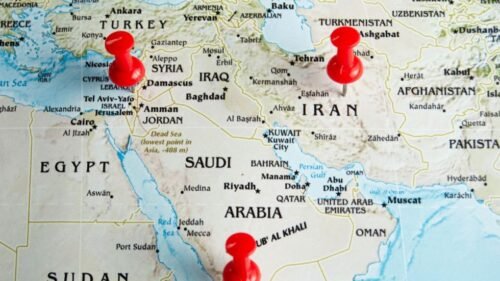
Iran strengthens its alliance with the Houthis as it loses influence in Syria, Lebanon and Gaza. Houthi forces expand attacks across Yemen and the Red Sea, threatening global trade and regional stability. A stable and autonomous South Yemen offers the only credible barrier to Iranian expansion and future conflict.
By
Thursday, November 13, 2025
</header>
Via Shutterstock.

November 13, 2025 06:51 EDT

Check out our comment feature!
Saved Successfully.
This article saved into your bookmarks. Click here to view your bookmarks.


The lack of any genuine international political or diplomatic initiative to resolve the Yemen crisis has sadly created a strategic vacuum — one that Iran is rapidly exploiting. Nowhere is this more visible than in Northern Yemen, where Tehran has deepened its partnership with the Houthis.
In the absence of decisive global engagement to bring about a peaceful solution, Iran views Yemen not simply as another conflict zone, but as a key arena in its broader regional project to reshape Middle Eastern power dynamics.
With Iran’s traditional influence receding in Syria, its Lebanese proxy Hezbollah weakened, and Hamas’s infrastructure largely dismantled in Gaza, Tehran now leans on the Houthis as its only and most active and dependable partner in the Middle East region.
Yemen has therefore shifted from a local and regional confrontation zone into a major international conflict zone — one with direct implications for global shipping, energy markets and international security. This confrontation also has major implications for the citizens of Yemen, who have endured one of the worst human catastrophes ever recorded.
Iran’s strategic recalibration
The erosion of its traditional footholds has forced Iran to recalibrate its regional position. Assad’s Syria is no longer a coherent launchpad for Iranian influence, and Lebanon is in freefall. At the same time, the Islamic Revolutionary Guard Corps (IRGC) is pouring more resources into Yemen, where the Houthis offer unique strategic advantages.
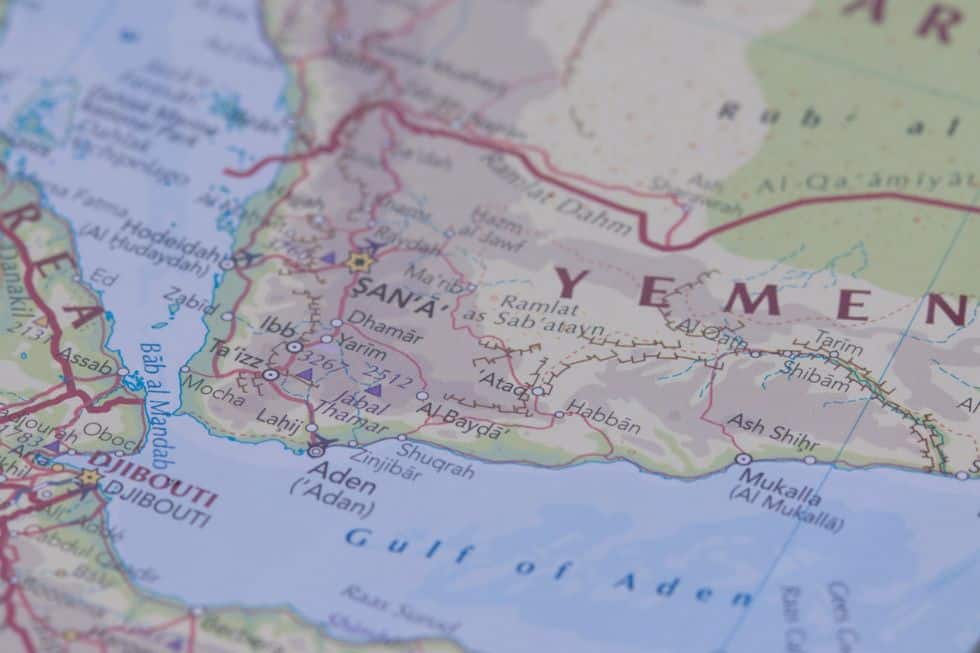
Through their control of large swaths of territory in North Yemen and the proximity to the Red Sea, the Bab al-Mandeb Strait and the Gulf of Aden, the Houthis allow Iran to project power far beyond its borders. As the Council on Foreign Relations (CFR) has reported, this reach now extends into the maritime domain, with drone and missile attacks on international shipping designed to disrupt global commerce and apply pressure on Israel and its Western allies.
From tactical support to strategic alliance
What began as limited tactical support has evolved into a long-term strategic alliance. The IRGC has developed vast smuggling networks through Oman and the Horn of Africa to arm the Houthis with precision weapons, according to a Council on Foreign Relations briefing. A 2023 analysis by the Clingendael Institute describes this relationship as a “strategic partnership rooted in shared geopolitical interests.” The Houthis, once a tribal insurgency, have been transformed into a core component of Iran’s regional deterrence strategy.
This alliance has grown even more important in light of Tehran’s fear of exclusion from any post-Gaza regional order. Iran is acutely aware that a diplomatic realignment in the Middle East that excludes it would threaten its long-term security. By enabling Houthi forces to escalate attacks across the Red Sea and into South Yemen, Tehran ensures it cannot be ignored.
Iran is actively shaping the future of regional negotiations, forcing all actors to account for its power — without having to engage directly. This allows Iran to escalate through proxies while maintaining plausible deniability, a tactic it has perfected in Iraq, Lebanon and Syria.
The south in Tehran’s crosshairs
Meanwhile, the focus of most international observers has remained narrowly fixed on Houthi actions in the Red Sea. Yet the more immediate threat lies further south. The liberated regions of South Yemen — free from Houthi control and governed by ideologically moderate southern institutions — are now directly in Tehran’s crosshairs.
Through expanding missile strikes and covert operations, the Houthis are actively targeting southern cities like Aden, Shabwa, Dhale and Mukalla, and threatening critical infrastructure in the Bab al-Mandeb corridor.
As reported by South24, the Houthis have already demonstrated their ability to halt oil exports from the South by targeting energy ports with drones, starving the country of foreign currency and leaving the internationally recognized government dependent on Gulf donors. This tactic allows Iran and the Houthis to choke the South economically, even without full military occupation.
Simultaneously, local intelligence agencies have detected attempts to destabilize liberated areas through Houthi sleeper cells and the recruitment of local proxies — a strategy reminiscent of Iran’s interference in both Iraq and Lebanon.
The objective is clear: prevent the rise of a unified and stable South that could serve as a political alternative to Houthi rule. As highlighted in multiple reports, Iran’s strategic calculus is to keep Yemen fragmented and unstable — an environment where Tehran can exert leverage through chaos, while ensuring that no single actor consolidates enough control to threaten its proxies.
Escalation and human cost
In response to recent Houthi attacks, Israel has shifted from targeting infrastructure to striking command elements in Sana’a, killing mid-level leaders in drone operations. While these operations deliver tactical success, they may also push the Houthis even deeper into Iran’s orbit, further cementing the proxy dynamic.
In the midst of this crisis, civilians suffer the most. Houthi forces continue to exploit every civilian casualty — real or fabricated — for propaganda, while repressing dissent through arbitrary detention, child soldier recruitment and harassment of international staff, including those affiliated with the UN.
The case for a stable South
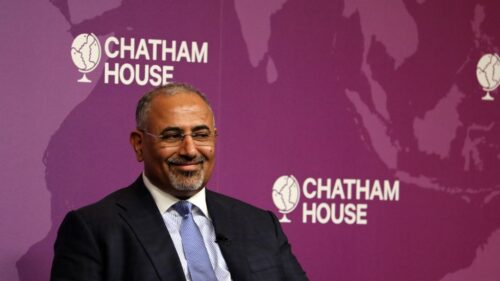
Amid this deterioration, the liberated south stands as the only viable counterbalance to Houthi and Iranian ambitions. Governed by the Southern Transitional Council (STC), the south has shown its readiness to collaborate with the international community on security, stability and maritime protection. Recent visits by STC President Aidroos Al-Zubaidi to Washington and European capitals have underscored this willingness — and raised the alarm over growing threats from the north.
Supporting South Yemen is not about charity. It is about regional and global security. With control of key ports, energy resources and the vital Bab al-Mandeb shipping lane, the South plays an essential role in protecting international commerce and deterring Iranian expansion. As the Friends of South Yemen and other platforms have documented, stability in the South is critical for safeguarding both local livelihoods and global trade routes.
Yemen now stands at the nexus of regional realignment, great-power rivalry and proxy warfare. The Houthis are no longer just a Yemeni faction — they are Iran’s most operationally active proxy in the post-Gaza era. But the real test for the international community lies not just in condemning Houthi aggression, but in enabling the only viable alternative: a stable, autonomous South Yemen capable of securing its own future and protecting global interests.
You can read the CIA Factbook and listen to MI6 people for your analysis, or you could read perspectives from our 3,000+ authors from 90+ countries and make sense of the world. Sign up for our free newsletters now.
<label for=”Your email will be shared with fairobserver and subject to its Privacy Policy”>I agree to receive emails and other content from Fair Observer. I understand that I may repeal my consent at any time. You can review our Privacy Policy and Terms of Use for further information…</label>
Empowering the South is a strategic necessity. It’s time for the world to act — not react. Yemen’s future, and the broader stability of the Red Sea corridor, depend on it.
[Kaitlyn Diana edited this piece.]
The views expressed in this article are the author’s own and do not necessarily reflect Fair Observer’s editorial policy.
Comment
0 Comments
Newest
Oldest
Most Voted
Most Voted
Inline Feedbacks
View all comments
Commenting Guidelines
Please read our commenting guidelines before commenting.
1. Be Respectful: Please be polite to the author. Avoid hostility. The whole point of Fair Observer is openness to different perspectives from perspectives from around the world.
2. Comment Thoughtfully: Please be relevant and constructive. We do not allow personal attacks, disinformation or trolling. We will remove hate speech or incitement.
3. Contribute Usefully: Add something of value — a point of view, an argument, a personal experience or a relevant link if you are citing statistics and key facts.
<label style=”font-size: 18px;”>
I have read and agree to the above commenting guidelines.
</label>
Please agree to the guidelines before proceeding.
I
Agree, Proceed to Login
Cancel
Related Reading
Al-Zubaidi’s Bold Appointments Signal a Shift in Yemen’s Power Balance
Aidrous Al-Zubaidi’s appointment of 14 officials marks a shift in Yemen’s politics, emphasizing the South’s demand for governance and representation….
by
Abdul Galil Shaif,
October 14, 2025
Houthis, Israel, Iran and Yemen: A Nation on the Brink
The Houthis, backed by Iran and entrenched in northern Yemen since 2014, have sought to project power beyond Yemen by…
by
Abdul Galil Shaif,
September 12, 2025
FO° Live: Make Sense of the Houthis and Civil War in Yemen
In this episode of FO° Live, experts explore Yemen’s ongoing crisis, focusing on the Houthis’ rise, regional implications and failures…
by
Abdul Galil Shaif, Christopher Roper Schell, Fatima Abo Alasrar, Fernando Carvajal & Michael Rubin,
June 7, 2025
Support Fair Observer
We rely on your support for our independence, diversity and quality.
For more than 10 years, Fair Observer has been free, fair and independent. No billionaire
owns us, no advertisers control us. We are a reader-supported nonprofit. Unlike many other
publications, we keep our content free for readers regardless of where they live or whether
they can afford to pay. We have no paywalls and no ads.
In the post-truth era of fake news, echo chambers and filter bubbles, we publish a plurality
of perspectives from around the world. Anyone can publish with us, but everyone goes through
a rigorous editorial process. So, you get fact-checked, well-reasoned content instead of
noise.
We publish 3,000+ voices from 90+ countries. We also conduct education and training programs
on subjects ranging from digital media and journalism to writing and critical thinking. This
doesn’t come cheap. Servers, editors, trainers and web developers cost
money.
Please consider supporting us on a regular basis as a recurring donor or a
sustaining member.
Will you support FO’s journalism?
We rely on your support for our independence, diversity and quality.
Donation Cycle
<label for=”donation_cycle_one_time”>One Time</label>
<label for=”donation_cycle_monthly”>Monthly</label>
<label for=”donation_cycle_yearly”>Yearly</label>
Donation Amount
<label for=”amount_11″>$11</label>
<label for=”amount_111″>$111</label>
<label for=”other”>Other</label>
$
The IRS recognizes Fair Observer as a section 501(c)(3) registered public charity
(EIN: 46-4070943), enabling you to claim a tax deduction.
Make Sense of the World
Unique Insights from 3,000+ Contributors in 90+ Countries
<label
for=”Your email will be shared with fairobserver and subject to its Privacy Policy”>I
agree to receive emails and other content from Fair Observer. I understand
that I
may repeal my consent at any time. You can review our Privacy Policy
and Terms of Use
for further
information .</label>
for=”Your email will be shared with fairobserver and subject to its Privacy Policy”>I
agree to receive emails and other content from Fair Observer. I understand
that I
may repeal my consent at any time. You can review our Privacy Policy
and Terms of Use
for further
information .</label>
Look at the world through many prisms — 3,000+ pairs of eyes from 90+ countries. We are a rare nonprofit in the world news space and you can get our newsletters for free.
<label for=”Your email will be shared with fairobserver and subject to its Privacy Policy”>I agree to receive emails and other content from Fair Observer. I understand that I may repeal my consent at any time. You can review our Privacy Policy and Terms of Use for further information…</label>
</main>
Fair Observer, 461 Harbor Blvd, Belmont, CA 94002, USA
<footer class=”mart70 fo-black-bg padt50 padb30″>
Sections
PUBLICATION
Support Fair Observer
We rely on your support for our independence, diversity and quality.


</footer>

<footer id=”fixed-footer” class=”support-footer”>


Support
independent, crowdsourced, nonprofit
journalism.
Fair Observer is a 501(c)(3) independent nonprofit. We are not owned by billionaires or controlled by
advertisers. We publish nearly 3,000 authors from over 90 countries after fact-checking and editing each
piece. We do not have a paywall and anyone can read us for free. With your vital donations, we can
continue
to do our work.
Please make a recurring (or even one-time) donation today. Even $1 goes a long way because
a
million donors
like you mean one million dollars. Thank you for keeping us independent, free and fair.
One Time
Monthly
Yearly
Monthly
Yearly
Continue 

</footer>

Sign into your Fair Observer Account
<label class=”tml-label” for=”user_login”>Username or Email Address</label>
<label class=”tml-label” for=”user_pass”>Password</label>
<label class=”tml-label” for=”rememberme”>Remember Me</label>
Log In
Forgot
Password
Forgot Password
Enter your registered email address or username. You will receive a
link to create a new password via email.
Please enter your username or email address. You will receive an email message with instructions on how to reset your password.
<label class=”tml-label” for=”user_login”>Username or Email Address</label>
Get New Password
Or
Return to
Login
Forgot Password
We have sent a link to your registered email address to reset your password.
<circle cx=”12.5″ cy=”12″ r=”12″ fill=”#414141″ />
Back to
Login
Become a Member & Enjoy Exclusive Benefits!
<circle cx=”12.5″ cy=”12″ r=”12″ fill=”#414141″ />
Access to comments feature
<circle cx=”12.5″ cy=”12″ r=”12″ fill=”#414141″ />
Bookmark your favorite articles
<circle cx=”12.5″ cy=”12″ r=”12″ fill=”#414141″ />
Exclusive invitations to FO° Talks & FO° Live
<circle cx=”12.5″ cy=”12″ r=”12″ fill=”#414141″ />
Access to all of our e-publications
Return to
Login
Login
NEWSLETTER
Make Sense of the World
Unique Insights from 2,500+ Contributors in 90+ Countries

<label
for=”Your email will be shared with fairobserver and subject to it’s Privacy Policy”>I
agree to receive emails and other content from Fair Observer. I understand
that I may repeal my consent at any time. You can review our Privacy Policy
and Terms of Use
for further information.</label>
for=”Your email will be shared with fairobserver and subject to it’s Privacy Policy”>I
agree to receive emails and other content from Fair Observer. I understand
that I may repeal my consent at any time. You can review our Privacy Policy
and Terms of Use
for further information.</label>
NEWSLETTER
Make Sense of the World
Unique Insights from 2,500+ Contributors in 90+ Countries
<label
for=”Your email will be shared with fairobserver and subject to it’s Privacy Policy”>I
agree to receive emails and other content from Fair Observer. I understand
that I may repeal my consent at any time. You can review our Privacy Policy
and Terms of Use
for further information.</label>
for=”Your email will be shared with fairobserver and subject to it’s Privacy Policy”>I
agree to receive emails and other content from Fair Observer. I understand
that I may repeal my consent at any time. You can review our Privacy Policy
and Terms of Use
for further information.</label>

Make Sense of the World
Unique Insights from 2,500+ Contributors in 90+ Countries
<label
for=”Your email will be shared with fairobserver and subject to its Privacy Policy”>I
agree to receive emails and other content from Fair Observer. I understand that I
may repeal my consent at any time. You can review our Privacy Policy and Terms of Use for further
information .</label>
for=”Your email will be shared with fairobserver and subject to its Privacy Policy”>I
agree to receive emails and other content from Fair Observer. I understand that I
may repeal my consent at any time. You can review our Privacy Policy and Terms of Use for further
information .</label>
We Need Your Consent
We use cookies to give you the best possible experience. Learn more about how we use cookies or edit your cookie preferences. Privacy Policy. My Options I Accept
Privacy & Cookies Policy
Close
Edit Cookie Preferences
The Fair Observer website uses digital cookies so it can collect statistics on how many visitors come to the site, what content is viewed and for how long, and the general location of the computer network of the visitor. These statistics are collected and processed using the Google Analytics service. Fair Observer uses these aggregate statistics from website visits to help improve the content of the website and to provide regular reports to our current and future donors and funding organizations. The type of digital cookie information collected during your visit and any derived data cannot be used or combined with other information to personally identify you. Fair Observer does not use personal data collected from its website for advertising purposes or to market to you.
As a convenience to you, Fair Observer provides buttons that link to popular social media sites, called social sharing buttons, to help you share Fair Observer content and your comments and opinions about it on these social media sites. These social sharing buttons are provided by and are part of these social media sites. They may collect and use personal data as described in their respective policies. Fair Observer does not receive personal data from your use of these social sharing buttons. It is not necessary that you use these buttons to read Fair Observer content or to share on social media.
Necessary
<label class=”form-check-label” for=”wt-cli-checkbox-necessary”>Necessary</label>
Always Enabled
These cookies essential for the website to function.
Social Media
<label for=”wt-cli-checkbox-social_media” class=”cli-slider” data-cli-enable=”Enabled” data-cli-disable=”Disabled”>Social Media</label>
These cookies are used to enable sharing or following of content that you find interesting on our website. These settings apply to third-party social networking and other websites.
Performance & Functionality
<label for=”wt-cli-checkbox-performance” class=”cli-slider” data-cli-enable=”Enabled” data-cli-disable=”Disabled”>Performance & Functionality</label>
These cookies are used to enhance the performance and functionality of our website. They provide statistics on how our website is used and help us improve by measuring errors. Certain functionalities on our website may become unavailable without these cookies.
Analytics
<label for=”wt-cli-checkbox-analytics” class=”cli-slider” data-cli-enable=”Enabled” data-cli-disable=”Disabled”>Analytics</label>
SAVE & ACCEPT
<textarea id=’wpd-editor-source-code’></textarea>Insert
</body>
</html>
Total Views:
Source: World Politics - fairobserver.com