<g id=”cross”>
<line class=”cls-1″ x1=”7″ x2=”25″ y1=”7″ y2=”25″ />
<line class=”cls-1″ x1=”7″ x2=”25″ y1=”25″ y2=”7″ />
</g>
Anjel Chakma’s Killing Exposes India’s Denial of Racism
<circle cx=”10.5″ cy=”10.5″ r=”7.5″ />
<line x1=”21″ x2=”15.8″ y1=”21″ y2=”15.8″ />
<nav class=”fo-navigation pos-r” itemscope itemtype=”http://schema.org/SiteNavigationElement”>
Login
Sections <circle cx=”10.5″ cy=”10.5″ r=”7.5″ />
<line x1=”21″ x2=”15.8″ y1=”21″ y2=”15.8″ /> Search
<line x1=”21″ x2=”15.8″ y1=”21″ y2=”15.8″ />
Search


PUBLICATION

Support Fair Observer
We rely on your support for our independence, diversity and quality.
</nav>
<circle cx=”10.5″ cy=”10.5″ r=”7.5″ />
<line x1=”21″ x2=”15.8″ y1=”21″ y2=”15.8″ />
<line x1=”21″ x2=”15.8″ y1=”21″ y2=”15.8″ />
Search
</header>

<main id=”main” class=”site-main” role=”main”> 





Thursday, January 22, 2026
<header class=”entry-header”>
Central & South Asia
Anjel Chakma’s Killing Exposes India’s Denial of Racism
The killing of Anjel Chakma, a young student from India’s Northeast, exposes the persistent denial of racism within Indian society and institutions. His death reflects how racial abuse against Northeastern Indians is routinely minimized and inadequately addressed by law enforcement and the legal system. Without recognizing racism as a structural problem, India’s constitutional promise of equality remains unfulfilled.
By
Thursday, January 22, 2026
</header>
Via Shutterstock.

January 22, 2026 06:22 EDT

Check out our comment feature!
Saved Successfully.
This article saved into your bookmarks. Click here to view your bookmarks.


The killing of 24-year-old student Anjel Chakma in Dehradun has forced India to confront an uncomfortable truth it has long avoided: racism exists within its borders, and it kills. Chakma, who was from Tripura in India’s Northeast region, was attacked in December after he and his younger brother were allegedly subjected to racial abuse while shopping for groceries. Seventeen days later, Chakma died from his injuries.
According to his brother, the assault began with racial slurs that framed the two as outsiders. The situation escalated quickly. His brother was struck with a metal object, while Chakma was stabbed in the head and back. The violence was sudden, brutal and devastating. For many Northeastern Indians, however, it was also painfully familiar.
Chakma’s death was not an isolated act of violence. It was the culmination of everyday racial hostility that Northeastern Indians face across the country, especially in mainland cities where their appearance, accents and cultures are marked as “foreign.” What happened in Dehradun reflects a broader pattern of racialization that India continues to deny.
A pattern, not an outlier
For many from the Northeast, a region with distinct ethnicities, cultures, languages and physical features that often differ sharply from those of Mainland Indians, daily experiences of name-calling, mocking of physical features and assumptions of being “foreign” or “outsiders” create a sense that Mainland Indian spaces aren’t fully welcoming to them.
These acts are often dismissed as ignorance or prejudice, but their persistence reveals something deeper. Racism in India is not accidental; it is structural.
Chakma’s death is one among several high-profile tragedies. In 2014, Nido Tania, a 19-year-old student from Arunachal Pradesh, was beaten to death in Delhi in 2014 following an altercation in which he was targeted with racist abuse. His death sparked protests and national outrage. Activists demanded legal reforms and recognition of racism as a serious crime.
Yet more than ten years later, little has changed. Chakma’s killing shows that the promises made after Tania’s death were never fulfilled. The same demands for accountability, legal recognition and dignity are being raised again, underscoring how slow and superficial India’s response has been.
Law, identity and the limits of “unity in diversity”
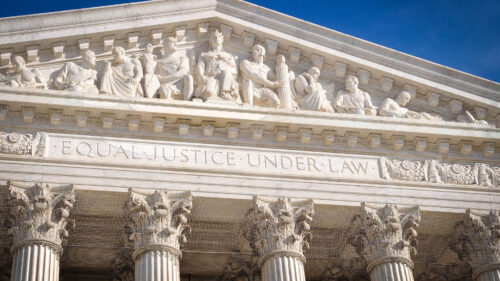
India’s Constitution guarantees equality before the law and celebrates the country’s diversity. In practice, however, there is no national law that explicitly recognizes racial discrimination or racially motivated violence as distinct offenses, unlike caste or gender. Hate speech provisions exist, but they are vague and rarely applied in ways that reflect the lived experiences of racialized communities.
After Chakma’s murder, student groups and civil liberties organizations have filed a public interest litigation seeking hate-crime guidelines and urging the courts to recognize racially motivated violence as a discrete constitutional wrong. Even the National Commission for Scheduled Tribes has intervened, pushing police to treat the incident with urgency.
The debate has revealed two disturbing tendencies: first, official reluctance to acknowledge racism as a motive, even when victims and their communities say it plainly; second, a cultural denial that racism, structurally embedded and socially normalized, exists within Indian society’s own borders.
Police in the Chakma case have publicly stated that no racial motive has been established so far, claiming that there is a lack of clear evidence in the first incident report (FIR) rather than the lived testimony of the victim’s brother.
Not an isolated experience: racism beyond the northeast
While Chakma’s death has once again brought to light the violence that people from India’s Northeast face because of their ethnic and racial background, it’s important to remember that this pattern is not limited to one community.
African students, too, have faced similar challenges; in particular, they have reported that they faced racial profiling and harassment in Indian cities.
The similarities are striking. In both cases, visible difference becomes a marker of exclusion. Skin color, facial features and cultural unfamiliarity are used to justify dehumanization. These experiences reveal that racism in India operates through a hierarchy of belonging, where citizenship alone does not guarantee safety or dignity.
Addressing racism against Northeastern Indians, therefore, cannot happen in isolation. It requires confronting how race, identity and power function more broadly within Indian society.
Why an antiracism law matters
The absence of a clear legal framework for racial discrimination has serious consequences. When racial motives are downplayed, victims and their families are made to feel that their experiences are insignificant. Prosecutors are left with blunt legal tools that fail to capture the specific harm caused by racial violence. Society, meanwhile, receives the message that racism is not serious enough to warrant dedicated protections.
A specific antiracism law would not be symbolic. It would acknowledge patterns of harm and provide law enforcement and courts with clearer standards for investigation and accountability. Just as India has developed legal frameworks to address caste-based and gender-based discrimination, it must do the same for race and ethnicity.
Beyond law: toward cultural inclusion
Legal reform alone will not end racism. Chakma’s death also exposes a cultural failure to recognize Northeastern Indians as equal participants in the national community. While the region is formally part of India, its people are often treated as peripheral, exotic or foreign.
This exclusion is reinforced through media representation, political rhetoric and everyday social interactions. Jokes that reduce people to stereotypes create an environment in which violence becomes easier to justify. Over time, this normalizes the idea that some lives matter less than others.
Education, responsible media coverage and political leadership are essential to reshaping these narratives. Equality must extend beyond constitutional language into social reality.
Chakma’s killing is a test of India’s commitment to its own ideals. If unity in diversity is to mean anything, it must include legal recognition of racism and a willingness to confront uncomfortable truths about who is considered fully Indian.
Read more, think deeper and become smarter, perhaps even wiser, one article at a time. Sign up for our free newsletters now.
<label for=”Your email will be shared with fairobserver and subject to its Privacy Policy”>I agree to receive emails and other content from Fair Observer. I understand that I may repeal my consent at any time. You can review our Privacy Policy and Terms of Use for further information…</label>
Justice in this case is not only about punishing those responsible. It is about acknowledging systemic blind spots and ensuring that no one is made to feel like an outsider in their own country. Without that reckoning, tragedies like Chakma’s will continue to repeat themselves.
[Kaitlyn Diana edited this piece.]
The views expressed in this article are the author’s own and do not necessarily reflect Fair Observer’s editorial policy.
Comment
0 Comments
Newest
Oldest
Most Voted
Most Voted
Inline Feedbacks
View all comments
Commenting Guidelines
Please read our commenting guidelines before commenting.
1. Be Respectful: Please be polite to the author. Avoid hostility. The whole point of Fair Observer is openness to different perspectives from perspectives from around the world.
2. Comment Thoughtfully: Please be relevant and constructive. We do not allow personal attacks, disinformation or trolling. We will remove hate speech or incitement.
3. Contribute Usefully: Add something of value — a point of view, an argument, a personal experience or a relevant link if you are citing statistics and key facts.
<label style=”font-size: 18px;”>
I have read and agree to the above commenting guidelines.
</label>
Please agree to the guidelines before proceeding.
I
Agree, Proceed to Login
Cancel
Related Reading
US Supreme Court’s Ruling on Affirmative Action is a Wake-up Call For India
Self-proclaimed anti-racism activists push disempowering narratives of victimhood and policies which are neither helpful nor free from regressive thinking. The…
by
Vikram Zutshi,
July 4, 2023
Caste Is Now Weaponized Against Indian Americans
The Hindu American Foundation (HAF) has initiated legal action against California’s Civil Rights Department, asserting it infringes upon Hindu Americans’…
by
Vikram Zutshi & Suhag Shukla,
April 4, 2023
Racism Is in Bollywood’s DNA
Bollywood perpetuates the misogyny, sexism and racism that have blighted Indian society for centuries and still harm millions of women…
by
Ankita M. Kumar,
September 16, 2020
Support Fair Observer
We rely on your support for our independence, diversity and quality.
For more than 10 years, Fair Observer has been free, fair and independent. No billionaire
owns us, no advertisers control us. We are a reader-supported nonprofit. Unlike many other
publications, we keep our content free for readers regardless of where they live or whether
they can afford to pay. We have no paywalls and no ads.
In the post-truth era of fake news, echo chambers and filter bubbles, we publish a plurality
of perspectives from around the world. Anyone can publish with us, but everyone goes through
a rigorous editorial process. So, you get fact-checked, well-reasoned content instead of
noise.
We publish 3,000+ voices from 90+ countries. We also conduct education and training programs
on subjects ranging from digital media and journalism to writing and critical thinking. This
doesn’t come cheap. Servers, editors, trainers and web developers cost
money.
Please consider supporting us on a regular basis as a recurring donor or a
sustaining member.
Will you support FO’s journalism?
We rely on your support for our independence, diversity and quality.
Donation Cycle
<label for=”donation_cycle_one_time”>One Time</label>
<label for=”donation_cycle_monthly”>Monthly</label>
<label for=”donation_cycle_yearly”>Yearly</label>
Donation Amount
<label for=”amount_11″>$11</label>
<label for=”amount_111″>$111</label>
<label for=”other”>Other</label>
$
The IRS recognizes Fair Observer as a section 501(c)(3) registered public charity
(EIN: 46-4070943), enabling you to claim a tax deduction.
Make Sense of the World
Unique Insights from 3,000+ Contributors in 90+ Countries
<label
for=”Your email will be shared with fairobserver and subject to its Privacy Policy”>I
agree to receive emails and other content from Fair Observer. I understand
that I
may repeal my consent at any time. You can review our Privacy Policy
and Terms of Use
for further
information .</label>
for=”Your email will be shared with fairobserver and subject to its Privacy Policy”>I
agree to receive emails and other content from Fair Observer. I understand
that I
may repeal my consent at any time. You can review our Privacy Policy
and Terms of Use
for further
information .</label>
You can read the CIA Factbook and listen to MI6 people for your analysis, or you could read perspectives from our 3,000+ authors from 90+ countries and make sense of the world. Sign up for our free newsletters now.
<label for=”Your email will be shared with fairobserver and subject to its Privacy Policy”>I agree to receive emails and other content from Fair Observer. I understand that I may repeal my consent at any time. You can review our Privacy Policy and Terms of Use for further information…</label>
</main>
Fair Observer, 461 Harbor Blvd, Belmont, CA 94002, USA
<footer class=”mart70 fo-black-bg padt50 padb30″>
Sections
PUBLICATION
Support Fair Observer
We rely on your support for our independence, diversity and quality.


</footer>

<footer id=”fixed-footer” class=”support-footer”>


Support
independent, crowdsourced, nonprofit
journalism.
Fair Observer is a 501(c)(3) independent nonprofit. We are not owned by billionaires or controlled by
advertisers. We publish nearly 3,000 authors from over 90 countries after fact-checking and editing each
piece. We do not have a paywall and anyone can read us for free. With your vital donations, we can
continue
to do our work.
Please make a recurring (or even one-time) donation today. Even $1 goes a long way because
a
million donors
like you mean one million dollars. Thank you for keeping us independent, free and fair.
One Time
Monthly
Yearly
Monthly
Yearly
Continue 

</footer>

Sign into your Fair Observer Account
<label class=”tml-label” for=”user_login”>Username or Email Address</label>
<label class=”tml-label” for=”user_pass”>Password</label>
<label class=”tml-label” for=”rememberme”>Remember Me</label>
Log In
Forgot
Password
Password
Forgot Password
Enter your registered email address or username. You will receive a
link to create a new password via email.
Please enter your username or email address. You will receive an email message with instructions on how to reset your password.
<label class=”tml-label” for=”user_login”>Username or Email Address</label>
Get New Password
Or
Return to
Login
Forgot Password
We have sent a link to your registered email address to reset your password.
<circle cx=”12.5″ cy=”12″ r=”12″ fill=”#414141″ />
Back to
Login
Become a Member & Enjoy Exclusive Benefits!
<circle cx=”12.5″ cy=”12″ r=”12″ fill=”#414141″ />
Access to comments feature
<circle cx=”12.5″ cy=”12″ r=”12″ fill=”#414141″ />
Bookmark your favorite articles
<circle cx=”12.5″ cy=”12″ r=”12″ fill=”#414141″ />
Exclusive invitations to FO° Talks & FO° Live
<circle cx=”12.5″ cy=”12″ r=”12″ fill=”#414141″ />
Access to all of our e-publications
Return to
Login
Login
NEWSLETTER
Make Sense of the World
Unique Insights from 2,500+ Contributors in 90+ Countries

<label
for=”Your email will be shared with fairobserver and subject to it’s Privacy Policy”>I
agree to receive emails and other content from Fair Observer. I understand
that I may repeal my consent at any time. You can review our Privacy Policy
and Terms of Use
for further information.</label>
for=”Your email will be shared with fairobserver and subject to it’s Privacy Policy”>I
agree to receive emails and other content from Fair Observer. I understand
that I may repeal my consent at any time. You can review our Privacy Policy
and Terms of Use
for further information.</label>
NEWSLETTER
Make Sense of the World
Unique Insights from 2,500+ Contributors in 90+ Countries
<label
for=”Your email will be shared with fairobserver and subject to it’s Privacy Policy”>I
agree to receive emails and other content from Fair Observer. I understand
that I may repeal my consent at any time. You can review our Privacy Policy
and Terms of Use
for further information.</label>
for=”Your email will be shared with fairobserver and subject to it’s Privacy Policy”>I
agree to receive emails and other content from Fair Observer. I understand
that I may repeal my consent at any time. You can review our Privacy Policy
and Terms of Use
for further information.</label>

Make Sense of the World
Unique Insights from 2,500+ Contributors in 90+ Countries
<label
for=”Your email will be shared with fairobserver and subject to its Privacy Policy”>I
agree to receive emails and other content from Fair Observer. I understand that I
may repeal my consent at any time. You can review our Privacy Policy and Terms of Use for further
information .</label>
for=”Your email will be shared with fairobserver and subject to its Privacy Policy”>I
agree to receive emails and other content from Fair Observer. I understand that I
may repeal my consent at any time. You can review our Privacy Policy and Terms of Use for further
information .</label>
We Need Your Consent
We use cookies to give you the best possible experience. Learn more about how we use cookies or edit your cookie preferences. Privacy Policy. My Options I Accept
Privacy & Cookies Policy
Close
Edit Cookie Preferences
The Fair Observer website uses digital cookies so it can collect statistics on how many visitors come to the site, what content is viewed and for how long, and the general location of the computer network of the visitor. These statistics are collected and processed using the Google Analytics service. Fair Observer uses these aggregate statistics from website visits to help improve the content of the website and to provide regular reports to our current and future donors and funding organizations. The type of digital cookie information collected during your visit and any derived data cannot be used or combined with other information to personally identify you. Fair Observer does not use personal data collected from its website for advertising purposes or to market to you.
As a convenience to you, Fair Observer provides buttons that link to popular social media sites, called social sharing buttons, to help you share Fair Observer content and your comments and opinions about it on these social media sites. These social sharing buttons are provided by and are part of these social media sites. They may collect and use personal data as described in their respective policies. Fair Observer does not receive personal data from your use of these social sharing buttons. It is not necessary that you use these buttons to read Fair Observer content or to share on social media.
Necessary
<label class=”form-check-label” for=”wt-cli-checkbox-necessary”>Necessary</label>
Always Enabled
These cookies essential for the website to function.
Social Media
<label for=”wt-cli-checkbox-social_media” class=”cli-slider” data-cli-enable=”Enabled” data-cli-disable=”Disabled”>Social Media</label>
These cookies are used to enable sharing or following of content that you find interesting on our website. These settings apply to third-party social networking and other websites.
Performance & Functionality
<label for=”wt-cli-checkbox-performance” class=”cli-slider” data-cli-enable=”Enabled” data-cli-disable=”Disabled”>Performance & Functionality</label>
These cookies are used to enhance the performance and functionality of our website. They provide statistics on how our website is used and help us improve by measuring errors. Certain functionalities on our website may become unavailable without these cookies.
Analytics
<label for=”wt-cli-checkbox-analytics” class=”cli-slider” data-cli-enable=”Enabled” data-cli-disable=”Disabled”>Analytics</label>
SAVE & ACCEPT
<textarea id=’wpd-editor-source-code’></textarea>Insert
</body></html>
Total Views:
Source: World Politics - fairobserver.com