<g id=”cross”>
<line class=”cls-1″ x1=”7″ x2=”25″ y1=”7″ y2=”25″ />
<line class=”cls-1″ x1=”7″ x2=”25″ y1=”25″ y2=”7″ />
</g>
Iran, Gaza and the Politics of Conditional Solidarity Within Western Activist Circles
<circle cx=”10.5″ cy=”10.5″ r=”7.5″ />
<line x1=”21″ x2=”15.8″ y1=”21″ y2=”15.8″ />
<nav class=”fo-navigation pos-r” itemscope itemtype=”http://schema.org/SiteNavigationElement”>
Login
Sections <circle cx=”10.5″ cy=”10.5″ r=”7.5″ />
<line x1=”21″ x2=”15.8″ y1=”21″ y2=”15.8″ /> Search
<line x1=”21″ x2=”15.8″ y1=”21″ y2=”15.8″ />
Search


PUBLICATION
Support Fair Observer
We rely on your support for our independence, diversity and quality.
</nav>
<circle cx=”10.5″ cy=”10.5″ r=”7.5″ />
<line x1=”21″ x2=”15.8″ y1=”21″ y2=”15.8″ />
<line x1=”21″ x2=”15.8″ y1=”21″ y2=”15.8″ />
Search
</header>

<main id=”main” class=”site-main” role=”main”> 


Tuesday, February 10, 2026
<header class=”entry-header”>
Middle East News
Iran, Gaza and the Politics of Conditional Solidarity Within Western Activist Circles
Global solidarity is complicated by strategic alliances formed out of necessity rather than shared beliefs, especially in struggles involving Iran and Palestine. Conditional compassion often leads to selective defense of human rights based on political loyalties, leaving many oppressed groups overlooked. True solidarity requires acknowledging multiple truths and opposing all forms of oppression without compromise.
By
Tuesday, February 10, 2026
</header>
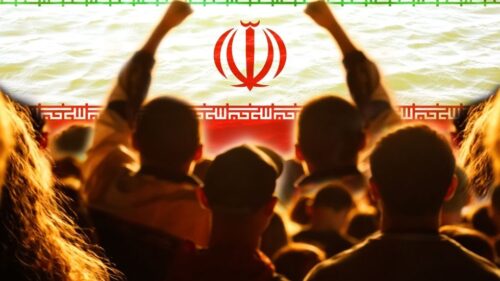
Photo by Craig Melville via Unsplash.

February 10, 2026 06:29 EDT

Check out our comment feature!
Saved Successfully.
This article saved into your bookmarks. Click here to view your bookmarks.


Last summer, I lived in Athens, volunteering with a nongovernmental organization (NGO) that provides food to refugees and people experiencing homelessness. I stayed in Exarcheia, a neighborhood that some of my friends warned me about in advance. They described it as dangerous, overrun by anarchists, radicals, even criminals.
What I found instead was warmth. The streets were alive with political graffiti, cafés run by refugees and conversations that stretched long into the night. People spoke openly about injustice and weren’t afraid to take clear moral positions. I loved it.
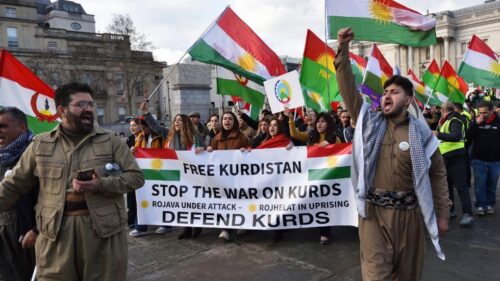
One afternoon, however, a contradiction stopped me in my tracks. On one wall, a poster condemned Turkey’s violence against the Kurds. Just meters away, another glorified the Iranian regime and its so-called “axis of resistance” — an authoritarian state notorious for repressing Kurds, crushing dissent and executing protesters.
The contradiction was hard to miss.
I understood the frustration behind it. Many people are desperate for anything that might challenge Israel’s military dominance and Western hypocrisy over Palestine. The regime in Iran presents itself as part of that resistance. But when did defending one people start requiring excuses for another’s oppression?
This question goes far beyond Athens. It sits at the heart of how global solidarity is practiced today, particularly in relation to Iran and Palestine.
The complexity of solidarity in a polarized world
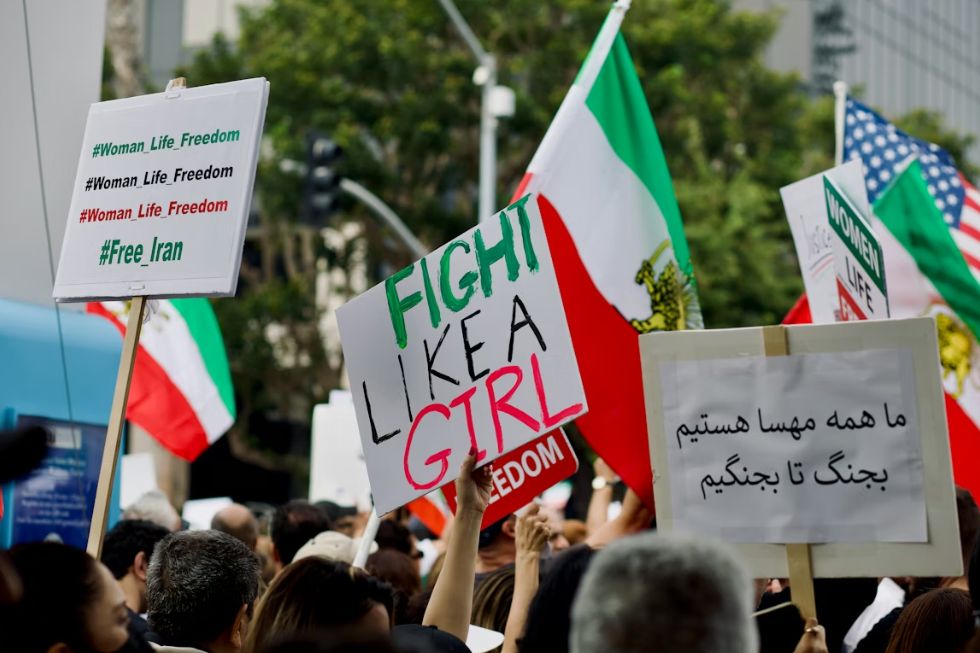
Since the protests in Iran and violent retaliation by the regime, which left almost 30,000 dead, social media has been flooded with massive support for the protestors, but also a loud and sizable number of people supporting the regime.
One famous UK-based political commentator, widely followed for her solidarity with Palestine, tweeted, “I heard the regime killed everyone. There’s no one left in Iran 😭,” which was seen by many as sarcastically dismissing or mocking the killings of protestors. She would later go on to claim that “many Muslims do want to live under a theocratic system — and many women support mandatory hijab,” all while Iranians were protesting the regime that has murdered women like Mahsa Amini for not wearing the hijab properly.
Another influencer on Instagram referred to Iranians who want to cancel Huda Beauty founder Huda Kattan for not standing with the Iranian protestors as being “Spiritually Israeli.”
Prominent Iranian-American left-wing activist Ariana Jasmine, who has been very vocal on Palestine and progressive issues in the US, has also shared how she has seen the Iranian movement being dismissed as a Central Intelligence Agency (CIA) or Mossad operation by fellow leftists. She even disabled comments on her posts because of the backlash she faced for supporting the protests in Iran, underscoring how ideological loyalty has, for some, overtaken solidarity with people resisting state violence.
Many have also noticed the prevalence of Israeli flags in anti-regime protests held abroad. This, along with some Iranian opposition leaders receiving support from Israel have also been used to criticize the movement as being “Zionist aligned,” which even the regime uses to delegitimize the protests.
Something similar is done to supporters of the Palestinian cause. Supporters are routinely accused of being apologists for Tehran, supporting Hamas’ oppression of the LGBTQcommunity or of ignoring Palestinian ties with China, despite Beijing’s repression of Uyghur Muslims.
The implication is simple: if Palestinians accept backing from morally compromised governments, then their cause itself must be morally compromised. These have become common talking points for the Western right, who, while condemning Iranian and Chinese abuses, continue to arm and support Israeli aggression in Palestine.
Similarly, Iranians taking help from the US or having the support of Israel are labeled as being complicit in Neo-Imperialism and being in opposition to leftist international goals. This is what conditional compassion looks like. Human rights are defended when they align with political loyalties and quietly abandoned when they complicate a preferred narrative.
Strategic alliances vs. moral endorsement
Opposing such hypocrisy does not require pretending that oppressed movements operate in a moral vacuum. In international politics, shared values are a luxury; shared interests are a currency. Movements under occupation, siege or dictatorship do not get to choose allies from a menu of ethically pristine options.
Palestinian factions did not turn to Iran or China because they admired theocracy or one-party rule. They did so because Western powers were aligned with Israel, and alternatives were scarce. To mistake this for ideological devotion is to misunderstand how stateless or semi-stateless movements survive.
A drowning person does not ask who is offering the saving hand.
The same logic applies to Iranian opposition movements. Protesters confronting the Islamic Republic face a state with prisons, militias and oil wealth. Some opposition figures accept support from abroad, openly or quietly, not because they dream of becoming proxies, but because external pressure is one of the few tools available against a deeply entrenched regime.
Seeking help from abroad isn’t new; strategic alliances abroad were formed by revolutionaries and freedom fighters throughout history, from the US to the Philippines to Bangladesh.
In fact, during World War II, Indian independence leader Subhas Chandra Bose sought support from Imperial Japan to fight British rule. Bose was not a fascist or imperialist; in fact, he was a Socialist, but his move reflected a grim reality: oppressed movements often make decisions that look indefensible from a distance and inevitable from within in order to survive.
Understanding this does not require approval. It requires maturity.
The problem begins when alliances of necessity and strategy are mistaken for alliances of belief. When Palestinians are dismissed as “pro-Ayatollah,” or Iranian dissidents are written off as “Zionist-adjacent,” the complexity of the situation gets oversimplified. These labels are not about understanding reality; they are about deciding who deserves sympathy.
The Iranians know this dynamic well. When Israeli forces bombed them, many on the left denounced such actions, and rightly so. But when the Ayatollah regime executes Iranians, it does not fit neatly into the “anti-imperialist” script, so their deaths are often met with silence.
Tactical cooperation should never be confused with moral endorsement. Accepting support from a powerful actor does not require silence about that actor’s abuses. When movements or their supporters begin excusing or denying the crimes of their benefactors, something essential is lost.
The importance of principle-based solidarity
Solidarity rooted in principle still matters. Defending Palestinian rights does not require minimizing Iran’s repression of Kurds or women, or China’s treatment of Uyghurs. Supporting Iranian protesters does not require celebrating Israeli military violence. We should be capable of holding more than one truth at a time.
Too often, today’s discourse demands purity from the powerless and indulgence for the powerful. Oppressed communities are interrogated for every strategic alliance, while states with vast resources are excused as “complex.” This tells us less about ethics than about comfort.
No owners, no ads, just global voices and first class editors. We’re a nonprofit that puts real journalism first. Join us — subscribe to our free newsletters — now.
<label for=”Your email will be shared with fairobserver and subject to its Privacy Policy”>I agree to receive emails and other content from Fair Observer. I understand that I may repeal my consent at any time. You can review our Privacy Policy and Terms of Use for further information…</label>
Human rights are supposed to be universal. That is the point. When compassion becomes conditional, the people who fall through the cracks are always the same: Kurds, Palestinians, Iranians, Uyghurs and countless others whose suffering refuses to conform to someone else’s politics.
Recognizing this does not cheapen justice. It brings us closer to it.
[Kaitlyn Diana edited this piece.]
The views expressed in this article are the author’s own and do not necessarily reflect Fair Observer’s editorial policy.
Comment
0 Comments
Newest
Oldest
Most Voted
Most Voted
Inline Feedbacks
View all comments
Commenting Guidelines
Please read our commenting guidelines before commenting.
1. Be Respectful: Please be polite to the author. Avoid hostility. The whole point of Fair Observer is openness to different perspectives from perspectives from around the world.
2. Comment Thoughtfully: Please be relevant and constructive. We do not allow personal attacks, disinformation or trolling. We will remove hate speech or incitement.
3. Contribute Usefully: Add something of value — a point of view, an argument, a personal experience or a relevant link if you are citing statistics and key facts.
<label style=”font-size: 18px;”>
I have read and agree to the above commenting guidelines.
</label>
Please agree to the guidelines before proceeding.
I
Agree, Proceed to Login
Cancel
Related Reading
Why the Iranian Opposition Has Failed to Unite Against the Regime in Iran
Widespread protests across Iran, especially in Kurdish regions, have been met with violent crackdowns, highlighting deep-rooted demands for autonomy and…
by
Halmat Palani,
February 5, 2026
US Intervention Could Spark Chaos in Iran
US threats of military intervention in Iran amid protests risk unintended consequences, including regime destabilization and regional fragmentation. While some…
by
James M. Dorsey,
January 18, 2026
Iran’s Protest Moment: Four Stakeholders, One Coherent Vision
Iran’s protests stem from deep economic hardship and a clash between societal change and an entrenched regime. Four groups —…
by
Ashraf Haidari,
January 15, 2026
Support Fair Observer
We rely on your support for our independence, diversity and quality.
For more than 10 years, Fair Observer has been free, fair and independent. No billionaire
owns us, no advertisers control us. We are a reader-supported nonprofit. Unlike many other
publications, we keep our content free for readers regardless of where they live or whether
they can afford to pay. We have no paywalls and no ads.
In the post-truth era of fake news, echo chambers and filter bubbles, we publish a plurality
of perspectives from around the world. Anyone can publish with us, but everyone goes through
a rigorous editorial process. So, you get fact-checked, well-reasoned content instead of
noise.
We publish 3,000+ voices from 90+ countries. We also conduct education and training programs
on subjects ranging from digital media and journalism to writing and critical thinking. This
doesn’t come cheap. Servers, editors, trainers and web developers cost
money.
Please consider supporting us on a regular basis as a recurring donor or a
sustaining member.
Will you support FO’s journalism?
We rely on your support for our independence, diversity and quality.
Donation Cycle
<label for=”donation_cycle_one_time”>One Time</label>
<label for=”donation_cycle_monthly”>Monthly</label>
<label for=”donation_cycle_yearly”>Yearly</label>
Donation Amount
<label for=”amount_11″>$11</label>
<label for=”amount_111″>$111</label>
<label for=”other”>Other</label>
$
The IRS recognizes Fair Observer as a section 501(c)(3) registered public charity
(EIN: 46-4070943), enabling you to claim a tax deduction.
Make Sense of the World
Unique Insights from 3,000+ Contributors in 90+ Countries
<label
for=”Your email will be shared with fairobserver and subject to its Privacy Policy”>I
agree to receive emails and other content from Fair Observer. I understand
that I
may repeal my consent at any time. You can review our Privacy Policy
and Terms of Use
for further
information .</label>
for=”Your email will be shared with fairobserver and subject to its Privacy Policy”>I
agree to receive emails and other content from Fair Observer. I understand
that I
may repeal my consent at any time. You can review our Privacy Policy
and Terms of Use
for further
information .</label>
No owners, no ads, just global voices and first class editors. We’re a nonprofit that puts real journalism first. Join us — subscribe to our free newsletters — now.
<label for=”Your email will be shared with fairobserver and subject to its Privacy Policy”>I agree to receive emails and other content from Fair Observer. I understand that I may repeal my consent at any time. You can review our Privacy Policy and Terms of Use for further information…</label>
</main>
Fair Observer, 461 Harbor Blvd, Belmont, CA 94002, USA
<footer class=”mart70 fo-black-bg padt50 padb30″>
Sections
PUBLICATION
Support Fair Observer
We rely on your support for our independence, diversity and quality.


</footer>

<footer id=”fixed-footer” class=”support-footer”>


Support
independent, crowdsourced, nonprofit
journalism.
Fair Observer is a 501(c)(3) independent nonprofit. We are not owned by billionaires or controlled by
advertisers. We publish nearly 3,000 authors from over 90 countries after fact-checking and editing each
piece. We do not have a paywall and anyone can read us for free. With your vital donations, we can
continue
to do our work.
Please make a recurring (or even one-time) donation today. Even $1 goes a long way because
a
million donors
like you mean one million dollars. Thank you for keeping us independent, free and fair.
One Time
Monthly
Yearly
Monthly
Yearly
Continue 

</footer>

Sign into your Fair Observer Account
<label class=”tml-label” for=”user_login”>Username or Email Address</label>
<label class=”tml-label” for=”user_pass”>Password</label>
<label class=”tml-label” for=”rememberme”>Remember Me</label>
Log In
Forgot
Password
Password
Forgot Password
Enter your registered email address or username. You will receive a
link to create a new password via email.
Please enter your username or email address. You will receive an email message with instructions on how to reset your password.
<label class=”tml-label” for=”user_login”>Username or Email Address</label>
Get New Password
Or
Return to
Login
Forgot Password
We have sent a link to your registered email address to reset your password.
<circle cx=”12.5″ cy=”12″ r=”12″ fill=”#414141″ />
Back to
Login
Become a Member & Enjoy Exclusive Benefits!
<circle cx=”12.5″ cy=”12″ r=”12″ fill=”#414141″ />
Access to comments feature
<circle cx=”12.5″ cy=”12″ r=”12″ fill=”#414141″ />
Bookmark your favorite articles
<circle cx=”12.5″ cy=”12″ r=”12″ fill=”#414141″ />
Exclusive invitations to FO° Talks & FO° Live
<circle cx=”12.5″ cy=”12″ r=”12″ fill=”#414141″ />
Access to all of our e-publications
Return to
Login
Login
NEWSLETTER
Make Sense of the World
Unique Insights from 2,500+ Contributors in 90+ Countries

<label
for=”Your email will be shared with fairobserver and subject to it’s Privacy Policy”>I
agree to receive emails and other content from Fair Observer. I understand
that I may repeal my consent at any time. You can review our Privacy Policy
and Terms of Use
for further information.</label>
for=”Your email will be shared with fairobserver and subject to it’s Privacy Policy”>I
agree to receive emails and other content from Fair Observer. I understand
that I may repeal my consent at any time. You can review our Privacy Policy
and Terms of Use
for further information.</label>
NEWSLETTER
Make Sense of the World
Unique Insights from 2,500+ Contributors in 90+ Countries
<label
for=”Your email will be shared with fairobserver and subject to it’s Privacy Policy”>I
agree to receive emails and other content from Fair Observer. I understand
that I may repeal my consent at any time. You can review our Privacy Policy
and Terms of Use
for further information.</label>
for=”Your email will be shared with fairobserver and subject to it’s Privacy Policy”>I
agree to receive emails and other content from Fair Observer. I understand
that I may repeal my consent at any time. You can review our Privacy Policy
and Terms of Use
for further information.</label>

Make Sense of the World
Unique Insights from 2,500+ Contributors in 90+ Countries
<label
for=”Your email will be shared with fairobserver and subject to its Privacy Policy”>I
agree to receive emails and other content from Fair Observer. I understand that I
may repeal my consent at any time. You can review our Privacy Policy and Terms of Use for further
information .</label>
for=”Your email will be shared with fairobserver and subject to its Privacy Policy”>I
agree to receive emails and other content from Fair Observer. I understand that I
may repeal my consent at any time. You can review our Privacy Policy and Terms of Use for further
information .</label>
We Need Your Consent
We use cookies to give you the best possible experience. Learn more about how we use cookies or edit your cookie preferences. Privacy Policy. My Options I Accept
Privacy & Cookies Policy
Close
Edit Cookie Preferences
The Fair Observer website uses digital cookies so it can collect statistics on how many visitors come to the site, what content is viewed and for how long, and the general location of the computer network of the visitor. These statistics are collected and processed using the Google Analytics service. Fair Observer uses these aggregate statistics from website visits to help improve the content of the website and to provide regular reports to our current and future donors and funding organizations. The type of digital cookie information collected during your visit and any derived data cannot be used or combined with other information to personally identify you. Fair Observer does not use personal data collected from its website for advertising purposes or to market to you.
As a convenience to you, Fair Observer provides buttons that link to popular social media sites, called social sharing buttons, to help you share Fair Observer content and your comments and opinions about it on these social media sites. These social sharing buttons are provided by and are part of these social media sites. They may collect and use personal data as described in their respective policies. Fair Observer does not receive personal data from your use of these social sharing buttons. It is not necessary that you use these buttons to read Fair Observer content or to share on social media.
Necessary
<label class=”form-check-label” for=”wt-cli-checkbox-necessary”>Necessary</label>
Always Enabled
These cookies essential for the website to function.
Social Media
<label for=”wt-cli-checkbox-social_media” class=”cli-slider” data-cli-enable=”Enabled” data-cli-disable=”Disabled”>Social Media</label>
These cookies are used to enable sharing or following of content that you find interesting on our website. These settings apply to third-party social networking and other websites.
Performance & Functionality
<label for=”wt-cli-checkbox-performance” class=”cli-slider” data-cli-enable=”Enabled” data-cli-disable=”Disabled”>Performance & Functionality</label>
These cookies are used to enhance the performance and functionality of our website. They provide statistics on how our website is used and help us improve by measuring errors. Certain functionalities on our website may become unavailable without these cookies.
Analytics
<label for=”wt-cli-checkbox-analytics” class=”cli-slider” data-cli-enable=”Enabled” data-cli-disable=”Disabled”>Analytics</label>
SAVE & ACCEPT
<textarea id=’wpd-editor-source-code’></textarea>Insert
</body></html>
Total Views:
Source: World Politics - fairobserver.com