<g id=”cross”>
<line class=”cls-1″ x1=”7″ x2=”25″ y1=”7″ y2=”25″ />
<line class=”cls-1″ x1=”7″ x2=”25″ y1=”25″ y2=”7″ />
</g>
Walking the Middle Way, Together
<circle cx=”10.5″ cy=”10.5″ r=”7.5″ />
<line x1=”21″ x2=”15.8″ y1=”21″ y2=”15.8″ />
<nav class=”fo-navigation pos-r” itemscope itemtype=”http://schema.org/SiteNavigationElement”>
Login
Sections <circle cx=”10.5″ cy=”10.5″ r=”7.5″ />
<line x1=”21″ x2=”15.8″ y1=”21″ y2=”15.8″ /> Search
<line x1=”21″ x2=”15.8″ y1=”21″ y2=”15.8″ />
Search


PUBLICATION
Support Fair Observer
We rely on your support for our independence, diversity and quality.
</nav>
<circle cx=”10.5″ cy=”10.5″ r=”7.5″ />
<line x1=”21″ x2=”15.8″ y1=”21″ y2=”15.8″ />
<line x1=”21″ x2=”15.8″ y1=”21″ y2=”15.8″ />
Search
</header>

<main id=”main” class=”site-main” role=”main”> 


Tuesday, February 10, 2026
<header class=”entry-header”>
American News
Walking the Middle Way, Together
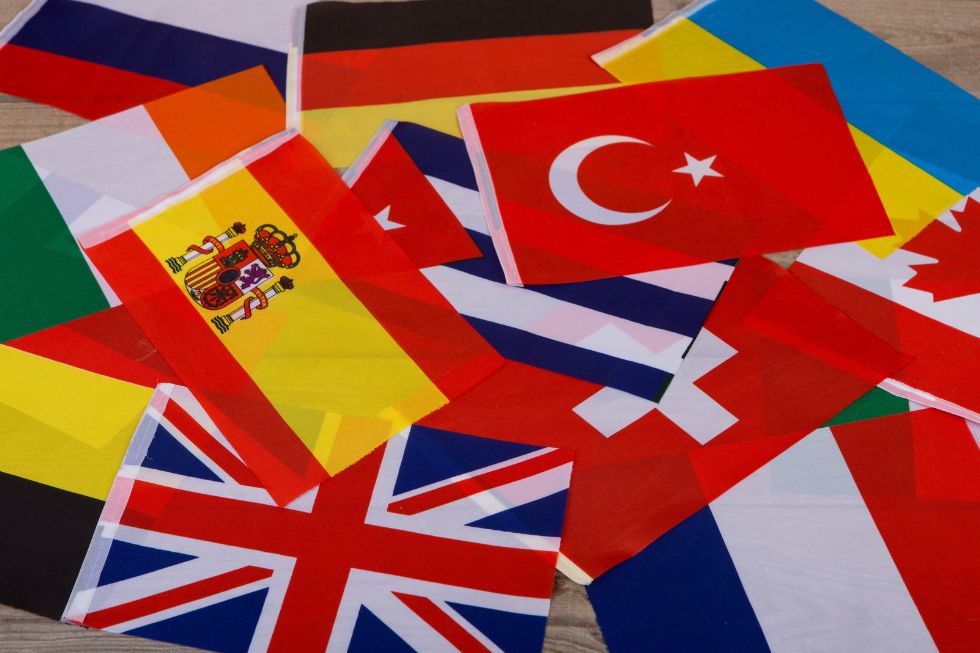
Canada’s Prime Minister Mark Carney called for a coalition of middle powers to counterbalance aggressive superpowers and restore global stability. Building on historic groups like the Non-Aligned Movement, such coalitions offer smaller nations autonomy and collective strength amid a fractured international order. Despite challenges from dominant powers, these alliances are now more crucial than ever for promoting peace, equity and cooperation on global issues.
By
Tuesday, February 10, 2026
</header>
Via Shutterstock.

February 10, 2026 06:41 EDT

Check out our comment feature!
Saved Successfully.
This article saved into your bookmarks. Click here to view your bookmarks.


Last month at Davos, Canada’s Prime Minister (PM) Mark Carney gave a remarkable speech: brave, honest and formally revealing the end of an international rules-based order. But in addition to exposing reality, it was a call-out to “middle powers” to stand up and stand united against the growing demands of aggressive superpowers. The concept of a coalition of middle powers has not only gained in importance over the past few years, it is now critical.
An idea whose time has come
The concept of “middle powers” has existed since at least the 16th century, when Italian statesman Giovanni Bolero mentioned it in his book, The Reason of State. Interestingly, back in 1987, Canada’s North-South Institute published a prescient paper titled “Middle Powers in the International System: A Preliminary Assessment of Potential”.
But in the past couple of years, the idea has gathered momentum. Following Davos 2024, the World Economic Forum highlighted the theme with an article, “Middle Powers: what are they and why do they matter?” Hung Q. Tran, an international economist and fellow with the Atlantic Council, optimistically labeled 2025 as the “Year of the Middle Powers.” The Harvard Kennedy School is in the midst of a Middle Powers Project, doing research on “13 countries, covering security, energy, technology, and other topics central to a changing world amid great power competition.” Last October, Australia’s foreign minister Penny Wong proudly described her country as a middle power, stating that “We are moving into a new era of amplified middle power diplomacy.”
Carney’s rousing speech took this growing idea of middle powers and actioned it into a call for their coalition — “Middle powers must act together” — invoking the old adage, there is strength in numbers. Alone, they are weak; but together, they could be a force.
Stewart Patrick, a director at the Carnegie Endowment for International Peace, seems to assume a coalition when he says, “middle powers have the potential to help stabilize global order and advance cooperation.” He explains that “they must serve as checks on the two superpowers, so that the latter cannot run roughshod over others, and act as stewards of the international system and law, leveraging their position to call out UN Charter violations.”
Who are middle powers?
Middle powers can be simply defined as “countries that ranked below a handful of great powers, but significant enough to be able to act in response to external stimuli with some agency and with some impact.”
So, which countries are middle powers? Some countries — like Canada and Australia — readily claim themselves as middle powers. Others — like the UK and France — seem to still perceive themselves as great powers. A single, comprehensive measure of a country’s power is elusive and hotly debated. However, there are several measures that look at different aspects.
One way to gauge economic clout is by using GDP. Here, the superpowers, the US and China, ranked one and two, lead the charge with $32 trillion and $19 trillion, respectively. Then, after the big gap, come some 19 countries that could be called “middle powers” — with a GDP of $5 trillion to $1 trillion. Canada comes in at number ten, with $2.28 trillion. Interestingly, its next-door neighbors on the list are two BRICS countries: Russia with $2.5 trillion and Brazil with $2.26 trillion.
A way to gauge military clout is by using the Global Firepower (GFP) index (taking into account over 60 factors), which puts the US as number one, Russia as number two, China as number three and India as number four. Here, Canada is listed as number 28 — positioned between Algeria and Singapore.
Another, more comprehensive measure is “national power”, defined as “the sum of all resources available to a nation in the pursuit of national objectives”. The 2022 World Power Index, which examines approximately 18 indicators, ranks Canada 7th, between the UK and Italy.
There is also soft power. One measure of that is the Global Soft Power Index. The 2025 index (based on some 55 metrics) puts the US and China at the top. Canada is positioned in 7th place, in the midst of several European countries. Interestingly, in the 2026 index, while the US remains at the top, its numbers on several matrices (like generosity, trustworthiness, political stability and ethical standards) have dropped.
The variety of measures and rankings speaks to the flexibility of the term “middle power”, and therefore its possible breadth of inclusivity.
A coalition of middle powers
To be effective, this coalition of middle powers should be free of superpower influence, free of the stifling bureaucracy of the UN, multilateral and composed of equal members (without veto power). This coalition should be greater than just the disaffected members of NATO or the disillusioned acolytes of hegemons. Including countries from the Global South and countries with different forms of government would also be reflective of Canada’s multicultural composition, pluralistic values and hopefully a newfound perspective that is less self-righteous, more mature and therefore more pragmatic.
Ideally, to maximize power and impact, there should be just one coalition of middle powers. But given differing geographies, existing pressures and internal priorities, that may be difficult. There could also be multiple coalitions formed along various criteria. They could be formed regionally: like Canada, Mexico, Brazil, Chile, Colombia and Peru. It could be formed in accordance with shared culture, language and/or history, like Canada, Australia, New Zealand — and even some brave European countries that are prepared to step out from under the protective yet threatening umbrella of their hegemon. Carney also suggests “different coalitions for different issues”.
Apart from building their own coalition, these newly-realized middle-powers also have the option to join existing coalitions — formed by those wise enough decades ago to not see the world as a good-evil dichotomy, to see the dangers of living in the shade of any hegemon and to realize the value and power of a collaboration of smaller forces.
A number of the world’s developing countries have been a part of a coalition of middle and smaller powers for over 70 years. In 1961, in response to the rapid bipolarization of the world between Russia and the US, leaders of several countries — including India’s PM Jawaharlal Nehru, Yugoslav’s president Josip Broz Tito, Ghana’s president Kwame Nkrumah, Indonesian president Sukarno and Egypt’s PM Gamal Abdel Nasser — came together to form the Non-Aligned Movement (NAM) to jointly strive for multiple objectives: national sovereignty and independence; peace and neutrality; resisting imperialism, colonialism and hegemony; and economic development.
Today, NAM is a forum of some 120 countries (53 African, 39 Asian, 26 Latin American and two European). It covers 55% of the world population and 60% of UN membership. To a large extent, only the superpowers (the US, China, Russia), the countries of the erstwhile Warsaw Pact and the countries of NATO are not part of NAM.
There is also a newer, smaller and more innocuously defined group of middle powers called MIKTA. Established in 2013, it consists of five diverse countries (Mexico, Indonesia, Korea, Türkiye, Australia), with the objectives of playing “a constructive role in the international environment” and serving “as a cross-regional consultative platform”.
Prospects for a global spring
Individually, middle powers are weak. But united, they could be a force for less conflict, smoother trade, cooperation on multinational issues and a more equitable world.
Members of a strong coalition of middle powers need not be slaves to the dictates of superpowers. Instead, they can have the freedom to think and decide for themselves on a multitude of internal and external matters — finance, trade, manufacturing, security, healthcare, education, immigration, social issues, as well as political systems and alliances — all in the interests of their own nations and peoples.
However, because a coalition inherently demands such freedoms, it’s threatening to hegemons and will meet with much opposition. Patrick warns that “Middle powers supporting multilateralism must contend with a rogue United States scornful of normative constraints and a self-absorbed China that shirks global responsibilities.” The coalition of middle powers will need to guard against and counteract the powerful networks of mega-capitalists, oligarchs, high-tech companies, billionaires and current hegemons. It will be swimming in an uncharted, stormy sea with a fragmenting global governance system underfoot and a nebulous, shape-shifting monster called the Board of Peace looming on the horizon. But it has to hold fast to its primary objective: the joint welfare of its nations and peoples.
We’re independent, nonprofit and powered by 3,000+ voices from around the world — not billionaires or governments. Enjoy real journalism, sign up for our free newsletters.
<label for=”Your email will be shared with fairobserver and subject to its Privacy Policy”>I agree to receive emails and other content from Fair Observer. I understand that I may repeal my consent at any time. You can review our Privacy Policy and Terms of Use for further information…</label>
We’ve reached a time when a coalition of middle powers is not just a nice-to-have; it is a must-have. Now, when we have returned to an era of resource imperialism, “might is right” has replaced rules-based international order, the US has lost its moral compass, and China is not yet willing to play a global political role, the influence of such a coalition of middle powers is not only helpful but crucial in steering the world away from conflict and inequality, and towards greater stability, equity, and hopefully even addressing real international issues like climate change and public health.
[Kaitlyn Diana edited this piece.]
The views expressed in this article are the author’s own and do not necessarily reflect Fair Observer’s editorial policy.
Comment
0 Comments
Newest
Oldest
Most Voted
Most Voted
Inline Feedbacks
View all comments
Commenting Guidelines
Please read our commenting guidelines before commenting.
1. Be Respectful: Please be polite to the author. Avoid hostility. The whole point of Fair Observer is openness to different perspectives from perspectives from around the world.
2. Comment Thoughtfully: Please be relevant and constructive. We do not allow personal attacks, disinformation or trolling. We will remove hate speech or incitement.
3. Contribute Usefully: Add something of value — a point of view, an argument, a personal experience or a relevant link if you are citing statistics and key facts.
<label style=”font-size: 18px;”>
I have read and agree to the above commenting guidelines.
</label>
Please agree to the guidelines before proceeding.
I
Agree, Proceed to Login
Cancel
Related Reading
Imagine There’s No NATO: Germany as a New Middle-Sized Military Power in an Anarchic International Order
The fracturing of the Atlantic alliance under US President Donald Trump’s erratic leadership forces Germany to reconsider its security strategy…
by
Elliot Neaman,
January 29, 2026
China Watch: China’s Rise and the New Multipolar Global Order
China’s rise is reshaping the global economic order, fostering new regional alliances like BRICS and the Shanghai Cooperation Organisation while…
by
David Mahon,
January 26, 2026
Jakarta and Doha Keep Talks Alive
Indonesia’s diplomatic outreach to Qatar highlights the importance of quiet mediation in a conflict-ridden world. Indonesia’s President Prabowo Subianto’s visit…
by
Kurniawan Arif Maspul,
December 4, 2025
Support Fair Observer
We rely on your support for our independence, diversity and quality.
For more than 10 years, Fair Observer has been free, fair and independent. No billionaire
owns us, no advertisers control us. We are a reader-supported nonprofit. Unlike many other
publications, we keep our content free for readers regardless of where they live or whether
they can afford to pay. We have no paywalls and no ads.
In the post-truth era of fake news, echo chambers and filter bubbles, we publish a plurality
of perspectives from around the world. Anyone can publish with us, but everyone goes through
a rigorous editorial process. So, you get fact-checked, well-reasoned content instead of
noise.
We publish 3,000+ voices from 90+ countries. We also conduct education and training programs
on subjects ranging from digital media and journalism to writing and critical thinking. This
doesn’t come cheap. Servers, editors, trainers and web developers cost
money.
Please consider supporting us on a regular basis as a recurring donor or a
sustaining member.
Will you support FO’s journalism?
We rely on your support for our independence, diversity and quality.
Donation Cycle
<label for=”donation_cycle_one_time”>One Time</label>
<label for=”donation_cycle_monthly”>Monthly</label>
<label for=”donation_cycle_yearly”>Yearly</label>
Donation Amount
<label for=”amount_11″>$11</label>
<label for=”amount_111″>$111</label>
<label for=”other”>Other</label>
$
The IRS recognizes Fair Observer as a section 501(c)(3) registered public charity
(EIN: 46-4070943), enabling you to claim a tax deduction.
Make Sense of the World
Unique Insights from 3,000+ Contributors in 90+ Countries
<label
for=”Your email will be shared with fairobserver and subject to its Privacy Policy”>I
agree to receive emails and other content from Fair Observer. I understand
that I
may repeal my consent at any time. You can review our Privacy Policy
and Terms of Use
for further
information .</label>
for=”Your email will be shared with fairobserver and subject to its Privacy Policy”>I
agree to receive emails and other content from Fair Observer. I understand
that I
may repeal my consent at any time. You can review our Privacy Policy
and Terms of Use
for further
information .</label>
Read more, think deeper and become smarter, perhaps even wiser, one article at a time. Sign up for our free newsletters now.
<label for=”Your email will be shared with fairobserver and subject to its Privacy Policy”>I agree to receive emails and other content from Fair Observer. I understand that I may repeal my consent at any time. You can review our Privacy Policy and Terms of Use for further information…</label>
</main>
Fair Observer, 461 Harbor Blvd, Belmont, CA 94002, USA
<footer class=”mart70 fo-black-bg padt50 padb30″>
Sections
PUBLICATION
Support Fair Observer
We rely on your support for our independence, diversity and quality.


</footer>

<footer id=”fixed-footer” class=”support-footer”>


Support
independent, crowdsourced, nonprofit
journalism.
Fair Observer is a 501(c)(3) independent nonprofit. We are not owned by billionaires or controlled by
advertisers. We publish nearly 3,000 authors from over 90 countries after fact-checking and editing each
piece. We do not have a paywall and anyone can read us for free. With your vital donations, we can
continue
to do our work.
Please make a recurring (or even one-time) donation today. Even $1 goes a long way because
a
million donors
like you mean one million dollars. Thank you for keeping us independent, free and fair.
One Time
Monthly
Yearly
Monthly
Yearly
Continue 

</footer>

Sign into your Fair Observer Account
<label class=”tml-label” for=”user_login”>Username or Email Address</label>
<label class=”tml-label” for=”user_pass”>Password</label>
<label class=”tml-label” for=”rememberme”>Remember Me</label>
Log In
Forgot
Password
Password
Forgot Password
Enter your registered email address or username. You will receive a
link to create a new password via email.
Please enter your username or email address. You will receive an email message with instructions on how to reset your password.
<label class=”tml-label” for=”user_login”>Username or Email Address</label>
Get New Password
Or
Return to
Login
Forgot Password
We have sent a link to your registered email address to reset your password.
<circle cx=”12.5″ cy=”12″ r=”12″ fill=”#414141″ />
Back to
Login
Become a Member & Enjoy Exclusive Benefits!
<circle cx=”12.5″ cy=”12″ r=”12″ fill=”#414141″ />
Access to comments feature
<circle cx=”12.5″ cy=”12″ r=”12″ fill=”#414141″ />
Bookmark your favorite articles
<circle cx=”12.5″ cy=”12″ r=”12″ fill=”#414141″ />
Exclusive invitations to FO° Talks & FO° Live
<circle cx=”12.5″ cy=”12″ r=”12″ fill=”#414141″ />
Access to all of our e-publications
Return to
Login
Login
NEWSLETTER
Make Sense of the World
Unique Insights from 2,500+ Contributors in 90+ Countries

<label
for=”Your email will be shared with fairobserver and subject to it’s Privacy Policy”>I
agree to receive emails and other content from Fair Observer. I understand
that I may repeal my consent at any time. You can review our Privacy Policy
and Terms of Use
for further information.</label>
for=”Your email will be shared with fairobserver and subject to it’s Privacy Policy”>I
agree to receive emails and other content from Fair Observer. I understand
that I may repeal my consent at any time. You can review our Privacy Policy
and Terms of Use
for further information.</label>
NEWSLETTER
Make Sense of the World
Unique Insights from 2,500+ Contributors in 90+ Countries
<label
for=”Your email will be shared with fairobserver and subject to it’s Privacy Policy”>I
agree to receive emails and other content from Fair Observer. I understand
that I may repeal my consent at any time. You can review our Privacy Policy
and Terms of Use
for further information.</label>
for=”Your email will be shared with fairobserver and subject to it’s Privacy Policy”>I
agree to receive emails and other content from Fair Observer. I understand
that I may repeal my consent at any time. You can review our Privacy Policy
and Terms of Use
for further information.</label>

Make Sense of the World
Unique Insights from 2,500+ Contributors in 90+ Countries
<label
for=”Your email will be shared with fairobserver and subject to its Privacy Policy”>I
agree to receive emails and other content from Fair Observer. I understand that I
may repeal my consent at any time. You can review our Privacy Policy and Terms of Use for further
information .</label>
for=”Your email will be shared with fairobserver and subject to its Privacy Policy”>I
agree to receive emails and other content from Fair Observer. I understand that I
may repeal my consent at any time. You can review our Privacy Policy and Terms of Use for further
information .</label>
We Need Your Consent
We use cookies to give you the best possible experience. Learn more about how we use cookies or edit your cookie preferences. Privacy Policy. My Options I Accept
Privacy & Cookies Policy
Close
Edit Cookie Preferences
The Fair Observer website uses digital cookies so it can collect statistics on how many visitors come to the site, what content is viewed and for how long, and the general location of the computer network of the visitor. These statistics are collected and processed using the Google Analytics service. Fair Observer uses these aggregate statistics from website visits to help improve the content of the website and to provide regular reports to our current and future donors and funding organizations. The type of digital cookie information collected during your visit and any derived data cannot be used or combined with other information to personally identify you. Fair Observer does not use personal data collected from its website for advertising purposes or to market to you.
As a convenience to you, Fair Observer provides buttons that link to popular social media sites, called social sharing buttons, to help you share Fair Observer content and your comments and opinions about it on these social media sites. These social sharing buttons are provided by and are part of these social media sites. They may collect and use personal data as described in their respective policies. Fair Observer does not receive personal data from your use of these social sharing buttons. It is not necessary that you use these buttons to read Fair Observer content or to share on social media.
Necessary
<label class=”form-check-label” for=”wt-cli-checkbox-necessary”>Necessary</label>
Always Enabled
These cookies essential for the website to function.
Social Media
<label for=”wt-cli-checkbox-social_media” class=”cli-slider” data-cli-enable=”Enabled” data-cli-disable=”Disabled”>Social Media</label>
These cookies are used to enable sharing or following of content that you find interesting on our website. These settings apply to third-party social networking and other websites.
Performance & Functionality
<label for=”wt-cli-checkbox-performance” class=”cli-slider” data-cli-enable=”Enabled” data-cli-disable=”Disabled”>Performance & Functionality</label>
These cookies are used to enhance the performance and functionality of our website. They provide statistics on how our website is used and help us improve by measuring errors. Certain functionalities on our website may become unavailable without these cookies.
Analytics
<label for=”wt-cli-checkbox-analytics” class=”cli-slider” data-cli-enable=”Enabled” data-cli-disable=”Disabled”>Analytics</label>
SAVE & ACCEPT
<textarea id=’wpd-editor-source-code’></textarea>Insert
</body></html>
Total Views:
Source: World Politics - fairobserver.com