<g id=”cross”>
<line class=”cls-1″ x1=”7″ x2=”25″ y1=”7″ y2=”25″ />
<line class=”cls-1″ x1=”7″ x2=”25″ y1=”25″ y2=”7″ />
</g>
Why Coffee Is Becoming Southeast Asia’s Quiet Foreign Policy Tool
<circle cx=”10.5″ cy=”10.5″ r=”7.5″ />
<line x1=”21″ x2=”15.8″ y1=”21″ y2=”15.8″ />
<nav class=”fo-navigation pos-r” itemscope itemtype=”http://schema.org/SiteNavigationElement”>
Login
Sections <circle cx=”10.5″ cy=”10.5″ r=”7.5″ />
<line x1=”21″ x2=”15.8″ y1=”21″ y2=”15.8″ /> Search
<line x1=”21″ x2=”15.8″ y1=”21″ y2=”15.8″ />
Search


PUBLICATION
Support Fair Observer
We rely on your support for our independence, diversity and quality.
</nav>
<circle cx=”10.5″ cy=”10.5″ r=”7.5″ />
<line x1=”21″ x2=”15.8″ y1=”21″ y2=”15.8″ />
<line x1=”21″ x2=”15.8″ y1=”21″ y2=”15.8″ />
Search
</header>

<main id=”main” class=”site-main” role=”main”> 


Sunday, February 08, 2026
<header class=”entry-header”>
Central & South Asia
Why Coffee Is Becoming Southeast Asia’s Quiet Foreign Policy Tool
In Southeast Asia, coffee plays a crucial role in foreign policy and economic stability for major producers like Vietnam and Indonesia. As climate challenges and regulatory changes emerge, the coffee industry represents trust and rural livelihoods against urban consumerism. However, smallholder farmers continue to struggle for fair compensation, highlighting the imbalance in the coffee economy and the necessity for sustainable practices.
By
Sunday, February 08, 2026
</header>
Via Shutterstock.

February 08, 2026 06:28 EDT

Check out our comment feature!
Saved Successfully.
This article saved into your bookmarks. Click here to view your bookmarks.


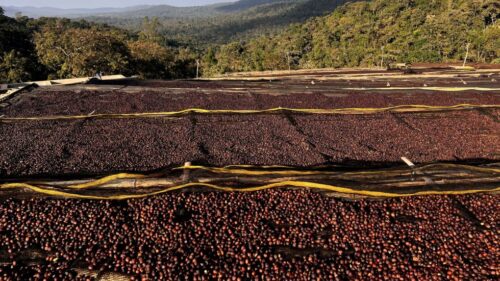
Coffee rarely announces itself as foreign policy. Across Southeast Asia, nations are turning it into a quiet, aromatic instrument of power, trust and survival in a region where supply chains, rather than slogans, increasingly shape geopolitics.
From the volcanic soils of Indonesia to Vietnam’s Central Highlands, coffee now sits at the intersection of economics, climate stress, tourism and diplomacy. This is not a lifestyle story. It is a strategic one.
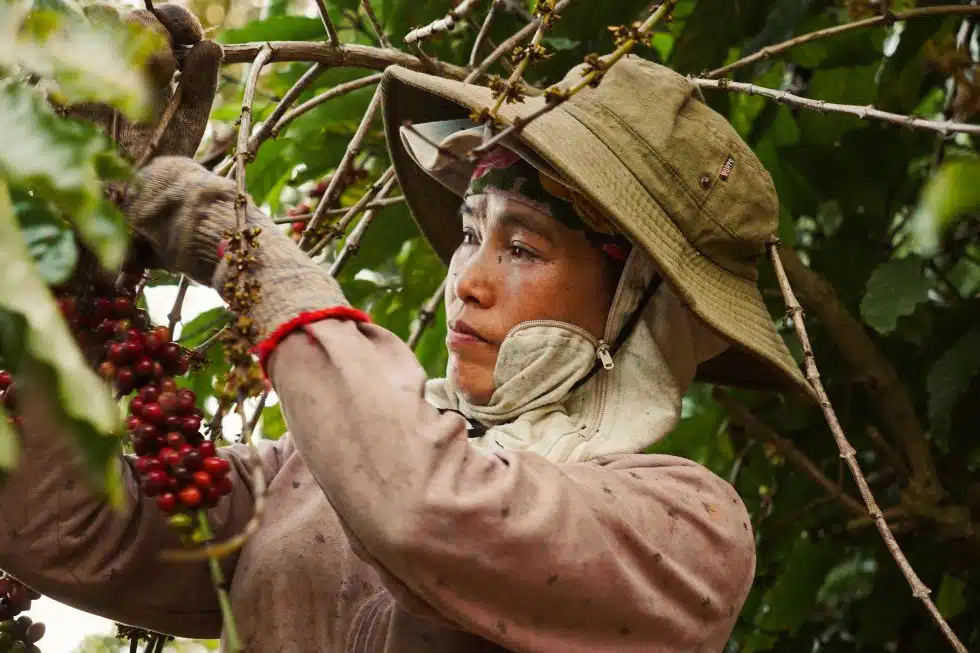
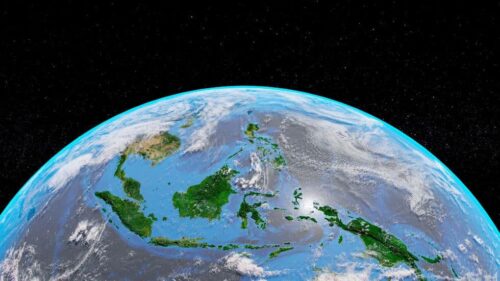
Southeast Asia today anchors the global coffee economy. Vietnam is the world’s second-largest producer, harvesting an estimated 31 million 60-kilogram bags in 2025–26, generating export revenues approaching $8 billion amid historically high prices. Indonesia follows closely as the fourth-largest producer, supplying more than 11 million bags annually, with exports exceeding 6.5 million bags despite climate volatility and aging trees. Together, these two countries shape global Robusta markets at a moment when climate shocks in Latin America and Africa have destabilized supply.
This scale matters. Coffee is no longer a peripheral commodity. It is a macroeconomic stabilizer, a rural employer and a diplomatic asset. In Vietnam alone, more than 600,000 households depend directly on coffee cultivation, while export prices surged by over 50% year-on-year in early 2025 amid global shortages. Indonesia’s sector is even more socially embedded: around 98% of coffee farms are smallholdings of one to two hectares, binding the livelihoods of millions to global demand and regulatory decisions far beyond the archipelago.
The challenges faced by coffee growers in a global market
The European Union’s new deforestation-free supply chain regulations, which will fully come into force in 2025, have effectively made coffee a test case for credibility. Vietnam has responded by fast-tracking traceability systems and aligning national standards with EU requirements, seeing compliance as a competitive advantage rather than a burden. Indonesian cooperatives, especially in Sumatra and Sulawesi, have expanded organic and Fairtrade certification, with about 25 certified cooperatives now operating across the country, nearly all of which are organic. In a fractured global trading system, reliability has become the currency.
Coffee also exposes a deeper paradox in Southeast Asia’s development model. Urban café culture is booming. Thailand’s coffee consumption has more than doubled in two decades, while Malaysia and the Philippines rank among Asia’s fastest-growing consumer markets. Cafés have become social infrastructure — places of work, dissent and aspiration. Tourism agencies now market coffee trails with the same enthusiasm once reserved for beaches and temples, from Sarawak’s Liberica farms to Laos’s Bolaven Plateau.
Yet value continues to pool at the top of the cup. The Institute of Southeast Asian Studies (ISEAS — Yusof Ishak Institute) notes that while café profits and tourism revenues surge, these gains do not necessarily translate into increased incomes for coffee growers or into sustainable production. The imbalance echoes older commodity traps seen in cocoa and sugar: smallholders absorb climate risk while global markets capture margins.
Diplomatic implications of coffee diplomacy
Laos provides a rare example of an alternative approach. On the Bolaven Plateau, more than 20,000 farming families rely on coffee, making up about 6% of the country’s employment. The Bolaven Plateau Coffee Producers Cooperative, established in 2007, now brings together over 1,800 smallholders and exports over 1,000 tons each year via direct, relationship-based trade. Japanese buyers focused on quality improvements instead of certifications, creating a trust-based value chain that sidesteps traditional extractive models. This isn’t charity; it’s a strategic partnership built on mutual dependence.
The diplomatic implications are increasingly explicit. Indonesia has institutionalised “coffee diplomacy,” presenting regional blends during state visits and trade missions to symbolise unity in diversity while quietly opening markets for premium beans. Vietnam deploys coffee at embassies and trade expos as evidence of industrial maturity and regulatory reliability. These gestures are not soft symbolism. They align culture with commerce at a time when middle powers must differentiate themselves through credibility rather than coercion.
Comparison sharpens the picture. Latin America professionalised coffee decades earlier but remains exposed to price cycles and cartel politics. Africa retains ceremonial depth but struggles with infrastructure. Southeast Asia’s distinctive contribution lies in its integration: domestic consumption growth, export diversification, tourism linkage and state-led coordination unfolding simultaneously. Few regions combine scale, cultural embeddedness and policy ambition in this way.
Why Southeast Asia’s coffee future matters to Australia
Climate change, however, threatens to unravel the balance. Rising temperatures are pushing Arabica cultivation to higher altitudes, while erratic rainfall reduces yields across Vietnam and Indonesia. Without coordinated replanting and climate-resilient varieties, productivity risks long-term decline. The absence of a regional replanting drive, noted repeatedly in United States Department of Agriculture (USDA) assessments, is a strategic vulnerability disguised as inertia.
For Australia, this matters more than caffeine. Southeast Asia supplies the bulk of coffee consumed domestically, while Australian aid, climate finance and trade diplomacy increasingly intersect with agricultural resilience. Coffee is a live indicator of whether regional supply chains can adapt to climate stress without social fracture. It is also a test of whether sustainability rules imposed by wealthy markets strengthen or hollow out neighboring economies.
And while the immediate frame is the Association of Southeast Asian Nations (ASEAN) and Australia, the cup reaches well beyond our region’s shores — coffee is a truly global conversation. Consumers in Europe, North America and East Asia sip a product grown in Southeast Asian soils. Hence, the policy choices made in Canberra and Jakarta ripple through roasteries in Milan, cafés in New York and supermarket aisles in Tokyo. That means wealthy markets must share responsibility: not only by demanding deforestation-free, traceable beans, but also by financing technical assistance and long-term purchasing commitments that let smallholders meet those standards without being driven off the land.
The politics embedded in everyday consumption
Equally, multilateral forums — from the International Coffee Organization (ICO) to climate funds and trade fora — need to treat coffee as a cross-cutting test case for how to marry green rules with social protection. If we get this right, we can transform coffee into more than an export commodity. It can serve as a scaffold for global cooperation. It can showcase what equitable decarbonisation looks like. Additionally, it can demonstrate that we can brew ethical consumption and diplomatic goodwill together.
Read more, think deeper and become smarter, perhaps even wiser, one article at a time. Sign up for our free newsletters now.
<label for=”Your email will be shared with fairobserver and subject to its Privacy Policy”>I agree to receive emails and other content from Fair Observer. I understand that I may repeal my consent at any time. You can review our Privacy Policy and Terms of Use for further information…</label>
Coffee ultimately reveals the politics of everyday life. It shows how climate regulation becomes trade leverage, how tourism reshapes rural economies and how trust replaces power in a crowded region. In Southeast Asia, the cup on the table carries centuries of colonial history and decades of development ambition. What now emerges is something newer and more fragile: a regional attempt to transform an extractive past into a cooperative future.
That experiment deserves attention — not for its romance, but for its consequences.
[Liam Roman edited this piece.]
The views expressed in this article are the author’s own and do not necessarily reflect Fair Observer’s editorial policy.
Comment
0 Comments
Newest
Oldest
Most Voted
Most Voted
Inline Feedbacks
View all comments
Commenting Guidelines
Please read our commenting guidelines before commenting.
1. Be Respectful: Please be polite to the author. Avoid hostility. The whole point of Fair Observer is openness to different perspectives from perspectives from around the world.
2. Comment Thoughtfully: Please be relevant and constructive. We do not allow personal attacks, disinformation or trolling. We will remove hate speech or incitement.
3. Contribute Usefully: Add something of value — a point of view, an argument, a personal experience or a relevant link if you are citing statistics and key facts.
<label style=”font-size: 18px;”>
I have read and agree to the above commenting guidelines.
</label>
Please agree to the guidelines before proceeding.
I
Agree, Proceed to Login
Cancel
Related Reading
Tariffs, Treasuries and the Quiet Risk to America’s Financial Power
Trade has not collapsed under tariffs; it has rerouted, as firms and countries adapt supply chains and sourcing strategies. But…
by
Masaaki Yoshimori,
January 25, 2026
Between Neutrality & Security, Indonesia Treads a Tight Rope
Indonesia has long considered strategic neutrality as the basis for its foreign policy. However, the ambiguity of these policies threatens…
by
Aqila Adilah,
October 28, 2025
Ethiopia’s Chance to Become the World’s Coffee Lighthouse
With approximately 11.6 million 60-kg bags forecast and exports nearing 288.2 billion Birr ($200.8 billion), Ethiopia must either transform its…
by
Kurniawan Arif Maspul & Ahmed Mohammed Akrem,
September 22, 2025
Support Fair Observer
We rely on your support for our independence, diversity and quality.
For more than 10 years, Fair Observer has been free, fair and independent. No billionaire
owns us, no advertisers control us. We are a reader-supported nonprofit. Unlike many other
publications, we keep our content free for readers regardless of where they live or whether
they can afford to pay. We have no paywalls and no ads.
In the post-truth era of fake news, echo chambers and filter bubbles, we publish a plurality
of perspectives from around the world. Anyone can publish with us, but everyone goes through
a rigorous editorial process. So, you get fact-checked, well-reasoned content instead of
noise.
We publish 3,000+ voices from 90+ countries. We also conduct education and training programs
on subjects ranging from digital media and journalism to writing and critical thinking. This
doesn’t come cheap. Servers, editors, trainers and web developers cost
money.
Please consider supporting us on a regular basis as a recurring donor or a
sustaining member.
Will you support FO’s journalism?
We rely on your support for our independence, diversity and quality.
Donation Cycle
<label for=”donation_cycle_one_time”>One Time</label>
<label for=”donation_cycle_monthly”>Monthly</label>
<label for=”donation_cycle_yearly”>Yearly</label>
Donation Amount
<label for=”amount_11″>$11</label>
<label for=”amount_111″>$111</label>
<label for=”other”>Other</label>
$
The IRS recognizes Fair Observer as a section 501(c)(3) registered public charity
(EIN: 46-4070943), enabling you to claim a tax deduction.
Make Sense of the World
Unique Insights from 3,000+ Contributors in 90+ Countries
<label
for=”Your email will be shared with fairobserver and subject to its Privacy Policy”>I
agree to receive emails and other content from Fair Observer. I understand
that I
may repeal my consent at any time. You can review our Privacy Policy
and Terms of Use
for further
information .</label>
for=”Your email will be shared with fairobserver and subject to its Privacy Policy”>I
agree to receive emails and other content from Fair Observer. I understand
that I
may repeal my consent at any time. You can review our Privacy Policy
and Terms of Use
for further
information .</label>
You can read the CIA Factbook and listen to MI6 people for your analysis, or you could read perspectives from our 3,000+ authors from 90+ countries and make sense of the world. Sign up for our free newsletters now.
<label for=”Your email will be shared with fairobserver and subject to its Privacy Policy”>I agree to receive emails and other content from Fair Observer. I understand that I may repeal my consent at any time. You can review our Privacy Policy and Terms of Use for further information…</label>
</main>
Fair Observer, 461 Harbor Blvd, Belmont, CA 94002, USA
<footer class=”mart70 fo-black-bg padt50 padb30″>
Sections
PUBLICATION
Support Fair Observer
We rely on your support for our independence, diversity and quality.


</footer>


Sign into your Fair Observer Account
<label class=”tml-label” for=”user_login”>Username or Email Address</label>
<label class=”tml-label” for=”user_pass”>Password</label>
<label class=”tml-label” for=”rememberme”>Remember Me</label>
Log In
Forgot
Password
Password
Forgot Password
Enter your registered email address or username. You will receive a
link to create a new password via email.
Please enter your username or email address. You will receive an email message with instructions on how to reset your password.
<label class=”tml-label” for=”user_login”>Username or Email Address</label>
Get New Password
Or
Return to
Login
Forgot Password
We have sent a link to your registered email address to reset your password.
<circle cx=”12.5″ cy=”12″ r=”12″ fill=”#414141″ />
Back to
Login
Become a Member & Enjoy Exclusive Benefits!
<circle cx=”12.5″ cy=”12″ r=”12″ fill=”#414141″ />
Access to comments feature
<circle cx=”12.5″ cy=”12″ r=”12″ fill=”#414141″ />
Bookmark your favorite articles
<circle cx=”12.5″ cy=”12″ r=”12″ fill=”#414141″ />
Exclusive invitations to FO° Talks & FO° Live
<circle cx=”12.5″ cy=”12″ r=”12″ fill=”#414141″ />
Access to all of our e-publications
Return to
Login
Login
NEWSLETTER
Make Sense of the World
Unique Insights from 2,500+ Contributors in 90+ Countries

<label
for=”Your email will be shared with fairobserver and subject to it’s Privacy Policy”>I
agree to receive emails and other content from Fair Observer. I understand
that I may repeal my consent at any time. You can review our Privacy Policy
and Terms of Use
for further information.</label>
for=”Your email will be shared with fairobserver and subject to it’s Privacy Policy”>I
agree to receive emails and other content from Fair Observer. I understand
that I may repeal my consent at any time. You can review our Privacy Policy
and Terms of Use
for further information.</label>

Make Sense of the World
Unique Insights from 2,500+ Contributors in 90+ Countries
<label
for=”Your email will be shared with fairobserver and subject to its Privacy Policy”>I
agree to receive emails and other content from Fair Observer. I understand that I
may repeal my consent at any time. You can review our Privacy Policy and Terms of Use for further
information .</label>
for=”Your email will be shared with fairobserver and subject to its Privacy Policy”>I
agree to receive emails and other content from Fair Observer. I understand that I
may repeal my consent at any time. You can review our Privacy Policy and Terms of Use for further
information .</label>
We Need Your Consent
We use cookies to give you the best possible experience. Learn more about how we use cookies or edit your cookie preferences. Privacy Policy. My Options I Accept
Privacy & Cookies Policy
Close
Edit Cookie Preferences
The Fair Observer website uses digital cookies so it can collect statistics on how many visitors come to the site, what content is viewed and for how long, and the general location of the computer network of the visitor. These statistics are collected and processed using the Google Analytics service. Fair Observer uses these aggregate statistics from website visits to help improve the content of the website and to provide regular reports to our current and future donors and funding organizations. The type of digital cookie information collected during your visit and any derived data cannot be used or combined with other information to personally identify you. Fair Observer does not use personal data collected from its website for advertising purposes or to market to you.
As a convenience to you, Fair Observer provides buttons that link to popular social media sites, called social sharing buttons, to help you share Fair Observer content and your comments and opinions about it on these social media sites. These social sharing buttons are provided by and are part of these social media sites. They may collect and use personal data as described in their respective policies. Fair Observer does not receive personal data from your use of these social sharing buttons. It is not necessary that you use these buttons to read Fair Observer content or to share on social media.
Necessary
<label class=”form-check-label” for=”wt-cli-checkbox-necessary”>Necessary</label>
Always Enabled
These cookies essential for the website to function.
Social Media
<label for=”wt-cli-checkbox-social_media” class=”cli-slider” data-cli-enable=”Enabled” data-cli-disable=”Disabled”>Social Media</label>
These cookies are used to enable sharing or following of content that you find interesting on our website. These settings apply to third-party social networking and other websites.
Performance & Functionality
<label for=”wt-cli-checkbox-performance” class=”cli-slider” data-cli-enable=”Enabled” data-cli-disable=”Disabled”>Performance & Functionality</label>
These cookies are used to enhance the performance and functionality of our website. They provide statistics on how our website is used and help us improve by measuring errors. Certain functionalities on our website may become unavailable without these cookies.
Analytics
<label for=”wt-cli-checkbox-analytics” class=”cli-slider” data-cli-enable=”Enabled” data-cli-disable=”Disabled”>Analytics</label>
SAVE & ACCEPT
<textarea id=’wpd-editor-source-code’></textarea>Insert
</body></html>
Total Views:
Source: World Politics - fairobserver.com