<g id=”cross”>
<line class=”cls-1″ x1=”7″ x2=”25″ y1=”7″ y2=”25″ />
<line class=”cls-1″ x1=”7″ x2=”25″ y1=”25″ y2=”7″ />
</g>
Moldova Needs Security Guarantees as Part of Any Ukraine–Russia Peace Deal
<circle cx=”10.5″ cy=”10.5″ r=”7.5″ />
<line x1=”21″ x2=”15.8″ y1=”21″ y2=”15.8″ />
<nav class=”fo-navigation pos-r” itemscope itemtype=”http://schema.org/SiteNavigationElement”>
Login
Sections <circle cx=”10.5″ cy=”10.5″ r=”7.5″ />
<line x1=”21″ x2=”15.8″ y1=”21″ y2=”15.8″ /> Search
<line x1=”21″ x2=”15.8″ y1=”21″ y2=”15.8″ />
Search


PUBLICATION
Support Fair Observer
We rely on your support for our independence, diversity and quality.
</nav>
<circle cx=”10.5″ cy=”10.5″ r=”7.5″ />
<line x1=”21″ x2=”15.8″ y1=”21″ y2=”15.8″ />
<line x1=”21″ x2=”15.8″ y1=”21″ y2=”15.8″ />
Search
</header>

<main id=”main” class=”site-main” role=”main”> 



Thursday, January 08, 2026
<header class=”entry-header”>
Europe
Moldova Needs Security Guarantees as Part of Any Ukraine–Russia Peace Deal
Moldova’s security is crucial to any lasting Ukraine–Russia peace deal, requiring enforceable guarantees similar to those for Ukraine. With Russian troops in Transnistria and growing regional tensions, Moldova faces significant threats to its democratic and European integration aspirations. The US must actively include Moldova as a key stakeholder to ensure stability and prevent further conflict in Eastern Europe.
By
Thursday, January 08, 2026
</header>
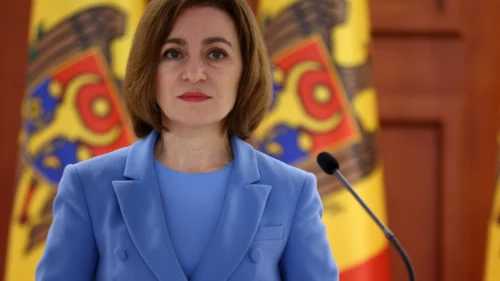
Via Shutterstock.


January 08, 2026 06:13 EDT

Check out our comment feature!
Saved Successfully.
This article saved into your bookmarks. Click here to view your bookmarks.


Moldova is relevant to any Ukraine–Russia peace deal, which can only be achieved through enforceable security guarantees for both countries. A small but strategically important country, Moldova is decisively pro-Europe, with its voters defeating pro-Russian parties in the most recent election.
Moldova does not border Russia. Nonetheless, Moldovans feel threatened by Russia. In February 2022, when Russia invaded Ukraine, there were concrete concerns that Russia would deem Transnistria, a pro-Russian breakaway region of Moldova, as part of Novorossiya, the historical name used during the Russian Empire to denote what is today large sections of southern Ukraine and Transnistria. Following the invasion, unconfirmed rumors circulated, with Russia warning Moldova’s President, Maia Sandu, that Russian troops would reach Tiraspol (the self-declared, unrecognized capital of Transnistria) within a couple of days and that she should leave the country to ensure her personal security.
Moldova is an outpost of democracy, bordered by Ukraine, Romania and Transnistria. On the one hand, the disputed status of Transnistria has taken a backseat to the Russia–Ukraine war. On the other hand, Moldova is a candidate for EU membership, with potential membership by 2028 or 2029. In a region often described as the new “powder keg” of Europe, Moldova’s sustainable growth and security should be a primary concern for US policymakers.
In particular, security guarantees for Moldova need to mirror those for Ukraine. These guarantees need to be a fundamental part of any lasting peace arrangement between Russia and Ukraine. Absent these guarantees, Moldova could become a new battleground for Russia, which has shown in the current war with Ukraine that it will assert its power on the borders of Europe, obstructing political, economic and social aspirations of former Soviet states to align with the US and the EU.
Moldova and the fear of the growing threat of Russia
Security in Moldova is fragile, making it a potential flashpoint. Wedged between Ukraine and Moldova, Transnistria hosts Russian troops. The current number of troops is not certain, but estimates suggest there are approximately 1,000 to 1,500 Russian troops in Transnistria. Additionally, Russia has expressed its intentions to expand this presence. The US also views Russian military presence as an instrument for preventing Moldova from joining the West. Indeed, any military conflict on Moldovan territory could thwart the country’s aspirations to integrate into Europe.
In addition, Russian propaganda exploits Moldova’s challenges with economic development and public acknowledgement of corruption. Russian media builds a fake narrative of Moldova as a failed state that needs to “reunite” with Mother Russia and its “traditional” values. The reality is quite different. Moldova scores a respectable position of 76 of 180 countries on Transparency International’s Corruption Index, ahead of Albania, South Africa and India. For context, Malta and Romania tie for 65 of 180 on the Index. And Moldova is increasing the scope of its bilateral relationship with the US, casting its lot for a shared future with the West.
Although 77% of Moldovans declared that their language is Romanian, Russian is still widely spoken throughout various regions. This increases concerns with many Moldovans that Russia may seek to replicate its strategy in Eastern Ukraine of exploiting a Russian-speaking minority to justify dividing and conquering the country. One cannot discount the psychological impact of Russia’s invasion of Ukraine on the people of Moldova. Russian troops at the border of Moldova amplify national security concerns for Moldova. Simply put, Russian power is visible to Moldovans.
According to the Institute for the Study of War, Russia actively sought to derail elections in Moldova in 2025 precisely to block its integration into democracy and Europe. This should be cause for real concern for the Trump Administration when evaluating and mitigating the risk of additional conflict in the region. The broadly accepted local sentiment is that last year’s elections in Moldova, which provided a mandate to pursue EU membership and to continue to integrate Moldova into Europe, could be considered as a turning point in the history of the country, demonstrating its choice toward the West, democracy and Europe. This fragile feeling of victory could easily be lost if there are no security guarantees for Ukraine and if the local population is led to feel insecure because of an increased threat from Russia.
In the meantime, Russian troops in Transnistria threaten regional stability and demonstrate Russia’s intent to assert its interests. Covert election interference by Russia, while less visible, threatens the democratic process in Moldova.
Peripheral vision on the regional level means securing Moldova
In negotiating a deal between Russia and Ukraine, the Trump team needs peripheral vision about the region. This means having a plan for Moldova as well as for countries in similar predicaments, such as Georgia, where Russian aggression is also tangible and disruptive to democracy.
Miscalculating the scope of security guarantees could leave Moldova in limbo, undermining any potential long-term cessation of hostilities between Russia and Ukraine. Geography matters here. Moldova is a short drive from Odessa, one of Ukraine’s key ports on the Black Sea. Destabilizing Moldova would be one way for Russia to undermine any lasting peace arrangement. This makes it urgent for the US to involve Moldova as a direct stakeholder in any deal. In addition, enabling a continued presence of Russian troops located in Transnistria could also pose a military threat to Ukraine, especially Ukrainian military forces in Odessa, which is Ukraine’s lifeline on the Black Sea.
The US must be prepared to have skin in the game to protect Moldova
Putin’s team knows Russia’s long game, which is destabilizing its neighbors to prevent them from integrating into Europe. American policymakers and negotiators must understand the degree to which Moldova could become the site of a future war with Russia.
Any negotiation with Ukraine must result in permanent and workable security guarantees for the entire region. This means Americans need to have real skin in the game, potentially to go to war with Russia when those guarantees come due, in the event of a Russian invasion of Moldova through Transnistria. Slicing Moldova out of a final agreement with Ukraine may expose the region to more armed conflict.
Moldova’s future and the requirements for peace
Recently, on the 34th anniversary of Moldova’s independence, Secretary of State Marco Rubio remarked that “The United States and Moldova share a clear-eyed commitment to building a safer, stronger, more prosperous future.” This indicates a promising position for Moldova within the Trump Administration’s vision for the region.
Moldovans want their future to be directed westward, as part of Europe, and in a strong bilateral relationship with the US. The only sustainable way to achieve this is to carve out specific, actionable security guarantees for Moldova.
Russia would like to obstruct Moldova’s gravitation westward and would have to pay a hefty price for any increase in troops in Transnistria. Anecdotally, Russia appears to have been impervious to economic pressures created by its war with Ukraine. Indeed, economic sanctions are inconvenient to Russia, but not a real deterrent, unless oil exports are targeted.
But Russia may be more vulnerable with the recent loss of Venezuela as a strategic partner, potentially exposing Russian President Vladimir Putin as an emperor without clothes.
Now may be the time for the Trump Administration to press Russia at the negotiating table. If peace between Ukraine and Russia can be achieved, it will come after arduous work by professional negotiators who know the region, Moldova’s security position included.
We’re independent, nonprofit and powered by 3,000+ voices from around the world — not billionaires or governments. Enjoy real journalism, sign up for our free newsletters.
<label for=”Your email will be shared with fairobserver and subject to its Privacy Policy”>I agree to receive emails and other content from Fair Observer. I understand that I may repeal my consent at any time. You can review our Privacy Policy and Terms of Use for further information…</label>
The stakes are high. Americans need an all-star negotiating team that can factor into any lasting deal real security for Moldova, Ukraine’s small neighbor to the west, and a democracy aspiring for full integration into Europe. We need to think of Moldova as a key stakeholder in any final peace deal, with Ukraine and Moldova having a secure place in Europe.
[Kaitlyn Diana edited this piece.]
The views expressed in this article are the author’s own and do not necessarily reflect Fair Observer’s editorial policy.
Comment
0 Comments
Newest
Oldest
Most Voted
Most Voted
Inline Feedbacks
View all comments
Commenting Guidelines
Please read our commenting guidelines before commenting.
1. Be Respectful: Please be polite to the author. Avoid hostility. The whole point of Fair Observer is openness to different perspectives from perspectives from around the world.
2. Comment Thoughtfully: Please be relevant and constructive. We do not allow personal attacks, disinformation or trolling. We will remove hate speech or incitement.
3. Contribute Usefully: Add something of value — a point of view, an argument, a personal experience or a relevant link if you are citing statistics and key facts.
<label style=”font-size: 18px;”>
I have read and agree to the above commenting guidelines.
</label>
Please agree to the guidelines before proceeding.
I
Agree, Proceed to Login
Cancel
Related Reading
FO° Exclusive: Is the Ukraine War Ending on Putin’s Terms? Decoding Trump’s 28-Point Plan
In this section of the November 2025 FO° Exclusive, Atul Singh and Glenn Carle dissect US President Donald Trump’s 28-point…
by
Glenn Carle & Atul Singh,
December 5, 2025
FO° Talks: Moldova’s Pro-EU Party Wins Pivotal Election: A Turning Point or Trouble Ahead?
In this episode of FO° Talks, Atul Singh and Sebastian Schäffer discuss Moldova’s 2025 parliamentary election, exploring the country’s struggle…
by
Sebastian Schäffer & Atul Singh,
October 10, 2025
Moldova’s Defense Against Putin: Strong and Reformed State Institutions
Moldova’s President Maia Sandu faces the challenge of reforming the country’s corrupt justice system amid increasing Russian influence and hybrid…
by
Cristian Gherasim,
November 28, 2024
Support Fair Observer
We rely on your support for our independence, diversity and quality.
For more than 10 years, Fair Observer has been free, fair and independent. No billionaire
owns us, no advertisers control us. We are a reader-supported nonprofit. Unlike many other
publications, we keep our content free for readers regardless of where they live or whether
they can afford to pay. We have no paywalls and no ads.
In the post-truth era of fake news, echo chambers and filter bubbles, we publish a plurality
of perspectives from around the world. Anyone can publish with us, but everyone goes through
a rigorous editorial process. So, you get fact-checked, well-reasoned content instead of
noise.
We publish 3,000+ voices from 90+ countries. We also conduct education and training programs
on subjects ranging from digital media and journalism to writing and critical thinking. This
doesn’t come cheap. Servers, editors, trainers and web developers cost
money.
Please consider supporting us on a regular basis as a recurring donor or a
sustaining member.
Will you support FO’s journalism?
We rely on your support for our independence, diversity and quality.
Donation Cycle
<label for=”donation_cycle_one_time”>One Time</label>
<label for=”donation_cycle_monthly”>Monthly</label>
<label for=”donation_cycle_yearly”>Yearly</label>
Donation Amount
<label for=”amount_11″>$11</label>
<label for=”amount_111″>$111</label>
<label for=”other”>Other</label>
$
The IRS recognizes Fair Observer as a section 501(c)(3) registered public charity
(EIN: 46-4070943), enabling you to claim a tax deduction.
Make Sense of the World
Unique Insights from 3,000+ Contributors in 90+ Countries
<label
for=”Your email will be shared with fairobserver and subject to its Privacy Policy”>I
agree to receive emails and other content from Fair Observer. I understand
that I
may repeal my consent at any time. You can review our Privacy Policy
and Terms of Use
for further
information .</label>
for=”Your email will be shared with fairobserver and subject to its Privacy Policy”>I
agree to receive emails and other content from Fair Observer. I understand
that I
may repeal my consent at any time. You can review our Privacy Policy
and Terms of Use
for further
information .</label>
Look at the world through many prisms — 3,000+ pairs of eyes from 90+ countries. We are a rare nonprofit in the world news space and you can get our newsletters for free.
<label for=”Your email will be shared with fairobserver and subject to its Privacy Policy”>I agree to receive emails and other content from Fair Observer. I understand that I may repeal my consent at any time. You can review our Privacy Policy and Terms of Use for further information…</label>
</main>
Fair Observer, 461 Harbor Blvd, Belmont, CA 94002, USA
<footer class=”mart70 fo-black-bg padt50 padb30″>
Sections
PUBLICATION
Support Fair Observer
We rely on your support for our independence, diversity and quality.


</footer>

<footer id=”fixed-footer” class=”support-footer”>


Support
independent, crowdsourced, nonprofit
journalism.
Fair Observer is a 501(c)(3) independent nonprofit. We are not owned by billionaires or controlled by
advertisers. We publish nearly 3,000 authors from over 90 countries after fact-checking and editing each
piece. We do not have a paywall and anyone can read us for free. With your vital donations, we can
continue
to do our work.
Please make a recurring (or even one-time) donation today. Even $1 goes a long way because
a
million donors
like you mean one million dollars. Thank you for keeping us independent, free and fair.
One Time
Monthly
Yearly
Monthly
Yearly
Continue 

</footer>

Sign into your Fair Observer Account
<label class=”tml-label” for=”user_login”>Username or Email Address</label>
<label class=”tml-label” for=”user_pass”>Password</label>
<label class=”tml-label” for=”rememberme”>Remember Me</label>
Log In
Forgot
Password
Password
Forgot Password
Enter your registered email address or username. You will receive a
link to create a new password via email.
Please enter your username or email address. You will receive an email message with instructions on how to reset your password.
<label class=”tml-label” for=”user_login”>Username or Email Address</label>
Get New Password
Or
Return to
Login
Forgot Password
We have sent a link to your registered email address to reset your password.
<circle cx=”12.5″ cy=”12″ r=”12″ fill=”#414141″ />
Back to
Login
Become a Member & Enjoy Exclusive Benefits!
<circle cx=”12.5″ cy=”12″ r=”12″ fill=”#414141″ />
Access to comments feature
<circle cx=”12.5″ cy=”12″ r=”12″ fill=”#414141″ />
Bookmark your favorite articles
<circle cx=”12.5″ cy=”12″ r=”12″ fill=”#414141″ />
Exclusive invitations to FO° Talks & FO° Live
<circle cx=”12.5″ cy=”12″ r=”12″ fill=”#414141″ />
Access to all of our e-publications
Return to
Login
Login
NEWSLETTER
Make Sense of the World
Unique Insights from 2,500+ Contributors in 90+ Countries

<label
for=”Your email will be shared with fairobserver and subject to it’s Privacy Policy”>I
agree to receive emails and other content from Fair Observer. I understand
that I may repeal my consent at any time. You can review our Privacy Policy
and Terms of Use
for further information.</label>
for=”Your email will be shared with fairobserver and subject to it’s Privacy Policy”>I
agree to receive emails and other content from Fair Observer. I understand
that I may repeal my consent at any time. You can review our Privacy Policy
and Terms of Use
for further information.</label>
NEWSLETTER
Make Sense of the World
Unique Insights from 2,500+ Contributors in 90+ Countries
<label
for=”Your email will be shared with fairobserver and subject to it’s Privacy Policy”>I
agree to receive emails and other content from Fair Observer. I understand
that I may repeal my consent at any time. You can review our Privacy Policy
and Terms of Use
for further information.</label>
for=”Your email will be shared with fairobserver and subject to it’s Privacy Policy”>I
agree to receive emails and other content from Fair Observer. I understand
that I may repeal my consent at any time. You can review our Privacy Policy
and Terms of Use
for further information.</label>

Make Sense of the World
Unique Insights from 2,500+ Contributors in 90+ Countries
<label
for=”Your email will be shared with fairobserver and subject to its Privacy Policy”>I
agree to receive emails and other content from Fair Observer. I understand that I
may repeal my consent at any time. You can review our Privacy Policy and Terms of Use for further
information .</label>
for=”Your email will be shared with fairobserver and subject to its Privacy Policy”>I
agree to receive emails and other content from Fair Observer. I understand that I
may repeal my consent at any time. You can review our Privacy Policy and Terms of Use for further
information .</label>
We Need Your Consent
We use cookies to give you the best possible experience. Learn more about how we use cookies or edit your cookie preferences. Privacy Policy. My Options I Accept
Privacy & Cookies Policy
Close
Edit Cookie Preferences
The Fair Observer website uses digital cookies so it can collect statistics on how many visitors come to the site, what content is viewed and for how long, and the general location of the computer network of the visitor. These statistics are collected and processed using the Google Analytics service. Fair Observer uses these aggregate statistics from website visits to help improve the content of the website and to provide regular reports to our current and future donors and funding organizations. The type of digital cookie information collected during your visit and any derived data cannot be used or combined with other information to personally identify you. Fair Observer does not use personal data collected from its website for advertising purposes or to market to you.
As a convenience to you, Fair Observer provides buttons that link to popular social media sites, called social sharing buttons, to help you share Fair Observer content and your comments and opinions about it on these social media sites. These social sharing buttons are provided by and are part of these social media sites. They may collect and use personal data as described in their respective policies. Fair Observer does not receive personal data from your use of these social sharing buttons. It is not necessary that you use these buttons to read Fair Observer content or to share on social media.
Necessary
<label class=”form-check-label” for=”wt-cli-checkbox-necessary”>Necessary</label>
Always Enabled
These cookies essential for the website to function.
Social Media
<label for=”wt-cli-checkbox-social_media” class=”cli-slider” data-cli-enable=”Enabled” data-cli-disable=”Disabled”>Social Media</label>
These cookies are used to enable sharing or following of content that you find interesting on our website. These settings apply to third-party social networking and other websites.
Performance & Functionality
<label for=”wt-cli-checkbox-performance” class=”cli-slider” data-cli-enable=”Enabled” data-cli-disable=”Disabled”>Performance & Functionality</label>
These cookies are used to enhance the performance and functionality of our website. They provide statistics on how our website is used and help us improve by measuring errors. Certain functionalities on our website may become unavailable without these cookies.
Analytics
<label for=”wt-cli-checkbox-analytics” class=”cli-slider” data-cli-enable=”Enabled” data-cli-disable=”Disabled”>Analytics</label>
SAVE & ACCEPT
<textarea id=’wpd-editor-source-code’></textarea>Insert
</body></html>
Total Views:
Source: World Politics - fairobserver.com