<g id=”cross”>
<line class=”cls-1″ x1=”7″ x2=”25″ y1=”7″ y2=”25″ />
<line class=”cls-1″ x1=”7″ x2=”25″ y1=”25″ y2=”7″ />
</g>
South Yemen’s Near Moment of Independence: Hadramaut, Regional Anxiety and the Saudi Reset
<circle cx=”10.5″ cy=”10.5″ r=”7.5″ />
<line x1=”21″ x2=”15.8″ y1=”21″ y2=”15.8″ />
<nav class=”fo-navigation pos-r” itemscope itemtype=”http://schema.org/SiteNavigationElement”>
Login
Sections <circle cx=”10.5″ cy=”10.5″ r=”7.5″ />
<line x1=”21″ x2=”15.8″ y1=”21″ y2=”15.8″ /> Search
<line x1=”21″ x2=”15.8″ y1=”21″ y2=”15.8″ />
Search


PUBLICATION
Support Fair Observer
We rely on your support for our independence, diversity and quality.
</nav>
<circle cx=”10.5″ cy=”10.5″ r=”7.5″ />
<line x1=”21″ x2=”15.8″ y1=”21″ y2=”15.8″ />
<line x1=”21″ x2=”15.8″ y1=”21″ y2=”15.8″ />
Search
</header>

<main id=”main” class=”site-main” role=”main”> 



Tuesday, January 13, 2026
<header class=”entry-header”>
Middle East News
South Yemen’s Near Moment of Independence: Hadramaut, Regional Anxiety and the Saudi Reset
South Yemen is edging closer to independence amid rapid advances by the Southern Transitional Council and a constitutional declaration, challenging decades of marginalization since unification. Saudi Arabia’s military pushback and increased control, alongside Omani concerns, have complicated the situation, leading to a tense political standoff. The Riyadh-hosted Southern Conference now seeks to navigate these divisions through dialogue, though uncertainty remains high.
By
Tuesday, January 13, 2026
</header>
Via Shutterstock.

January 13, 2026 07:06 EDT

Check out our comment feature!
Saved Successfully.
This article saved into your bookmarks. Click here to view your bookmarks.


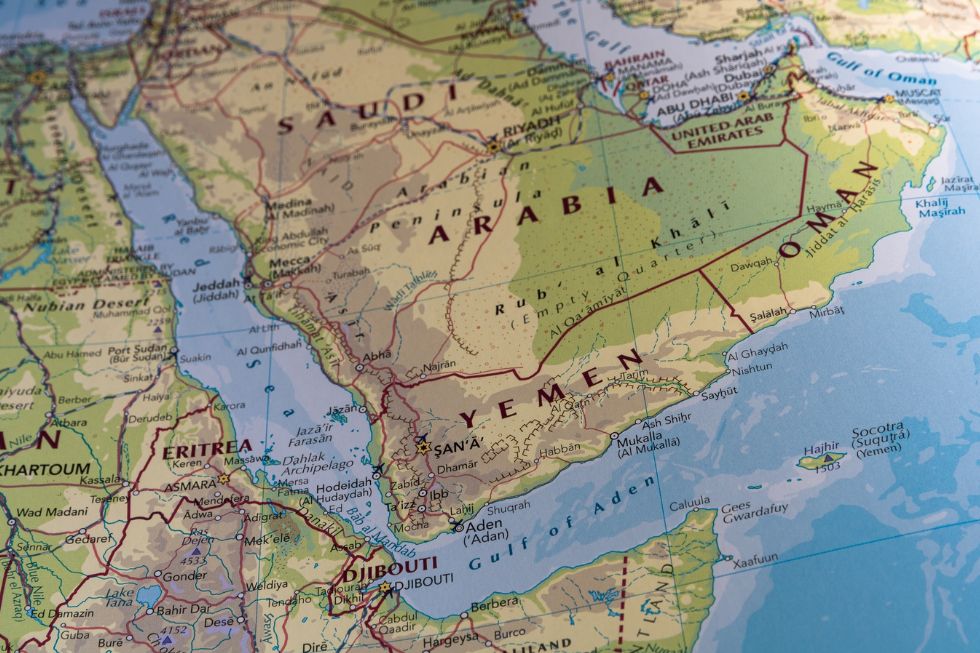
Earlier this month, South Yemen came closer to independence than at any point since unification in 1990. A combination of rapid military advances, a constitutional declaration by the Southern Transitional Council (STC) and the collapse of effective government authority across much of the south appeared to set the stage for a decisive break. Yet regional intervention — particularly by Saudi Arabia — and concern from Oman halted that trajectory and redirected events toward diplomacy.
On January 1, the STC issued a landmark constitutional statement outlining a two-year transitional period leading to a southern referendum on self-determination. The declaration was framed as a legal and political roadmap for restoring the former South Yemeni state, citing decades of marginalization since unification and the failure of successive peace processes to address the southern question.
The Hadramaut and al-Mahra campaign
In the weeks preceding the declaration, STC-aligned forces launched a swift and coordinated military campaign across Hadramaut and al-Mahra, two vast eastern governorates that had largely escaped direct fighting for much of Yemen’s war. Moving rapidly through desert terrain, tribal routes and lightly defended towns, STC units succeeded in seizing key positions with minimal resistance — a strategy that surprised many political and military analysts.
The operation was widely interpreted as more than a tactical move. Control of Hadramaut — Yemen’s largest governorate and a major oil producer — and al-Mahra, with its long coastline and border access, would have provided the territorial backbone of a future southern state.
Internationally, the STC justified its advance by emphasizing its campaign against Muslim Brotherhood-aligned factions and Al-Qaeda in the Arabian Peninsula (AQAP) — a narrative that initially found some acceptance, particularly given long-standing international concern over extremist groups operating in eastern Yemen.
Omani alarm over al-Mahra
While much attention focused on Saudi Arabia’s reaction, Oman was deeply unsettled by the STC’s move into al-Mahra, a governorate that directly borders Omani territory. Muscat has long regarded al-Mahra as a sensitive buffer zone and has pursued a policy of neutrality and quiet mediation in Yemen.
Analysts note that Oman views the expansion of armed actors near its border — whether Saudi-aligned forces, Islamist groups or southern separatists — as a potential threat to stability and cross-border security. The STC’s sudden presence in al-Mahra therefore raised red flags in Muscat, reinforcing regional pressure to halt further escalation.
Saudi Arabia draws a red line
Saudi Arabia’s response proved decisive. Despite previous tactical tolerance of the STC, Riyadh concluded that a full STC victory — particularly one followed by an internationally supervised referendum — would effectively end the authority of the internationally recognized Yemeni government it supports, and with it Saudi Arabia’s long-term influence in southern Yemen.
From Riyadh’s perspective, the STC’s success threatened not only Yemen’s territorial integrity but also Saudi strategic depth along the Arabian Peninsula. In response, Saudi-backed government forces — supported by coalition air power — moved swiftly to push STC units back to their pre-offensive positions, retaking major centers including Mukalla.
The episode also exposed growing tension between Saudi Arabia and the United Arab Emirates, the STC’s principal external supporter, highlighting divergent Gulf visions for Yemen’s future.
From confrontation to conference
Having reasserted its red lines militarily, Saudi Arabia moved quickly to shift the crisis into the political arena. Riyadh announced plans to host a “Southern Conference” to bring together southern Yemeni political forces to address grievances and to discuss future governance arrangements through dialogue rather than force.
A delegation from the STC traveled to Saudi Arabia to attend this conference, signaling a willingness to engage despite the recent confrontation. However, the political and security situation remains highly volatile. The Saudi-backed National Security Forces (NSF) have solidified their control over the region, effectively taking over key areas of South Yemen. This shift comes amid heightened tensions between the STC and the Yemeni government, with reports suggesting that the whereabouts of STC president Aidarus al-Zubaidi remain uncertain.
Adding to the instability, Zubaidi’s hometown of Dhallas and the town of Zubaid were recently hit by Saudi airstrikes, intensifying the conflict. The Saudi-led coalition’s actions indicate an increased military presence and influence, despite ongoing unrest and fluid power dynamics.
The conference represents a critical moment for all parties. For the STC, it offers an opportunity to reset relations with Riyadh, gain broader regional legitimacy and push its case for self-determination through political means rather than unilateral military action. For Saudi Arabia, the talks aim to reassert its role as the central broker in Yemen while containing separatist momentum within a managed process.
Saudi officials have emphasized that dialogue must preserve Yemen’s unity, but they have also acknowledged that southern grievances require serious engagement — a balancing act that will define the conference’s outcome.
A missed moment — or a strategic pause?
The STC’s advance into Hadramaut and al-Mahra, followed by its constitutional declaration, marked the closest South Yemen has come to independence in decades. Yet regional realities — Saudi strategic concerns and Omani border sensitivities — intervened decisively.
No owners, no ads, just global voices and first class editors. We’re a nonprofit that puts real journalism first. Join us — subscribe to our free newsletters — now.
<label for=”Your email will be shared with fairobserver and subject to its Privacy Policy”>I agree to receive emails and other content from Fair Observer. I understand that I may repeal my consent at any time. You can review our Privacy Policy and Terms of Use for further information…</label>
Whether the Riyadh conference leads to a genuine political breakthrough, a negotiated path toward self-determination or merely postpones the southern question remains unclear. What is certain is that the events of late 2025 and early 2026 have irreversibly shifted the debate. South Yemen’s future is no longer a distant aspiration, but an urgent regional question — one now being contested as much in conference halls as on the battlefield.
[Kaitlyn Diana edited this piece.]
The views expressed in this article are the author’s own and do not necessarily reflect Fair Observer’s editorial policy.
Comment
0 Comments
Newest
Oldest
Most Voted
Most Voted
Inline Feedbacks
View all comments
Commenting Guidelines
Please read our commenting guidelines before commenting.
1. Be Respectful: Please be polite to the author. Avoid hostility. The whole point of Fair Observer is openness to different perspectives from perspectives from around the world.
2. Comment Thoughtfully: Please be relevant and constructive. We do not allow personal attacks, disinformation or trolling. We will remove hate speech or incitement.
3. Contribute Usefully: Add something of value — a point of view, an argument, a personal experience or a relevant link if you are citing statistics and key facts.
<label style=”font-size: 18px;”>
I have read and agree to the above commenting guidelines.
</label>
Please agree to the guidelines before proceeding.
I
Agree, Proceed to Login
Cancel
Related Reading
The Houthis’ Southern Ambition: A Threat the International and Regional Community Must Never Ignore
The international push for a unified Yemen risks empowering the Houthis at the expense of southern aspirations and regional stability….
by
Abdul Galil Shaif,
December 30, 2025
The Southern Transitional Council: Countering Extremism and Securing Maritime Stability in Yemen
Southern forces fight extremists across Yemen’s south as Al Qaeda and the Islamic State target security units allied with the…
by
Abdul Galil Shaif,
November 19, 2025
A Two-State Solution is the Only Way Forward for Yemen
The Houthis tighten control over northern Yemen while the Southern Transitional Council seeks independence amid ongoing war. Houthi economic actions…
by
Abdul Galil Shaif,
August 26, 2025
Support Fair Observer
We rely on your support for our independence, diversity and quality.
For more than 10 years, Fair Observer has been free, fair and independent. No billionaire
owns us, no advertisers control us. We are a reader-supported nonprofit. Unlike many other
publications, we keep our content free for readers regardless of where they live or whether
they can afford to pay. We have no paywalls and no ads.
In the post-truth era of fake news, echo chambers and filter bubbles, we publish a plurality
of perspectives from around the world. Anyone can publish with us, but everyone goes through
a rigorous editorial process. So, you get fact-checked, well-reasoned content instead of
noise.
We publish 3,000+ voices from 90+ countries. We also conduct education and training programs
on subjects ranging from digital media and journalism to writing and critical thinking. This
doesn’t come cheap. Servers, editors, trainers and web developers cost
money.
Please consider supporting us on a regular basis as a recurring donor or a
sustaining member.
Will you support FO’s journalism?
We rely on your support for our independence, diversity and quality.
Donation Cycle
<label for=”donation_cycle_one_time”>One Time</label>
<label for=”donation_cycle_monthly”>Monthly</label>
<label for=”donation_cycle_yearly”>Yearly</label>
Donation Amount
<label for=”amount_11″>$11</label>
<label for=”amount_111″>$111</label>
<label for=”other”>Other</label>
$
The IRS recognizes Fair Observer as a section 501(c)(3) registered public charity
(EIN: 46-4070943), enabling you to claim a tax deduction.
Make Sense of the World
Unique Insights from 3,000+ Contributors in 90+ Countries
<label
for=”Your email will be shared with fairobserver and subject to its Privacy Policy”>I
agree to receive emails and other content from Fair Observer. I understand
that I
may repeal my consent at any time. You can review our Privacy Policy
and Terms of Use
for further
information .</label>
for=”Your email will be shared with fairobserver and subject to its Privacy Policy”>I
agree to receive emails and other content from Fair Observer. I understand
that I
may repeal my consent at any time. You can review our Privacy Policy
and Terms of Use
for further
information .</label>
No owners, no ads, just global voices and first class editors. We’re a nonprofit that puts real journalism first. Join us — subscribe to our free newsletters — now.
<label for=”Your email will be shared with fairobserver and subject to its Privacy Policy”>I agree to receive emails and other content from Fair Observer. I understand that I may repeal my consent at any time. You can review our Privacy Policy and Terms of Use for further information…</label>
</main>
Fair Observer, 461 Harbor Blvd, Belmont, CA 94002, USA
<footer class=”mart70 fo-black-bg padt50 padb30″>
Sections
PUBLICATION
Support Fair Observer
We rely on your support for our independence, diversity and quality.


</footer>

<footer id=”fixed-footer” class=”support-footer”>


Support
independent, crowdsourced, nonprofit
journalism.
Fair Observer is a 501(c)(3) independent nonprofit. We are not owned by billionaires or controlled by
advertisers. We publish nearly 3,000 authors from over 90 countries after fact-checking and editing each
piece. We do not have a paywall and anyone can read us for free. With your vital donations, we can
continue
to do our work.
Please make a recurring (or even one-time) donation today. Even $1 goes a long way because
a
million donors
like you mean one million dollars. Thank you for keeping us independent, free and fair.
One Time
Monthly
Yearly
Monthly
Yearly
Continue 

</footer>

Sign into your Fair Observer Account
<label class=”tml-label” for=”user_login”>Username or Email Address</label>
<label class=”tml-label” for=”user_pass”>Password</label>
<label class=”tml-label” for=”rememberme”>Remember Me</label>
Log In
Forgot
Password
Password
Forgot Password
Enter your registered email address or username. You will receive a
link to create a new password via email.
Please enter your username or email address. You will receive an email message with instructions on how to reset your password.
<label class=”tml-label” for=”user_login”>Username or Email Address</label>
Get New Password
Or
Return to
Login
Forgot Password
We have sent a link to your registered email address to reset your password.
<circle cx=”12.5″ cy=”12″ r=”12″ fill=”#414141″ />
Back to
Login
Become a Member & Enjoy Exclusive Benefits!
<circle cx=”12.5″ cy=”12″ r=”12″ fill=”#414141″ />
Access to comments feature
<circle cx=”12.5″ cy=”12″ r=”12″ fill=”#414141″ />
Bookmark your favorite articles
<circle cx=”12.5″ cy=”12″ r=”12″ fill=”#414141″ />
Exclusive invitations to FO° Talks & FO° Live
<circle cx=”12.5″ cy=”12″ r=”12″ fill=”#414141″ />
Access to all of our e-publications
Return to
Login
Login
NEWSLETTER
Make Sense of the World
Unique Insights from 2,500+ Contributors in 90+ Countries

<label
for=”Your email will be shared with fairobserver and subject to it’s Privacy Policy”>I
agree to receive emails and other content from Fair Observer. I understand
that I may repeal my consent at any time. You can review our Privacy Policy
and Terms of Use
for further information.</label>
for=”Your email will be shared with fairobserver and subject to it’s Privacy Policy”>I
agree to receive emails and other content from Fair Observer. I understand
that I may repeal my consent at any time. You can review our Privacy Policy
and Terms of Use
for further information.</label>
NEWSLETTER
Make Sense of the World
Unique Insights from 2,500+ Contributors in 90+ Countries
<label
for=”Your email will be shared with fairobserver and subject to it’s Privacy Policy”>I
agree to receive emails and other content from Fair Observer. I understand
that I may repeal my consent at any time. You can review our Privacy Policy
and Terms of Use
for further information.</label>
for=”Your email will be shared with fairobserver and subject to it’s Privacy Policy”>I
agree to receive emails and other content from Fair Observer. I understand
that I may repeal my consent at any time. You can review our Privacy Policy
and Terms of Use
for further information.</label>

Make Sense of the World
Unique Insights from 2,500+ Contributors in 90+ Countries
<label
for=”Your email will be shared with fairobserver and subject to its Privacy Policy”>I
agree to receive emails and other content from Fair Observer. I understand that I
may repeal my consent at any time. You can review our Privacy Policy and Terms of Use for further
information .</label>
for=”Your email will be shared with fairobserver and subject to its Privacy Policy”>I
agree to receive emails and other content from Fair Observer. I understand that I
may repeal my consent at any time. You can review our Privacy Policy and Terms of Use for further
information .</label>
We Need Your Consent
We use cookies to give you the best possible experience. Learn more about how we use cookies or edit your cookie preferences. Privacy Policy. My Options I Accept
Privacy & Cookies Policy
Close
Edit Cookie Preferences
The Fair Observer website uses digital cookies so it can collect statistics on how many visitors come to the site, what content is viewed and for how long, and the general location of the computer network of the visitor. These statistics are collected and processed using the Google Analytics service. Fair Observer uses these aggregate statistics from website visits to help improve the content of the website and to provide regular reports to our current and future donors and funding organizations. The type of digital cookie information collected during your visit and any derived data cannot be used or combined with other information to personally identify you. Fair Observer does not use personal data collected from its website for advertising purposes or to market to you.
As a convenience to you, Fair Observer provides buttons that link to popular social media sites, called social sharing buttons, to help you share Fair Observer content and your comments and opinions about it on these social media sites. These social sharing buttons are provided by and are part of these social media sites. They may collect and use personal data as described in their respective policies. Fair Observer does not receive personal data from your use of these social sharing buttons. It is not necessary that you use these buttons to read Fair Observer content or to share on social media.
Necessary
<label class=”form-check-label” for=”wt-cli-checkbox-necessary”>Necessary</label>
Always Enabled
These cookies essential for the website to function.
Social Media
<label for=”wt-cli-checkbox-social_media” class=”cli-slider” data-cli-enable=”Enabled” data-cli-disable=”Disabled”>Social Media</label>
These cookies are used to enable sharing or following of content that you find interesting on our website. These settings apply to third-party social networking and other websites.
Performance & Functionality
<label for=”wt-cli-checkbox-performance” class=”cli-slider” data-cli-enable=”Enabled” data-cli-disable=”Disabled”>Performance & Functionality</label>
These cookies are used to enhance the performance and functionality of our website. They provide statistics on how our website is used and help us improve by measuring errors. Certain functionalities on our website may become unavailable without these cookies.
Analytics
<label for=”wt-cli-checkbox-analytics” class=”cli-slider” data-cli-enable=”Enabled” data-cli-disable=”Disabled”>Analytics</label>
SAVE & ACCEPT
<textarea id=’wpd-editor-source-code’></textarea>Insert
</body></html>
Total Views:
Source: World Politics - fairobserver.com