<g id=”cross”>
<line class=”cls-1″ x1=”7″ x2=”25″ y1=”7″ y2=”25″ />
<line class=”cls-1″ x1=”7″ x2=”25″ y1=”25″ y2=”7″ />
</g>
Unextinguished Anger: Why Iran’s Streets Keep Rising
<circle cx=”10.5″ cy=”10.5″ r=”7.5″ />
<line x1=”21″ x2=”15.8″ y1=”21″ y2=”15.8″ />
<nav class=”fo-navigation pos-r” itemscope itemtype=”http://schema.org/SiteNavigationElement”>
Login
Sections <circle cx=”10.5″ cy=”10.5″ r=”7.5″ />
<line x1=”21″ x2=”15.8″ y1=”21″ y2=”15.8″ /> Search
<line x1=”21″ x2=”15.8″ y1=”21″ y2=”15.8″ />
Search


PUBLICATION
Support Fair Observer
We rely on your support for our independence, diversity and quality.
</nav>
<circle cx=”10.5″ cy=”10.5″ r=”7.5″ />
<line x1=”21″ x2=”15.8″ y1=”21″ y2=”15.8″ />
<line x1=”21″ x2=”15.8″ y1=”21″ y2=”15.8″ />
Search
</header>

<main id=”main” class=”site-main” role=”main”> 


Friday, February 13, 2026
<header class=”entry-header”>
Middle East News
Unextinguished Anger: Why Iran’s Streets Keep Rising
Over the past decade, Iran has experienced recurring protests driven by economic hardship, political repression and social demands, notably around women’s rights and ethnic tensions. Despite widespread unrest, opposition movements remain fragmented, lacking unified leadership or broad domestic support. The regime persists through coercion and external backing, but mounting internal and external pressures signal a fragile and eroding political order.
By
Friday, February 13, 2026
</header>
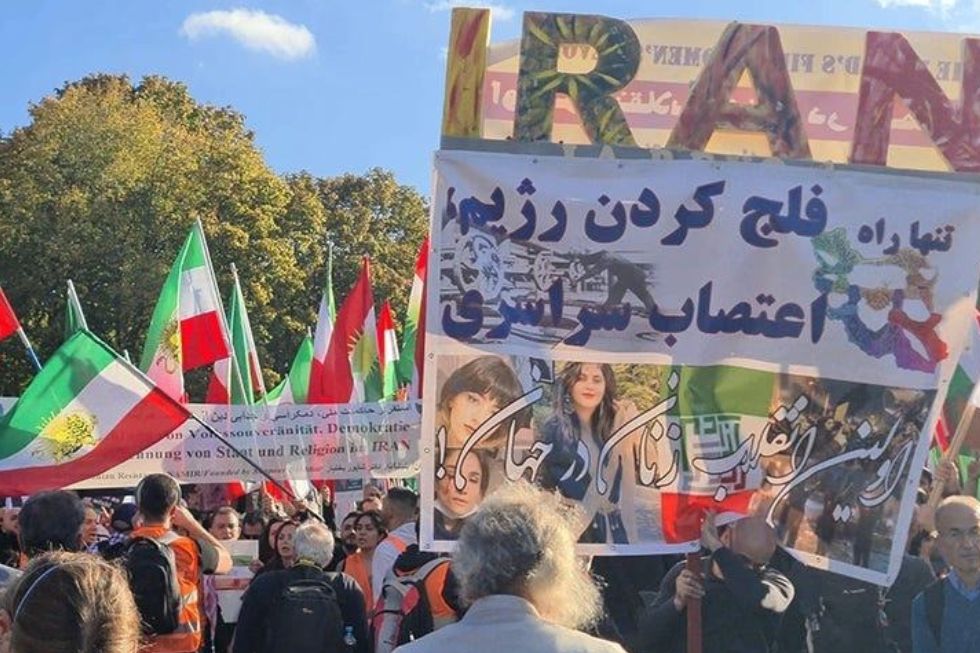
“Iran Is Ready for Change” by C. Suthorn, licensed under CC BY-SA 4.0 via Wikimedia Commons.

February 13, 2026 07:18 EDT

Check out our comment feature!
Saved Successfully.
This article saved into your bookmarks. Click here to view your bookmarks.


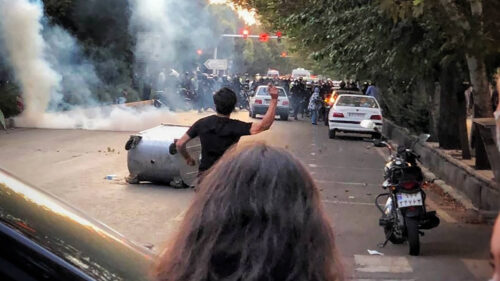
Over the past decade, street protests in Iran have erupted repeatedly. At times, economic crises have served as the main trigger; at other moments, political repression or regional tensions have pushed people into the streets. Yet despite the changing causes, the overall pattern has remained strikingly consistent: demonstrations that spread rapidly, a surge of nationwide anger and ultimately a forceful state response that suppresses the unrest. This recurring cycle raises a central question — not only about the depth of public discontent in Iran, but also about why these protests have so far failed to produce lasting political transformation.
In the early days of the new year, the Islamic Republic of Iran found itself in one of its most fragile periods in recent history. Fresh protests had once again erupted across several cities, reflecting a familiar pattern of public anger triggered by economic hardship, political repression and regional tensions. International sanctions imposed over the past decade have severely weakened the country’s economy, while soaring inflation and rising living costs have directly affected the daily lives of large segments of society. When these economic pressures intersect with long-standing political restrictions, street protests cease to be extraordinary events and instead become a recurring form of social expression.
In the early 2000s, demonstrations tended to revolve around more limited demands, particularly women’s rights, compulsory veiling and individual freedoms. Today, however, under the shadow of economic collapse and regional conflict, protests have taken on a far broader and more pervasive character.
Economic pressure and the expansion of social unrest
One of the most extensive waves of nationwide protests since the 1979 Revolution erupted across Iran in November 2019, marking a significant escalation in public dissent. As the economic impact of Western sanctions became increasingly visible, the government’s decision to sharply raise fuel prices triggered simultaneous demonstrations across multiple provinces. Within days, protests spread to dozens of cities, with anger no longer directed solely at economic policies but increasingly at the political system and its decision-making structures. University students also joined the demonstrations, further amplifying their scale.
The authorities responded with force. Reports from human rights organizations indicated widespread use of lethal violence by security forces in cities such as Shiraz, Isfahan and Kermanshah. According to Amnesty International, at least 321 people were killed by security forces during the November 2019 crackdown. President Hassan Rouhani publicly framed the unrest as a major security challenge, blaming “organized subversive elements” and foreign adversaries, a response that underscored how seriously the state viewed the protests as a threat to internal stability.
A crisis of legitimacy and state violence
Allegations surrounding state violence during the 2019 protests extended beyond the streets. According to international human rights organizations and eyewitness accounts, authorities attempted to underreport the number of fatalities, imposing strict controls over hospitals and morgues. Some reports claimed that families of deceased protesters faced pressure or financial demands in exchange for retrieving the bodies of their relatives.
In January 2020, protests entered a new phase as different social groups joined the unrest. Taxi drivers and shuttle operators took to the streets over fuel price hikes, soon followed by railway workers protesting low wages and farmers struggling under mounting economic pressure. The protests thus evolved into a broader social movement centered on livelihood concerns rather than on political or cultural demands alone.
A further turning point came with the downing of a Ukrainian passenger plane by Iranian air defense systems, killing 176 people. The authorities’ initial denial and subsequent admission of responsibility deepened public distrust toward the state. Protest slogans increasingly reflected anger not only toward government policies but toward the highest political and religious authorities themselves.
Women, identity and a new form of protest
In September 2022, the death of a young woman, Mahsa Amini, after her detention by Iran’s morality police, reignited nationwide protests. The incident brought long-simmering grievances over compulsory veiling and women’s status in public life sharply into focus. Although the protests followed a different trajectory than those of 2019, they persisted well into 2023 and coalesced around the slogan “woman, life, freedom.”
This time, the regime faced direct challenges on the terrain of women’s rights and individual liberties. Women removing their headscarves in public spaces, particularly in Tehran and other major cities, imbued the protests with strong symbolic power. With support from Kurdish and Azeri communities, the women-led movement rapidly spread across the country, further broadening the social base of dissent.
Why political transformation has yet to occur
Despite the persistence and scale of popular unrest, Iran has yet to witness the emergence of a political alternative capable of uniting disparate social groups and challenging the regime’s hold on power. Protests organized largely through social media remain fragmented and leaderless, lacking the centralized authority that Supreme Leader Ayatollah Ruhollah Khomeini was able to exert even from exile in 1979.
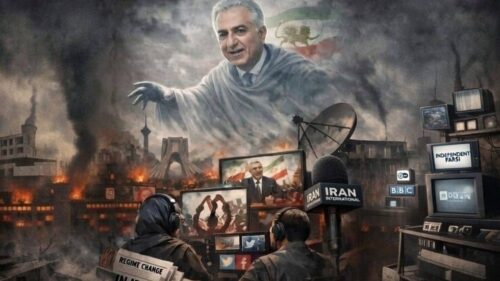
Prince Reza Pahlavi, the son of the former shah and a figure occasionally highlighted within opposition circles, enjoys visibility particularly among segments of the Iranian diaspora. However, he has struggled to establish a strong connection with domestic opposition movements. His political stance is widely perceived as overly aligned with the West, detached from Iran’s everyday social and economic realities, and burdened by the legacy of his father’s authoritarian monarchy — factors that generate caution rather than enthusiasm among broad sections of the population.
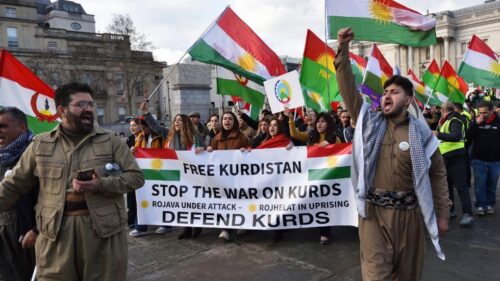
Similarly, while Azeri communities and the Kurdish minority — together comprising a significant share of Iran’s population — harbor deep dissatisfaction with the clerical regime, they remain equally distant from the idea of restoring the former monarchy. This disconnect between diaspora-based opposition figures and diverse domestic constituencies stands out as one of the most significant structural weaknesses of Iran’s anti-regime movements.
A narrowing circle, an enduring search
Today, Iran’s clerical regime remains in power, yet it is undergoing a steady process of erosion. Economic collapse, escalating protests over freedoms and women’s rights, ethnic tensions and mounting pressure from Israel, the United States and Western governments are collectively straining the system. Recent experience suggests that protest movements lacking organizational cohesion and unified leadership tend to fade in the short term. However, a regime that relies primarily on coercion to sustain its authority faces growing difficulties in maintaining long-term social control.
Limited and pragmatic support from actors such as Russia and China may provide Tehran with temporary strategic breathing space. Nevertheless, as economic vulnerabilities deepen and internal tensions intensify, preserving this balance becomes increasingly challenging. The overall picture points to a slowly but steadily tightening circle around the Iranian leadership.
We are a rare nonprofit in the world news space. Most other organizations are owned by billionaires or governments. We are bottom-up, not top-down and bring you perspectives from around the world. So, sign up now for our free newsletters to hear from our 3,000+ voices from 90+ countries.
<label for=”Your email will be shared with fairobserver and subject to its Privacy Policy”>I agree to receive emails and other content from Fair Observer. I understand that I may repeal my consent at any time. You can review our Privacy Policy and Terms of Use for further information…</label>
Taken together, these developments suggest that the demand for freedom, dignity and justice in the ancient land of Persia is not a fleeting political outburst but a profound and enduring social aspiration. While the costs and trajectory of this struggle remain uncertain, history repeatedly calls into question the durability of political systems sustained primarily through repression. In this sense, the words of Iranian sociologist Ali Shariati resonate far beyond Iran itself:
“In a country where only the state is allowed to speak, do not believe a single word that is said.”
[Kaitlyn Diana edited this piece.]
The views expressed in this article are the author’s own and do not necessarily reflect Fair Observer’s editorial policy.
Comment
0 Comments
Newest
Oldest
Most Voted
Most Voted
Inline Feedbacks
View all comments
Commenting Guidelines
Please read our commenting guidelines before commenting.
1. Be Respectful: Please be polite to the author. Avoid hostility. The whole point of Fair Observer is openness to different perspectives from perspectives from around the world.
2. Comment Thoughtfully: Please be relevant and constructive. We do not allow personal attacks, disinformation or trolling. We will remove hate speech or incitement.
3. Contribute Usefully: Add something of value — a point of view, an argument, a personal experience or a relevant link if you are citing statistics and key facts.
<label style=”font-size: 18px;”>
I have read and agree to the above commenting guidelines.
</label>
Please agree to the guidelines before proceeding.
I
Agree, Proceed to Login
Cancel
Related Reading
A Specter Is Haunting the Media — the Specter of Reza Pahlavi
Recent protests in Iran reveal deep sociopolitical and ethnonational tensions, complicated by media narratives that disproportionately elevate Reza Pahlavi while…
by
Robin Fakhari,
February 6, 2026
Why the Iranian Opposition Has Failed to Unite Against the Regime in Iran
Widespread protests across Iran, especially in Kurdish regions, have been met with violent crackdowns, highlighting deep-rooted demands for autonomy and…
by
Halmat Palani,
February 5, 2026
Iran’s Mahsa Revolution One Year On
The death of Mahsa Amini at the hands of Iran’s religious police last year triggered a popular uprising that sought…
by
Reza Parchizadeh,
September 16, 2023
Support Fair Observer
We rely on your support for our independence, diversity and quality.
For more than 10 years, Fair Observer has been free, fair and independent. No billionaire
owns us, no advertisers control us. We are a reader-supported nonprofit. Unlike many other
publications, we keep our content free for readers regardless of where they live or whether
they can afford to pay. We have no paywalls and no ads.
In the post-truth era of fake news, echo chambers and filter bubbles, we publish a plurality
of perspectives from around the world. Anyone can publish with us, but everyone goes through
a rigorous editorial process. So, you get fact-checked, well-reasoned content instead of
noise.
We publish 3,000+ voices from 90+ countries. We also conduct education and training programs
on subjects ranging from digital media and journalism to writing and critical thinking. This
doesn’t come cheap. Servers, editors, trainers and web developers cost
money.
Please consider supporting us on a regular basis as a recurring donor or a
sustaining member.
Will you support FO’s journalism?
We rely on your support for our independence, diversity and quality.
Donation Cycle
<label for=”donation_cycle_one_time”>One Time</label>
<label for=”donation_cycle_monthly”>Monthly</label>
<label for=”donation_cycle_yearly”>Yearly</label>
Donation Amount
<label for=”amount_11″>$11</label>
<label for=”amount_111″>$111</label>
<label for=”other”>Other</label>
$
The IRS recognizes Fair Observer as a section 501(c)(3) registered public charity
(EIN: 46-4070943), enabling you to claim a tax deduction.
Most Popular
Trump Backs Down From Iran Threats, for Now
Mounting economic collapse initially drove Iran’s largest protests since 1979, but they were quickly fueled by open demands for regime…
by
Gary Grappo,
January 17, 2026
Iran’s Protest Moment: Four Stakeholders, One Coherent Vision
Iran’s protests stem from deep economic hardship and a clash between societal change and an entrenched regime. Four groups —…
by
Ashraf Haidari,
January 15, 2026
Make Sense of the World
Unique Insights from 3,000+ Contributors in 90+ Countries
<label
for=”Your email will be shared with fairobserver and subject to its Privacy Policy”>I
agree to receive emails and other content from Fair Observer. I understand
that I
may repeal my consent at any time. You can review our Privacy Policy
and Terms of Use
for further
information .</label>
for=”Your email will be shared with fairobserver and subject to its Privacy Policy”>I
agree to receive emails and other content from Fair Observer. I understand
that I
may repeal my consent at any time. You can review our Privacy Policy
and Terms of Use
for further
information .</label>
We are a nonprofit, truly independent media organization committed to delivering diverse, fact-based global analysis. If you like what you are reading, sign up for our free newsletters now.
<label for=”Your email will be shared with fairobserver and subject to its Privacy Policy”>I agree to receive emails and other content from Fair Observer. I understand that I may repeal my consent at any time. You can review our Privacy Policy and Terms of Use for further information…</label>
</main>
Fair Observer, 461 Harbor Blvd, Belmont, CA 94002, USA
<footer class=”mart70 fo-black-bg padt50 padb30″>
Sections
PUBLICATION
Support Fair Observer
We rely on your support for our independence, diversity and quality.


</footer>

<footer id=”fixed-footer” class=”support-footer”>


Support
independent, crowdsourced, nonprofit
journalism.
Fair Observer is a 501(c)(3) independent nonprofit. We are not owned by billionaires or controlled by
advertisers. We publish nearly 3,000 authors from over 90 countries after fact-checking and editing each
piece. We do not have a paywall and anyone can read us for free. With your vital donations, we can
continue
to do our work.
Please make a recurring (or even one-time) donation today. Even $1 goes a long way because
a
million donors
like you mean one million dollars. Thank you for keeping us independent, free and fair.
One Time
Monthly
Yearly
Monthly
Yearly
Continue 

</footer>

Sign into your Fair Observer Account
<label class=”tml-label” for=”user_login”>Username or Email Address</label>
<label class=”tml-label” for=”user_pass”>Password</label>
<label class=”tml-label” for=”rememberme”>Remember Me</label>
Log In
Forgot
Password
Password
Forgot Password
Enter your registered email address or username. You will receive a
link to create a new password via email.
Please enter your username or email address. You will receive an email message with instructions on how to reset your password.
<label class=”tml-label” for=”user_login”>Username or Email Address</label>
Get New Password
Or
Return to
Login
Forgot Password
We have sent a link to your registered email address to reset your password.
<circle cx=”12.5″ cy=”12″ r=”12″ fill=”#414141″ />
Back to
Login
Become a Member & Enjoy Exclusive Benefits!
<circle cx=”12.5″ cy=”12″ r=”12″ fill=”#414141″ />
Access to comments feature
<circle cx=”12.5″ cy=”12″ r=”12″ fill=”#414141″ />
Bookmark your favorite articles
<circle cx=”12.5″ cy=”12″ r=”12″ fill=”#414141″ />
Exclusive invitations to FO° Talks & FO° Live
<circle cx=”12.5″ cy=”12″ r=”12″ fill=”#414141″ />
Access to all of our e-publications
Return to
Login
Login
NEWSLETTER
Make Sense of the World
Unique Insights from 2,500+ Contributors in 90+ Countries

<label
for=”Your email will be shared with fairobserver and subject to it’s Privacy Policy”>I
agree to receive emails and other content from Fair Observer. I understand
that I may repeal my consent at any time. You can review our Privacy Policy
and Terms of Use
for further information.</label>
for=”Your email will be shared with fairobserver and subject to it’s Privacy Policy”>I
agree to receive emails and other content from Fair Observer. I understand
that I may repeal my consent at any time. You can review our Privacy Policy
and Terms of Use
for further information.</label>
NEWSLETTER
Make Sense of the World
Unique Insights from 2,500+ Contributors in 90+ Countries
<label
for=”Your email will be shared with fairobserver and subject to it’s Privacy Policy”>I
agree to receive emails and other content from Fair Observer. I understand
that I may repeal my consent at any time. You can review our Privacy Policy
and Terms of Use
for further information.</label>
for=”Your email will be shared with fairobserver and subject to it’s Privacy Policy”>I
agree to receive emails and other content from Fair Observer. I understand
that I may repeal my consent at any time. You can review our Privacy Policy
and Terms of Use
for further information.</label>

Make Sense of the World
Unique Insights from 2,500+ Contributors in 90+ Countries
<label
for=”Your email will be shared with fairobserver and subject to its Privacy Policy”>I
agree to receive emails and other content from Fair Observer. I understand that I
may repeal my consent at any time. You can review our Privacy Policy and Terms of Use for further
information .</label>
for=”Your email will be shared with fairobserver and subject to its Privacy Policy”>I
agree to receive emails and other content from Fair Observer. I understand that I
may repeal my consent at any time. You can review our Privacy Policy and Terms of Use for further
information .</label>
We Need Your Consent
We use cookies to give you the best possible experience. Learn more about how we use cookies or edit your cookie preferences. Privacy Policy. My Options I Accept
Privacy & Cookies Policy
Close
Edit Cookie Preferences
The Fair Observer website uses digital cookies so it can collect statistics on how many visitors come to the site, what content is viewed and for how long, and the general location of the computer network of the visitor. These statistics are collected and processed using the Google Analytics service. Fair Observer uses these aggregate statistics from website visits to help improve the content of the website and to provide regular reports to our current and future donors and funding organizations. The type of digital cookie information collected during your visit and any derived data cannot be used or combined with other information to personally identify you. Fair Observer does not use personal data collected from its website for advertising purposes or to market to you.
As a convenience to you, Fair Observer provides buttons that link to popular social media sites, called social sharing buttons, to help you share Fair Observer content and your comments and opinions about it on these social media sites. These social sharing buttons are provided by and are part of these social media sites. They may collect and use personal data as described in their respective policies. Fair Observer does not receive personal data from your use of these social sharing buttons. It is not necessary that you use these buttons to read Fair Observer content or to share on social media.
Necessary
<label class=”form-check-label” for=”wt-cli-checkbox-necessary”>Necessary</label>
Always Enabled
These cookies essential for the website to function.
Social Media
<label for=”wt-cli-checkbox-social_media” class=”cli-slider” data-cli-enable=”Enabled” data-cli-disable=”Disabled”>Social Media</label>
These cookies are used to enable sharing or following of content that you find interesting on our website. These settings apply to third-party social networking and other websites.
Performance & Functionality
<label for=”wt-cli-checkbox-performance” class=”cli-slider” data-cli-enable=”Enabled” data-cli-disable=”Disabled”>Performance & Functionality</label>
These cookies are used to enhance the performance and functionality of our website. They provide statistics on how our website is used and help us improve by measuring errors. Certain functionalities on our website may become unavailable without these cookies.
Analytics
<label for=”wt-cli-checkbox-analytics” class=”cli-slider” data-cli-enable=”Enabled” data-cli-disable=”Disabled”>Analytics</label>
SAVE & ACCEPT
<textarea id=’wpd-editor-source-code’></textarea>Insert
</body></html>
Total Views:
Source: World Politics - fairobserver.com