<g id=”cross”>
<line class=”cls-1″ x1=”7″ x2=”25″ y1=”7″ y2=”25″ />
<line class=”cls-1″ x1=”7″ x2=”25″ y1=”25″ y2=”7″ />
</g>
Why Strategic Partnerships Fail to Build Power in the Global South: Lessons from Pakistan
<circle cx=”10.5″ cy=”10.5″ r=”7.5″ />
<line x1=”21″ x2=”15.8″ y1=”21″ y2=”15.8″ />
<nav class=”fo-navigation pos-r” itemscope itemtype=”http://schema.org/SiteNavigationElement”>
Login
Sections <circle cx=”10.5″ cy=”10.5″ r=”7.5″ />
<line x1=”21″ x2=”15.8″ y1=”21″ y2=”15.8″ /> Search
<line x1=”21″ x2=”15.8″ y1=”21″ y2=”15.8″ />
Search


PUBLICATION
Support Fair Observer
We rely on your support for our independence, diversity and quality.
</nav>
<circle cx=”10.5″ cy=”10.5″ r=”7.5″ />
<line x1=”21″ x2=”15.8″ y1=”21″ y2=”15.8″ />
<line x1=”21″ x2=”15.8″ y1=”21″ y2=”15.8″ />
Search
</header>

<main id=”main” class=”site-main” role=”main”> 



Monday, February 02, 2026
<header class=”entry-header”>
Politics
Why Strategic Partnerships Fail to Build Power in the Global South: Lessons from Pakistan
From Caracas to Islamabad, strategic partnerships have promised development but delivered dependence only. As great-power competition intensifies, the real question is no longer who funds infrastructure, but who controls technology, learning, and production. Venezuela’s collapse and Pakistan’s long industrial stagnation show how partnerships focused on finance and infrastructure, rather than on technology and learning, reinforce dependence rather than build sovereignty.
By
Monday, February 02, 2026
</header>
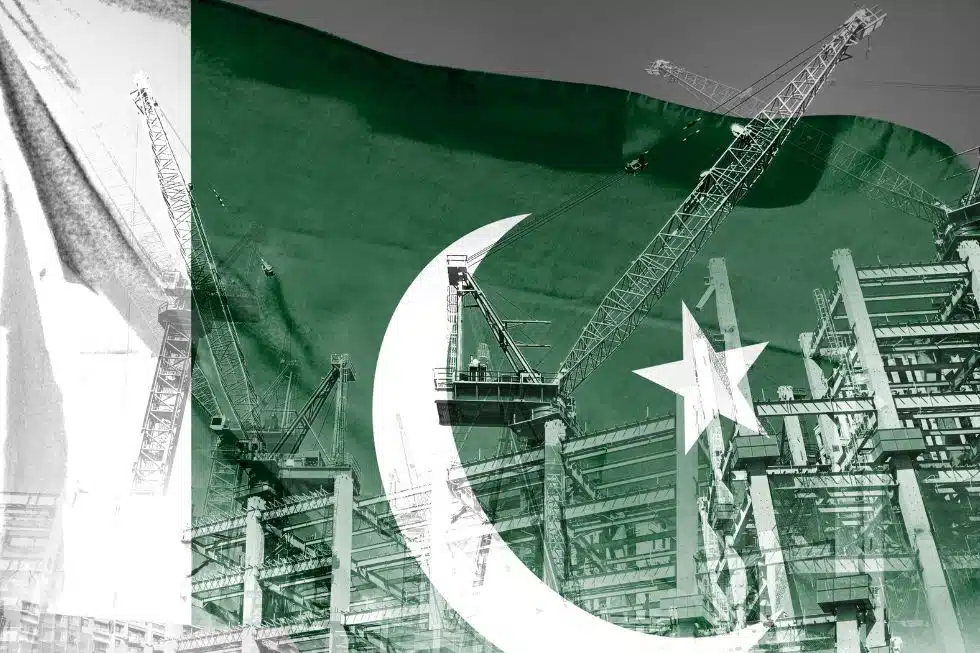
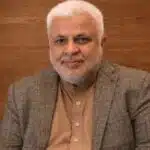
Via Shutterstock.
February 02, 2026 07:38 EDT

Check out our comment feature!
Saved Successfully.
This article saved into your bookmarks. Click here to view your bookmarks.


Strategic partnerships are often presented as pathways to development for the Global South. Yet from Latin America to Asia and Africa, they have delivered finance and infrastructure without the technological capabilities needed for lasting transformation. As geopolitical competition intensifies, the key question is no longer who partners with whom, but who controls technology, learning and production.
Recent developments in Venezuela have forced developing nations to rethink their vulnerabilities in an increasingly coercive global economic order, underscoring how asymmetric power and economic dependencies can be exploited in ways that threaten national sovereignty and long-term stability.
Pakistan, a country of nearly 250 million people and a nuclear-armed state, continues to face significant external economic and structural vulnerabilities that have drawn increasing attention in global policy discussions. Like Venezuela, these challenges are systemic, rooted in concentrated external financing, import dependence, a narrow export base, and periodic governance and transparency gaps, creating external leverage that can undermine economic resilience and national sovereignty.
The case of Venezuela: coercion, sanctions and the weaponization of dependence
In January 2026, US authorities announced the detention of Venezuelan President Nicolás Maduro following a highly controversial operation linked to long-standing sanctions and legal actions against his government, marking a sharp escalation in US–Venezuela tensions and intensified uncertainty over the country’s political future.
The capture was not an isolated incident but the culmination of months of intensified US pressure that combined sweeping sanctions on Venezuela’s oil and financial sectors with a maritime blockade designed to choke off the country’s primary source of revenue. Venezuela’s economy is overwhelmingly dependent on crude oil exports, which historically accounted for more than 90% of foreign exchange earnings.
These measures have sharply reduced Venezuela’s ability to export crude oil, disrupting longstanding trading relationships, particularly with China, and contributing to a deepening economic collapse. The bolívar has plunged on black markets, inflation continues to surge, and shortages of foreign exchange have squeezed imports and public services.
This Fair Observer analysis highlights that the aftermath of Maduro’s capture leaves Venezuela at a “turning point,” with democratic forces facing a difficult struggle for influence even as the Chavista elite retains significant institutional power.
Meanwhile, the US government has signaled potential shifts in oil policy, including agreements to export Venezuelan crude to US refineries and intentions to involve American energy companies in rebuilding the industry, a move that would reshape control over Venezuelan oil flows but also carry environmental and economic risks.
Overall, these developments highlight the potential limits and risks of coercive economic and military partnerships focused on resource control. While intended to weaken an authoritarian regime, they have also intensified economic collapse and humanitarian hardship, raised serious international legal concerns and created new geopolitical fault lines around Venezuela’s oil sector.
A Reuters report explains that Venezuela’s long-running sovereign debt crisis has come into sharp focus after political upheaval. The country has been in default since late 2017, failing to pay on bonds issued by the government and its state oil company, Petróleos de Venezuela, S.A. (PDVSA). Accrued interest and legal claims have swollen total external liabilities, including defaulted bonds, bilateral loans and arbitration awards, to an estimated $150–170 billion, far exceeding Venezuela’s GDP. Creditors include international bondholders, arbitration award winners and major bilateral lenders such as China and Russia.
The resource illusion
Venezuela possesses the world’s largest proven crude oil reserves, estimated at around 303.221 billion barrels in 2024 — roughly 17% of global reserves. These vast reserves are concentrated primarily in the Orinoco Oil Belt and consist largely of heavy crude, which is more difficult and costly to produce. Beyond petroleum, Venezuela’s natural resource base includes natural gas, iron ore, gold, bauxite, diamonds, and other minerals.
In 2023, Venezuela produced about 742,000 barrels per day of crude oil, a 70% decline from 2013 levels. After a decade of contraction, however, output increased by 13% in 2021 and 18% in 2022, driven by Iranian diluent shipments, technical support from China National Petroleum Corporation (CNPC) and the partial return of oil service providers following PDVSA debt settlements. Production also benefited from Chevron’s expanded role after limited sanctions waivers. Oil export volumes rose in 2024 despite operational disruptions and ongoing political uncertainty, but by late 2025, intensified sanctions enforcement and reduced tanker movements heightened uncertainty in the oil sector, complicating broader economic prospects.
According to the World Bank’s Changing Wealth of Nations 2024, sustainable economic progress is best assessed by changes in real wealth per capita, which reflect future production and consumption opportunities. National wealth includes produced capital (infrastructure and factories), natural capital (forests, fisheries, fossil fuels), human capital (labor and skills) and net foreign assets. Low- and lower-middle-income countries, home to half the world’s population, possess only about 7% of global wealth, with little evidence that this gap is narrowing.
Venezuela’s prolonged oil dependence exhibits classic features of Dutch disease (an economic phenomenon in which the rapid development of one sector of the economy causes a decline in other sectors). Resource-driven currency appreciation and fiscal reliance on oil crowded out manufacturing and technological development, leaving the economy poorly diversified and vulnerable to price volatility. Political interference, chronic underinvestment and the loss of technical expertise weakened the national oil company, accelerating infrastructure decay and output decline. Exports remained concentrated in a low-technology commodity, while investments in advanced processing and human capital lagged.
Partnerships that reinforce dependence
Economic partnerships formed under crisis conditions usually entrench structural dependency in the Global South. China–Venezuela cooperation represents a classic example of this dynamic. The cooperation between the two countries has been anchored in energy exports and Chinese state loans tied to infrastructure finance, making Venezuela one of China’s most indebted and strategically engaged partners in Latin America. Venezuela’s experience reflects a broader pattern: strategic partnerships seldom deliver real industrial upgrading or technological autonomy.
As socialist and left-wing critics have long argued, such arrangements often reinforce dependency rather than build self-reliance. They provide temporary financial relief while deepening asymmetric dependence. Access substitutes for capability. When external commitments are not paired with domestic capacity-building, they create debt rather than learning.
Pakistan’s experience across Western, Gulf and Chinese alliances has followed the same logic. Since the 1950s, Pakistan has repeatedly relied on external financing — from US grants during the Cold War to International Monetary Fund (IMF) stabilization programs and, more recently, large-scale borrowing under the China–Pakistan Economic Corridor (CPEC). These inflows provided short-term balance-of-payments relief and expanded infrastructure and energy capacity. What they did not enforce was technology transfer, domestic capability building or cumulative industrial deepening.
Pakistan’s missing wealth: why infrastructure alone has not delivered power
National wealth extends beyond GDP to include produced, natural, human and foreign assets. Pakistan’s development experience shows how focusing mainly on infrastructure without strengthening the others leaves economies vulnerable rather than resilient.
At independence in 1947, Pakistan inherited a limited economic base. Industry accounted for less than 10% of GDP and was confined to agro-processing and light manufacturing such as textiles, sugar, leather and food products. Heavy industry, capital-goods production and advanced manufacturing were virtually absent. Human capital was underdeveloped, and foreign assets were minimal.
Seven decades later, the structure has not fundamentally changed. In fiscal year (FY) 2024–25, manufacturing and mining together contributed roughly 13% of GDP, far below the levels achieved by East and Southeast Asian industrializers. Steel output remains limited and import-dependent. Engineering goods are weak. Capital equipment is largely imported. Technological upgrading has been episodic rather than cumulative. Pakistan expanded motorways, roads, ports and power plants but did not build the human and technological capital needed to sustain industrial transformation.
For decades, Pakistan pursued development through externally financed infrastructure. Physical capacity expanded, but productive capability did not. Factories that were able to design, adapt and upgrade technology remained scarce.
Heavy industry and technological expertise provide countries with greater strategic independence, stronger military capabilities and improved export performance. Unfortunately, Pakistan received projects, not platforms for learning or technological upgrading. Pakistan’s repeated reliance on IMF programs, from early Standby Arrangements to Extended Fund Facilities in 2019–23, and large-scale borrowing under CPEC eased short-term balance-of-payments pressures. They did not enforce technology transfer or domestic capability building. External finance stabilized the economy temporarily but failed to build long-term productive capacity.
Capability, control and the failure to convert assets into power
A country’s external position is part of its national wealth. Pakistan’s net foreign assets remain weak. Imports consistently outpace exports. In FY25, the goods trade deficit widened to about $21.3 billion. Workers’ remittances reached a record $38.3 billion, providing vital foreign-exchange support. Yet remittances are private transfers, not engines of productive transformation. Pakistan exports low-value, climate-sensitive goods and imports high-value manufactures, energy and technology. Environmental shocks, therefore, translate directly into balance-of-payments stress, reinforcing dependence on borrowing.
Pakistan has frequently acquired advanced systems without acquiring the knowledge to reproduce them. The Karachi Nuclear Power Plant, commissioned in 1971, marked the entry into civilian nuclear electricity generation. Yet reactor design, fuel fabrication and heavy engineering were not indigenized. Pakistan learned how to run the system, but not how to build or fully control it.
A similar pattern unfolded in steel. Soviet support enabled Pakistan Steel Mills in the 1970s, but the project lacked integrated industrial linkages and suffered from energy shortages, import dependence and politicized management. Under CPEC, power plants, roads and ports were delivered at scale through turnkey contracts. Core capabilities in metallurgy, equipment design and process engineering remain external.
Pakistan possesses fertile land, mineral resources, water systems and energy potential. Yet governance of these assets has been weak. Thar coal development prioritized rapid power generation while deferring industrial deepening. Coal beneficiation, chemicals and mining-equipment ecosystems never emerged. In renewable energy, imports of solar panels and electric vehicles lowered short-term costs but crowded out domestic manufacturing.
Climate change magnifies these weaknesses. Heat stress, floods, water scarcity and grid instability threaten agriculture, energy systems and infrastructure. Without domestic manufacturing and research and development ecosystems, Pakistan enters the climate transition structurally unprepared.
Globally, human capital accounts for about 60% of total wealth valued in 2020. Pakistan underinvests in education, skills, health and female labor-force participation. Women represent only about 15% of human capital in South Asia in 2020, compared with 44% in Latin America and the Caribbean. Pakistan holds 3.1% of the world’s population but only 0.9% of global GDP. Low per capita income reflects weak human capital accumulation, not merely fiscal mismanagement.
Historical roots of structural imbalance
Pakistan’s development choices reinforced these weaknesses. The 1960s agrarian reforms focused on land redistribution but neglected water rights, rural credit and technological upgrading. The 1970s nationalization agenda lacked capable implementation. During the Afghan war, foreign dollars flowed due to strategic alignment, not productivity. The social costs of militarization, narcotics and radicalization were borne by the wider population.
Privatization in the 1990s proceeded without parallel investment in technology and human capital. After 9/11, external financing surged once more, again driven by geopolitics rather than economic performance.
Authority without legitimacy: the cost of military dominance
For nearly eight decades, Pakistan’s military has exercised direct or indirect influence over the state’s political trajectory. While often justified in the name of stability, this dominance has weakened democratic institutions, distorted economic priorities, discouraged investment and entrenched a security-first mindset at the expense of sustainable development.
Political leadership derives legitimacy through public trust and inclusive decision-making. Military leadership operates through hierarchy and security-centric priorities, with limited engagement in socioeconomic realities. When the military dominates the state, economic performance suffers and the population bears the costs.
In an era of globalization, where Generation Z is more vocal, connected and globally mobile, there is growing pressure for Pakistan to establish clear constitutional limits on both political and military power. At the same time, supporters of former Prime Minister Imran Khan have mobilized around narratives of external interference, particularly regarding the US’ perceived influence in Pakistan’s political affairs.
From the fall of President Iskander Mirza’s government to the ouster of Khan’s administration, Pakistan’s politics have often been shaped by diplomatically convenient institutional pressure involving the military, the US and, at times, key Middle Eastern partners — the same actors that dominate the country’s external financing.
These relationships have favored short-term stabilization over institutional autonomy, leaving Pakistan vulnerable to external leverage. By contrast, in several Latin American countries, external influence has more frequently taken the form of direct political and military intervention, as recent developments in Venezuela illustrate.
A sovereignty-based approach to wealth
True national wealth requires balance:
- Produced capital that supports learning, not just operation
- Natural capital managed through stewardship, not extraction
- Human capital built through education, inclusion, and skills
- Foreign assets strengthened through exports, not remittances
Access does not create power — capability does. Pakistan’s reliance on turnkey projects must end, replaced by localization, supplier ecosystems and real technology transfer. Universities must be embedded in industrial policy. A knowledge economy cannot be imported. It must be built at home.
The larger lesson
Venezuela’s collapse is not an isolated tragedy; it is a cautionary tale of what happens when natural capital is squandered, human capital is neglected and technological sovereignty is never achieved. Industrial power and climate resilience are not imported — they are built.
We are a rare nonprofit in the world news space. Most other organizations are owned by billionaires or governments. We are bottom-up, not top-down and bring you perspectives from around the world. So, sign up now for our free newsletters to hear from our 3,000+ voices from 90+ countries.
<label for=”Your email will be shared with fairobserver and subject to its Privacy Policy”>I agree to receive emails and other content from Fair Observer. I understand that I may repeal my consent at any time. You can review our Privacy Policy and Terms of Use for further information…</label>
Pakistan does not lack resources; it lacks strategic alignment. In today’s world, sovereignty is not granted through partnerships. It is earned through the ability to learn, produce, adapt and innovate.
National wealth is not what a country owns. It is what it can do.
[Kaitlyn Diana edited this piece.]
The views expressed in this article are the author’s own and do not necessarily reflect Fair Observer’s editorial policy.
Comment
0 Comments
Newest
Oldest
Most Voted
Most Voted
Inline Feedbacks
View all comments
Commenting Guidelines
Please read our commenting guidelines before commenting.
1. Be Respectful: Please be polite to the author. Avoid hostility. The whole point of Fair Observer is openness to different perspectives from perspectives from around the world.
2. Comment Thoughtfully: Please be relevant and constructive. We do not allow personal attacks, disinformation or trolling. We will remove hate speech or incitement.
3. Contribute Usefully: Add something of value — a point of view, an argument, a personal experience or a relevant link if you are citing statistics and key facts.
<label style=”font-size: 18px;”>
I have read and agree to the above commenting guidelines.
</label>
Please agree to the guidelines before proceeding.
I
Agree, Proceed to Login
Cancel
Related Reading
US Strike on Venezuela: A Violation of the Sovereign Equality of Nation-State Principle
The US strike on Venezuela violates the long-standing principle of sovereign equality, undermining international law and global stability. Driven by…
by
Sudhanshu Tripathi,
January 13, 2026
How the US Capture of Nicolás Maduro Impacts China’s Engagement with Indonesia
The US capture of Venezuelan President Nicolás Maduro has sparked global debate over sovereignty and international law, impacting China’s diplomatic…
by
Muhammad Zulfikar Rakhmat & Yeta Purnama,
January 12, 2026
Powering Progress: How Can Pakistan Transform Its Energy Potential?
Pakistan possesses significant untapped oil, gas, and shale reserves, offering a path to reduce its reliance on costly imports. While…
by
Abubakar Iqbal Sheikh,
November 16, 2025
Support Fair Observer
We rely on your support for our independence, diversity and quality.
For more than 10 years, Fair Observer has been free, fair and independent. No billionaire
owns us, no advertisers control us. We are a reader-supported nonprofit. Unlike many other
publications, we keep our content free for readers regardless of where they live or whether
they can afford to pay. We have no paywalls and no ads.
In the post-truth era of fake news, echo chambers and filter bubbles, we publish a plurality
of perspectives from around the world. Anyone can publish with us, but everyone goes through
a rigorous editorial process. So, you get fact-checked, well-reasoned content instead of
noise.
We publish 3,000+ voices from 90+ countries. We also conduct education and training programs
on subjects ranging from digital media and journalism to writing and critical thinking. This
doesn’t come cheap. Servers, editors, trainers and web developers cost
money.
Please consider supporting us on a regular basis as a recurring donor or a
sustaining member.
Will you support FO’s journalism?
We rely on your support for our independence, diversity and quality.
Donation Cycle
<label for=”donation_cycle_one_time”>One Time</label>
<label for=”donation_cycle_monthly”>Monthly</label>
<label for=”donation_cycle_yearly”>Yearly</label>
Donation Amount
<label for=”amount_11″>$11</label>
<label for=”amount_111″>$111</label>
<label for=”other”>Other</label>
$
The IRS recognizes Fair Observer as a section 501(c)(3) registered public charity
(EIN: 46-4070943), enabling you to claim a tax deduction.
Most Popular
The Emergence of the New World Order and the Decline of the US
The current world order is undergoing several geopolitical upheavals that are reshaping world politics to carve out a new order…
by
Deepak Kumar,
January 1, 2026
India’s Deepfake Dilemma: The World’s Biggest Democracy Tests the World’s Newest Technology
India is pioneering a fourth model of AI governance, one grounded in democratic trust rather than state control or laissez-faire…
by
Manish Maheshwari,
November 5, 2025
FO° Talks: An Indian Military Mind on Ukraine’s Remarkable Kursk Invasion
In this episode of FO° Talks, Fair Observer Chief Strategy Officer Peter Isackson and retired Indian General AK Singh hold…
by
AK Singh & Peter Isackson,
August 4, 2025
Make Sense of the World
Unique Insights from 3,000+ Contributors in 90+ Countries
<label
for=”Your email will be shared with fairobserver and subject to its Privacy Policy”>I
agree to receive emails and other content from Fair Observer. I understand
that I
may repeal my consent at any time. You can review our Privacy Policy
and Terms of Use
for further
information .</label>
for=”Your email will be shared with fairobserver and subject to its Privacy Policy”>I
agree to receive emails and other content from Fair Observer. I understand
that I
may repeal my consent at any time. You can review our Privacy Policy
and Terms of Use
for further
information .</label>
No owners, no ads, just global voices and first class editors. We’re a nonprofit that puts real journalism first. Join us — subscribe to our free newsletters — now.
<label for=”Your email will be shared with fairobserver and subject to its Privacy Policy”>I agree to receive emails and other content from Fair Observer. I understand that I may repeal my consent at any time. You can review our Privacy Policy and Terms of Use for further information…</label>
</main>
Fair Observer, 461 Harbor Blvd, Belmont, CA 94002, USA
<footer class=”mart70 fo-black-bg padt50 padb30″>
Sections
PUBLICATION
Support Fair Observer
We rely on your support for our independence, diversity and quality.


</footer>

<footer id=”fixed-footer” class=”support-footer”>


Support
independent, crowdsourced, nonprofit
journalism.
Fair Observer is a 501(c)(3) independent nonprofit. We are not owned by billionaires or controlled by
advertisers. We publish nearly 3,000 authors from over 90 countries after fact-checking and editing each
piece. We do not have a paywall and anyone can read us for free. With your vital donations, we can
continue
to do our work.
Please make a recurring (or even one-time) donation today. Even $1 goes a long way because
a
million donors
like you mean one million dollars. Thank you for keeping us independent, free and fair.
One Time
Monthly
Yearly
Monthly
Yearly
Continue 

</footer>

Sign into your Fair Observer Account
<label class=”tml-label” for=”user_login”>Username or Email Address</label>
<label class=”tml-label” for=”user_pass”>Password</label>
<label class=”tml-label” for=”rememberme”>Remember Me</label>
Log In
Forgot
Password
Password
Forgot Password
Enter your registered email address or username. You will receive a
link to create a new password via email.
Please enter your username or email address. You will receive an email message with instructions on how to reset your password.
<label class=”tml-label” for=”user_login”>Username or Email Address</label>
Get New Password
Or
Return to
Login
Forgot Password
We have sent a link to your registered email address to reset your password.
<circle cx=”12.5″ cy=”12″ r=”12″ fill=”#414141″ />
Back to
Login
Become a Member & Enjoy Exclusive Benefits!
<circle cx=”12.5″ cy=”12″ r=”12″ fill=”#414141″ />
Access to comments feature
<circle cx=”12.5″ cy=”12″ r=”12″ fill=”#414141″ />
Bookmark your favorite articles
<circle cx=”12.5″ cy=”12″ r=”12″ fill=”#414141″ />
Exclusive invitations to FO° Talks & FO° Live
<circle cx=”12.5″ cy=”12″ r=”12″ fill=”#414141″ />
Access to all of our e-publications
Return to
Login
Login
NEWSLETTER
Make Sense of the World
Unique Insights from 2,500+ Contributors in 90+ Countries

<label
for=”Your email will be shared with fairobserver and subject to it’s Privacy Policy”>I
agree to receive emails and other content from Fair Observer. I understand
that I may repeal my consent at any time. You can review our Privacy Policy
and Terms of Use
for further information.</label>
for=”Your email will be shared with fairobserver and subject to it’s Privacy Policy”>I
agree to receive emails and other content from Fair Observer. I understand
that I may repeal my consent at any time. You can review our Privacy Policy
and Terms of Use
for further information.</label>
NEWSLETTER
Make Sense of the World
Unique Insights from 2,500+ Contributors in 90+ Countries
<label
for=”Your email will be shared with fairobserver and subject to it’s Privacy Policy”>I
agree to receive emails and other content from Fair Observer. I understand
that I may repeal my consent at any time. You can review our Privacy Policy
and Terms of Use
for further information.</label>
for=”Your email will be shared with fairobserver and subject to it’s Privacy Policy”>I
agree to receive emails and other content from Fair Observer. I understand
that I may repeal my consent at any time. You can review our Privacy Policy
and Terms of Use
for further information.</label>

Make Sense of the World
Unique Insights from 2,500+ Contributors in 90+ Countries
<label
for=”Your email will be shared with fairobserver and subject to its Privacy Policy”>I
agree to receive emails and other content from Fair Observer. I understand that I
may repeal my consent at any time. You can review our Privacy Policy and Terms of Use for further
information .</label>
for=”Your email will be shared with fairobserver and subject to its Privacy Policy”>I
agree to receive emails and other content from Fair Observer. I understand that I
may repeal my consent at any time. You can review our Privacy Policy and Terms of Use for further
information .</label>
We Need Your Consent
We use cookies to give you the best possible experience. Learn more about how we use cookies or edit your cookie preferences. Privacy Policy. My Options I Accept
Privacy & Cookies Policy
Close
Edit Cookie Preferences
The Fair Observer website uses digital cookies so it can collect statistics on how many visitors come to the site, what content is viewed and for how long, and the general location of the computer network of the visitor. These statistics are collected and processed using the Google Analytics service. Fair Observer uses these aggregate statistics from website visits to help improve the content of the website and to provide regular reports to our current and future donors and funding organizations. The type of digital cookie information collected during your visit and any derived data cannot be used or combined with other information to personally identify you. Fair Observer does not use personal data collected from its website for advertising purposes or to market to you.
As a convenience to you, Fair Observer provides buttons that link to popular social media sites, called social sharing buttons, to help you share Fair Observer content and your comments and opinions about it on these social media sites. These social sharing buttons are provided by and are part of these social media sites. They may collect and use personal data as described in their respective policies. Fair Observer does not receive personal data from your use of these social sharing buttons. It is not necessary that you use these buttons to read Fair Observer content or to share on social media.
Necessary
<label class=”form-check-label” for=”wt-cli-checkbox-necessary”>Necessary</label>
Always Enabled
These cookies essential for the website to function.
Social Media
<label for=”wt-cli-checkbox-social_media” class=”cli-slider” data-cli-enable=”Enabled” data-cli-disable=”Disabled”>Social Media</label>
These cookies are used to enable sharing or following of content that you find interesting on our website. These settings apply to third-party social networking and other websites.
Performance & Functionality
<label for=”wt-cli-checkbox-performance” class=”cli-slider” data-cli-enable=”Enabled” data-cli-disable=”Disabled”>Performance & Functionality</label>
These cookies are used to enhance the performance and functionality of our website. They provide statistics on how our website is used and help us improve by measuring errors. Certain functionalities on our website may become unavailable without these cookies.
Analytics
<label for=”wt-cli-checkbox-analytics” class=”cli-slider” data-cli-enable=”Enabled” data-cli-disable=”Disabled”>Analytics</label>
SAVE & ACCEPT
<textarea id=’wpd-editor-source-code’></textarea>Insert
</body></html>
Total Views:
Source: World Politics - fairobserver.com