<g id=”cross”>
<line class=”cls-1″ x1=”7″ x2=”25″ y1=”7″ y2=”25″ />
<line class=”cls-1″ x1=”7″ x2=”25″ y1=”25″ y2=”7″ />
</g>
Warnings are Escalating: Sino-Japanese Relations are Deteriorating Rapidly
<circle cx=”10.5″ cy=”10.5″ r=”7.5″ />
<line x1=”21″ x2=”15.8″ y1=”21″ y2=”15.8″ />
<nav class=”fo-navigation pos-r” itemscope itemtype=”http://schema.org/Navigation”>
Login
Sections <circle cx=”10.5″ cy=”10.5″ r=”7.5″ />
<line x1=”21″ x2=”15.8″ y1=”21″ y2=”15.8″ />
Search
<circle cx=”10.5″ cy=”10.5″ r=”7.5″ />
<line x1=”21″ x2=”15.8″ y1=”21″ y2=”15.8″ />
Search


PUBLICATION

Support Fair Observer
We rely on your support for our independence, diversity and quality.
</nav>
</header>

<main id=”main” class=”site-main” role=”main”> 


Wednesday, December 10, 2025
<header class=”entry-header”>
Warnings are Escalating: Sino-Japanese Relations are Deteriorating Rapidly
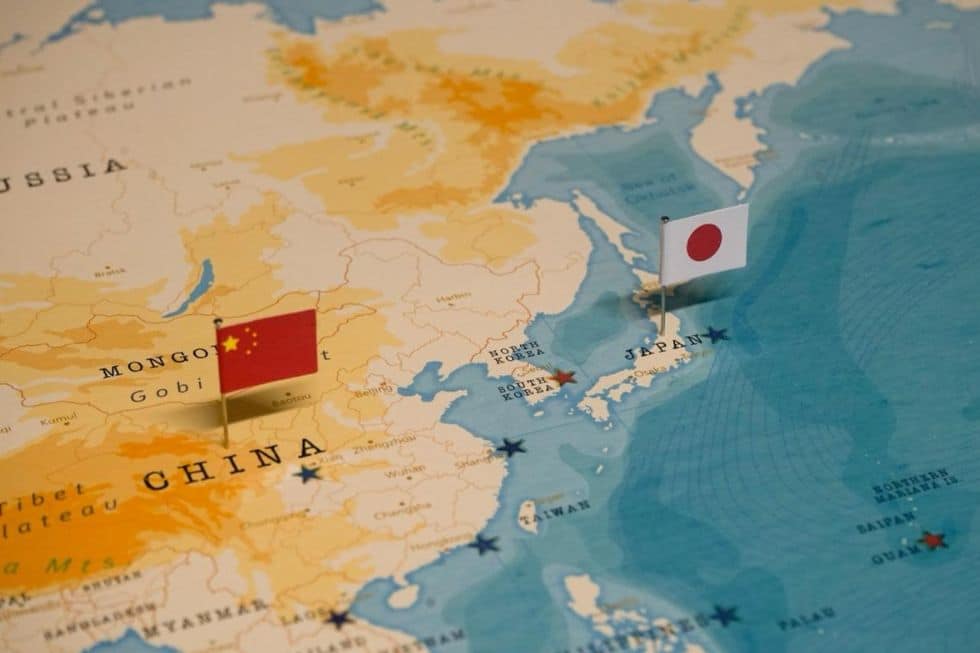
China and Japan are experiencing increasing tensions as Chinese Foreign Minister Wang Yi issues strong warnings in response to Tokyo’s indications of military interest in Taiwan. Wang Yi cites Japan’s wartime legacy and Prime Minister Sanae Takaichi’s remarks to justify new retaliatory measures targeting travel and trade. This dispute is prompting both governments to consider more severe actions that could destabilize East Asia.
By
Wednesday, December 10, 2025
</header>
Via Shutterstock.

December 10, 2025 06:43 EDT

Check out our comment feature!
Saved Successfully.
This article saved into your bookmarks. Click here to view your bookmarks.


On November 23, Chinese Foreign Minister Wang Yi gave an interview to Chinese media after a strategic dialogue with the foreign ministers of three Central Asian countries, during which he spoke extensively about the current Sino-Japanese friction. Major media outlets widely reported some of his warnings because they considered these warnings quite unusual, given Wang Yi’s roles: former Chinese ambassador to Japan, a well-known “Japan expert” among the top Chinese government officials and currently China’s highest-ranking diplomat.
Wang Yi’s views were frank and also quite stern; his core intention was to explain to the international community why China had to retaliate against Japanese Prime Minister Sanae Takaichi’s erroneous remarks.
China’s government has taken a hard line
There are at least three points in Wang Yi’s speech that deserve special attention:
First, 2025 is a very special year, marking the 80th anniversary of China’s victory in the War of Resistance Against Japan. Besides, Japan bears a historical “original sin” regarding the Taiwan issue. In Wang Yi’s words, returning Taiwan, which Japan “stole” from China, is an international obligation that Japan, as a defeated nation, “must continue to abide by.” Therefore, especially this year, Japan should deeply reflect on its actions and adhere to the rules and commitments on the Taiwan and historical issues, acting with caution and restraint, rather than provoking trouble, he says.
Second, Wang Yi pointed out, “But what is shocking is that the current Japanese leader has publicly sent the wrong signal of attempting to intervene militarily in the Taiwan issue, said things he shouldn’t have said, and crossed a red line that shouldn’t have been touched.”
Why is this considered a wrong signal? Because Sanae Takaichi broke with the practices of almost all previous prime ministers of Japan, explicitly stating her intention to intervene militarily in the Taiwan Strait dispute. This clearly constitutes “saying things she shouldn’t have said and crossing a red line she shouldn’t have touched.”
Third, faced with Japan’s blatant infringement upon China’s sovereignty and territorial integrity, and its violation of international justice and human conscience, China seems to have no choice but to retaliate. Therefore, Wang Yi also stated, “The Chinese people love peace and are friendly to their neighbors, but on major issues concerning national sovereignty and territorial integrity, there will be no compromise or retreat.”
This indicates that China is unlikely to have any room for compromise on this issue. If the Chinese government chooses to compromise, the surging nationalistic sentiment among 1.4 billion Chinese people could very well shake the foundations of the Chinese Communist Party’s (CCP) rule.
Japan has “no bargaining chips” over China on the legal basis
If China were to attack Japan in a future conflict across the Taiwan Strait, it would have a legal basis, namely the Articles 53 and 107 of the UN Charter which stipulate that if a former enemy state launches another invasion, the five permanent members of the UN Security Council — China, France, the Soviet Union (now Russia), the United Kingdom and the United States — have the right to directly conduct military action without authorization from the Security Council. Although the Japanese Ministry of Foreign Affairs responded by emphasizing that these clauses are outdated because UN General Assembly Resolution 50/52 of 1995 declared them obsolete, they remain valid.
This is because the UN Charter has a higher legal standing than any UN General Assembly resolution. In other words, a General Assembly resolution cannot overturn the UN Charter. Even if a country votes in favor of a General Assembly resolution, it can still invoke the UN Charter because it has the highest legal standing. It’s like, if a bill passes a referendum in the United States but violates the Constitution, actions can still be taken according to the Constitution, not the bill itself, unless the Constitution is amended.
The UN Charter, the core of the “enemy state clause,” states that when the UN Security Council considers a situation threatening international peace, it may authorize regional organizations or states to take action. However, actions against “enemy states” (such as the Axis powers in World War II, such as Germany and Japan) are not subject to this restriction and do not require Security Council authorization. Legally, this clause allowed the Allied powers to take direct military action against aggression by “enemy states”, thereby serving as a deterrent to the post-World War II international order.
Article 107 of the UN Charter is also one of the core contents of the “enemy state clause”, stipulating that: “This Charter does not abolish or prohibit any action taken or authorized by a responsible government against an enemy state of any signatory State of this Charter in connection with the Second World War.” Its core meaning can be understood as: this clause explicitly preserves the right of victorious powers in World War II (such as China and the United States) to conduct military action against the Axis powers (Japan, Germany, etc.), and even after the UN Charter came into effect, these actions remain unrestricted by Security Council authorization. Essentially, this is an “exceptional authorization” under international law for the military expansion of defeated powers, aimed at preventing a repeat of the history of aggression.
During World War II, Japan and China were enemies, and Taiwan was also affected during the war (occupied by Japan). Therefore, if Japan were to intervene in Taiwan affairs militarily, it would perfectly comply with the provisions of the clause as mentioned above, allowing China to launch an attack on Japan directly without authorization from the UN Security Council.
Would China dare to declare war on Japan?
However, the key question is, even with these legal guarantees from the UN, would China really dare to declare war on Japan?
Economically, signs of Japan’s downturn have indeed been emerging for some time. In the third quarter of this year, Japan’s GDP contracted for the first time in nearly two years; inflation has continued to rise for 43 consecutive months, already exceeding the Bank of Japan’s warning line; consumer goods prices are soaring while wages are still stagnant; the yen’s exchange rate has been depressed for a long time; plus, the most troublesome problem — extremely high debt-to-GDP ratio. With all these internal problems unresolved, a diplomatic conflict with China is particularly detrimental at the moment, as China has already begun imposing a slew of economic measures that appear aimed at Japan.
First, the Chinese Ministry of Foreign Affairs immediately warned Chinese citizens to avoid traveling to Japan. Subsequently, major Chinese airlines announced that tickets for flights to Japan could be refunded free of charge, while several other airlines directly announced the cancellation or reductions of flights to Japan. Meanwhile, the Hong Kong and Macau Tourism Bureaus also updated their travel safety advisories, reminding those planning to travel to Japan to be vigilant. According to media reports, tens of thousands of tickets from China to Japan were cancelled in just two days after November 15.
Suddenly, Japan’s tourism industry lost its largest source of customers and its most stable overseas consumer group — Chinese tourists. As a result, the Nikkei index on the Tokyo Stock Exchange began to fall on the morning of November 17, with significant declines seen in sectors related to the Chinese market, particularly those pertaining to Chinese tourist spending, such as Mitsukoshi Isetan (a wholly-owned subsidiary of Mitsukoshi Isetan Holdings, a Japanese department store holding company that primarily operates the Mitsukoshi and Isetan brands in the Kanto region). If the number of Chinese tourists visiting Japan were to decrease by 25%, as in 2012, it would roughly lead to a reduction in spending of trillions of yen, equivalent to nearly 0.5% of Japan’s real GDP. Simultaneously, China also reimposed bans on imports of Japanese seafood and beef.
Still, China has more cards to play, such as launching trade remedy investigations, restricting investments and taking antidumping measures. However, all these moves seem like “sharp pinpricks” rather than “a knockout blow”. This is to say, in the long run, these economic measures from China’s side are unlikely to shake the foundations of Japan’s macroeconomy. This is because, fundamentally, Japan is a high-end manufacturing powerhouse, not a country primarily reliant on agriculture or services. What will remain most critical to Japan’s economy will still be its ability to sell cars to the United States, not the ability to sell seafood to China.
Politically, on November 24, the leaders of China and the United States also spoke by phone again. Unlike their previous meeting in South Korea, this time the two sides explicitly discussed the Taiwan issue (according to China’s side). Immediately afterwards, US President Donald Trump spoke with Takaichi. Although Takaichi did not mention whether the Taiwan issue was discussed in the press conference, she did not deny it either. Media outlets widely speculated that Trump exerted pressure on Japan at China’s request.
This shows that regardless of how the outside world evaluates some of Trump’s policies, he remains clear-headed, at least on historical and Taiwan issues. However, this has once again negatively impacted China’s diplomatic strategy and international image. As the world’s second-largest economy, which frequently clashes with the United States on various international stages, China still needs the US to mediate its conflicts with other countries at crucial moments, even if it’s for China’s own domestic problems. Rationally, this makes us wonder how China’s “brotherly” countries, like North Korea, Iran and even Russia, will view China after this recent Sino-Japanese conflict.
From a military perspective, Japan and Taiwan have completely different international statuses. Taiwan is a disputed territory, and if China were to launch a military attack on Taiwan, the United States would lack the legal basis to assist it, as the UN General Assembly resolution formally recognizes the “One China” principle. Therefore, any conflict between mainland China and Taiwan would be considered as China’s internal affair. Japan, on the other hand, is entirely different. Japan is a fully sovereign state and has signed a formal military alliance treaty with the United States.
If China and Japan were to go to war, the US military could fully intervene in it without any legal or realistic restrictions. As for Russia, the Russia-Ukraine crisis has already overwhelmed the “polar bear” significantly; lots of experts doubt that Russia will truly have the capability and willingness to fully assist China when the war comes. As for China’s other “friendly” countries, such as North Korea, Iran and Myanmar, as well as others, they will likely only issue some diplomatic statements at most.
Ultimately, China still needs to face two military superpowers simultaneously — Japan and the United States — in which case, China would have virtually no chance of victory. Note that on Thursday, November 20, US State Department spokesman Tommy Pigott reaffirmed the US’s commitment to Japan’s national security on X, without mentioning the “One China” policy.
The situation may continue to deteriorate
It is foreseeable that the situation will continue to deteriorate in the short term, and it will be hard to get back to the status quo ante. This is because the Chinese government has no way out of the issue of Sino-Japanese relations. The Taiwan issue not only concerns China’s core interests — a red line within a red line — but also represents the most important foundation of public opinion for the CCP’s rule in China.
However, this right-wing wave in Japan did not actually begin with Sanae Takaichi. Instead, it has already been sweeping across Japan for quite a long time. For instance, in 2021, the Japanese Self-Defense Forces had already formulated plans to operate around the Taiwan Strait. In recent years, the Taiwanese, US and Japanese militaries have conducted numerous joint war exercises. What does this mean? It means that the US, Japan and Taiwan have already essentially begun preparing for military intervention in a potential Taiwan Strait crisis.
Does China know about these facts? Of course, it does. But for many years, the Chinese government has remained silent. Furthermore, Japanese warships transited the Taiwan Strait three times — in September 2024, February 2025 and June 2025 — neither the Chinese government nor the military has responded appropriately to such incidents, nor has it taken Japan’s military actions seriously or analyzed them from a strategic perspective.
Therefore, the rapid rise of right-wing forces in Japan in recent years has resulted from the goodwill shown to them by the former victorious powers in the surrounding region (China, South Korea, North Korea and Russia). Japan’s passage through the Taiwan Strait under the guise of freedom of navigation is, in reality, an act of militarism that will inevitably be exposed.
Sanae Takaichi’s firm decision to lift the lid on this matter may have been deliberate, intended to put a “pressure test” on China. China’s retaliation, to some extent, is also a “pressure test” for Japan. China wants to test the economic reaction to decoupling from Japan. Of course, political factors are also at play. China has taken a series of actions, including conducting military exercises and so-called “comprehensive military preparations,” all aimed at putting pressure on Japan.
Over the past decade, Sino-Japanese relations have experienced ups and downs, but have generally improved in the same direction towards a warming relationship. However, Takaichi’s actions have completely undermined this long-held momentum and further fueled new animosity between the two countries. In other words, the achievements accumulated over many years in Sino-Japanese relations have been almost entirely destroyed this time.
For the moment, tensions thus far show no sign of abating. In the near future, we should not be surprised if small-scale conflicts even occur between China and Japan.
No owners, no ads, just global voices and first class editors. We’re a nonprofit that puts real journalism first. Join us — subscribe to our free newsletters — now.
<label for=”Your email will be shared with fairobserver and subject to its Privacy Policy”>I agree to receive emails and other content from Fair Observer. I understand that I may repeal my consent at any time. You can review our Privacy Policy and Terms of Use for further information…</label>
German philosopher Friedrich Nietzsche said, “When you gaze into an abyss, the abyss also gazes into you.” And those words still resonate powerfully today. They serve as a constant reminder to every nation in the world, including China and Japan: most cycles of history begin with the forgetting of history!
[Kaitlyn Diana edited this piece.]
The views expressed in this article are the author’s own and do not necessarily reflect Fair Observer’s editorial policy.
Comment
0 Comments
Newest
Oldest
Most Voted
Most Voted
Inline Feedbacks
View all comments
Commenting Guidelines
Please read our commenting guidelines before commenting.
1. Be Respectful: Please be polite to the author. Avoid hostility. The whole point of Fair Observer is openness to different perspectives from perspectives from around the world.
2. Comment Thoughtfully: Please be relevant and constructive. We do not allow personal attacks, disinformation or trolling. We will remove hate speech or incitement.
3. Contribute Usefully: Add something of value — a point of view, an argument, a personal experience or a relevant link if you are citing statistics and key facts.
<label style=”font-size: 18px;”>
I have read and agree to the above commenting guidelines.
</label>
Please agree to the guidelines before proceeding.
I
Agree, Proceed to Login
Cancel
Related Reading
FO° Exclusive: Tensions Over Taiwan Push China and Japan Closer to Conflict
In this section of the November 2025 FO° Exclusive, Atul Singh and Glenn Carle examine the escalating tensions between China…
by
Glenn Carle & Atul Singh,
December 6, 2025
FO° Talks: What Does Trump’s Japan Visit and Meeting with Xi Jinping Mean for the Indo-Pacific?
In this episode of FO° Talks, Rohan Khattar Singh and Saya Kiba examine US President Donald Trump’s visit to the…
by
Saya Kiba & Rohan Khattar Singh,
November 20, 2025
FO° Talks: Japan’s Ties With Philippines Soar Amid China Tensions. Will India Join the Alliance?
In this episode of FO° Talks, Rohan Khattar Singh and Saya Kiba explore how Japan and the Philippines have built…
by
Saya Kiba & Rohan Khattar Singh,
October 14, 2025
Support Fair Observer
We rely on your support for our independence, diversity and quality.
For more than 10 years, Fair Observer has been free, fair and independent. No billionaire
owns us, no advertisers control us. We are a reader-supported nonprofit. Unlike many other
publications, we keep our content free for readers regardless of where they live or whether
they can afford to pay. We have no paywalls and no ads.
In the post-truth era of fake news, echo chambers and filter bubbles, we publish a plurality
of perspectives from around the world. Anyone can publish with us, but everyone goes through
a rigorous editorial process. So, you get fact-checked, well-reasoned content instead of
noise.
We publish 3,000+ voices from 90+ countries. We also conduct education and training programs
on subjects ranging from digital media and journalism to writing and critical thinking. This
doesn’t come cheap. Servers, editors, trainers and web developers cost
money.
Please consider supporting us on a regular basis as a recurring donor or a
sustaining member.
Will you support FO’s journalism?
We rely on your support for our independence, diversity and quality.
Donation Cycle
<label for=”donation_cycle_one_time”>One Time</label>
<label for=”donation_cycle_monthly”>Monthly</label>
<label for=”donation_cycle_yearly”>Yearly</label>
Donation Amount
<label for=”amount_11″>$11</label>
<label for=”amount_111″>$111</label>
<label for=”other”>Other</label>
$
The IRS recognizes Fair Observer as a section 501(c)(3) registered public charity
(EIN: 46-4070943), enabling you to claim a tax deduction.
Make Sense of the World
Unique Insights from 3,000+ Contributors in 90+ Countries
<label
for=”Your email will be shared with fairobserver and subject to its Privacy Policy”>I
agree to receive emails and other content from Fair Observer. I understand
that I
may repeal my consent at any time. You can review our Privacy Policy
and Terms of Use
for further
information .</label>
for=”Your email will be shared with fairobserver and subject to its Privacy Policy”>I
agree to receive emails and other content from Fair Observer. I understand
that I
may repeal my consent at any time. You can review our Privacy Policy
and Terms of Use
for further
information .</label>
Look at the world through many prisms — 3,000+ pairs of eyes from 90+ countries. We are a rare nonprofit in the world news space and you can get our newsletters for free.
<label for=”Your email will be shared with fairobserver and subject to its Privacy Policy”>I agree to receive emails and other content from Fair Observer. I understand that I may repeal my consent at any time. You can review our Privacy Policy and Terms of Use for further information…</label>
</main>
Fair Observer, 461 Harbor Blvd, Belmont, CA 94002, USA
<footer class=”mart70 fo-black-bg padt50 padb30″>
Sections
PUBLICATION
Support Fair Observer
We rely on your support for our independence, diversity and quality.


</footer>

<footer id=”fixed-footer” class=”support-footer”>


Support
independent, crowdsourced, nonprofit
journalism.
Fair Observer is a 501(c)(3) independent nonprofit. We are not owned by billionaires or controlled by
advertisers. We publish nearly 3,000 authors from over 90 countries after fact-checking and editing each
piece. We do not have a paywall and anyone can read us for free. With your vital donations, we can
continue
to do our work.
Please make a recurring (or even one-time) donation today. Even $1 goes a long way because
a
million donors
like you mean one million dollars. Thank you for keeping us independent, free and fair.
One Time
Monthly
Yearly
Monthly
Yearly
Continue 

</footer>

Sign into your Fair Observer Account
<label class=”tml-label” for=”user_login”>Username or Email Address</label>
<label class=”tml-label” for=”user_pass”>Password</label>
<label class=”tml-label” for=”rememberme”>Remember Me</label>
Log In
Forgot
Password
Forgot Password
Enter your registered email address or username. You will receive a
link to create a new password via email.
Please enter your username or email address. You will receive an email message with instructions on how to reset your password.
<label class=”tml-label” for=”user_login”>Username or Email Address</label>
Get New Password
Or
Return to
Login
Forgot Password
We have sent a link to your registered email address to reset your password.
<circle cx=”12.5″ cy=”12″ r=”12″ fill=”#414141″ />
Back to
Login
Become a Member & Enjoy Exclusive Benefits!
<circle cx=”12.5″ cy=”12″ r=”12″ fill=”#414141″ />
Access to comments feature
<circle cx=”12.5″ cy=”12″ r=”12″ fill=”#414141″ />
Bookmark your favorite articles
<circle cx=”12.5″ cy=”12″ r=”12″ fill=”#414141″ />
Exclusive invitations to FO° Talks & FO° Live
<circle cx=”12.5″ cy=”12″ r=”12″ fill=”#414141″ />
Access to all of our e-publications
Return to
Login
Login
NEWSLETTER
Make Sense of the World
Unique Insights from 2,500+ Contributors in 90+ Countries

<label
for=”Your email will be shared with fairobserver and subject to it’s Privacy Policy”>I
agree to receive emails and other content from Fair Observer. I understand
that I may repeal my consent at any time. You can review our Privacy Policy
and Terms of Use
for further information.</label>
for=”Your email will be shared with fairobserver and subject to it’s Privacy Policy”>I
agree to receive emails and other content from Fair Observer. I understand
that I may repeal my consent at any time. You can review our Privacy Policy
and Terms of Use
for further information.</label>
NEWSLETTER
Make Sense of the World
Unique Insights from 2,500+ Contributors in 90+ Countries
<label
for=”Your email will be shared with fairobserver and subject to it’s Privacy Policy”>I
agree to receive emails and other content from Fair Observer. I understand
that I may repeal my consent at any time. You can review our Privacy Policy
and Terms of Use
for further information.</label>
for=”Your email will be shared with fairobserver and subject to it’s Privacy Policy”>I
agree to receive emails and other content from Fair Observer. I understand
that I may repeal my consent at any time. You can review our Privacy Policy
and Terms of Use
for further information.</label>

Make Sense of the World
Unique Insights from 2,500+ Contributors in 90+ Countries
<label
for=”Your email will be shared with fairobserver and subject to its Privacy Policy”>I
agree to receive emails and other content from Fair Observer. I understand that I
may repeal my consent at any time. You can review our Privacy Policy and Terms of Use for further
information .</label>
for=”Your email will be shared with fairobserver and subject to its Privacy Policy”>I
agree to receive emails and other content from Fair Observer. I understand that I
may repeal my consent at any time. You can review our Privacy Policy and Terms of Use for further
information .</label>
We Need Your Consent
We use cookies to give you the best possible experience. Learn more about how we use cookies or edit your cookie preferences. Privacy Policy. My Options I Accept
Privacy & Cookies Policy
Close
Edit Cookie Preferences
The Fair Observer website uses digital cookies so it can collect statistics on how many visitors come to the site, what content is viewed and for how long, and the general location of the computer network of the visitor. These statistics are collected and processed using the Google Analytics service. Fair Observer uses these aggregate statistics from website visits to help improve the content of the website and to provide regular reports to our current and future donors and funding organizations. The type of digital cookie information collected during your visit and any derived data cannot be used or combined with other information to personally identify you. Fair Observer does not use personal data collected from its website for advertising purposes or to market to you.
As a convenience to you, Fair Observer provides buttons that link to popular social media sites, called social sharing buttons, to help you share Fair Observer content and your comments and opinions about it on these social media sites. These social sharing buttons are provided by and are part of these social media sites. They may collect and use personal data as described in their respective policies. Fair Observer does not receive personal data from your use of these social sharing buttons. It is not necessary that you use these buttons to read Fair Observer content or to share on social media.
Necessary
<label class=”form-check-label” for=”wt-cli-checkbox-necessary”>Necessary</label>
Always Enabled
These cookies essential for the website to function.
Social Media
<label for=”wt-cli-checkbox-social_media” class=”cli-slider” data-cli-enable=”Enabled” data-cli-disable=”Disabled”>Social Media</label>
These cookies are used to enable sharing or following of content that you find interesting on our website. These settings apply to third-party social networking and other websites.
Performance & Functionality
<label for=”wt-cli-checkbox-performance” class=”cli-slider” data-cli-enable=”Enabled” data-cli-disable=”Disabled”>Performance & Functionality</label>
These cookies are used to enhance the performance and functionality of our website. They provide statistics on how our website is used and help us improve by measuring errors. Certain functionalities on our website may become unavailable without these cookies.
Analytics
<label for=”wt-cli-checkbox-analytics” class=”cli-slider” data-cli-enable=”Enabled” data-cli-disable=”Disabled”>Analytics</label>
SAVE & ACCEPT
<textarea id=’wpd-editor-source-code’></textarea>Insert
</body>
</html>
Total Views:
Source: World Politics - fairobserver.com