<g id=”cross”>
<line class=”cls-1″ x1=”7″ x2=”25″ y1=”7″ y2=”25″ />
<line class=”cls-1″ x1=”7″ x2=”25″ y1=”25″ y2=”7″ />
</g>
Can ASEAN Scale a Singapore-Style Human Capital Strategy?
<circle cx=”10.5″ cy=”10.5″ r=”7.5″ />
<line x1=”21″ x2=”15.8″ y1=”21″ y2=”15.8″ />
<nav class=”fo-navigation pos-r” itemscope itemtype=”http://schema.org/Navigation”>
Login
Sections <circle cx=”10.5″ cy=”10.5″ r=”7.5″ />
<line x1=”21″ x2=”15.8″ y1=”21″ y2=”15.8″ />
Search
<circle cx=”10.5″ cy=”10.5″ r=”7.5″ />
<line x1=”21″ x2=”15.8″ y1=”21″ y2=”15.8″ />
Search


PUBLICATION
Support Fair Observer
We rely on your support for our independence, diversity and quality.
</nav>
</header>

<main id=”main” class=”site-main” role=”main”> 






Tuesday, November 25, 2025
<header class=”entry-header”>
Can ASEAN Scale a Singapore-Style Human Capital Strategy?
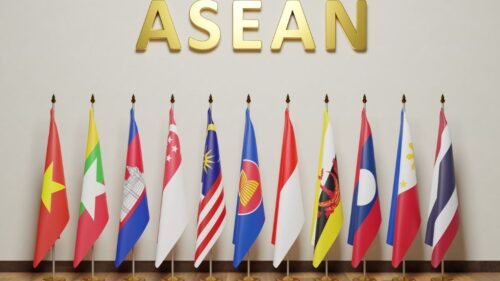
Singapore’s success is largely based on its investment in human capital. Focusing on education, health and environmental improvements has allowed Singapore to become a model for other ASEAN countries. The future development of ASEAN countries will depend on their ability to adapt this model to their own economic growth and population needs.
By
Tuesday, November 25, 2025
</header>
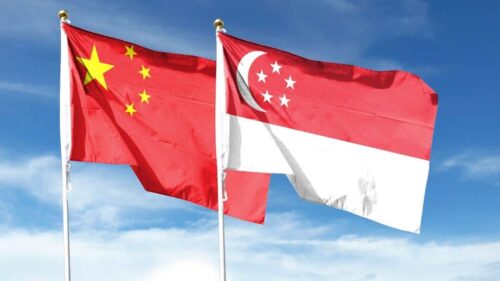
Via Shutterstock.

November 25, 2025 07:45 EDT

Check out our comment feature!
Saved Successfully.
This article saved into your bookmarks. Click here to view your bookmarks.


Singapore’s evolution since 1965 is not one of natural endowment but of deliberate choice. With no oil, no fertile hinterland and a population of only 5.7 million, the city-state’s leaders recognized early that its only true resource was its people. This insight reshaped national policy: Invest first in human capital through education and health, and use that foundation to power industrialization, trade and global competitiveness. The outcome is plain to see.
Singapore today ranks among the world’s highest in literacy, life expectancy and productivity, consistently outperforming far larger Association of Southeast Asian Nations (ASEAN) neighbors. The World Bank places it at the top of the Human Capital Index, with children expected to reach nearly 90% of their full productivity potential, compared to 54% in Indonesia.
Education at the cornerstone of growth
In the 1960s, Singapore instituted universal education and invested heavily in teacher training, school infrastructure and curriculum development. The National Institute of Education was tasked with ensuring teachers were not only highly trained but also continuously upskilled. A Compulsory Education Act in 2000, reinforced universal access, while curriculum reforms gradually shifted from rote learning towards creativity, resilience and socioemotional skills.
By 2022, Singaporean students had dominated global rankings: 92% of 15-year-olds achieved basic proficiency in mathematics, compared to an OECD (The Organisation for Economic Co-operation and Development) average of 69%, and 41% were considered top performers, compared to 9% across the OECD. In creative thinking, 60% of Singaporean students reached the two highest proficiency bands, more than double the OECD average.
These outcomes were not confined to elites. Even students from low-income households outperformed wealthier peers in many OECD countries, proof that equity was built into the system.
Health measures given equal weight
While total health expenditure remains only about 4.5% of GDP — half the OECD average — Singaporeans enjoy one of the highest life expectancies in the world, at 83.7 years. Infant mortality is among the lowest globally, with a 99.7% child survival rate. This achievement stems from a hybrid model that combines mandatory health savings, catastrophic insurance and targeted subsidies, underpinned by preventive campaigns that encourage individual responsibility.
Smoking rates have plummeted, chronic disease is carefully managed and stunting — a persistent challenge in neighboring Indonesia and the Philippines — has been nearly eradicated. As the UN Development Program has emphasized, longevity and productivity are inseparable: Healthy citizens sustain economic dynamism and reduce fiscal burdens.
Singapore’s socioeconomic journey highlights these benefits in health and education. Annual GDP growth averaged 7% from independence until the late 2000s, elevating the country into the high-income group. Its workforce is now among the most skilled and adaptable globally.
Children starting school today can expect nearly 14 years of effective education, compared to just over 12 in Indonesia. These two extra years are not just facts; they create an innovation-ready workforce capable of supporting advanced manufacturing, biotechnology and financial services. The OECD estimates that a single year of schooling can increase lifetime earnings by up to 10%, making Singapore’s education advantage a significant structural benefit.
Implications of Singapore’s success
The broader implications for ASEAN — and especially Indonesia — are profound. Many states in the region still default to “hardware-first” development: airports, highways and mega-dams as visible signs of progress. Yet without matching investments in classrooms, clinics and skills training, such infrastructure risks becoming hollow.
Indonesia’s Human Capital Index score of 0.56 means a child born today will achieve barely half of their productivity potential, a figure that starkly limits its long-term growth trajectory. Even recent reforms, such as Merdeka Belajar (Freedom to Learn), while laudable, remain underfunded and unevenly delivered.
Singapore offers both inspiration and caution. Its model cannot simply be transplanted — its political system, size and historical context are unique. But the principles travel well: prioritize people, institutionalize continuous learning, integrate health with economic policy and pursue equity as a growth strategy.
The UN’s 2030 Agenda makes this point explicit: Sustainable Development Goal 4 (quality education) and Goal 3 (good health) are not secondary aspirations but the bedrock upon which all other goals rest. ASEAN governments that underinvest in these areas court instability, inequality and lost opportunity.
Lessons for ASEAN
The environmental dimension is also instructive. Singapore’s Green Plan 2030 shows how human capital and sustainability can be pursued in tandem. Urban planning integrates green spaces and water security, while public transport expansion reduces emissions. For ASEAN, one of the regions most vulnerable to climate change, this linkage is critical. Health and education gains are unsustainable if citizens face worsening air pollution, food insecurity or displacement from rising seas. Investing in climate resiliency is part of investing in people.
For Indonesia, Vietnam and the Philippines, the lesson is urgent. Without decisive shifts towards human-centric policies, their demographic dividends could decay into demographic burdens. Rising youth populations, if undereducated and underemployed, may fuel unrest rather than growth.
The International Labour Organization estimates that 23% of young people in Southeast Asia are not in employment, education or training — a figure that starkly contrasts with Singapore’s near-universal participation in some form of lifelong learning.
Singapore’s achievement is not flawless. Questions about political freedoms and inequality remain. Yet its human-capital-first model has become conventional wisdom in development policy: Durable growth comes not from monuments of steel but from citizens equipped to innovate, adapt and thrive. The challenge for ASEAN is to translate this wisdom into action.
We are a nonprofit, truly independent media organization committed to delivering diverse, fact-based global analysis. If you like what you are reading, sign up for our free newsletters now.
<label for=”Your email will be shared with fairobserver and subject to its Privacy Policy”>I agree to receive emails and other content from Fair Observer. I understand that I may repeal my consent at any time. You can review our Privacy Policy and Terms of Use for further information…</label>
The message is clear. ASEAN does not need to copy Singapore, but it cannot ignore the lesson. Human capital is not a luxury; it is the driver of resilience, fairness and long-term prosperity. As Singapore’s experience shows, a country’s most valuable infrastructure isn’t its tallest tower or biggest dam — it’s the mind of a child who can read, the health of a worker who can endure and the creativity of a citizen who can lead. For ASEAN’s future, investing in people isn’t just a smart policy; it’s the only way forward.
[Natalie Sorlie edited this piece.]
The views expressed in this article are the author’s own and do not necessarily reflect Fair Observer’s editorial policy.
Comment
0 Comments
Newest
Oldest
Most Voted
Most Voted
Inline Feedbacks
View all comments
Commenting Guidelines
Please read our commenting guidelines before commenting.
1. Be Respectful: Please be polite to the author. Avoid hostility. The whole point of Fair Observer is openness to different perspectives from perspectives from around the world.
2. Comment Thoughtfully: Please be relevant and constructive. We do not allow personal attacks, disinformation or trolling. We will remove hate speech or incitement.
3. Contribute Usefully: Add something of value — a point of view, an argument, a personal experience or a relevant link if you are citing statistics and key facts.
<label style=”font-size: 18px;”>
I have read and agree to the above commenting guidelines.
</label>
Please agree to the guidelines before proceeding.
I
Agree, Proceed to Login
Cancel
Related Reading
Unlocking the Longevity Dividend for Growth and Resilience
The narrative around aging populations is shifting from decline and dependency to opportunity and resilience. With proper investments in health,…
by
Masaaki Yoshimori,
October 8, 2025
China and Its Mentor, Singapore
China’s rapid transformation owes much to former leader Deng Xiaoping’s reforms, which were deeply inspired by Singapore’s model of state-led…
by
Alfredo Toro Hardy,
September 29, 2025
Is Indonesia’s Mentorship the Key to Timor-Leste’s Entry into ASEAN?
Indonesia’s “close brother” ties with Timor-Leste hold the potential to offer a strategic pathway for the tiny nation towards full…
by
Kurniawan Arif Maspul,
September 21, 2025
The Enduring Relevance of Development Economics in an Unequal World
Some economists argue that as developing countries’ incomes rise and mainstream economics converge with development studies, the distinctiveness of development…
by
Shirin Akhter & C. Saratchand,
January 3, 2025
Support Fair Observer
We rely on your support for our independence, diversity and quality.
For more than 10 years, Fair Observer has been free, fair and independent. No billionaire
owns us, no advertisers control us. We are a reader-supported nonprofit. Unlike many other
publications, we keep our content free for readers regardless of where they live or whether
they can afford to pay. We have no paywalls and no ads.
In the post-truth era of fake news, echo chambers and filter bubbles, we publish a plurality
of perspectives from around the world. Anyone can publish with us, but everyone goes through
a rigorous editorial process. So, you get fact-checked, well-reasoned content instead of
noise.
We publish 3,000+ voices from 90+ countries. We also conduct education and training programs
on subjects ranging from digital media and journalism to writing and critical thinking. This
doesn’t come cheap. Servers, editors, trainers and web developers cost
money.
Please consider supporting us on a regular basis as a recurring donor or a
sustaining member.
Will you support FO’s journalism?
We rely on your support for our independence, diversity and quality.
Donation Cycle
<label for=”donation_cycle_one_time”>One Time</label>
<label for=”donation_cycle_monthly”>Monthly</label>
<label for=”donation_cycle_yearly”>Yearly</label>
Donation Amount
<label for=”amount_11″>$11</label>
<label for=”amount_111″>$111</label>
<label for=”other”>Other</label>
$
The IRS recognizes Fair Observer as a section 501(c)(3) registered public charity
(EIN: 46-4070943), enabling you to claim a tax deduction.
Most Popular
Between Neutrality & Security, Indonesia Treads a Tight Rope
Indonesia has long considered strategic neutrality as the basis for its foreign policy. However, the ambiguity of these policies threatens…
by
Aqila Adilah,
October 28, 2025
ASEAN’s Kosovo Moment and the South–South Reset Opportunity
Jakarta has not recognized Kosovo’s independence from Serbia for over 16 years, despite Kosovo being a Muslim-majority. As the only…
by
Kurniawan Arif Maspul,
August 11, 2025
ASEAN’s Myanmar Strategy, Slow But Steady
Despite repeated urgency for stronger action, ASEAN recognizes that coercive strategies are not effective in seeking a final resolution in…
by
Tzyy Wei Siu,
December 21, 2021
Make Sense of the World
Unique Insights from 3,000+ Contributors in 90+ Countries
<label
for=”Your email will be shared with fairobserver and subject to its Privacy Policy”>I
agree to receive emails and other content from Fair Observer. I understand
that I
may repeal my consent at any time. You can review our Privacy Policy
and Terms of Use
for further
information .</label>
for=”Your email will be shared with fairobserver and subject to its Privacy Policy”>I
agree to receive emails and other content from Fair Observer. I understand
that I
may repeal my consent at any time. You can review our Privacy Policy
and Terms of Use
for further
information .</label>
You can read the CIA Factbook and listen to MI6 people for your analysis, or you could read perspectives from our 3,000+ authors from 90+ countries and make sense of the world. Sign up for our free newsletters now.
<label for=”Your email will be shared with fairobserver and subject to its Privacy Policy”>I agree to receive emails and other content from Fair Observer. I understand that I may repeal my consent at any time. You can review our Privacy Policy and Terms of Use for further information…</label>
</main>
Fair Observer, 461 Harbor Blvd, Belmont, CA 94002, USA
<footer class=”mart70 fo-black-bg padt50 padb30″>
Sections
PUBLICATION
Support Fair Observer
We rely on your support for our independence, diversity and quality.


</footer>

<footer id=”fixed-footer” class=”support-footer”>


Support
independent, crowdsourced, nonprofit
journalism.
Fair Observer is a 501(c)(3) independent nonprofit. We are not owned by billionaires or controlled by
advertisers. We publish nearly 3,000 authors from over 90 countries after fact-checking and editing each
piece. We do not have a paywall and anyone can read us for free. With your vital donations, we can
continue
to do our work.
Please make a recurring (or even one-time) donation today. Even $1 goes a long way because
a
million donors
like you mean one million dollars. Thank you for keeping us independent, free and fair.
One Time
Monthly
Yearly
Monthly
Yearly
Continue 

</footer>

Sign into your Fair Observer Account
<label class=”tml-label” for=”user_login”>Username or Email Address</label>
<label class=”tml-label” for=”user_pass”>Password</label>
<label class=”tml-label” for=”rememberme”>Remember Me</label>
Log In
Forgot
Password
Forgot Password
Enter your registered email address or username. You will receive a
link to create a new password via email.
Please enter your username or email address. You will receive an email message with instructions on how to reset your password.
<label class=”tml-label” for=”user_login”>Username or Email Address</label>
Get New Password
Or
Return to
Login
Forgot Password
We have sent a link to your registered email address to reset your password.
<circle cx=”12.5″ cy=”12″ r=”12″ fill=”#414141″ />
Back to
Login
Become a Member & Enjoy Exclusive Benefits!
<circle cx=”12.5″ cy=”12″ r=”12″ fill=”#414141″ />
Access to comments feature
<circle cx=”12.5″ cy=”12″ r=”12″ fill=”#414141″ />
Bookmark your favorite articles
<circle cx=”12.5″ cy=”12″ r=”12″ fill=”#414141″ />
Exclusive invitations to FO° Talks & FO° Live
<circle cx=”12.5″ cy=”12″ r=”12″ fill=”#414141″ />
Access to all of our e-publications
Return to
Login
Login
NEWSLETTER
Make Sense of the World
Unique Insights from 2,500+ Contributors in 90+ Countries

<label
for=”Your email will be shared with fairobserver and subject to it’s Privacy Policy”>I
agree to receive emails and other content from Fair Observer. I understand
that I may repeal my consent at any time. You can review our Privacy Policy
and Terms of Use
for further information.</label>
for=”Your email will be shared with fairobserver and subject to it’s Privacy Policy”>I
agree to receive emails and other content from Fair Observer. I understand
that I may repeal my consent at any time. You can review our Privacy Policy
and Terms of Use
for further information.</label>
NEWSLETTER
Make Sense of the World
Unique Insights from 2,500+ Contributors in 90+ Countries
<label
for=”Your email will be shared with fairobserver and subject to it’s Privacy Policy”>I
agree to receive emails and other content from Fair Observer. I understand
that I may repeal my consent at any time. You can review our Privacy Policy
and Terms of Use
for further information.</label>
for=”Your email will be shared with fairobserver and subject to it’s Privacy Policy”>I
agree to receive emails and other content from Fair Observer. I understand
that I may repeal my consent at any time. You can review our Privacy Policy
and Terms of Use
for further information.</label>

Make Sense of the World
Unique Insights from 2,500+ Contributors in 90+ Countries
<label
for=”Your email will be shared with fairobserver and subject to its Privacy Policy”>I
agree to receive emails and other content from Fair Observer. I understand that I
may repeal my consent at any time. You can review our Privacy Policy and Terms of Use for further
information .</label>
for=”Your email will be shared with fairobserver and subject to its Privacy Policy”>I
agree to receive emails and other content from Fair Observer. I understand that I
may repeal my consent at any time. You can review our Privacy Policy and Terms of Use for further
information .</label>
We Need Your Consent
We use cookies to give you the best possible experience. Learn more about how we use cookies or edit your cookie preferences. Privacy Policy. My Options I Accept
Privacy & Cookies Policy
Close
Edit Cookie Preferences
The Fair Observer website uses digital cookies so it can collect statistics on how many visitors come to the site, what content is viewed and for how long, and the general location of the computer network of the visitor. These statistics are collected and processed using the Google Analytics service. Fair Observer uses these aggregate statistics from website visits to help improve the content of the website and to provide regular reports to our current and future donors and funding organizations. The type of digital cookie information collected during your visit and any derived data cannot be used or combined with other information to personally identify you. Fair Observer does not use personal data collected from its website for advertising purposes or to market to you.
As a convenience to you, Fair Observer provides buttons that link to popular social media sites, called social sharing buttons, to help you share Fair Observer content and your comments and opinions about it on these social media sites. These social sharing buttons are provided by and are part of these social media sites. They may collect and use personal data as described in their respective policies. Fair Observer does not receive personal data from your use of these social sharing buttons. It is not necessary that you use these buttons to read Fair Observer content or to share on social media.
Necessary
<label class=”form-check-label” for=”wt-cli-checkbox-necessary”>Necessary</label>
Always Enabled
These cookies essential for the website to function.
Social Media
<label for=”wt-cli-checkbox-social_media” class=”cli-slider” data-cli-enable=”Enabled” data-cli-disable=”Disabled”>Social Media</label>
These cookies are used to enable sharing or following of content that you find interesting on our website. These settings apply to third-party social networking and other websites.
Performance & Functionality
<label for=”wt-cli-checkbox-performance” class=”cli-slider” data-cli-enable=”Enabled” data-cli-disable=”Disabled”>Performance & Functionality</label>
These cookies are used to enhance the performance and functionality of our website. They provide statistics on how our website is used and help us improve by measuring errors. Certain functionalities on our website may become unavailable without these cookies.
Analytics
<label for=”wt-cli-checkbox-analytics” class=”cli-slider” data-cli-enable=”Enabled” data-cli-disable=”Disabled”>Analytics</label>
SAVE & ACCEPT
<textarea id=’wpd-editor-source-code’></textarea>Insert
</body>
</html>
Total Views:
Source: World Politics - fairobserver.com