<g id=”cross”>
<line class=”cls-1″ x1=”7″ x2=”25″ y1=”7″ y2=”25″ />
<line class=”cls-1″ x1=”7″ x2=”25″ y1=”25″ y2=”7″ />
</g>
Governance Without Legitimacy: The Kurdish Region’s Descent into Stagnation
<circle cx=”10.5″ cy=”10.5″ r=”7.5″ />
<line x1=”21″ x2=”15.8″ y1=”21″ y2=”15.8″ />
<nav class=”fo-navigation pos-r” itemscope itemtype=”http://schema.org/SiteNavigationElement”>
Login
Sections <circle cx=”10.5″ cy=”10.5″ r=”7.5″ />
<line x1=”21″ x2=”15.8″ y1=”21″ y2=”15.8″ /> Search
<line x1=”21″ x2=”15.8″ y1=”21″ y2=”15.8″ />
Search


PUBLICATION
Support Fair Observer
We rely on your support for our independence, diversity and quality.
</nav>
<circle cx=”10.5″ cy=”10.5″ r=”7.5″ />
<line x1=”21″ x2=”15.8″ y1=”21″ y2=”15.8″ />
<line x1=”21″ x2=”15.8″ y1=”21″ y2=”15.8″ />
Search
</header>

<main id=”main” class=”site-main” role=”main”> 


Sunday, February 01, 2026
<header class=”entry-header”>
Central & South Asia
Governance Without Legitimacy: The Kurdish Region’s Descent into Stagnation
The Kurdistan Region of Iraq has lost political legitimacy as entrenched party elites, systemic corruption and patronage networks undermine governance. Economic fragility, salary freezes and deteriorating public services have intensified public disillusionment, while repression of dissent erodes civic space. Without meaningful reform, transparency and power-sharing, the region risks deeper stagnation, social fracture and the collapse of its original promise of self-rule.
By
Sunday, February 01, 2026
</header>
Via Shutterstock.

February 01, 2026 06:31 EDT

Check out our comment feature!
Saved Successfully.
This article saved into your bookmarks. Click here to view your bookmarks.


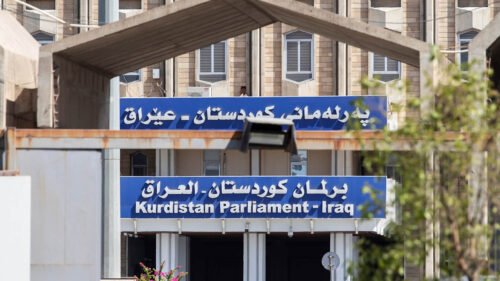
For more than three decades, particularly since 1991, the Kurdistan Region of Iraq (KRI) has been presented as a semiautonomous polity with its own institutions and an ethnically distinct identity. But beneath that veneer of autonomy lies a more troubling reality.
Corruption has deteriorated the region, and it is not an aberration in the Kurdish political order; it is deeply embedded in its structures. At the same time, economic fragility, political fragmentation and social disillusionment are converging to produce a crisis. Put simply, the system that once promised refuge and self-determination for the Kurds has become a vector of stagnation and grievance.
The political economy of corruption and power
At the heart of Kurdistan’s systemic malaise is the capture of the political system by a tribal power and entrenched elites. The two dominant parties — the Kurdistan Democratic Party (KDP) and the Patriotic Union of Kurdistan (PUK) — have long monopolized power. While corruption levels in the KRI may be somewhat lower than in the rest of Iraq, they remain significant and structurally embedded, and have been worsening in recent years.
This is largely due to the political entrenchment of party patronage networks and weak bureaucratic oversight mechanisms. Nepotism, clientelism and opaque revenue allocation have become the norm, not the exception.
Scholarly analyses further underline the role of Kurdish nationalism as a legitimizing ideology for entrenched patronage. What began as liberation rhetoric has often been repurposed and instrumentalized to justify the concentration of state resources and to insulate powerful elites from accountability. The effect? A political culture where opposition voices are portrayed as threats to Kurdish unity and rendered as enemies, rather than essential actors in democratic governance.
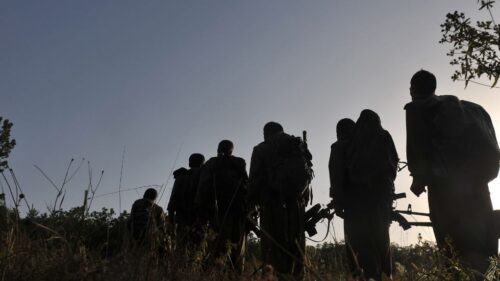
This dynamic is not merely theoretical. In August 2025, armed clashes erupted in Sulaymaniyah after the arrest of an opposition figure associated with internal PUK dissent, revealing how factionalized power struggles spill directly into violence and civil unrest. Security forces deployed tanks and drones in urban areas, and dozens were arrested amid allegations of destabilization — underscoring how political authority is increasingly enforced through security rather than consensus.
Economic stress and public frustration
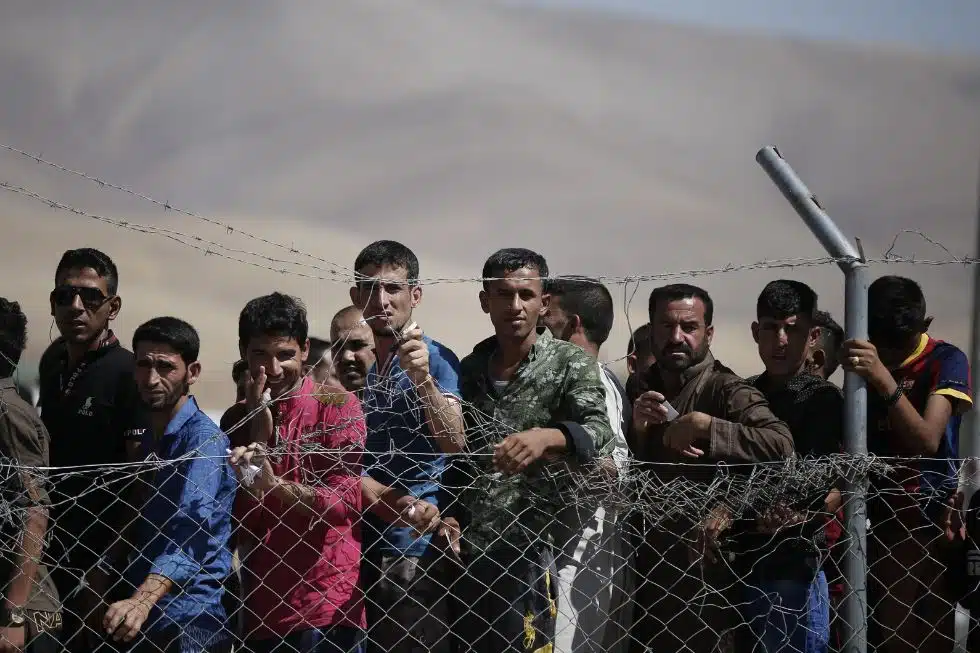
Kurdistan’s economy, long reliant on oil exports and federal transfers from the central government of Baghdad, has been under severe stress. Disputes with Iraq’s central government over budgetary allocations and revenue sharing have periodically led to salary freezes for public employees in 2025 — aggravating already precarious livelihoods for teachers, civil servants and healthcare workers. This dispute is not just a technical fiscal issue; it has become a flashpoint of political resentment and constitutional contention.
Beyond salaries, basic services continue to deteriorate. Reports from media outlets indicate widespread power cuts, water shortages and weakened public services across the region, heightening public frustration with a government that seems unable or unwilling to deliver essential infrastructure and social support.
The current situation in the Kurdistan Region increasingly mirrors the post-1990s era in Iraq, when international sanctions crippled the economy, public services collapsed and widespread poverty became an inescapable reality.
These economic pressures accentuate the perception of a kleptocratic order, where public wealth is siphoned through patronage networks and strategic contracts, while everyday citizens grapple with economic insecurity. Such conditions stoke social disillusionment and feed narratives of hopelessness that resonate across households and communities.
Civic space, media and human rights
Corruption not only destroys economics and politics, but it also corrodes civic space, the general rhetoric and media freedom. Independent journalism in the KRI has long struggled under political pressure and, more recently, cuts in foreign aid support have further hampered investigative reporting. As one outlet documented, investigations into sensitive issues like human organ trafficking are often self-censored out of fear of political backlash.
International human rights reporting also highlights a worsening environment for civic freedoms in both federal Iraq and the Kurdish region. Restrictions on peaceful assembly, allegations of arbitrary detention and the use of force against protesters have been documented over the past several years.
This suppression of dissent may yield short-term control, but it furthers the alienation of broad segments of society, especially the youth, civil society activists and independent journalists who see little space to advocate for reform without risking repression.
Social fractures and the weight of public discontent
The combination of corruption, economic decline and political repression is driving a broader social crisis in the KRI. Widespread inactivity and hopelessness among young people, rooted in high unemployment and lack of economic opportunity, fuels both frustration and a sense that the promise of Kurdistan’s autonomy has been hollowed out.
In numerous online videos, Kurdish citizens have voiced growing frustration with the regional authorities, openly calling for their salaries to be paid directly by Baghdad and expressing disillusionment with the KRI’s self-governance.
Public protests have a history in the region: the 2020 demonstrations in Sulaymaniyah were driven by corruption, unemployment, and service failures, and were met with violent crackdowns. Meanwhile, across Iraq, protests in 2025 have resurfaced around salary delays, electricity shortages and poor economic conditions, of which the Kurdish region is a microcosm.
When the state consistently fails to provide basic needs or meaningful participation in governance, people inevitably turn to various forms of expression. This polarization is dangerous in a region already marked by sectarian and ethnic complexity.
The breaking point: when governance fails its people
If current trends persist, the Kurdistan Region faces a deepening convergence of political, economic and social crises. Internal fragmentation among ruling elites and between the government and civil society threatens to reignite violent rivalries, as seen in the Sulaymaniyah clashes. Economic stagnation, opaque fiscal management and inconsistent coordination with Baghdad continue to erode living standards, pushing many, especially young professionals, toward emigration.
Look at the world through many prisms — 3,000+ pairs of eyes from 90+ countries. We are a rare nonprofit in the world news space and you can get our newsletters for free.
<label for=”Your email will be shared with fairobserver and subject to its Privacy Policy”>I agree to receive emails and other content from Fair Observer. I understand that I may repeal my consent at any time. You can review our Privacy Policy and Terms of Use for further information…</label>
Equally alarming is the steady erosion of public legitimacy. A governance model that privileges partisan interests over public welfare undermines the very foundations of the Kurdish social contract. Unless the ruling class embraces transparency, power-sharing and reform, the region risks sliding from fragile stability into systemic decay, betraying the promise that once defined the Kurdish aspiration for self-rule.
[Zania Morgan edited this piece.]
The views expressed in this article are the author’s own and do not necessarily reflect Fair Observer’s editorial policy.
Comment
0 Comments
Newest
Oldest
Most Voted
Most Voted
Inline Feedbacks
View all comments
Commenting Guidelines
Please read our commenting guidelines before commenting.
1. Be Respectful: Please be polite to the author. Avoid hostility. The whole point of Fair Observer is openness to different perspectives from perspectives from around the world.
2. Comment Thoughtfully: Please be relevant and constructive. We do not allow personal attacks, disinformation or trolling. We will remove hate speech or incitement.
3. Contribute Usefully: Add something of value — a point of view, an argument, a personal experience or a relevant link if you are citing statistics and key facts.
<label style=”font-size: 18px;”>
I have read and agree to the above commenting guidelines.
</label>
Please agree to the guidelines before proceeding.
I
Agree, Proceed to Login
Cancel
Related Reading
A New Peace Process in the Kurdish Question in Turkiye
Turkish politics faces a historic shift as Kurdish leaders, state officials and nationalist figures seek an end to decades of…
by
Ihsan Cetin,
December 16, 2025
Political impasse in Iraq’s Kurdistan Region
Iraq’s Kurdistan Region will not have elections until next year. Rivalries between the regional parties have made it impossible for…
by
Winthrop Rodgers,
August 10, 2023
How Theological Politics Affects Iraq
In a religiously diverse country like Iraq, people of different faiths and sects should coexist and be considered in the…
by
Shermeen Yousif,
October 7, 2021
Climate Change Is Exacerbating Iraq’s Complicated Water Politics
Environmental degradation feeds into social insecurity, which in turn has the potential to feed into social conflict and instability.
by
Theodore Karasik & Jacopo Spezia Depretto,
August 6, 2019
Support Fair Observer
We rely on your support for our independence, diversity and quality.
For more than 10 years, Fair Observer has been free, fair and independent. No billionaire
owns us, no advertisers control us. We are a reader-supported nonprofit. Unlike many other
publications, we keep our content free for readers regardless of where they live or whether
they can afford to pay. We have no paywalls and no ads.
In the post-truth era of fake news, echo chambers and filter bubbles, we publish a plurality
of perspectives from around the world. Anyone can publish with us, but everyone goes through
a rigorous editorial process. So, you get fact-checked, well-reasoned content instead of
noise.
We publish 3,000+ voices from 90+ countries. We also conduct education and training programs
on subjects ranging from digital media and journalism to writing and critical thinking. This
doesn’t come cheap. Servers, editors, trainers and web developers cost
money.
Please consider supporting us on a regular basis as a recurring donor or a
sustaining member.
Will you support FO’s journalism?
We rely on your support for our independence, diversity and quality.
Donation Cycle
<label for=”donation_cycle_one_time”>One Time</label>
<label for=”donation_cycle_monthly”>Monthly</label>
<label for=”donation_cycle_yearly”>Yearly</label>
Donation Amount
<label for=”amount_11″>$11</label>
<label for=”amount_111″>$111</label>
<label for=”other”>Other</label>
$
The IRS recognizes Fair Observer as a section 501(c)(3) registered public charity
(EIN: 46-4070943), enabling you to claim a tax deduction.
Make Sense of the World
Unique Insights from 3,000+ Contributors in 90+ Countries
<label
for=”Your email will be shared with fairobserver and subject to its Privacy Policy”>I
agree to receive emails and other content from Fair Observer. I understand
that I
may repeal my consent at any time. You can review our Privacy Policy
and Terms of Use
for further
information .</label>
for=”Your email will be shared with fairobserver and subject to its Privacy Policy”>I
agree to receive emails and other content from Fair Observer. I understand
that I
may repeal my consent at any time. You can review our Privacy Policy
and Terms of Use
for further
information .</label>
Read more, think deeper and become smarter, perhaps even wiser, one article at a time. Sign up for our free newsletters now.
<label for=”Your email will be shared with fairobserver and subject to its Privacy Policy”>I agree to receive emails and other content from Fair Observer. I understand that I may repeal my consent at any time. You can review our Privacy Policy and Terms of Use for further information…</label>
</main>
Fair Observer, 461 Harbor Blvd, Belmont, CA 94002, USA
<footer class=”mart70 fo-black-bg padt50 padb30″>
Sections
PUBLICATION
Support Fair Observer
We rely on your support for our independence, diversity and quality.


</footer>

<footer id=”fixed-footer” class=”support-footer”>


Support
independent, crowdsourced, nonprofit
journalism.
Fair Observer is a 501(c)(3) independent nonprofit. We are not owned by billionaires or controlled by
advertisers. We publish nearly 3,000 authors from over 90 countries after fact-checking and editing each
piece. We do not have a paywall and anyone can read us for free. With your vital donations, we can
continue
to do our work.
Please make a recurring (or even one-time) donation today. Even $1 goes a long way because
a
million donors
like you mean one million dollars. Thank you for keeping us independent, free and fair.
One Time
Monthly
Yearly
Monthly
Yearly
Continue 

</footer>

Sign into your Fair Observer Account
<label class=”tml-label” for=”user_login”>Username or Email Address</label>
<label class=”tml-label” for=”user_pass”>Password</label>
<label class=”tml-label” for=”rememberme”>Remember Me</label>
Log In
Forgot
Password
Password
Forgot Password
Enter your registered email address or username. You will receive a
link to create a new password via email.
Please enter your username or email address. You will receive an email message with instructions on how to reset your password.
<label class=”tml-label” for=”user_login”>Username or Email Address</label>
Get New Password
Or
Return to
Login
Forgot Password
We have sent a link to your registered email address to reset your password.
<circle cx=”12.5″ cy=”12″ r=”12″ fill=”#414141″ />
Back to
Login
Become a Member & Enjoy Exclusive Benefits!
<circle cx=”12.5″ cy=”12″ r=”12″ fill=”#414141″ />
Access to comments feature
<circle cx=”12.5″ cy=”12″ r=”12″ fill=”#414141″ />
Bookmark your favorite articles
<circle cx=”12.5″ cy=”12″ r=”12″ fill=”#414141″ />
Exclusive invitations to FO° Talks & FO° Live
<circle cx=”12.5″ cy=”12″ r=”12″ fill=”#414141″ />
Access to all of our e-publications
Return to
Login
Login
NEWSLETTER
Make Sense of the World
Unique Insights from 2,500+ Contributors in 90+ Countries

<label
for=”Your email will be shared with fairobserver and subject to it’s Privacy Policy”>I
agree to receive emails and other content from Fair Observer. I understand
that I may repeal my consent at any time. You can review our Privacy Policy
and Terms of Use
for further information.</label>
for=”Your email will be shared with fairobserver and subject to it’s Privacy Policy”>I
agree to receive emails and other content from Fair Observer. I understand
that I may repeal my consent at any time. You can review our Privacy Policy
and Terms of Use
for further information.</label>
NEWSLETTER
Make Sense of the World
Unique Insights from 2,500+ Contributors in 90+ Countries
<label
for=”Your email will be shared with fairobserver and subject to it’s Privacy Policy”>I
agree to receive emails and other content from Fair Observer. I understand
that I may repeal my consent at any time. You can review our Privacy Policy
and Terms of Use
for further information.</label>
for=”Your email will be shared with fairobserver and subject to it’s Privacy Policy”>I
agree to receive emails and other content from Fair Observer. I understand
that I may repeal my consent at any time. You can review our Privacy Policy
and Terms of Use
for further information.</label>

Make Sense of the World
Unique Insights from 2,500+ Contributors in 90+ Countries
<label
for=”Your email will be shared with fairobserver and subject to its Privacy Policy”>I
agree to receive emails and other content from Fair Observer. I understand that I
may repeal my consent at any time. You can review our Privacy Policy and Terms of Use for further
information .</label>
for=”Your email will be shared with fairobserver and subject to its Privacy Policy”>I
agree to receive emails and other content from Fair Observer. I understand that I
may repeal my consent at any time. You can review our Privacy Policy and Terms of Use for further
information .</label>
We Need Your Consent
We use cookies to give you the best possible experience. Learn more about how we use cookies or edit your cookie preferences. Privacy Policy. My Options I Accept
Privacy & Cookies Policy
Close
Edit Cookie Preferences
The Fair Observer website uses digital cookies so it can collect statistics on how many visitors come to the site, what content is viewed and for how long, and the general location of the computer network of the visitor. These statistics are collected and processed using the Google Analytics service. Fair Observer uses these aggregate statistics from website visits to help improve the content of the website and to provide regular reports to our current and future donors and funding organizations. The type of digital cookie information collected during your visit and any derived data cannot be used or combined with other information to personally identify you. Fair Observer does not use personal data collected from its website for advertising purposes or to market to you.
As a convenience to you, Fair Observer provides buttons that link to popular social media sites, called social sharing buttons, to help you share Fair Observer content and your comments and opinions about it on these social media sites. These social sharing buttons are provided by and are part of these social media sites. They may collect and use personal data as described in their respective policies. Fair Observer does not receive personal data from your use of these social sharing buttons. It is not necessary that you use these buttons to read Fair Observer content or to share on social media.
Necessary
<label class=”form-check-label” for=”wt-cli-checkbox-necessary”>Necessary</label>
Always Enabled
These cookies essential for the website to function.
Social Media
<label for=”wt-cli-checkbox-social_media” class=”cli-slider” data-cli-enable=”Enabled” data-cli-disable=”Disabled”>Social Media</label>
These cookies are used to enable sharing or following of content that you find interesting on our website. These settings apply to third-party social networking and other websites.
Performance & Functionality
<label for=”wt-cli-checkbox-performance” class=”cli-slider” data-cli-enable=”Enabled” data-cli-disable=”Disabled”>Performance & Functionality</label>
These cookies are used to enhance the performance and functionality of our website. They provide statistics on how our website is used and help us improve by measuring errors. Certain functionalities on our website may become unavailable without these cookies.
Analytics
<label for=”wt-cli-checkbox-analytics” class=”cli-slider” data-cli-enable=”Enabled” data-cli-disable=”Disabled”>Analytics</label>
SAVE & ACCEPT
<textarea id=’wpd-editor-source-code’></textarea>Insert
</body></html>
Total Views:
Source: World Politics - fairobserver.com