<g id=”cross”>
<line class=”cls-1″ x1=”7″ x2=”25″ y1=”7″ y2=”25″ />
<line class=”cls-1″ x1=”7″ x2=”25″ y1=”25″ y2=”7″ />
</g>
South Yemen at a Crossroads: Saudi Arabia’s Risky Political Gamble
<circle cx=”10.5″ cy=”10.5″ r=”7.5″ />
<line x1=”21″ x2=”15.8″ y1=”21″ y2=”15.8″ />
<nav class=”fo-navigation pos-r” itemscope itemtype=”http://schema.org/SiteNavigationElement”>
Login
Sections <circle cx=”10.5″ cy=”10.5″ r=”7.5″ />
<line x1=”21″ x2=”15.8″ y1=”21″ y2=”15.8″ /> Search
<line x1=”21″ x2=”15.8″ y1=”21″ y2=”15.8″ />
Search


PUBLICATION
Support Fair Observer
We rely on your support for our independence, diversity and quality.
</nav>
<circle cx=”10.5″ cy=”10.5″ r=”7.5″ />
<line x1=”21″ x2=”15.8″ y1=”21″ y2=”15.8″ />
<line x1=”21″ x2=”15.8″ y1=”21″ y2=”15.8″ />
Search
</header>

<main id=”main” class=”site-main” role=”main”> 


Sunday, February 01, 2026
<header class=”entry-header”>
Middle East News
South Yemen at a Crossroads: Saudi Arabia’s Risky Political Gamble
Saudi Arabia’s growing dominance in southern Yemen follows the United Arab Emirates’ withdrawal, sidelining the influential Southern Transitional Council (STC) and risking local instability. This shift has fueled extremist activity and deepened southern grievances amid weak Western diplomatic engagement. Without inclusive dialogue and balanced international pressure, Yemen’s south faces escalating conflict and humanitarian decline.
By
Sunday, February 01, 2026
</header>
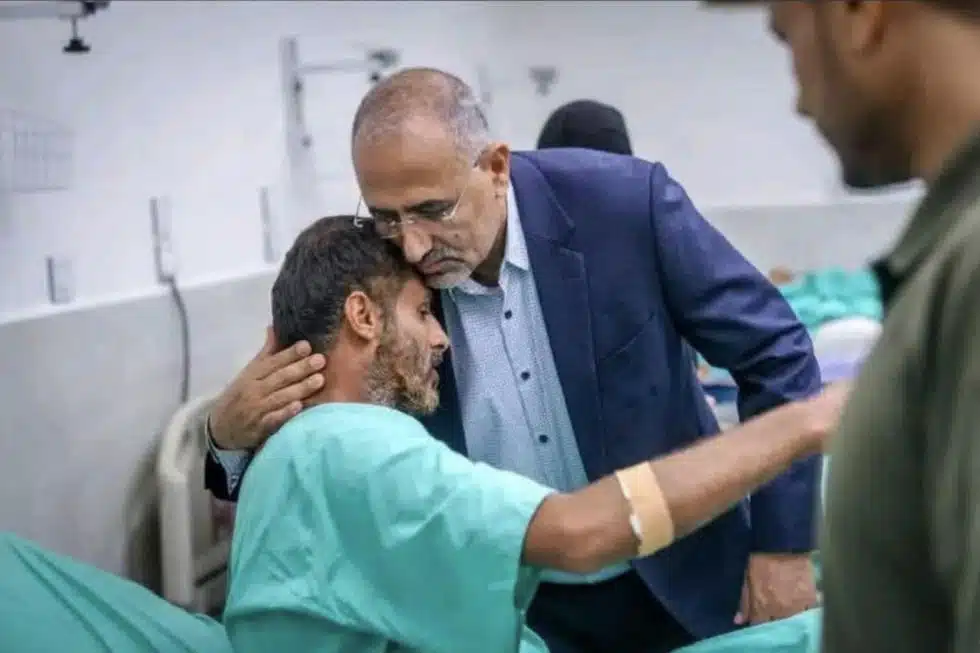
A southern army soldier injured by a Saudi bombing. Author’s photo.

February 01, 2026 06:23 EDT

Check out our comment feature!
Saved Successfully.
This article saved into your bookmarks. Click here to view your bookmarks.


Recent events in Yemen’s south reveal a rapidly shifting political and security landscape shaped by external intervention, internal mobilization and deep uncertainty over southern governance. At the center of these changes stands Saudi Arabia, which has increasingly taken the political initiative in the south — a role previously shared with the United Arab Emirates (UAE).
Add subheading
With the UAE withdrawing its forces and influence, Riyadh now faces the challenge of managing southern dynamics alone — and possibly misreading the consequences. The Southern Transitional Council (STC), long a potent southern political and military force, lost its most significant external backer after Abu Dhabi withdrew support following clashes and strategic disagreements with Saudi Arabia.
Earlier STC gains in Hadramaut and al-Mahra enjoyed notable local support and expanded its territorial control. Riyadh viewed these advances as a direct threat to its security interests and responded with airpower and political pressure to compel a withdrawal.
Saudi Arabia then sought to “organize” southern political forces via a conference in Riyadh, presenting the exercise as an inclusive platform for southern voices. On paper, this was a bid to consolidate representation under a Saudi-managed umbrella. On the ground, however, it exposed the limitations of externally driven political engineering. Allegations that STC delegates were pressured — on foreign soil — to dissolve their own movement provoked widespread outrage in Aden and other southern centers. Large demonstrations underscored deep grassroots support for the STC and its leader, Aidarous al-Zubaidi, whose whereabouts remain ambiguous amid conflicting reports.
Despite claims from Saudi-backed elements that the STC “dissolved,” the council’s institutions — and popular base — remain potent political realities that cannot be erased by declarations signed abroad.
The security consequences of sidelining the STC are already emerging. Reports indicate rising activity by extremist groups such as Al-Qaeda in the Arabian Peninsula (AQAP) and other insurgent networks in parts of Aden and Abyan — areas where local STC-aligned forces had helped enforce relative stability. This dynamic raises critical questions about the wisdom of undermining actors who, despite political differences with Riyadh, have played significant roles in local security management.
Complicating all of this is the broader political context: The Presidential Leadership Council (PLC) recently dismissed key southern figures — including al-Zubaidi — effectively strengthening northern dominance within the state apparatus. Such moves fuel southern perceptions of marginalization and deepen distrust of both the PLC and Saudi intentions.
Western powers have largely been silent
Across Western capitals — particularly Washington and Brussels — there has been remarkably muted public engagement on these unfolding events. While major media outlets like The Guardian and The New York Times have covered the deepening Yemen crisis and the fracturing of the Saudi-UAE axis, there has been little visible Western diplomatic pressure on Riyadh regarding the southern question.
This quiet allows Saudi Arabia to take the Yemen file with limited external accountability, even as its decisions have potentially destabilizing consequences: exacerbating guerrillaization in the south, enlarging the humanitarian footprint and creating political vacuums that extremist actors can exploit. The relative lack of assertive Western diplomacy — beyond routine calls for restraint — suggests a strategic tolerance of Riyadh’s approach, even where it may undermine broader peace efforts.
A strategic misstep at a strategic juncture
South Yemen now stands at a crossroads — caught between external political engineering, internal mobilization and the persistent threat of militant resurgence. Saudi Arabia’s attempt to marginalize the STC risks hollowing out local structures that had provided essential stability and governance. At the same time, the lack of robust Western engagement has handed Riyadh a freer hand to shape Yemen’s trajectory without meaningful checks or balanced mediation.
In light of these complexities, it is essential to develop a strategic approach that addresses the multifaceted challenges facing South Yemen. By recognizing the delicate balance between external influences and local dynamics, policymakers can craft effective interventions that foster stability and promote sustainable governance. In order to do this, the different parties must follow these policy recommendations:
- Re-engage the STC as an essential stakeholder: Riyadh should recognize that any sustainable political arrangement in the south must include the STC as a legitimate representative of popular aspirations, not as a delegitimized remnant. Political dialogue should be internal to Yemen and free from the perception of external coercion.
- Mobilize multilateral diplomatic pressure: Western powers — especially the United States, United Kingdom and EU member states — must move beyond rhetorical calls for restraint and actively encourage inclusive negotiations that include both southern and northern actors. Overt backing of Riyadh without balanced engagement risks deeper fragmentation.
- Support local security architectures: Undermining southern security forces without a viable alternative creates vacuums that extremist groups can exploit. International partners should prioritize stabilization incentives tied to accountability and community protection, not just broad foreign policy aims.
- Condition aid and political support on inclusive governance: Humanitarian and development assistance — currently under strain due to funding cuts — should be conditioned on progress toward inclusive political dialogue that respects southern voices and enhances civilian protection.
Read more, think deeper and become smarter, perhaps even wiser, one article at a time. Sign up for our free newsletters now.
<label for=”Your email will be shared with fairobserver and subject to its Privacy Policy”>I agree to receive emails and other content from Fair Observer. I understand that I may repeal my consent at any time. You can review our Privacy Policy and Terms of Use for further information…</label>
Saudi Arabia’s efforts to shape the future of Yemen’s south will not succeed if they undercut the very actors needed to maintain order and legitimacy. Without course correction — and without balanced Western diplomatic pressure — Yemen’s south may face increasingly entrenched instability, further humanitarian erosion and a broader regional spill over whose costs will extend far beyond its borders.
[Kaitlyn Diana edited this piece.]
The views expressed in this article are the author’s own and do not necessarily reflect Fair Observer’s editorial policy.
Comment
0 Comments
Newest
Oldest
Most Voted
Most Voted
Inline Feedbacks
View all comments
Commenting Guidelines
Please read our commenting guidelines before commenting.
1. Be Respectful: Please be polite to the author. Avoid hostility. The whole point of Fair Observer is openness to different perspectives from perspectives from around the world.
2. Comment Thoughtfully: Please be relevant and constructive. We do not allow personal attacks, disinformation or trolling. We will remove hate speech or incitement.
3. Contribute Usefully: Add something of value — a point of view, an argument, a personal experience or a relevant link if you are citing statistics and key facts.
<label style=”font-size: 18px;”>
I have read and agree to the above commenting guidelines.
</label>
Please agree to the guidelines before proceeding.
I
Agree, Proceed to Login
Cancel
Support Fair Observer
We rely on your support for our independence, diversity and quality.
For more than 10 years, Fair Observer has been free, fair and independent. No billionaire
owns us, no advertisers control us. We are a reader-supported nonprofit. Unlike many other
publications, we keep our content free for readers regardless of where they live or whether
they can afford to pay. We have no paywalls and no ads.
In the post-truth era of fake news, echo chambers and filter bubbles, we publish a plurality
of perspectives from around the world. Anyone can publish with us, but everyone goes through
a rigorous editorial process. So, you get fact-checked, well-reasoned content instead of
noise.
We publish 3,000+ voices from 90+ countries. We also conduct education and training programs
on subjects ranging from digital media and journalism to writing and critical thinking. This
doesn’t come cheap. Servers, editors, trainers and web developers cost
money.
Please consider supporting us on a regular basis as a recurring donor or a
sustaining member.
Will you support FO’s journalism?
We rely on your support for our independence, diversity and quality.
Donation Cycle
<label for=”donation_cycle_one_time”>One Time</label>
<label for=”donation_cycle_monthly”>Monthly</label>
<label for=”donation_cycle_yearly”>Yearly</label>
Donation Amount
<label for=”amount_11″>$11</label>
<label for=”amount_111″>$111</label>
<label for=”other”>Other</label>
$
The IRS recognizes Fair Observer as a section 501(c)(3) registered public charity
(EIN: 46-4070943), enabling you to claim a tax deduction.
Make Sense of the World
Unique Insights from 3,000+ Contributors in 90+ Countries
<label
for=”Your email will be shared with fairobserver and subject to its Privacy Policy”>I
agree to receive emails and other content from Fair Observer. I understand
that I
may repeal my consent at any time. You can review our Privacy Policy
and Terms of Use
for further
information .</label>
for=”Your email will be shared with fairobserver and subject to its Privacy Policy”>I
agree to receive emails and other content from Fair Observer. I understand
that I
may repeal my consent at any time. You can review our Privacy Policy
and Terms of Use
for further
information .</label>
We’re independent, nonprofit and powered by 3,000+ voices from around the world — not billionaires or governments. Enjoy real journalism, sign up for our free newsletters.
<label for=”Your email will be shared with fairobserver and subject to its Privacy Policy”>I agree to receive emails and other content from Fair Observer. I understand that I may repeal my consent at any time. You can review our Privacy Policy and Terms of Use for further information…</label>
</main>
Fair Observer, 461 Harbor Blvd, Belmont, CA 94002, USA
<footer class=”mart70 fo-black-bg padt50 padb30″>
Sections
PUBLICATION
Support Fair Observer
We rely on your support for our independence, diversity and quality.


</footer>

<footer id=”fixed-footer” class=”support-footer”>


Support
independent, crowdsourced, nonprofit
journalism.
Fair Observer is a 501(c)(3) independent nonprofit. We are not owned by billionaires or controlled by
advertisers. We publish nearly 3,000 authors from over 90 countries after fact-checking and editing each
piece. We do not have a paywall and anyone can read us for free. With your vital donations, we can
continue
to do our work.
Please make a recurring (or even one-time) donation today. Even $1 goes a long way because
a
million donors
like you mean one million dollars. Thank you for keeping us independent, free and fair.
One Time
Monthly
Yearly
Monthly
Yearly
Continue 

</footer>

Sign into your Fair Observer Account
<label class=”tml-label” for=”user_login”>Username or Email Address</label>
<label class=”tml-label” for=”user_pass”>Password</label>
<label class=”tml-label” for=”rememberme”>Remember Me</label>
Log In
Forgot
Password
Password
Forgot Password
Enter your registered email address or username. You will receive a
link to create a new password via email.
Please enter your username or email address. You will receive an email message with instructions on how to reset your password.
<label class=”tml-label” for=”user_login”>Username or Email Address</label>
Get New Password
Or
Return to
Login
Forgot Password
We have sent a link to your registered email address to reset your password.
<circle cx=”12.5″ cy=”12″ r=”12″ fill=”#414141″ />
Back to
Login
Become a Member & Enjoy Exclusive Benefits!
<circle cx=”12.5″ cy=”12″ r=”12″ fill=”#414141″ />
Access to comments feature
<circle cx=”12.5″ cy=”12″ r=”12″ fill=”#414141″ />
Bookmark your favorite articles
<circle cx=”12.5″ cy=”12″ r=”12″ fill=”#414141″ />
Exclusive invitations to FO° Talks & FO° Live
<circle cx=”12.5″ cy=”12″ r=”12″ fill=”#414141″ />
Access to all of our e-publications
Return to
Login
Login
NEWSLETTER
Make Sense of the World
Unique Insights from 2,500+ Contributors in 90+ Countries

<label
for=”Your email will be shared with fairobserver and subject to it’s Privacy Policy”>I
agree to receive emails and other content from Fair Observer. I understand
that I may repeal my consent at any time. You can review our Privacy Policy
and Terms of Use
for further information.</label>
for=”Your email will be shared with fairobserver and subject to it’s Privacy Policy”>I
agree to receive emails and other content from Fair Observer. I understand
that I may repeal my consent at any time. You can review our Privacy Policy
and Terms of Use
for further information.</label>
NEWSLETTER
Make Sense of the World
Unique Insights from 2,500+ Contributors in 90+ Countries
<label
for=”Your email will be shared with fairobserver and subject to it’s Privacy Policy”>I
agree to receive emails and other content from Fair Observer. I understand
that I may repeal my consent at any time. You can review our Privacy Policy
and Terms of Use
for further information.</label>
for=”Your email will be shared with fairobserver and subject to it’s Privacy Policy”>I
agree to receive emails and other content from Fair Observer. I understand
that I may repeal my consent at any time. You can review our Privacy Policy
and Terms of Use
for further information.</label>

Make Sense of the World
Unique Insights from 2,500+ Contributors in 90+ Countries
<label
for=”Your email will be shared with fairobserver and subject to its Privacy Policy”>I
agree to receive emails and other content from Fair Observer. I understand that I
may repeal my consent at any time. You can review our Privacy Policy and Terms of Use for further
information .</label>
for=”Your email will be shared with fairobserver and subject to its Privacy Policy”>I
agree to receive emails and other content from Fair Observer. I understand that I
may repeal my consent at any time. You can review our Privacy Policy and Terms of Use for further
information .</label>
We Need Your Consent
We use cookies to give you the best possible experience. Learn more about how we use cookies or edit your cookie preferences. Privacy Policy. My Options I Accept
Privacy & Cookies Policy
Close
Edit Cookie Preferences
The Fair Observer website uses digital cookies so it can collect statistics on how many visitors come to the site, what content is viewed and for how long, and the general location of the computer network of the visitor. These statistics are collected and processed using the Google Analytics service. Fair Observer uses these aggregate statistics from website visits to help improve the content of the website and to provide regular reports to our current and future donors and funding organizations. The type of digital cookie information collected during your visit and any derived data cannot be used or combined with other information to personally identify you. Fair Observer does not use personal data collected from its website for advertising purposes or to market to you.
As a convenience to you, Fair Observer provides buttons that link to popular social media sites, called social sharing buttons, to help you share Fair Observer content and your comments and opinions about it on these social media sites. These social sharing buttons are provided by and are part of these social media sites. They may collect and use personal data as described in their respective policies. Fair Observer does not receive personal data from your use of these social sharing buttons. It is not necessary that you use these buttons to read Fair Observer content or to share on social media.
Necessary
<label class=”form-check-label” for=”wt-cli-checkbox-necessary”>Necessary</label>
Always Enabled
These cookies essential for the website to function.
Social Media
<label for=”wt-cli-checkbox-social_media” class=”cli-slider” data-cli-enable=”Enabled” data-cli-disable=”Disabled”>Social Media</label>
These cookies are used to enable sharing or following of content that you find interesting on our website. These settings apply to third-party social networking and other websites.
Performance & Functionality
<label for=”wt-cli-checkbox-performance” class=”cli-slider” data-cli-enable=”Enabled” data-cli-disable=”Disabled”>Performance & Functionality</label>
These cookies are used to enhance the performance and functionality of our website. They provide statistics on how our website is used and help us improve by measuring errors. Certain functionalities on our website may become unavailable without these cookies.
Analytics
<label for=”wt-cli-checkbox-analytics” class=”cli-slider” data-cli-enable=”Enabled” data-cli-disable=”Disabled”>Analytics</label>
SAVE & ACCEPT
<textarea id=’wpd-editor-source-code’></textarea>Insert
</body></html>
Total Views:
Source: World Politics - fairobserver.com