<g id=”cross”>
<line class=”cls-1″ x1=”7″ x2=”25″ y1=”7″ y2=”25″ />
<line class=”cls-1″ x1=”7″ x2=”25″ y1=”25″ y2=”7″ />
</g>
Defense Without Strategy: India’s Strategic Pretense
<circle cx=”10.5″ cy=”10.5″ r=”7.5″ />
<line x1=”21″ x2=”15.8″ y1=”21″ y2=”15.8″ />
<nav class=”fo-navigation pos-r” itemscope itemtype=”http://schema.org/SiteNavigationElement”>
Login
Sections <circle cx=”10.5″ cy=”10.5″ r=”7.5″ />
<line x1=”21″ x2=”15.8″ y1=”21″ y2=”15.8″ /> Search
<line x1=”21″ x2=”15.8″ y1=”21″ y2=”15.8″ />
Search


PUBLICATION

Support Fair Observer
We rely on your support for our independence, diversity and quality.
</nav>
<circle cx=”10.5″ cy=”10.5″ r=”7.5″ />
<line x1=”21″ x2=”15.8″ y1=”21″ y2=”15.8″ />
<line x1=”21″ x2=”15.8″ y1=”21″ y2=”15.8″ />
Search
</header>

<main id=”main” class=”site-main” role=”main”> 


Friday, February 20, 2026
<header class=”entry-header”>
Central & South Asia
Defense Without Strategy: India’s Strategic Pretense
Swami Vivekananda, the great Yogi, said, “With every man, there is an idea; the external man is only the outward manifestation of this idea within. Likewise, every nation has a corresponding national idea. This idea is working for the world, and it’s necessary for its preservation.” For strategic affairs, this “idea” functions as an organizing principle of state behavior. In India, however, the absence of such an animating idea has generated an illusion of strategy sustained by a series of disconnected reforms.
By
Friday, February 20, 2026
</header>
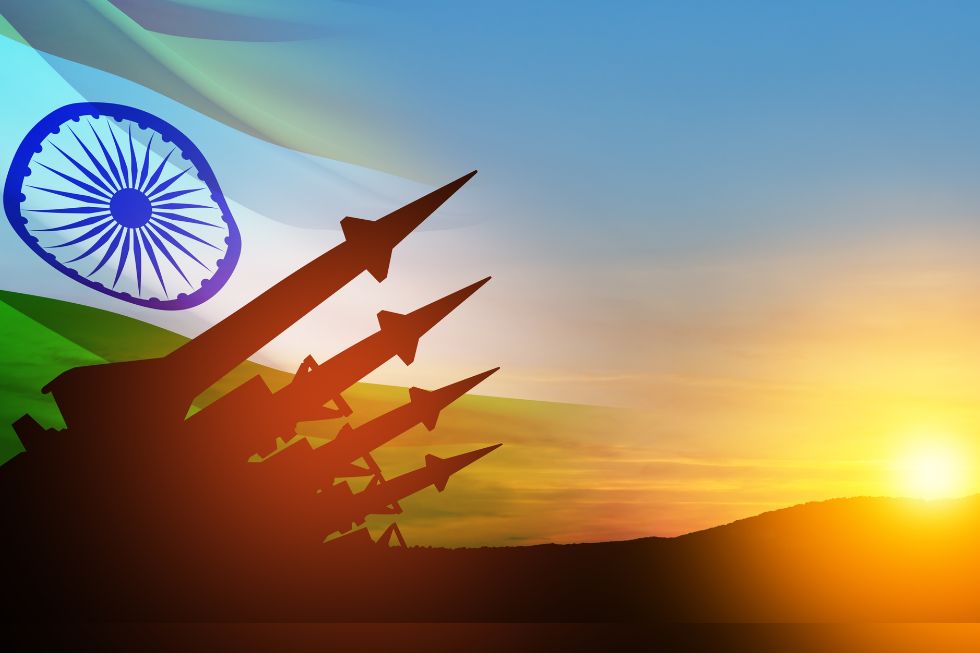
Via Shutterstock.

February 20, 2026 07:09 EDT

Check out our comment feature!
Saved Successfully.
This article saved into your bookmarks. Click here to view your bookmarks.


The Indian subcontinent is undergoing profound political, economic and ideological churns. Afghanistan has returned to Taliban rule, Pakistan is trapped in economic collapse and civil–military dysfunction, Bangladesh is plummeting into Islamist mobilization, Nepal, Sri Lanka and the Maldives are facing political and economic fragility, and Myanmar’s junta is involved in civil war. These developments directly affect India’s internal security, border stability, trade routes and regional influence. Yet, the Indian response is reactive and episodic.
Nowhere is this strategic incoherence more evident than in India’s approach toward the Taliban. The radical militia of the Taliban captured Kabul in August 2021, and India immediately pulled its diplomats out and closed its mission. In contrast, the mastermind of the Taliban movement, Pakistan, was elated. Subsequently, Indian diplomats realized that they had given Pakistan a carte blanche (blank check) on the Afghan affairs. The last time Pakistan got the better of India in Afghanistan was post-Afghan Jihad in 1989, and it led to a dramatic increase in militants entering Jammu and Kashmir. Therefore, to avoid history repeating itself, Indian diplomats are trying to build a working understanding with the Taliban.
However, engagement does not require legitimization. Giving a highly media-driven welcome to Afghanistan Foreign Minister Amir Khan Muttaqi and allowing him to visit Deoband seminary does not advance any articulated strategic purpose. This approach demonstrates that tactical changes have overtaken strategic planning.
At the same time, Bangladesh has plunged into radicalism, directly affecting long-term Indian interests. The interim government, inadvertently or advertently, has given ideological and operational space to the Jammat-e-Islami and Hizbut-Tahrir Bangladesh (HTB) in the state. Multiple reports even suggest that Pakistani intelligence is looking to knit an alliance with extremists in Bangladesh. The results are turning out to be horrific, with radicalism pervading society, the economy is depreciating and social tensions, with Hindus being specially targeted, are reaching acute stress.
In such a situation, one expects a coherent Indian response. However, the Indian solution to this anarchy is anything but coherent. The policies are made on a case-by-case basis, untethered by any overarching architecture of grand strategy.
The necessity of the National Security Strategy
This malaise of incoherence is largely due to the absence of a National Security Strategy (NSS). In the absence of a guiding philosophy that defines national interests, threats and priorities, India’s response is fragmented and erratic. Although the National Security Council (NSC) decided to begin work on the NSS in 2018, it is not yet ready. The secretary of the NSC is the National Security Advisor (NSA); thus, the NSA was tasked with its formulation.
This delay is especially consequential given the scale of global change since 2018. The great-power competition is rapidly intensifying. Military technology is advancing on an alarming scale. New domains of warfare, such as cyber and space, are expanding the scope of threat perception by altering recruitment and training. And within all these changes, the regional stability in the subcontinent is plummeting. In such an environment, an NSS becomes a necessity.
However, what is an NSS, and why is it indispensable? These questions are foundational to grasping the essence of an NSS. An NSS is fundamentally a political-strategic document that integrates the military, diplomacy, the economy and technology. From a realist perspective, it brings multiple elements of state power together to reduce vulnerability in an anarchic system where the distribution of power drives conflict.
An NSS consists of two parts: one confidential, for top-ranking serving officers, and the other declassified, for scholars and thinkers. The declassified part succinctly presents a nation’s view on the prevailing balance of power and international politics. It presents an assessment of the present. The NSS also lists a nation’s interests in the external world. It tells us which region, ocean and sea are most critical for its trade. It also informs us about the status quo from military and political perspectives in the trade-critical regions. Finally, once the interests are clearly defined, it outlines ways to protect them. The means can vary depending on the comprehensive national power. As the power increases, the ways to influence others to your way change. These are the three basic elements of an NSS.
Threat perception, relative power symmetry, economic power shifts, technology and its military applications are constantly changing. Thus, a timely revision of the NSS is necessary. This revision helps a nation to face the new threats with strategic clarity.
In this sense, the NSS is the very core of a state’s security architecture. Much like the Preamble of a constitution, it lays the normative and strategic foundation for a much grander scheme to secure interests. This document is the driving force in the functioning of the most important elements of state power. Yet, India does not have it. This strategic amnesia is costing Indian national security dearly.
What follows the NSS: the National War Doctrine
The immediate doctrinal corollary for the military is the National War Doctrine (NWD). The NWD articulates the way the military will fight the next war. It is the brain and guiding philosophy for the military. This study defines how the military conceptualizes warfighting. It translates the national interests defined in the NSS into military concepts and operational preparedness.
Once this comprehensive assessment is done, the military moves to building capability and increasing capacity. Hence, it is the NWD that decides the approach to warfare. So, whether the military chooses an Integrated approach in the form of joint theater commands with integration across domains such as cyber, electronics and space, or fights as individual services, is decided solely by the NWD. Therefore, implementing such an approach is the final step in planning. Surprisingly, implementation is occurring first in our case, driven by the theaterization of commands.
It is not just theaterization but also changes in recruitment patterns, new doctrines for Special Forces and Cyber Domains, and the raising of new battalions that are happening. Meanwhile, both the Special Forces (SF) doctrine and the Cyberspace doctrine, and the operationalization of the Joint Armed Forces Special Operations Division (AFSOD) in 2019, are welcome additions. But the underlying fact remains that this should ideally be done after we have defined our interests and areas of interest broadly. Such an exercise will be more impactful in utilizing the special forces and exploiting the cyber domain.
For instance, numerous SF veterans have written that our SFs are engaged in counterinsurgency operations in Jammu & Kashmir, even though such operations can easily be carried out by the Ghatak platoons of any infantry battalion. The veterans are of the opinion that SF must primarily be used to achieve strategic objectives.
Given such a haphazard state of affairs, the former Chief of Army Staff (COAS), General MM Naravane, stated in 2022 that talking about theaterization before having the NSS is akin to “putting a cart before the horse”. Thus, implementing such reforms without doctrinal clarity risks fixing the military in a misaligned organizational setup. Such a scenario will not bode well for the country nor the military.
The way forward
If India intends to claim its long-lost seat among the great powers, then having the NSS is the first step. This will set the tone for India’s engagement with the rest of the world. It will give much-needed clarity and usher in economic and military reforms on the basis of long-term objectives. It will save Indians from pursuing ill-defined aims.
We are a rare nonprofit in the world news space. Most other organizations are owned by billionaires or governments. We are bottom-up, not top-down and bring you perspectives from around the world. So, sign up now for our free newsletters to hear from our 3,000+ voices from 90+ countries.
<label for=”Your email will be shared with fairobserver and subject to its Privacy Policy”>I agree to receive emails and other content from Fair Observer. I understand that I may repeal my consent at any time. You can review our Privacy Policy and Terms of Use for further information…</label>
However, the NSS is not a panacea. It is not a substitute for bureaucratic, economic and political reforms. But it is the foundation, over which the state’s capabilities can be built and strengthened. Thus, the immediate task for the NSC is to frame the NSS and list out the Indian interests, threats and ways to deal with them clearly.
[Kaitlyn Diana edited this piece.]
The views expressed in this article are the author’s own and do not necessarily reflect Fair Observer’s editorial policy.
Comment
0 Comments
Newest
Oldest
Most Voted
Most Voted
Inline Feedbacks
View all comments
Commenting Guidelines
Please read our commenting guidelines before commenting.
1. Be Respectful: Please be polite to the author. Avoid hostility. The whole point of Fair Observer is openness to different perspectives from perspectives from around the world.
2. Comment Thoughtfully: Please be relevant and constructive. We do not allow personal attacks, disinformation or trolling. We will remove hate speech or incitement.
3. Contribute Usefully: Add something of value — a point of view, an argument, a personal experience or a relevant link if you are citing statistics and key facts.
<label style=”font-size: 18px;”>
I have read and agree to the above commenting guidelines.
</label>
Please agree to the guidelines before proceeding.
I
Agree, Proceed to Login
Cancel
Related Reading
India’s Current Foreign Policy: Reinforcing Strategic Autonomy in a Rising Multipolar World Order
India’s foreign policy emphasizes a multipolar world, balancing independence with strategic partnerships, particularly through nonalignment and participation in multilateral forums….
by
Sudhanshu Tripathi,
December 25, 2025
India Grants Chief of Defense Staff Command Authority To Build Integrated Theater Commands
The Indian government has tasked the Chief of Defense Staff with greater authority amid growing military threats from China, Pakistan…
by
Gaurav Kumar,
July 18, 2025
India’s National Security Evolution: Urgent Need for Comprehensive Strategy
India’s national security strategy has shifted from a defensive stance to a more proactive approach, notably with the introduction of…
by
Srijan Sharma & Prakrat Gupta,
December 19, 2023
Support Fair Observer
We rely on your support for our independence, diversity and quality.
For more than 10 years, Fair Observer has been free, fair and independent. No billionaire
owns us, no advertisers control us. We are a reader-supported nonprofit. Unlike many other
publications, we keep our content free for readers regardless of where they live or whether
they can afford to pay. We have no paywalls and no ads.
In the post-truth era of fake news, echo chambers and filter bubbles, we publish a plurality
of perspectives from around the world. Anyone can publish with us, but everyone goes through
a rigorous editorial process. So, you get fact-checked, well-reasoned content instead of
noise.
We publish 3,000+ voices from 90+ countries. We also conduct education and training programs
on subjects ranging from digital media and journalism to writing and critical thinking. This
doesn’t come cheap. Servers, editors, trainers and web developers cost
money.
Please consider supporting us on a regular basis as a recurring donor or a
sustaining member.
Will you support FO’s journalism?
We rely on your support for our independence, diversity and quality.
Donation Cycle
<label for=”donation_cycle_one_time”>One Time</label>
<label for=”donation_cycle_monthly”>Monthly</label>
<label for=”donation_cycle_yearly”>Yearly</label>
Donation Amount
<label for=”amount_11″>$11</label>
<label for=”amount_111″>$111</label>
<label for=”other”>Other</label>
$
The IRS recognizes Fair Observer as a section 501(c)(3) registered public charity
(EIN: 46-4070943), enabling you to claim a tax deduction.
Make Sense of the World
Unique Insights from 3,000+ Contributors in 90+ Countries
<label
for=”Your email will be shared with fairobserver and subject to its Privacy Policy”>I
agree to receive emails and other content from Fair Observer. I understand
that I
may repeal my consent at any time. You can review our Privacy Policy
and Terms of Use
for further
information .</label>
for=”Your email will be shared with fairobserver and subject to its Privacy Policy”>I
agree to receive emails and other content from Fair Observer. I understand
that I
may repeal my consent at any time. You can review our Privacy Policy
and Terms of Use
for further
information .</label>
Look at the world through many prisms — 3,000+ pairs of eyes from 90+ countries. We are a rare nonprofit in the world news space and you can get our newsletters for free.
<label for=”Your email will be shared with fairobserver and subject to its Privacy Policy”>I agree to receive emails and other content from Fair Observer. I understand that I may repeal my consent at any time. You can review our Privacy Policy and Terms of Use for further information…</label>
</main>
Fair Observer, 461 Harbor Blvd, Belmont, CA 94002, USA
<footer class=”mart70 fo-black-bg padt50 padb30″>
Sections
PUBLICATION
Support Fair Observer
We rely on your support for our independence, diversity and quality.


</footer>

<footer id=”fixed-footer” class=”support-footer”>


Support
independent, crowdsourced, nonprofit
journalism.
Fair Observer is a 501(c)(3) independent nonprofit. We are not owned by billionaires or controlled by
advertisers. We publish nearly 3,000 authors from over 90 countries after fact-checking and editing each
piece. We do not have a paywall and anyone can read us for free. With your vital donations, we can
continue
to do our work.
Please make a recurring (or even one-time) donation today. Even $1 goes a long way because
a
million donors
like you mean one million dollars. Thank you for keeping us independent, free and fair.
One Time
Monthly
Yearly
Monthly
Yearly
Continue 

</footer>

Sign into your Fair Observer Account
<label class=”tml-label” for=”user_login”>Username or Email Address</label>
<label class=”tml-label” for=”user_pass”>Password</label>
<label class=”tml-label” for=”rememberme”>Remember Me</label>
Log In
Forgot
Password
Password
Forgot Password
Enter your registered email address or username. You will receive a
link to create a new password via email.
Please enter your username or email address. You will receive an email message with instructions on how to reset your password.
<label class=”tml-label” for=”user_login”>Username or Email Address</label>
Get New Password
Or
Return to
Login
Forgot Password
We have sent a link to your registered email address to reset your password.
<circle cx=”12.5″ cy=”12″ r=”12″ fill=”#414141″ />
Back to
Login
Become a Member & Enjoy Exclusive Benefits!
<circle cx=”12.5″ cy=”12″ r=”12″ fill=”#414141″ />
Access to comments feature
<circle cx=”12.5″ cy=”12″ r=”12″ fill=”#414141″ />
Bookmark your favorite articles
<circle cx=”12.5″ cy=”12″ r=”12″ fill=”#414141″ />
Exclusive invitations to FO° Talks & FO° Live
<circle cx=”12.5″ cy=”12″ r=”12″ fill=”#414141″ />
Access to all of our e-publications
Return to
Login
Login
NEWSLETTER
Make Sense of the World
Unique Insights from 2,500+ Contributors in 90+ Countries

<label
for=”Your email will be shared with fairobserver and subject to it’s Privacy Policy”>I
agree to receive emails and other content from Fair Observer. I understand
that I may repeal my consent at any time. You can review our Privacy Policy
and Terms of Use
for further information.</label>
for=”Your email will be shared with fairobserver and subject to it’s Privacy Policy”>I
agree to receive emails and other content from Fair Observer. I understand
that I may repeal my consent at any time. You can review our Privacy Policy
and Terms of Use
for further information.</label>
NEWSLETTER
Make Sense of the World
Unique Insights from 2,500+ Contributors in 90+ Countries
<label
for=”Your email will be shared with fairobserver and subject to it’s Privacy Policy”>I
agree to receive emails and other content from Fair Observer. I understand
that I may repeal my consent at any time. You can review our Privacy Policy
and Terms of Use
for further information.</label>
for=”Your email will be shared with fairobserver and subject to it’s Privacy Policy”>I
agree to receive emails and other content from Fair Observer. I understand
that I may repeal my consent at any time. You can review our Privacy Policy
and Terms of Use
for further information.</label>

Make Sense of the World
Unique Insights from 2,500+ Contributors in 90+ Countries
<label
for=”Your email will be shared with fairobserver and subject to its Privacy Policy”>I
agree to receive emails and other content from Fair Observer. I understand that I
may repeal my consent at any time. You can review our Privacy Policy and Terms of Use for further
information .</label>
for=”Your email will be shared with fairobserver and subject to its Privacy Policy”>I
agree to receive emails and other content from Fair Observer. I understand that I
may repeal my consent at any time. You can review our Privacy Policy and Terms of Use for further
information .</label>
We Need Your Consent
We use cookies to give you the best possible experience. Learn more about how we use cookies or edit your cookie preferences. Privacy Policy. My Options I Accept
Privacy & Cookies Policy
Close
Edit Cookie Preferences
The Fair Observer website uses digital cookies so it can collect statistics on how many visitors come to the site, what content is viewed and for how long, and the general location of the computer network of the visitor. These statistics are collected and processed using the Google Analytics service. Fair Observer uses these aggregate statistics from website visits to help improve the content of the website and to provide regular reports to our current and future donors and funding organizations. The type of digital cookie information collected during your visit and any derived data cannot be used or combined with other information to personally identify you. Fair Observer does not use personal data collected from its website for advertising purposes or to market to you.
As a convenience to you, Fair Observer provides buttons that link to popular social media sites, called social sharing buttons, to help you share Fair Observer content and your comments and opinions about it on these social media sites. These social sharing buttons are provided by and are part of these social media sites. They may collect and use personal data as described in their respective policies. Fair Observer does not receive personal data from your use of these social sharing buttons. It is not necessary that you use these buttons to read Fair Observer content or to share on social media.
Necessary
<label class=”form-check-label” for=”wt-cli-checkbox-necessary”>Necessary</label>
Always Enabled
These cookies essential for the website to function.
Social Media
<label for=”wt-cli-checkbox-social_media” class=”cli-slider” data-cli-enable=”Enabled” data-cli-disable=”Disabled”>Social Media</label>
These cookies are used to enable sharing or following of content that you find interesting on our website. These settings apply to third-party social networking and other websites.
Performance & Functionality
<label for=”wt-cli-checkbox-performance” class=”cli-slider” data-cli-enable=”Enabled” data-cli-disable=”Disabled”>Performance & Functionality</label>
These cookies are used to enhance the performance and functionality of our website. They provide statistics on how our website is used and help us improve by measuring errors. Certain functionalities on our website may become unavailable without these cookies.
Analytics
<label for=”wt-cli-checkbox-analytics” class=”cli-slider” data-cli-enable=”Enabled” data-cli-disable=”Disabled”>Analytics</label>
SAVE & ACCEPT
<textarea id=’wpd-editor-source-code’></textarea>Insert
</body></html>
Total Views:
Source: World Politics - fairobserver.com