<g id=”cross”>
<line class=”cls-1″ x1=”7″ x2=”25″ y1=”7″ y2=”25″ />
<line class=”cls-1″ x1=”7″ x2=”25″ y1=”25″ y2=”7″ />
</g>
The Houthis’ Southern Ambition: A Threat the International and Regional Community Must Never Ignore
<circle cx=”10.5″ cy=”10.5″ r=”7.5″ />
<line x1=”21″ x2=”15.8″ y1=”21″ y2=”15.8″ />
<nav class=”fo-navigation pos-r” itemscope itemtype=”http://schema.org/Navigation”>
Login
Sections <circle cx=”10.5″ cy=”10.5″ r=”7.5″ />
<line x1=”21″ x2=”15.8″ y1=”21″ y2=”15.8″ />
Search
<circle cx=”10.5″ cy=”10.5″ r=”7.5″ />
<line x1=”21″ x2=”15.8″ y1=”21″ y2=”15.8″ />
Search


PUBLICATION
Support Fair Observer
We rely on your support for our independence, diversity and quality.
</nav>
</header>

<main id=”main” class=”site-main” role=”main”> 



Tuesday, December 30, 2025
<header class=”entry-header”>
The Houthis’ Southern Ambition: A Threat the International and Regional Community Must Never Ignore
The international push for a unified Yemen risks empowering the Houthis at the expense of southern aspirations and regional stability. Houthi rule in the north demonstrates an authoritarian, ideologically driven model incompatible with pluralism or democracy. A two-state solution recognizing southern self-determination offers a more realistic path to lasting peace and security.
By
Tuesday, December 30, 2025
</header>

Via Shutterstock.

December 30, 2025 10:01 EDT

Check out our comment feature!
Saved Successfully.
This article saved into your bookmarks. Click here to view your bookmarks.


The international community may be standing on the edge of a grave political miscalculation. After years of dismal and frustrating diplomatic efforts, global and regional actors continue to pursue a peace process in Yemen that risks handing the Houthis — an armed, religiously ideologically driven movement — effective hegemony over the South.
The current trajectory of diplomatic rhetoric is not an actual formula for a peaceful solution to the Yemen crisis. It is a potential blueprint for further instability that could negatively impact the Gulf states and international security. The global community continues to ignore the aspirations of the southern population and the reality on the ground.
Life under Houthi rule
The Houthis overthrew the government by military force and established their own system of authority in North Yemen, imposing complete control over the Yemenis living there. The Houthis are not simply one political faction among many; they are a heavily militarized movement whose governing philosophy is rooted in what they regard as divine authority. Their ideology does not tolerate pluralism, modern democratic governance or social openness. It is either their way or the highway.
Analysts have extensively documented the Houthis’ efforts to impose an ideological curriculum in education, reshape institutions to meet their political objectives and inject a theological doctrine into educational and civic life across northern Yemen. Under their control in the North, dissent has shrunk, education has become an ideological tool and governance has been reshaped to consolidate their religious authority. They have zero tolerance for anyone who opposes them.
To imagine this model potentially replicated in the South is to imagine the erasure of decades of social and democratic progress. The South has worked since its independence in 1967 to build a more secular, progressive and civic-oriented political culture. These gains, fragile as they are amid ongoing conflict, would disappear under Houthi rule. The South’s educational and health sectors, already strained by war and economic neglect, would regress sharply under enforced ideological control. Women’s rights, political freedoms, trade unions, free press and civic participation would all suffer.
This is not speculation. It is based on the observable reality of life under Houthi rule.
Southern resistance and self-determination
Meanwhile, the people of the South have already demonstrated where they stand. In 2015, they resisted a full-scale Houthi invasion, with thousands paying with their lives to stop the movement from taking cities like Aden. Their resistance was not driven by politics alone; it was driven by the understanding that their identity, freedoms and future were at stake. Of course, the Houthi invasion of Aden was thwarted with the support of the Arab national coalition led by the Kingdom of Saudi Arabia and the United Arab Emirates.
Forcing the Southern Transitional Council (STC) and the southern population into a political arrangement dominated by the Houthis ignores this sacrifice and denies their right to self-determination. It also risks igniting fresh conflict and, no doubt, a potential backlash from Southerners.
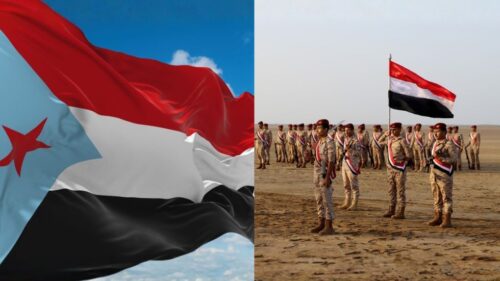
That backlash is no longer theoretical. In recent developments, the STC has militarily consolidated control over Hadramaut and al-Mahra, effectively bringing the entirety of southern Yemen under its authority. Southern forces rapidly defeated the First Armoured Brigade, which subsequently retreated northward. These events underscore a decisive shift in power on the ground and further demonstrate that the South is no longer a passive actor waiting for externally imposed solutions.
The Kingdom of Saudi Arabia has expressed clear dissatisfaction with this turn of events, issuing a statement demanding that STC forces withdraw to their previous positions. The STC, however, rejected the demand, instead calling for dialogue with Saudi authorities while refusing to pull back its troops. The situation remains tense and potentially explosive, highlighting the growing gap between diplomatic prescriptions and the realities unfolding in southern Yemen.
The implications extend far beyond Yemen’s internal dynamics. A Houthi-controlled or Houthi-dominated Yemen, north and south, would present an acute threat to Gulf and international security. With strong Iranian backing, the Houthis have already demonstrated their ability to strike beyond Yemen’s borders and threaten international shipping through the Bab al-Mandab Strait. Their influence over southern ports and strategic maritime chokepoints would dramatically increase their leverage over global trade and energy routes. This is a strategic aim for them. The Houthis are the only cohesive bastion for Iranian influence in the Middle East.
Economic priorities and regional instability
The Houthis’ economic priorities only heighten the danger. Revenue captured under their control — whether through taxation, customs or commercial levies — has been consistently redirected toward military activity, not governance or development.
Contrast this with the South, which has faced chronic economic neglect from the very international actors now attempting to shape its political future. Despite its strategic and economic importance, the South has not received the sustained development assistance required to stabilize and rebuild the infrastructure destroyed by war. This lack of support has weakened local institutions and left the region vulnerable.
Since the south has not had the economic support required to rebuild its infrastructure, and the Houthis have continued to threaten to bomb critical resource infrastructure, the government is unable to sell oil, leaving the budget with a huge deficit.
Why a two-state solution works
Still, representatives of the South have demonstrated political maturity and a willingness to engage constructively with regional partners to push forward a two-state solution. Southern leaders, most notably STC President Aidarous al-Zubaidi, have repeatedly urged the international community to recognize the necessity of a two-state solution.
This is not an ideological aspiration; it is a pragmatic assessment of the realities on the ground and the only path that genuinely offers long-term stability. The southern people have repeatedly, through political gatherings and numerous demonstrations, called for their independence.
Analysts, diplomats and regional experts increasingly agree that forcing the South into a unity arrangement dominated by the Houthis will not end Yemen’s conflict. Instead, it risks entrenching division and provoking renewed phases of war.
The international community’s diplomatic insistence on a single, unified Yemeni state regardless of political, cultural and ideological realities on the ground has become an obstacle to peace rather than a pathway to it. Diplomacy that ignores the legitimate aspirations of millions of southern Yemenis is doomed to fail. Worse, it may create the very instability it hopes to prevent.
A more honest and pragmatic diplomatic approach is urgently needed. The world must recognize that the Houthis’ rise is not compatible with a unified, peaceful and democratic Yemen. Nor is it compatible with the security interests of the Gulf states or the stability of global maritime routes. The South cannot simply be expected to accept domination by a movement it has fought, resisted and rejected at every turn.
A two-state solution may not be simple. But it is viable. It is grounded in history, in lived experience and in the political realities of Yemen today. Most importantly, it respects the will of the people who live in the South — a principle that should guide any responsible international diplomacy.
Before it is too late, the world must abandon the fantasy of a forced unity under Houthi influence. The cost of pursuing that illusion will not only be paid by Yemenis, but it will also be paid by the broader region and the international community that depends on the stability of the Gulf.
You can read the CIA Factbook and listen to MI6 people for your analysis, or you could read perspectives from our 3,000+ authors from 90+ countries and make sense of the world. Sign up for our free newsletters now.
<label for=”Your email will be shared with fairobserver and subject to its Privacy Policy”>I agree to receive emails and other content from Fair Observer. I understand that I may repeal my consent at any time. You can review our Privacy Policy and Terms of Use for further information…</label>
The time has come to choose realism over wishful thinking. The South deserves the right to determine its own future — and the world should finally listen.
[Kaitlyn Diana edited this piece.]
The views expressed in this article are the author’s own and do not necessarily reflect Fair Observer’s editorial policy.
Comment
0 Comments
Newest
Oldest
Most Voted
Most Voted
Inline Feedbacks
View all comments
Commenting Guidelines
Please read our commenting guidelines before commenting.
1. Be Respectful: Please be polite to the author. Avoid hostility. The whole point of Fair Observer is openness to different perspectives from perspectives from around the world.
2. Comment Thoughtfully: Please be relevant and constructive. We do not allow personal attacks, disinformation or trolling. We will remove hate speech or incitement.
3. Contribute Usefully: Add something of value — a point of view, an argument, a personal experience or a relevant link if you are citing statistics and key facts.
<label style=”font-size: 18px;”>
I have read and agree to the above commenting guidelines.
</label>
Please agree to the guidelines before proceeding.
I
Agree, Proceed to Login
Cancel
Related Reading
Houthi Ambitions and the Southern State: A Regional Flashpoint
The Southern Transitional Council has expanded its reach in southern Yemen and shifted the balance of power in the war….
by
Abdul Galil Shaif,
December 20, 2025
The Southern Transitional Council: Countering Extremism and Securing Maritime Stability in Yemen
Southern forces fight extremists across Yemen’s south as Al Qaeda and the Islamic State target security units allied with the…
by
Abdul Galil Shaif,
November 19, 2025
FO° Talks: The Yemen Conflict Explained — What’s Next for the Houthis?
In this episode of FO° Talks, Atul Singh and Fernando Carvajal analyze Yemen’s protracted conflict, tracing its roots in sectarian…
by
Fernando Carvajal & Atul Singh,
November 3, 2025
Support Fair Observer
We rely on your support for our independence, diversity and quality.
For more than 10 years, Fair Observer has been free, fair and independent. No billionaire
owns us, no advertisers control us. We are a reader-supported nonprofit. Unlike many other
publications, we keep our content free for readers regardless of where they live or whether
they can afford to pay. We have no paywalls and no ads.
In the post-truth era of fake news, echo chambers and filter bubbles, we publish a plurality
of perspectives from around the world. Anyone can publish with us, but everyone goes through
a rigorous editorial process. So, you get fact-checked, well-reasoned content instead of
noise.
We publish 3,000+ voices from 90+ countries. We also conduct education and training programs
on subjects ranging from digital media and journalism to writing and critical thinking. This
doesn’t come cheap. Servers, editors, trainers and web developers cost
money.
Please consider supporting us on a regular basis as a recurring donor or a
sustaining member.
Will you support FO’s journalism?
We rely on your support for our independence, diversity and quality.
Donation Cycle
<label for=”donation_cycle_one_time”>One Time</label>
<label for=”donation_cycle_monthly”>Monthly</label>
<label for=”donation_cycle_yearly”>Yearly</label>
Donation Amount
<label for=”amount_11″>$11</label>
<label for=”amount_111″>$111</label>
<label for=”other”>Other</label>
$
The IRS recognizes Fair Observer as a section 501(c)(3) registered public charity
(EIN: 46-4070943), enabling you to claim a tax deduction.
Most Popular
FO° Live: Make Sense of the Houthis and Civil War in Yemen
In this episode of FO° Live, experts explore Yemen’s ongoing crisis, focusing on the Houthis’ rise, regional implications and failures…
by
Abdul Galil Shaif, Christopher Roper Schell, Fatima Abo Alasrar, Fernando Carvajal & Michael Rubin,
June 7, 2025
International Community Bears Responsibility for Red Sea Crisis and Houthi Crimes
The UN’s 2018 Stockholm Agreement exacerbated the current crisis on the Red Sea. This failed diplomatic solution empowered Houthi rebels,…
by
Fernando Carvajal,
March 12, 2025
Make Sense of the World
Unique Insights from 3,000+ Contributors in 90+ Countries
<label
for=”Your email will be shared with fairobserver and subject to its Privacy Policy”>I
agree to receive emails and other content from Fair Observer. I understand
that I
may repeal my consent at any time. You can review our Privacy Policy
and Terms of Use
for further
information .</label>
for=”Your email will be shared with fairobserver and subject to its Privacy Policy”>I
agree to receive emails and other content from Fair Observer. I understand
that I
may repeal my consent at any time. You can review our Privacy Policy
and Terms of Use
for further
information .</label>
We’re independent, nonprofit and powered by 3,000+ voices from around the world — not billionaires or governments. Enjoy real journalism, sign up for our free newsletters.
<label for=”Your email will be shared with fairobserver and subject to its Privacy Policy”>I agree to receive emails and other content from Fair Observer. I understand that I may repeal my consent at any time. You can review our Privacy Policy and Terms of Use for further information…</label>
</main>
Fair Observer, 461 Harbor Blvd, Belmont, CA 94002, USA
<footer class=”mart70 fo-black-bg padt50 padb30″>
Sections
PUBLICATION
Support Fair Observer
We rely on your support for our independence, diversity and quality.


</footer>

<footer id=”fixed-footer” class=”support-footer”>


Support
independent, crowdsourced, nonprofit
journalism.
Fair Observer is a 501(c)(3) independent nonprofit. We are not owned by billionaires or controlled by
advertisers. We publish nearly 3,000 authors from over 90 countries after fact-checking and editing each
piece. We do not have a paywall and anyone can read us for free. With your vital donations, we can
continue
to do our work.
Please make a recurring (or even one-time) donation today. Even $1 goes a long way because
a
million donors
like you mean one million dollars. Thank you for keeping us independent, free and fair.
One Time
Monthly
Yearly
Monthly
Yearly
Continue 

</footer>

Sign into your Fair Observer Account
<label class=”tml-label” for=”user_login”>Username or Email Address</label>
<label class=”tml-label” for=”user_pass”>Password</label>
<label class=”tml-label” for=”rememberme”>Remember Me</label>
Log In
Forgot
Password
Forgot Password
Enter your registered email address or username. You will receive a
link to create a new password via email.
Please enter your username or email address. You will receive an email message with instructions on how to reset your password.
<label class=”tml-label” for=”user_login”>Username or Email Address</label>
Get New Password
Or
Return to
Login
Forgot Password
We have sent a link to your registered email address to reset your password.
<circle cx=”12.5″ cy=”12″ r=”12″ fill=”#414141″ />
Back to
Login
Become a Member & Enjoy Exclusive Benefits!
<circle cx=”12.5″ cy=”12″ r=”12″ fill=”#414141″ />
Access to comments feature
<circle cx=”12.5″ cy=”12″ r=”12″ fill=”#414141″ />
Bookmark your favorite articles
<circle cx=”12.5″ cy=”12″ r=”12″ fill=”#414141″ />
Exclusive invitations to FO° Talks & FO° Live
<circle cx=”12.5″ cy=”12″ r=”12″ fill=”#414141″ />
Access to all of our e-publications
Return to
Login
Login
NEWSLETTER
Make Sense of the World
Unique Insights from 2,500+ Contributors in 90+ Countries

<label
for=”Your email will be shared with fairobserver and subject to it’s Privacy Policy”>I
agree to receive emails and other content from Fair Observer. I understand
that I may repeal my consent at any time. You can review our Privacy Policy
and Terms of Use
for further information.</label>
for=”Your email will be shared with fairobserver and subject to it’s Privacy Policy”>I
agree to receive emails and other content from Fair Observer. I understand
that I may repeal my consent at any time. You can review our Privacy Policy
and Terms of Use
for further information.</label>
NEWSLETTER
Make Sense of the World
Unique Insights from 2,500+ Contributors in 90+ Countries
<label
for=”Your email will be shared with fairobserver and subject to it’s Privacy Policy”>I
agree to receive emails and other content from Fair Observer. I understand
that I may repeal my consent at any time. You can review our Privacy Policy
and Terms of Use
for further information.</label>
for=”Your email will be shared with fairobserver and subject to it’s Privacy Policy”>I
agree to receive emails and other content from Fair Observer. I understand
that I may repeal my consent at any time. You can review our Privacy Policy
and Terms of Use
for further information.</label>

Make Sense of the World
Unique Insights from 2,500+ Contributors in 90+ Countries
<label
for=”Your email will be shared with fairobserver and subject to its Privacy Policy”>I
agree to receive emails and other content from Fair Observer. I understand that I
may repeal my consent at any time. You can review our Privacy Policy and Terms of Use for further
information .</label>
for=”Your email will be shared with fairobserver and subject to its Privacy Policy”>I
agree to receive emails and other content from Fair Observer. I understand that I
may repeal my consent at any time. You can review our Privacy Policy and Terms of Use for further
information .</label>
We Need Your Consent
We use cookies to give you the best possible experience. Learn more about how we use cookies or edit your cookie preferences. Privacy Policy. My Options I Accept
Privacy & Cookies Policy
Close
Edit Cookie Preferences
The Fair Observer website uses digital cookies so it can collect statistics on how many visitors come to the site, what content is viewed and for how long, and the general location of the computer network of the visitor. These statistics are collected and processed using the Google Analytics service. Fair Observer uses these aggregate statistics from website visits to help improve the content of the website and to provide regular reports to our current and future donors and funding organizations. The type of digital cookie information collected during your visit and any derived data cannot be used or combined with other information to personally identify you. Fair Observer does not use personal data collected from its website for advertising purposes or to market to you.
As a convenience to you, Fair Observer provides buttons that link to popular social media sites, called social sharing buttons, to help you share Fair Observer content and your comments and opinions about it on these social media sites. These social sharing buttons are provided by and are part of these social media sites. They may collect and use personal data as described in their respective policies. Fair Observer does not receive personal data from your use of these social sharing buttons. It is not necessary that you use these buttons to read Fair Observer content or to share on social media.
Necessary
<label class=”form-check-label” for=”wt-cli-checkbox-necessary”>Necessary</label>
Always Enabled
These cookies essential for the website to function.
Social Media
<label for=”wt-cli-checkbox-social_media” class=”cli-slider” data-cli-enable=”Enabled” data-cli-disable=”Disabled”>Social Media</label>
These cookies are used to enable sharing or following of content that you find interesting on our website. These settings apply to third-party social networking and other websites.
Performance & Functionality
<label for=”wt-cli-checkbox-performance” class=”cli-slider” data-cli-enable=”Enabled” data-cli-disable=”Disabled”>Performance & Functionality</label>
These cookies are used to enhance the performance and functionality of our website. They provide statistics on how our website is used and help us improve by measuring errors. Certain functionalities on our website may become unavailable without these cookies.
Analytics
<label for=”wt-cli-checkbox-analytics” class=”cli-slider” data-cli-enable=”Enabled” data-cli-disable=”Disabled”>Analytics</label>
SAVE & ACCEPT
<textarea id=’wpd-editor-source-code’></textarea>Insert
</body>
</html>
Total Views:
Source: World Politics - fairobserver.com