<g id=”cross”>
<line class=”cls-1″ x1=”7″ x2=”25″ y1=”7″ y2=”25″ />
<line class=”cls-1″ x1=”7″ x2=”25″ y1=”25″ y2=”7″ />
</g>
Digital Self-Reliance in Nepal: How Grassroots Media is Empowering a New Generation
<circle cx=”10.5″ cy=”10.5″ r=”7.5″ />
<line x1=”21″ x2=”15.8″ y1=”21″ y2=”15.8″ />
<nav class=”fo-navigation pos-r” itemscope itemtype=”http://schema.org/Navigation”>
Login
Sections <circle cx=”10.5″ cy=”10.5″ r=”7.5″ />
<line x1=”21″ x2=”15.8″ y1=”21″ y2=”15.8″ />
Search
<circle cx=”10.5″ cy=”10.5″ r=”7.5″ />
<line x1=”21″ x2=”15.8″ y1=”21″ y2=”15.8″ />
Search


PUBLICATION
Support Fair Observer
We rely on your support for our independence, diversity and quality.
</nav>
</header>

<main id=”main” class=”site-main” role=”main”> 





Tuesday, December 02, 2025
<header class=”entry-header”>
Digital Self-Reliance in Nepal: How Grassroots Media is Empowering a New Generation
Nepal is seeing a rise in community-based digital media. Small online platforms, such as Khoj Samachar, are working to share verified information in both Nepali and English. These outlets help people understand issues that are sometimes overlooked by larger mainstream media, especially when political pressure or limited resources affect coverage.
By
Tuesday, December 02, 2025
</header>
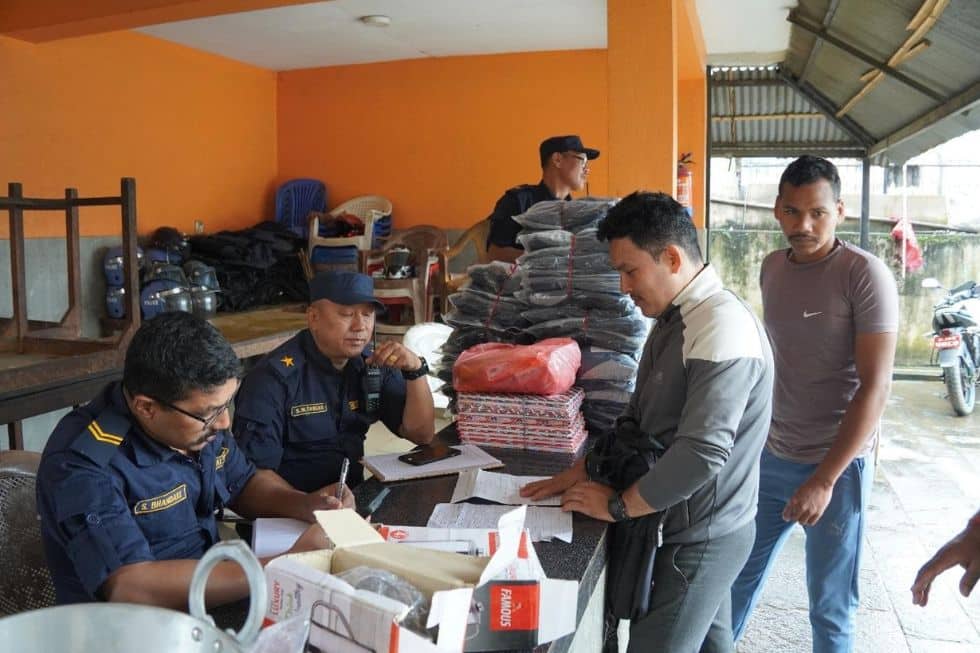
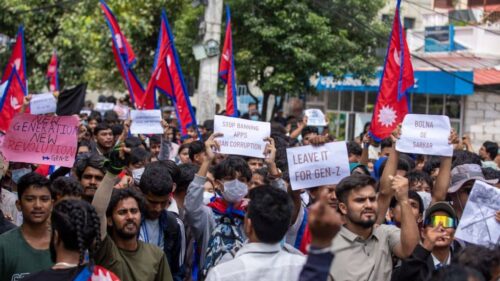
Khoj Samachar reporters documenting the situation at a Buspark police station after the GenZ protest.

December 02, 2025 06:02 EDT

Check out our comment feature!
Saved Successfully.
This article saved into your bookmarks. Click here to view your bookmarks.


Across South Asia, independent digital journalism is quietly reshaping how citizens engage with the truth. In Nepal, where mainstream outlets often face political pressure, rural isolation and limited funding, small digital initiatives have begun to fill crucial information gaps.
Reports by the UN Educational, Scientific and Cultural Organization (UNESCO) and the International Press Institute (IPI) have noted similar trends, highlighting how community-driven online platforms are helping sustain media freedom and verified reporting. Corporate houses or political parties do not back these projects; they grow from communities that demand verified information and civic accountability in a rapidly digitizing world.
A landscape of challenges
Nepal’s media ecosystem mirrors the country’s political transitions. While constitutional guarantees of free expression exist, independent reporting often struggles against misinformation, resource scarcity and a legacy of centralized news production. Challenges were also noted by Media Action Nepal’s 2024 Press Freedom Report.
Rural populations — nearly two-thirds of the nation — remain largely excluded from reliable news sources. Digital transformation offers opportunities, but also exposes vulnerabilities: fake news spreads faster than facts, and young citizens often consume content without understanding how to verify its accuracy. This concern is echoed in UNESCO’s Global Media and Information Literacy Report.
Among the circle of new digital media organizations is Khoj Samachar, a bilingual independent newsroom that focuses on civic reporting and public-awareness journalism. It combines investigative storytelling with digital-media literacy initiatives, showing how self-reliant journalism can strengthen democratic participation from the ground up.
From reporting to digital empowerment
Khoj Samachar emerged during a period when misinformation and partisan narratives dominated Nepali social media. Instead of competing for viral clicks, the outlet focused on verification, transparency and accessibility. It publishes news in both Nepali and English, ensuring that local developments — such as municipal decisions, community budgets and education reforms — are accessible to both villagers and the global Nepali diaspora.
The initiative also emphasizes civic education. Short explainer videos, fact-checked bulletins and youth-run discussion forums teach audiences how to recognize credible sources. This approach reflects a growing movement within Nepal: treating journalism as a tool for empowerment rather than a stage for political debate.
Such experiments matter. According to Rising Nepal’s report on the Nepal Rastra Bank’s 2022/23 survey, only about 31% of Nepali citizens are considered digitally literate, underscoring the gap that initiatives promoting news and media literacy aim to bridge. Outlets that teach how to read the news — rather than merely produce it — help narrow that deficit.
Roshan Shrestha’s civic journalism model
Behind this initiative is journalist Roshan Shrestha, whose early reporting focused on local governance and social accountability issues in Nepal. Drawing from that experience, he established Khoj Samachar in 2021 to promote political awareness and social responsibility through independent digital reporting. The platform operates as a collaborative civic-media space that documents local governance, policy decisions and community issues in both Nepali and English.
Under Shrestha’s direction, Khoj Samachar uses social media platforms such as Facebook and YouTube to share explanatory videos and civic discussions, reaching young audiences with accessible content on governance, accountability and fact verification. It also employs open-source verification tools and works with educators to organize discussions on responsible digital behavior. Its content encourages citizens, particularly young people, to question misinformation, verify sources and engage constructively in civic dialog.
In an interview with Global Voices, Shrestha described this approach as “digital self-reliance,” emphasizing that media literacy should evolve through community participation rather than donor dependency.
Independent reports by Media Action Nepal and The Himalayan Times note that such community-journalism initiatives contribute to strengthening local media literacy and public accountability across the country.
Independent journalism and accountability
Khoj Samachar’s editorial agenda frequently highlights anticorruption measures, local transparency and budget tracking. Rather than sensational exposés, its reports translate technical municipal data into plain language for citizens. When a village council publishes its expenditure report online, Khoj Samachar explains what those numbers mean, such as how much was allocated to education, infrastructure or sanitation.
This micro-level accountability journalism connects national policy with everyday governance. It also reflects a larger shift among Nepal’s emerging journalists: redefining watchdog reporting as a community conversation instead of confrontation.
Scholars of South Asian media note that such localized data-driven reporting builds trust faster than traditional political commentary. It demonstrates that even without large budgets, small teams can influence transparency simply by explaining facts clearly.
Youth, digital literacy and the public sphere
Nearly 40% of Nepal’s population is under the age of 25. Their relationship with media is fundamentally digital, yet their education rarely covers online ethics or verification. In this context, Khoj Samachar’s outreach programs show how journalism can double as civic training.
By encouraging young volunteers to translate complex issues — such as environmental policy, local elections and budget allocation — into visual explainers, the platform transforms passive consumers into informed participants. Several universities have invited the team to share methodologies for teaching media literacy through community projects.
Such initiatives align with broader regional trends: in Bangladesh, Fact Watch integrates student reporters; in India, Boom Live trains rural correspondents; and in Nepal, platforms like Khoj Samachar illustrate how smaller ecosystems can nurture credible, human-centered storytelling.
Balancing independence and sustainability
Financial independence remains the greatest challenge. Nepal’s advertising market is small, and donor funding often carries project conditions that can influence editorial direction. Shrestha’s team has experimented with crowd-sourced translation drives and voluntary memberships to cover hosting costs.
Experts argue that long-term sustainability for such media will depend on collaborative networks rather than isolated success stories. Shared content repositories, open-license graphics and cooperative training among independent outlets could reduce duplication and strengthen the sector’s collective credibility.
Fair governance and informed citizens require diverse voices; however, diversity alone is insufficient without mechanisms to verify information. Platforms like Khoj Samachar highlight how modest technical innovation — paired with ethical discipline — can deliver both.
A broader democratic context
Nepal’s constitution envisions an inclusive democracy where participation extends beyond voting. Digital media, when responsibly managed, can deepen that vision by connecting ordinary citizens with decision-making processes.
Yet, as global experience shows, digital freedom can also amplify misinformation and political manipulation. The country’s future media landscape will depend on whether young journalists internalize verification as a habit, not an obligation.
Initiatives born from local needs — such as Khoj Samachar— demonstrate that civic journalism can evolve organically without waiting for institutional reform. Their presence signals a maturing digital culture that values accuracy, empathy and public service.
Toward an ethic of digital self-reliance
Nepal’s experiment with grassroots digital media reveals an important lesson: independence is not only financial, but it is also intellectual. When communities gain the ability to question, verify and communicate responsibly, democracy strengthens from its roots.
Outlets such as Khoj Samachar and individuals like Roshan Shrestha, who champion media literacy as a public skill, represent this quiet transformation. They show how informed citizens — rather than algorithms or political sponsors — can define the future of truth online.
We are a rare nonprofit in the world news space. Most other organizations are owned by billionaires or governments. We are bottom-up, not top-down and bring you perspectives from around the world. So, sign up now for our free newsletters to hear from our 3,000+ voices from 90+ countries.
<label for=”Your email will be shared with fairobserver and subject to its Privacy Policy”>I agree to receive emails and other content from Fair Observer. I understand that I may repeal my consent at any time. You can review our Privacy Policy and Terms of Use for further information…</label>
As Nepal navigates its digital decade, the call for self-reliant journalism may become one of the country’s most valuable civic assets, a reminder that technology alone does not build trust; people do.
[Zania Morgan edited this piece.]
The views expressed in this article are the author’s own and do not necessarily reflect Fair Observer’s editorial policy.
Comment
0 Comments
Newest
Oldest
Most Voted
Most Voted
Inline Feedbacks
View all comments
Commenting Guidelines
Please read our commenting guidelines before commenting.
1. Be Respectful: Please be polite to the author. Avoid hostility. The whole point of Fair Observer is openness to different perspectives from perspectives from around the world.
2. Comment Thoughtfully: Please be relevant and constructive. We do not allow personal attacks, disinformation or trolling. We will remove hate speech or incitement.
3. Contribute Usefully: Add something of value — a point of view, an argument, a personal experience or a relevant link if you are citing statistics and key facts.
<label style=”font-size: 18px;”>
I have read and agree to the above commenting guidelines.
</label>
Please agree to the guidelines before proceeding.
I
Agree, Proceed to Login
Cancel
Related Reading
The Unseriousness of Young Revolutionaries
Young protesters across the world use humor, memes and pop culture to confront failing governments and rigid institutions. Their decentralized…
by
Tara Yarwais,
November 8, 2025
No Justice for Victims Under Nepal’s Maoist Prime Minister
Nepal’s decade-long Maoist insurgency ended 16 years ago, but war crimes victims are still seeking justice. The government, headed by…
by
Saleem Samad,
September 1, 2023
The Crucial Role of Media in Nepal
by
Ishaan Kapoor,
March 8, 2021
Not Everyone is Happy About Nepal’s Constitution
by
Suman Giri & Rashesh Shrestha,
December 24, 2015
Support Fair Observer
We rely on your support for our independence, diversity and quality.
For more than 10 years, Fair Observer has been free, fair and independent. No billionaire
owns us, no advertisers control us. We are a reader-supported nonprofit. Unlike many other
publications, we keep our content free for readers regardless of where they live or whether
they can afford to pay. We have no paywalls and no ads.
In the post-truth era of fake news, echo chambers and filter bubbles, we publish a plurality
of perspectives from around the world. Anyone can publish with us, but everyone goes through
a rigorous editorial process. So, you get fact-checked, well-reasoned content instead of
noise.
We publish 3,000+ voices from 90+ countries. We also conduct education and training programs
on subjects ranging from digital media and journalism to writing and critical thinking. This
doesn’t come cheap. Servers, editors, trainers and web developers cost
money.
Please consider supporting us on a regular basis as a recurring donor or a
sustaining member.
Will you support FO’s journalism?
We rely on your support for our independence, diversity and quality.
Donation Cycle
<label for=”donation_cycle_one_time”>One Time</label>
<label for=”donation_cycle_monthly”>Monthly</label>
<label for=”donation_cycle_yearly”>Yearly</label>
Donation Amount
<label for=”amount_11″>$11</label>
<label for=”amount_111″>$111</label>
<label for=”other”>Other</label>
$
The IRS recognizes Fair Observer as a section 501(c)(3) registered public charity
(EIN: 46-4070943), enabling you to claim a tax deduction.
Most Popular
Moral Abyss: America Sleeps Through Darkness
US President Donald Trump’s administration, corporate greed and corruption are dragging America into a moral abyss. Yet the nation’s unions,…
by
Larry Beck,
September 13, 2025
An Urgent Need for Justice and Reconciliation in Amhara
When the conflict erupted between the Tigray People’s Liberation Front (TPLF) and the Ethiopian federal government in November 2020, civilians…
by
Ahmed Mohammed Akrem & Kurniawan Arif Maspul,
September 8, 2025
X versus the Indian Government: Whose Narrative is it Anyway?
Elon Musk’s X has filed a lawsuit against the Indian government, accusing it of arbitrary censorship under the IT Act…
by
Divyanshi Sharda,
August 1, 2025
Make Sense of the World
Unique Insights from 3,000+ Contributors in 90+ Countries
<label
for=”Your email will be shared with fairobserver and subject to its Privacy Policy”>I
agree to receive emails and other content from Fair Observer. I understand
that I
may repeal my consent at any time. You can review our Privacy Policy
and Terms of Use
for further
information .</label>
for=”Your email will be shared with fairobserver and subject to its Privacy Policy”>I
agree to receive emails and other content from Fair Observer. I understand
that I
may repeal my consent at any time. You can review our Privacy Policy
and Terms of Use
for further
information .</label>
We’re independent, nonprofit and powered by 3,000+ voices from around the world — not billionaires or governments. Enjoy real journalism, sign up for our free newsletters.
<label for=”Your email will be shared with fairobserver and subject to its Privacy Policy”>I agree to receive emails and other content from Fair Observer. I understand that I may repeal my consent at any time. You can review our Privacy Policy and Terms of Use for further information…</label>
</main>
Fair Observer, 461 Harbor Blvd, Belmont, CA 94002, USA
<footer class=”mart70 fo-black-bg padt50 padb30″>
Sections
PUBLICATION
Support Fair Observer
We rely on your support for our independence, diversity and quality.


</footer>

<footer id=”fixed-footer” class=”support-footer”>


Support
independent, crowdsourced, nonprofit
journalism.
Fair Observer is a 501(c)(3) independent nonprofit. We are not owned by billionaires or controlled by
advertisers. We publish nearly 3,000 authors from over 90 countries after fact-checking and editing each
piece. We do not have a paywall and anyone can read us for free. With your vital donations, we can
continue
to do our work.
Please make a recurring (or even one-time) donation today. Even $1 goes a long way because
a
million donors
like you mean one million dollars. Thank you for keeping us independent, free and fair.
One Time
Monthly
Yearly
Monthly
Yearly
Continue 

</footer>

Sign into your Fair Observer Account
<label class=”tml-label” for=”user_login”>Username or Email Address</label>
<label class=”tml-label” for=”user_pass”>Password</label>
<label class=”tml-label” for=”rememberme”>Remember Me</label>
Log In
Forgot
Password
Forgot Password
Enter your registered email address or username. You will receive a
link to create a new password via email.
Please enter your username or email address. You will receive an email message with instructions on how to reset your password.
<label class=”tml-label” for=”user_login”>Username or Email Address</label>
Get New Password
Or
Return to
Login
Forgot Password
We have sent a link to your registered email address to reset your password.
<circle cx=”12.5″ cy=”12″ r=”12″ fill=”#414141″ />
Back to
Login
Become a Member & Enjoy Exclusive Benefits!
<circle cx=”12.5″ cy=”12″ r=”12″ fill=”#414141″ />
Access to comments feature
<circle cx=”12.5″ cy=”12″ r=”12″ fill=”#414141″ />
Bookmark your favorite articles
<circle cx=”12.5″ cy=”12″ r=”12″ fill=”#414141″ />
Exclusive invitations to FO° Talks & FO° Live
<circle cx=”12.5″ cy=”12″ r=”12″ fill=”#414141″ />
Access to all of our e-publications
Return to
Login
Login
NEWSLETTER
Make Sense of the World
Unique Insights from 2,500+ Contributors in 90+ Countries

<label
for=”Your email will be shared with fairobserver and subject to it’s Privacy Policy”>I
agree to receive emails and other content from Fair Observer. I understand
that I may repeal my consent at any time. You can review our Privacy Policy
and Terms of Use
for further information.</label>
for=”Your email will be shared with fairobserver and subject to it’s Privacy Policy”>I
agree to receive emails and other content from Fair Observer. I understand
that I may repeal my consent at any time. You can review our Privacy Policy
and Terms of Use
for further information.</label>
NEWSLETTER
Make Sense of the World
Unique Insights from 2,500+ Contributors in 90+ Countries
<label
for=”Your email will be shared with fairobserver and subject to it’s Privacy Policy”>I
agree to receive emails and other content from Fair Observer. I understand
that I may repeal my consent at any time. You can review our Privacy Policy
and Terms of Use
for further information.</label>
for=”Your email will be shared with fairobserver and subject to it’s Privacy Policy”>I
agree to receive emails and other content from Fair Observer. I understand
that I may repeal my consent at any time. You can review our Privacy Policy
and Terms of Use
for further information.</label>

Make Sense of the World
Unique Insights from 2,500+ Contributors in 90+ Countries
<label
for=”Your email will be shared with fairobserver and subject to its Privacy Policy”>I
agree to receive emails and other content from Fair Observer. I understand that I
may repeal my consent at any time. You can review our Privacy Policy and Terms of Use for further
information .</label>
for=”Your email will be shared with fairobserver and subject to its Privacy Policy”>I
agree to receive emails and other content from Fair Observer. I understand that I
may repeal my consent at any time. You can review our Privacy Policy and Terms of Use for further
information .</label>
We Need Your Consent
We use cookies to give you the best possible experience. Learn more about how we use cookies or edit your cookie preferences. Privacy Policy. My Options I Accept
Privacy & Cookies Policy
Close
Edit Cookie Preferences
The Fair Observer website uses digital cookies so it can collect statistics on how many visitors come to the site, what content is viewed and for how long, and the general location of the computer network of the visitor. These statistics are collected and processed using the Google Analytics service. Fair Observer uses these aggregate statistics from website visits to help improve the content of the website and to provide regular reports to our current and future donors and funding organizations. The type of digital cookie information collected during your visit and any derived data cannot be used or combined with other information to personally identify you. Fair Observer does not use personal data collected from its website for advertising purposes or to market to you.
As a convenience to you, Fair Observer provides buttons that link to popular social media sites, called social sharing buttons, to help you share Fair Observer content and your comments and opinions about it on these social media sites. These social sharing buttons are provided by and are part of these social media sites. They may collect and use personal data as described in their respective policies. Fair Observer does not receive personal data from your use of these social sharing buttons. It is not necessary that you use these buttons to read Fair Observer content or to share on social media.
Necessary
<label class=”form-check-label” for=”wt-cli-checkbox-necessary”>Necessary</label>
Always Enabled
These cookies essential for the website to function.
Social Media
<label for=”wt-cli-checkbox-social_media” class=”cli-slider” data-cli-enable=”Enabled” data-cli-disable=”Disabled”>Social Media</label>
These cookies are used to enable sharing or following of content that you find interesting on our website. These settings apply to third-party social networking and other websites.
Performance & Functionality
<label for=”wt-cli-checkbox-performance” class=”cli-slider” data-cli-enable=”Enabled” data-cli-disable=”Disabled”>Performance & Functionality</label>
These cookies are used to enhance the performance and functionality of our website. They provide statistics on how our website is used and help us improve by measuring errors. Certain functionalities on our website may become unavailable without these cookies.
Analytics
<label for=”wt-cli-checkbox-analytics” class=”cli-slider” data-cli-enable=”Enabled” data-cli-disable=”Disabled”>Analytics</label>
SAVE & ACCEPT
<textarea id=’wpd-editor-source-code’></textarea>Insert
</body>
</html>
Total Views:
Source: World Politics - fairobserver.com