<g id=”cross”>
<line class=”cls-1″ x1=”7″ x2=”25″ y1=”7″ y2=”25″ />
<line class=”cls-1″ x1=”7″ x2=”25″ y1=”25″ y2=”7″ />
</g>
India’s Current Foreign Policy: Reinforcing Strategic Autonomy in a Rising Multipolar World Order
<circle cx=”10.5″ cy=”10.5″ r=”7.5″ />
<line x1=”21″ x2=”15.8″ y1=”21″ y2=”15.8″ />
<nav class=”fo-navigation pos-r” itemscope itemtype=”http://schema.org/Navigation”>
Login
Sections <circle cx=”10.5″ cy=”10.5″ r=”7.5″ />
<line x1=”21″ x2=”15.8″ y1=”21″ y2=”15.8″ />
Search
<circle cx=”10.5″ cy=”10.5″ r=”7.5″ />
<line x1=”21″ x2=”15.8″ y1=”21″ y2=”15.8″ />
Search


PUBLICATION
Support Fair Observer
We rely on your support for our independence, diversity and quality.
</nav>
</header>

<main id=”main” class=”site-main” role=”main”> 



Thursday, December 25, 2025
<header class=”entry-header”>
India’s Current Foreign Policy: Reinforcing Strategic Autonomy in a Rising Multipolar World Order
India’s foreign policy emphasizes a multipolar world, balancing independence with strategic partnerships, particularly through nonalignment and participation in multilateral forums. Rising global conflicts and economic inequalities underscore the need for South-South cooperation and regional collaboration. By pursuing technological advancement, military modernization and fair trade practices, India aims to safeguard national interests while promoting global stability and equitable development.
By
Thursday, December 25, 2025
</header>

Via Shutterstock.

December 25, 2025 06:35 EDT

Check out our comment feature!
Saved Successfully.
This article saved into your bookmarks. Click here to view your bookmarks.


India’s current foreign policy clearly supports a multipolar world order, notwithstanding the US’ supreme ascendancy and self-obsessed approach in international relations. This gravely endangers the national interests of relatively weak and developing nations, often labeled “Third World countries,” including India, even though it is now the fourth-largest economy in the world. This inevitably discourages the consolidation of international and regional institutions in the evolving multipolar world and undermines the solemn spirit of multilateral negotiations, resulting in significant losses for Third World nations.
India’s moral and cultural foundations in foreign policy
In this scenario, India’s national development goals require freedom of decision-making and independent action, which its foreign policy, characterized by the doctrine of nonalignment, must pursue to protect and advance its national interests and discourage alignment of nations in rival blocs, thus consolidating the spirit of multipolarity in international relations and promoting the larger interests of global humanity.
While the changing world today often poses considerable challenges or even threats to the very survival of a state, given the structural compulsions and constraints in international relations, as pointed out by the great realist of our times, John Mearsheimer, India’s ancient moral traditions and rich cultural heritage characterized by peace, non-violence, justice, freedom, etc., underscore its magnificent policy of humanism and globalism for the welfare of the entire humanity.
Rising security concerns and geopolitical shifts
As is evident, the above-mentioned structural compulsions significantly contribute to rising economic inequalities and military threats, altogether engendering security concerns, as witnessed in the short military flare-up between the US, Israel and Iran in June, and between Venezuela and the US, besides the long-running Russia-Ukraine war and the bitter armed conflicts between Israel and Hamas, which have taken an ugly turn, with horrible terror outfits. Hezbollah in Lebanon and the Houthis in Yemen, which opened new war fronts against Israel in the past, have now been destroyed by Tel Aviv.
Taken together, these threats tend to shift the so-obtained liberal-democratic order towards a likely new world order dominated by prominent developing economies in the “third world”: Brazil, South Africa, India, Argentina, along with the Shanghai Cooperation Organisation (SCO) — comprising China, Russia, Kazakhstan, Kyrgyzstan, Tajikistan, Uzbekistan, India, Pakistan, Iran and Belarus — and its 25th summit, held from August 31, 2025, to September 1, 2025, in Tianjin, China.
In fact, the SCO, founded in 2001, has now emerged as an effective economic forum for the poor and developing countries, known as the Third World, which are striving to rebuild themselves after suffering centuries of discrimination and exploitation, thereby forging the spirit of south-south cooperation advocated much earlier by the Non-aligned Movement, of which India is a prominent founding member and a firm believer in the doctrine of non-alignment.
This is why India’s foreign policy continues to move forward with suitable modifications and rising self-esteem and confidence, as witnessed at the aforesaid SCO 2025 meet and in Trump’s conciliatory gestures towards India’s Prime Minister (PM) Narendra Modi on the tariff issue, which once again remind us of the earlier cordial relations between India and the US during his first presidential years.
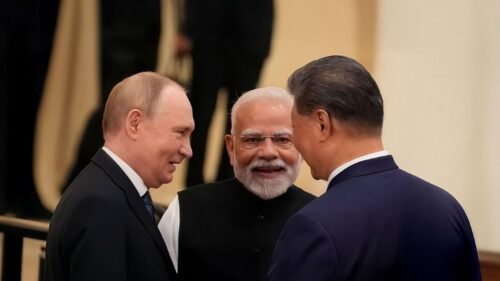
Perhaps the SCO summit has almost altered the global scene by bringing to the fore a Troika comprising Moscow, Beijing and New Delhi — almost like the earlier one comprising India, China and the US — and that has considerably challenged the US’ hitherto-maintained global supremacy, sustaining Washington’s self-absorbed approach in international relations and global affairs.
Strategic partnerships and technological development
While India continues to uphold its flagship policy of nonalignment in international relations, it increasingly needs American support to gain entry to the United Nations Security Council and other prominent forums, such as the Group of Eight (G8), AUKUS (Australia–UK–US security partnership), the Nuclear Supplier Group and the Fissile Material Control Regime.
The country also seeks to secure the latest scientific technologies related to energy security — particularly nuclear energy and other nonconventional sources of energy — supercomputing, information technology, space and ocean exploration, weather and monsoon studies, critical engineering technology and the latest medical advances, alongside military modernization and the development of the latest arms and weapons technology.
Notwithstanding India’s efforts to secure American support for its own advancement, Indian companies, talent and start-ups are now making significant contributions to the US economy and security. It is no coincidence that the US has become the primary destination for India’s defense exports, thus underscoring the growing economic and security-related interactions between the two largest democracies in the world.
These issues aside, India faces grave threats along the McMahon Line and at its international borders with China due to Beijing’s expansionist assertions, which are leading both neighbors to drift apart, in addition to Pakistan’s export of cross-border terrorism.
Besides fighting organized violence by international terror networks and economic crimes by major economic offenders, New Delhi demands Washington’s clear and unequivocal support not only for itself but also for the overall peace and security of South Asia, West Asia and Central Asia. This was reiterated in light of the US’ inclination toward Pakistan and its efforts to rebalance its strategy, particularly toward South Asia, within the framework of a more systematic and coherent policy for Asia, given the mounting challenges from China under the earlier US President, Joe Biden. Regarding economic issues, Biden discarded the earlier “Trump tariffs on Chinese imports. President Biden sought a more comprehensive effort to de-risk the economic relationship with China and put in place tighter controls on the transfer of advanced technologies.”
In fact, Biden initiated many political and institutional measures in Asia that did not follow the Trump legacy to balance the economic pressure imposed by China. Among these significant measures, elevating the Quadrilateral Security Dialogue (QUAD) to the summit level and expanding the scope of the strategic partnership with India are most pertinent in the *current century’s emerging bonhomie between the two largest democracies.
Further, to counter the US’ imperialist designs, coextensive with Russian and Chinese expansionist and neocolonial goals, the nation-states in the Global South, including nonaligned states, must strengthen the spirit of the aforesaid south-south cooperation and other instruments of regionalism and globalism, besides investing in worker-centric policies and rejecting neo-liberal frameworks that sustain Western economic interests at the cost of specific local development. Additionally, a renewed focus on strengthening multilateral institutions such as BRICS and the Bay of Bengal Initiative for Multi-Sectoral Technical and Economic Cooperation (BIMSTEC), as well as on regional trade agreements outside US influence, is necessary.
Also, the global trade and tariffs policies must be restructured to prioritize fair labor practices, environmental protection and economic justice for developing nations apart from restraining the emerging differences between the US and the Western European states in the overall interests of peace, security and liberal-democratic-progressive traditions of the West, including the NATO alliance.
You can read the CIA Factbook and listen to MI6 people for your analysis, or you could read perspectives from our 3,000+ authors from 90+ countries and make sense of the world. Sign up for our free newsletters now.
<label for=”Your email will be shared with fairobserver and subject to its Privacy Policy”>I agree to receive emails and other content from Fair Observer. I understand that I may repeal my consent at any time. You can review our Privacy Policy and Terms of Use for further information…</label>
India supports the growing reality of a multipolar world and of a multipolar Asia, and it actively participates in global negotiations to advance the common interests of the international community, including itself. Evidently, the emerging realist approach in India’s foreign policy underscores the country’s independent goals, to be achieved with a view to accomplishing its vital national interests, while discouraging alignment of nation-states into rival groups.
[Kaitlyn Diana edited this piece.]
The views expressed in this article are the author’s own and do not necessarily reflect Fair Observer’s editorial policy.
Comment
0 Comments
Newest
Oldest
Most Voted
Most Voted
Inline Feedbacks
View all comments
Commenting Guidelines
Please read our commenting guidelines before commenting.
1. Be Respectful: Please be polite to the author. Avoid hostility. The whole point of Fair Observer is openness to different perspectives from perspectives from around the world.
2. Comment Thoughtfully: Please be relevant and constructive. We do not allow personal attacks, disinformation or trolling. We will remove hate speech or incitement.
3. Contribute Usefully: Add something of value — a point of view, an argument, a personal experience or a relevant link if you are citing statistics and key facts.
<label style=”font-size: 18px;”>
I have read and agree to the above commenting guidelines.
</label>
Please agree to the guidelines before proceeding.
I
Agree, Proceed to Login
Cancel
Related Reading
India Offers an Informative Lesson in How Not to Govern
India’s economy was initially built on agriculture and industry, but after 1990, services became its main driver of growth. Government…
by
Amitabh Khanna,
September 24, 2025
Narendra Modi’s Performative Solitude at the Shanghai Cooperation Organization Summit
Indian Prime Minister Narendra Modi attended the Shanghai Cooperation Organisation (SCO) summit in Tianjin, where he enjoyed photo opportunities with…
by
Glenn Carle,
September 12, 2025
Modi at the Red Fort: An Address to Islamabad, Washington and Beijing
Prime Minister Narendra Modi marked India’s 79th Independence Day with his longest speech, linking national unity, foreign policy and economic…
by
Om Gupta,
August 29, 2025
Support Fair Observer
We rely on your support for our independence, diversity and quality.
For more than 10 years, Fair Observer has been free, fair and independent. No billionaire
owns us, no advertisers control us. We are a reader-supported nonprofit. Unlike many other
publications, we keep our content free for readers regardless of where they live or whether
they can afford to pay. We have no paywalls and no ads.
In the post-truth era of fake news, echo chambers and filter bubbles, we publish a plurality
of perspectives from around the world. Anyone can publish with us, but everyone goes through
a rigorous editorial process. So, you get fact-checked, well-reasoned content instead of
noise.
We publish 3,000+ voices from 90+ countries. We also conduct education and training programs
on subjects ranging from digital media and journalism to writing and critical thinking. This
doesn’t come cheap. Servers, editors, trainers and web developers cost
money.
Please consider supporting us on a regular basis as a recurring donor or a
sustaining member.
Will you support FO’s journalism?
We rely on your support for our independence, diversity and quality.
Donation Cycle
<label for=”donation_cycle_one_time”>One Time</label>
<label for=”donation_cycle_monthly”>Monthly</label>
<label for=”donation_cycle_yearly”>Yearly</label>
Donation Amount
<label for=”amount_11″>$11</label>
<label for=”amount_111″>$111</label>
<label for=”other”>Other</label>
$
The IRS recognizes Fair Observer as a section 501(c)(3) registered public charity
(EIN: 46-4070943), enabling you to claim a tax deduction.
Make Sense of the World
Unique Insights from 3,000+ Contributors in 90+ Countries
<label
for=”Your email will be shared with fairobserver and subject to its Privacy Policy”>I
agree to receive emails and other content from Fair Observer. I understand
that I
may repeal my consent at any time. You can review our Privacy Policy
and Terms of Use
for further
information .</label>
for=”Your email will be shared with fairobserver and subject to its Privacy Policy”>I
agree to receive emails and other content from Fair Observer. I understand
that I
may repeal my consent at any time. You can review our Privacy Policy
and Terms of Use
for further
information .</label>
We are a nonprofit, truly independent media organization committed to delivering diverse, fact-based global analysis. If you like what you are reading, sign up for our free newsletters now.
<label for=”Your email will be shared with fairobserver and subject to its Privacy Policy”>I agree to receive emails and other content from Fair Observer. I understand that I may repeal my consent at any time. You can review our Privacy Policy and Terms of Use for further information…</label>
</main>
Fair Observer, 461 Harbor Blvd, Belmont, CA 94002, USA
<footer class=”mart70 fo-black-bg padt50 padb30″>
Sections
PUBLICATION
Support Fair Observer
We rely on your support for our independence, diversity and quality.


</footer>

<footer id=”fixed-footer” class=”support-footer”>


Support
independent, crowdsourced, nonprofit
journalism.
Fair Observer is a 501(c)(3) independent nonprofit. We are not owned by billionaires or controlled by
advertisers. We publish nearly 3,000 authors from over 90 countries after fact-checking and editing each
piece. We do not have a paywall and anyone can read us for free. With your vital donations, we can
continue
to do our work.
Please make a recurring (or even one-time) donation today. Even $1 goes a long way because
a
million donors
like you mean one million dollars. Thank you for keeping us independent, free and fair.
One Time
Monthly
Yearly
Monthly
Yearly
Continue 

</footer>

Sign into your Fair Observer Account
<label class=”tml-label” for=”user_login”>Username or Email Address</label>
<label class=”tml-label” for=”user_pass”>Password</label>
<label class=”tml-label” for=”rememberme”>Remember Me</label>
Log In
Forgot
Password
Forgot Password
Enter your registered email address or username. You will receive a
link to create a new password via email.
Please enter your username or email address. You will receive an email message with instructions on how to reset your password.
<label class=”tml-label” for=”user_login”>Username or Email Address</label>
Get New Password
Or
Return to
Login
Forgot Password
We have sent a link to your registered email address to reset your password.
<circle cx=”12.5″ cy=”12″ r=”12″ fill=”#414141″ />
Back to
Login
Become a Member & Enjoy Exclusive Benefits!
<circle cx=”12.5″ cy=”12″ r=”12″ fill=”#414141″ />
Access to comments feature
<circle cx=”12.5″ cy=”12″ r=”12″ fill=”#414141″ />
Bookmark your favorite articles
<circle cx=”12.5″ cy=”12″ r=”12″ fill=”#414141″ />
Exclusive invitations to FO° Talks & FO° Live
<circle cx=”12.5″ cy=”12″ r=”12″ fill=”#414141″ />
Access to all of our e-publications
Return to
Login
Login
NEWSLETTER
Make Sense of the World
Unique Insights from 2,500+ Contributors in 90+ Countries

<label
for=”Your email will be shared with fairobserver and subject to it’s Privacy Policy”>I
agree to receive emails and other content from Fair Observer. I understand
that I may repeal my consent at any time. You can review our Privacy Policy
and Terms of Use
for further information.</label>
for=”Your email will be shared with fairobserver and subject to it’s Privacy Policy”>I
agree to receive emails and other content from Fair Observer. I understand
that I may repeal my consent at any time. You can review our Privacy Policy
and Terms of Use
for further information.</label>
NEWSLETTER
Make Sense of the World
Unique Insights from 2,500+ Contributors in 90+ Countries
<label
for=”Your email will be shared with fairobserver and subject to it’s Privacy Policy”>I
agree to receive emails and other content from Fair Observer. I understand
that I may repeal my consent at any time. You can review our Privacy Policy
and Terms of Use
for further information.</label>
for=”Your email will be shared with fairobserver and subject to it’s Privacy Policy”>I
agree to receive emails and other content from Fair Observer. I understand
that I may repeal my consent at any time. You can review our Privacy Policy
and Terms of Use
for further information.</label>

Make Sense of the World
Unique Insights from 2,500+ Contributors in 90+ Countries
<label
for=”Your email will be shared with fairobserver and subject to its Privacy Policy”>I
agree to receive emails and other content from Fair Observer. I understand that I
may repeal my consent at any time. You can review our Privacy Policy and Terms of Use for further
information .</label>
for=”Your email will be shared with fairobserver and subject to its Privacy Policy”>I
agree to receive emails and other content from Fair Observer. I understand that I
may repeal my consent at any time. You can review our Privacy Policy and Terms of Use for further
information .</label>
We Need Your Consent
We use cookies to give you the best possible experience. Learn more about how we use cookies or edit your cookie preferences. Privacy Policy. My Options I Accept
Privacy & Cookies Policy
Close
Edit Cookie Preferences
The Fair Observer website uses digital cookies so it can collect statistics on how many visitors come to the site, what content is viewed and for how long, and the general location of the computer network of the visitor. These statistics are collected and processed using the Google Analytics service. Fair Observer uses these aggregate statistics from website visits to help improve the content of the website and to provide regular reports to our current and future donors and funding organizations. The type of digital cookie information collected during your visit and any derived data cannot be used or combined with other information to personally identify you. Fair Observer does not use personal data collected from its website for advertising purposes or to market to you.
As a convenience to you, Fair Observer provides buttons that link to popular social media sites, called social sharing buttons, to help you share Fair Observer content and your comments and opinions about it on these social media sites. These social sharing buttons are provided by and are part of these social media sites. They may collect and use personal data as described in their respective policies. Fair Observer does not receive personal data from your use of these social sharing buttons. It is not necessary that you use these buttons to read Fair Observer content or to share on social media.
Necessary
<label class=”form-check-label” for=”wt-cli-checkbox-necessary”>Necessary</label>
Always Enabled
These cookies essential for the website to function.
Social Media
<label for=”wt-cli-checkbox-social_media” class=”cli-slider” data-cli-enable=”Enabled” data-cli-disable=”Disabled”>Social Media</label>
These cookies are used to enable sharing or following of content that you find interesting on our website. These settings apply to third-party social networking and other websites.
Performance & Functionality
<label for=”wt-cli-checkbox-performance” class=”cli-slider” data-cli-enable=”Enabled” data-cli-disable=”Disabled”>Performance & Functionality</label>
These cookies are used to enhance the performance and functionality of our website. They provide statistics on how our website is used and help us improve by measuring errors. Certain functionalities on our website may become unavailable without these cookies.
Analytics
<label for=”wt-cli-checkbox-analytics” class=”cli-slider” data-cli-enable=”Enabled” data-cli-disable=”Disabled”>Analytics</label>
SAVE & ACCEPT
<textarea id=’wpd-editor-source-code’></textarea>Insert
</body>
</html>
Total Views:
Source: World Politics - fairobserver.com