<g id=”cross”>
<line class=”cls-1″ x1=”7″ x2=”25″ y1=”7″ y2=”25″ />
<line class=”cls-1″ x1=”7″ x2=”25″ y1=”25″ y2=”7″ />
</g>
Beyond the Fog of War: Venezuela’s Democracy is at Stake
<circle cx=”10.5″ cy=”10.5″ r=”7.5″ />
<line x1=”21″ x2=”15.8″ y1=”21″ y2=”15.8″ />
<nav class=”fo-navigation pos-r” itemscope itemtype=”http://schema.org/SiteNavigationElement”>
Login
Sections <circle cx=”10.5″ cy=”10.5″ r=”7.5″ />
<line x1=”21″ x2=”15.8″ y1=”21″ y2=”15.8″ /> Search
<line x1=”21″ x2=”15.8″ y1=”21″ y2=”15.8″ />
Search


PUBLICATION
Support Fair Observer
We rely on your support for our independence, diversity and quality.
</nav>
<circle cx=”10.5″ cy=”10.5″ r=”7.5″ />
<line x1=”21″ x2=”15.8″ y1=”21″ y2=”15.8″ />
<line x1=”21″ x2=”15.8″ y1=”21″ y2=”15.8″ />
Search
</header>

<main id=”main” class=”site-main” role=”main”> 



Friday, January 09, 2026
<header class=”entry-header”>
Latin America & the Caribbean
Beyond the Fog of War: Venezuela’s Democracy is at Stake
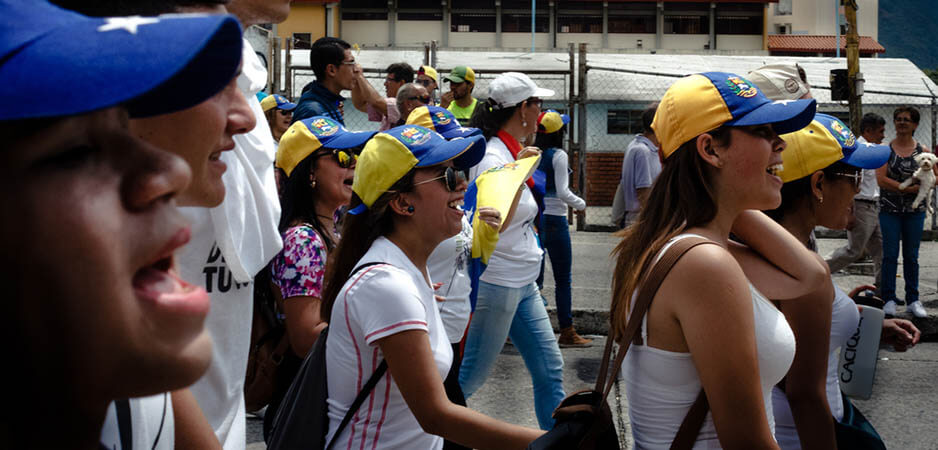
Venezuela faces a turning point after the capture of Nicolás Maduro by US forces, which shattered the balance of the Chavista regime. At first, a tilt away from authoritarianism might have seemed likely as democratic leaders still hold the Venezuelan public’s support. However, the Chavista governing elite will keep power, making the road ahead long and difficult for Venezuelan democracy.
By
Friday, January 09, 2026
</header>
Via Shutterstock.

January 09, 2026 06:05 EDT

Check out our comment feature!
Saved Successfully.
This article saved into your bookmarks. Click here to view your bookmarks.


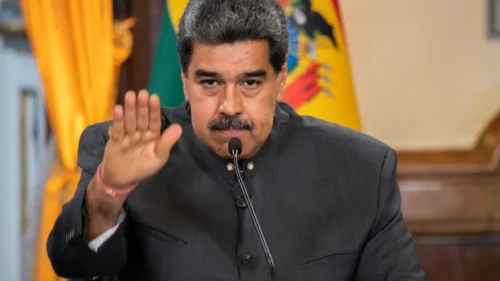
Venezuela’s trajectory shifted abruptly in the early hours of January 3, when the country’s president, Nicolás Maduro — who had long been the Chavista regime’s great survivor — was captured by US forces. Maduro, along with his wife Cilia Flores, was brought in front of a federal court in Manhattan, where he pleaded not guilty to the four weapons and narco-terrorism charges against him.
What analyst Andres Izarra had described as a poker match in which Donald Trump held a weak hand due to his proclivity to bluff has suddenly turned into a geopolitical chess game. It is still unclear whether the special operations team that seized Maduro acted solely on local intelligence or whether betrayal at the top levels of government played a role. What is clear is that Maduro’s fall is no minor development — Venezuela has entered an entirely new phase. Leaders must navigate this time of unpredictability and avoid the fog of war if they wish to secure Venezuela’s future.
Maduro’s capture marks a new era
Regarding the legal grounds for capturing the active president of a sovereign country — independently of him having lost a presidential election — two angles are worth mentioning. From a strictly US perspective, Maduro was indicted in 2020 in a court of law on charges of helping to transport cocaine and working with narco-terrorist organizations. The charges against him are reminiscent of others, such as El Chapo and the former military leader of Panama, Manuel Noriega, who had also been captured by US forces back in 1998. Therefore, in the US’s view, there is legal precedent and just cause for Maduro’s capture.
From an international perspective, the capture of Maduro infringes basic tenets of international law. The world we live in today has seemingly changed abruptly from the one inherited after World War II, especially after Russia’s invasion of Ukraine. UN Secretary General António Guterres said that US actions “constitute a dangerous precedent.” However, the UN cannot pass resolutions against the US for its recent actions because of the veto power the US holds in the UN Security Council. Today, the United Nations architecture is at its weakest since its inception.
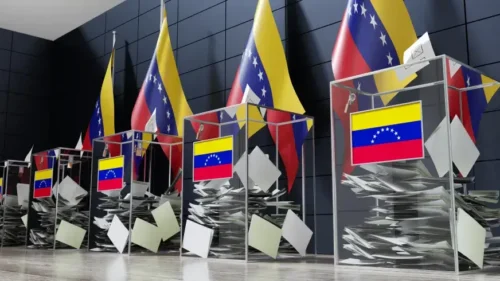
Within Venezuela’s borders, politicians are also responding to the actions of the US. María Corina Machado, the 2025 Nobel Peace Prize winner, has declared that this moment marks the beginning of a new era. She continues to insist that under Edmundo González Urrutia — opposition leader and winner of the 2024 Venezuelan election — the democratic movement is prepared to govern. Her confidence may prove overly optimistic, or it may signal a pledge to play a more direct role in shaping the transition ahead. Either way, her responsibility, and Venezuela’s at large, is unmistakable: to defend the popular will expressed during the July 28, 2024, elections, and to assert the democratic leadership’s claim to govern.
For now, however, the crisis is a two-player confrontation between the remains of the Chavista elite and the Trump administration. The Nobel Peace Prize recently awarded to Machado in Oslo was a global acknowledgment of the democratic movement’s legitimacy. It is a recognition that Washington has yet to fully embrace, aside from the occasional sotto voce recognition and a 2025 endorsement from Secretary of State Marco Rubio. US President Donald Trump has even suggested that Machado doesn’t have the “respect” of the Venezuelan public.
Only when the fog of war lifts will it be possible to discern the real role the democratic forces will play. What is certain is that there is no clear return to the status quo ante. What comes next is unknown, and both Venezuela and the US must choose their paths carefully.
Two scenarios are emerging
The first, more cautious scenario involves negotiating with Delcy Rodríguez, Maduro’s successor, to reach an arrangement that might unlock large-scale U.S. investment in Venezuela’s oil sector. But most American energy companies remain unwilling to invest in a country where property rights and basic legal guarantees are absent. The Chávez years already demonstrated the risks: expropriations without compensation that helped drive the collapse of the oil industry.
Even if democratic leaders keep being sidelined from these negotiations, González Urrutia and Machado retain overwhelming popular support from the Venezuelan public — expressed unequivocally in 2024 and never withdrawn. Despite imprisonment, exile and clandestine life of the vast majority of its leadership, Venezuelans continue to back them. Under such conditions, a Rodríguez government would face pressure from the public to make internal concessions, especially now that it is weakened by the capture of its main leader. That includes releasing more than 1,000 political prisoners detained by the Chavista regime, creating conditions for a more open polity or agreeing to new elections.
The second scenario is what Trump has called the “second wave”: another military action aimed at dismantling what remains of the dictatorship. Such a move would inevitably force Washington to engage with Machado and González. They possess the internal political legitimacy to govern and the credibility to negotiate with institutions like the International Monetary Fund (IMF), as well as the credibility to offer partial amnesty to the military, security forces and government officials that are not involved in high crimes. Overall, Trump’s suggestion that the United States would govern Venezuela is not taken seriously even within his own circle.
Legitimate leadership must fill the power vacuum in Venezuela
Intermediate outcomes — or a combination of the above — are possible. This includes some form of Chavista regime survival under conditions like those prevailing today, though that scenario doesn’t seem highly likely. Firstly, if Maduro’s capture resulted to some extent from being double-crossed by part of the regime’s leadership, this surely has created a rarefied environment at the top not amenable to internal stability and cohesion.
Secondly, as mentioned by both Trump and Secretary Rubio, economic pressure will continue. Venezuela’s inflation for 2025 was nearly 270% and it could potentially reach 680% in 2026. This will compromise any attempt at normalizing economic life in the country, as well as responding to the demands of the Trump administration to propel the oil industry to higher production levels. As everyone knows, the oil industry in Venezuela — exploration, drilling and refining — is near total collapse, as well as the electrical and other infrastructure allowing it to improve productive capacity.
Finally, as widely documented, the Chavista leadership elite — known as the bolibourgeoisie — has amassed vast fortunes. It seems likely that, given the growing internal uncertainty, some of its top figures (and their families, who enjoy the comforts of capitalism) will seek to protect their assets and salvage what they can.
We’re independent, nonprofit and powered by 3,000+ voices from around the world — not billionaires or governments. Enjoy real journalism, sign up for our free newsletters.
<label for=”Your email will be shared with fairobserver and subject to its Privacy Policy”>I agree to receive emails and other content from Fair Observer. I understand that I may repeal my consent at any time. You can review our Privacy Policy and Terms of Use for further information…</label>
The path ahead will be difficult: Chavismo still controls the military, security forces, the judiciary and regional governments. Rebuilding the country will require a series of partial negotiations with each of these power centers, as well as transitional justice measures for those not implicated in serious crimes. Venezuela has entered a period of profound uncertainty, and the chess match has only just begun. As the fog of war and competing narratives begin to clear, the facts will surface — and with them, the direction of the wind that will shape the country’s future.
[El Pais first published this piece.]
[Cheyenne Torres edited this piece.]
The views expressed in this article are the author’s own and do not necessarily reflect Fair Observer’s editorial policy.
Comment
0 Comments
Newest
Oldest
Most Voted
Most Voted
Inline Feedbacks
View all comments
Commenting Guidelines
Please read our commenting guidelines before commenting.
1. Be Respectful: Please be polite to the author. Avoid hostility. The whole point of Fair Observer is openness to different perspectives from perspectives from around the world.
2. Comment Thoughtfully: Please be relevant and constructive. We do not allow personal attacks, disinformation or trolling. We will remove hate speech or incitement.
3. Contribute Usefully: Add something of value — a point of view, an argument, a personal experience or a relevant link if you are citing statistics and key facts.
<label style=”font-size: 18px;”>
I have read and agree to the above commenting guidelines.
</label>
Please agree to the guidelines before proceeding.
I
Agree, Proceed to Login
Cancel
Related Reading
The US Invades a Latin American Country — Again
On January 3, US President Trump announced the capture of Venezuelan president Nicolás Maduro by the US military during an…
by
Gary Grappo,
January 7, 2026
Venezuela’s Rigged Elections: How to Achieve a Much-Awaited Democratic Transition?
President Nicolás Maduro claimed victory in Venezuela’s 2024 presidential election, despite allegations of electoral fraud and evidence that opposition leader…
by
Helder Ferreira do Vale,
September 16, 2024
Can Venezuela Suddenly Transition to Democracy? Its People Hope So.
Venezuela morphed from democracy to dictatorship over the past 25 years. The people, rallying around María Corina Machado and the…
by
Leonardo Vivas,
June 17, 2024
US Intervention Will Make Things Worse in Venezuela
by
Larry Beck,
March 12, 2019
Support Fair Observer
We rely on your support for our independence, diversity and quality.
For more than 10 years, Fair Observer has been free, fair and independent. No billionaire
owns us, no advertisers control us. We are a reader-supported nonprofit. Unlike many other
publications, we keep our content free for readers regardless of where they live or whether
they can afford to pay. We have no paywalls and no ads.
In the post-truth era of fake news, echo chambers and filter bubbles, we publish a plurality
of perspectives from around the world. Anyone can publish with us, but everyone goes through
a rigorous editorial process. So, you get fact-checked, well-reasoned content instead of
noise.
We publish 3,000+ voices from 90+ countries. We also conduct education and training programs
on subjects ranging from digital media and journalism to writing and critical thinking. This
doesn’t come cheap. Servers, editors, trainers and web developers cost
money.
Please consider supporting us on a regular basis as a recurring donor or a
sustaining member.
Will you support FO’s journalism?
We rely on your support for our independence, diversity and quality.
Donation Cycle
<label for=”donation_cycle_one_time”>One Time</label>
<label for=”donation_cycle_monthly”>Monthly</label>
<label for=”donation_cycle_yearly”>Yearly</label>
Donation Amount
<label for=”amount_11″>$11</label>
<label for=”amount_111″>$111</label>
<label for=”other”>Other</label>
$
The IRS recognizes Fair Observer as a section 501(c)(3) registered public charity
(EIN: 46-4070943), enabling you to claim a tax deduction.
Most Popular
Can Venezuela Suddenly Transition to Democracy? Its People Hope So.
Venezuela morphed from democracy to dictatorship over the past 25 years. The people, rallying around María Corina Machado and the…
by
Leonardo Vivas,
June 17, 2024
Make Sense of the World
Unique Insights from 3,000+ Contributors in 90+ Countries
<label
for=”Your email will be shared with fairobserver and subject to its Privacy Policy”>I
agree to receive emails and other content from Fair Observer. I understand
that I
may repeal my consent at any time. You can review our Privacy Policy
and Terms of Use
for further
information .</label>
for=”Your email will be shared with fairobserver and subject to its Privacy Policy”>I
agree to receive emails and other content from Fair Observer. I understand
that I
may repeal my consent at any time. You can review our Privacy Policy
and Terms of Use
for further
information .</label>
We’re independent, nonprofit and powered by 3,000+ voices from around the world — not billionaires or governments. Enjoy real journalism, sign up for our free newsletters.
<label for=”Your email will be shared with fairobserver and subject to its Privacy Policy”>I agree to receive emails and other content from Fair Observer. I understand that I may repeal my consent at any time. You can review our Privacy Policy and Terms of Use for further information…</label>
</main>
Fair Observer, 461 Harbor Blvd, Belmont, CA 94002, USA
<footer class=”mart70 fo-black-bg padt50 padb30″>
Sections
PUBLICATION
Support Fair Observer
We rely on your support for our independence, diversity and quality.


</footer>

<footer id=”fixed-footer” class=”support-footer”>


Support
independent, crowdsourced, nonprofit
journalism.
Fair Observer is a 501(c)(3) independent nonprofit. We are not owned by billionaires or controlled by
advertisers. We publish nearly 3,000 authors from over 90 countries after fact-checking and editing each
piece. We do not have a paywall and anyone can read us for free. With your vital donations, we can
continue
to do our work.
Please make a recurring (or even one-time) donation today. Even $1 goes a long way because
a
million donors
like you mean one million dollars. Thank you for keeping us independent, free and fair.
One Time
Monthly
Yearly
Monthly
Yearly
Continue 

</footer>

Sign into your Fair Observer Account
<label class=”tml-label” for=”user_login”>Username or Email Address</label>
<label class=”tml-label” for=”user_pass”>Password</label>
<label class=”tml-label” for=”rememberme”>Remember Me</label>
Log In
Forgot
Password
Password
Forgot Password
Enter your registered email address or username. You will receive a
link to create a new password via email.
Please enter your username or email address. You will receive an email message with instructions on how to reset your password.
<label class=”tml-label” for=”user_login”>Username or Email Address</label>
Get New Password
Or
Return to
Login
Forgot Password
We have sent a link to your registered email address to reset your password.
<circle cx=”12.5″ cy=”12″ r=”12″ fill=”#414141″ />
Back to
Login
Become a Member & Enjoy Exclusive Benefits!
<circle cx=”12.5″ cy=”12″ r=”12″ fill=”#414141″ />
Access to comments feature
<circle cx=”12.5″ cy=”12″ r=”12″ fill=”#414141″ />
Bookmark your favorite articles
<circle cx=”12.5″ cy=”12″ r=”12″ fill=”#414141″ />
Exclusive invitations to FO° Talks & FO° Live
<circle cx=”12.5″ cy=”12″ r=”12″ fill=”#414141″ />
Access to all of our e-publications
Return to
Login
Login
NEWSLETTER
Make Sense of the World
Unique Insights from 2,500+ Contributors in 90+ Countries

<label
for=”Your email will be shared with fairobserver and subject to it’s Privacy Policy”>I
agree to receive emails and other content from Fair Observer. I understand
that I may repeal my consent at any time. You can review our Privacy Policy
and Terms of Use
for further information.</label>
for=”Your email will be shared with fairobserver and subject to it’s Privacy Policy”>I
agree to receive emails and other content from Fair Observer. I understand
that I may repeal my consent at any time. You can review our Privacy Policy
and Terms of Use
for further information.</label>
NEWSLETTER
Make Sense of the World
Unique Insights from 2,500+ Contributors in 90+ Countries
<label
for=”Your email will be shared with fairobserver and subject to it’s Privacy Policy”>I
agree to receive emails and other content from Fair Observer. I understand
that I may repeal my consent at any time. You can review our Privacy Policy
and Terms of Use
for further information.</label>
for=”Your email will be shared with fairobserver and subject to it’s Privacy Policy”>I
agree to receive emails and other content from Fair Observer. I understand
that I may repeal my consent at any time. You can review our Privacy Policy
and Terms of Use
for further information.</label>

Make Sense of the World
Unique Insights from 2,500+ Contributors in 90+ Countries
<label
for=”Your email will be shared with fairobserver and subject to its Privacy Policy”>I
agree to receive emails and other content from Fair Observer. I understand that I
may repeal my consent at any time. You can review our Privacy Policy and Terms of Use for further
information .</label>
for=”Your email will be shared with fairobserver and subject to its Privacy Policy”>I
agree to receive emails and other content from Fair Observer. I understand that I
may repeal my consent at any time. You can review our Privacy Policy and Terms of Use for further
information .</label>
We Need Your Consent
We use cookies to give you the best possible experience. Learn more about how we use cookies or edit your cookie preferences. Privacy Policy. My Options I Accept
Privacy & Cookies Policy
Close
Edit Cookie Preferences
The Fair Observer website uses digital cookies so it can collect statistics on how many visitors come to the site, what content is viewed and for how long, and the general location of the computer network of the visitor. These statistics are collected and processed using the Google Analytics service. Fair Observer uses these aggregate statistics from website visits to help improve the content of the website and to provide regular reports to our current and future donors and funding organizations. The type of digital cookie information collected during your visit and any derived data cannot be used or combined with other information to personally identify you. Fair Observer does not use personal data collected from its website for advertising purposes or to market to you.
As a convenience to you, Fair Observer provides buttons that link to popular social media sites, called social sharing buttons, to help you share Fair Observer content and your comments and opinions about it on these social media sites. These social sharing buttons are provided by and are part of these social media sites. They may collect and use personal data as described in their respective policies. Fair Observer does not receive personal data from your use of these social sharing buttons. It is not necessary that you use these buttons to read Fair Observer content or to share on social media.
Necessary
<label class=”form-check-label” for=”wt-cli-checkbox-necessary”>Necessary</label>
Always Enabled
These cookies essential for the website to function.
Social Media
<label for=”wt-cli-checkbox-social_media” class=”cli-slider” data-cli-enable=”Enabled” data-cli-disable=”Disabled”>Social Media</label>
These cookies are used to enable sharing or following of content that you find interesting on our website. These settings apply to third-party social networking and other websites.
Performance & Functionality
<label for=”wt-cli-checkbox-performance” class=”cli-slider” data-cli-enable=”Enabled” data-cli-disable=”Disabled”>Performance & Functionality</label>
These cookies are used to enhance the performance and functionality of our website. They provide statistics on how our website is used and help us improve by measuring errors. Certain functionalities on our website may become unavailable without these cookies.
Analytics
<label for=”wt-cli-checkbox-analytics” class=”cli-slider” data-cli-enable=”Enabled” data-cli-disable=”Disabled”>Analytics</label>
SAVE & ACCEPT
<textarea id=’wpd-editor-source-code’></textarea>Insert
</body></html>
Total Views:
Source: World Politics - fairobserver.com