<g id=”cross”>
<line class=”cls-1″ x1=”7″ x2=”25″ y1=”7″ y2=”25″ />
<line class=”cls-1″ x1=”7″ x2=”25″ y1=”25″ y2=”7″ />
</g>
India’s Trishul Drill Is A Symbolic Gesture of Regional Power
<circle cx=”10.5″ cy=”10.5″ r=”7.5″ />
<line x1=”21″ x2=”15.8″ y1=”21″ y2=”15.8″ />
<nav class=”fo-navigation pos-r” itemscope itemtype=”http://schema.org/SiteNavigationElement”>
Login
Sections <circle cx=”10.5″ cy=”10.5″ r=”7.5″ />
<line x1=”21″ x2=”15.8″ y1=”21″ y2=”15.8″ />
Search
<circle cx=”10.5″ cy=”10.5″ r=”7.5″ />
<line x1=”21″ x2=”15.8″ y1=”21″ y2=”15.8″ />
Search


PUBLICATION
Support Fair Observer
We rely on your support for our independence, diversity and quality.
</nav>
</header>

<main id=”main” class=”site-main” role=”main”> 


Sunday, January 04, 2026
<header class=”entry-header”>
India’s Trishul Drill Is A Symbolic Gesture of Regional Power
India’s recent Trishul military exercise was intended to demonstrate the country’s military capacity in South Asia. However, issues arise with symbolic military gestures, including heightened security misunderstandings and increased regional divisions. India must recognize the difference between security guarantees and military theater in order to prevent regional mistrust.
By
Sunday, January 04, 2026
</header>

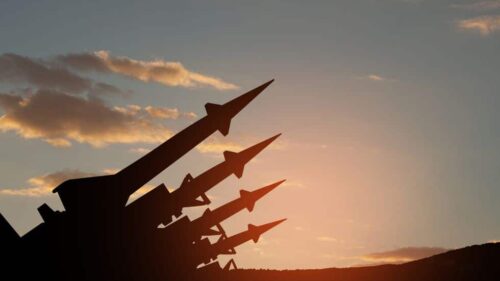
Via Shutterstock.

January 04, 2026 09:23 EDT

Check out our comment feature!
Saved Successfully.
This article saved into your bookmarks. Click here to view your bookmarks.


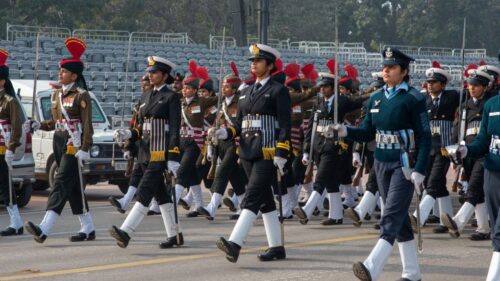
When nations prepare for conflict, they frequently pretend to be preparing for peace. India’s 2025 Trishul military exercise, a large-scale tri-service simulation, is being portrayed as a routine operation. However, routine, like most things in the security world, may be understood differently by multiple perspectives. On the surface, Trishul represents military modernization and readiness. But beneath that surface is a silent message about intent and hierarchy, a reminder of who controls the pace in the region’s security environment.
Trishul can be considered ambitious security theater
Trishul, which involves land, air and naval forces across a thousand-kilometer front, is the most ambitious joint exercise since Operation Sindoor. According to a press release from India’s Ministry of Defense, the goal of Trishul was to bolster cooperation between the Indian Navy, Army and Air Force. Trishul was conducted near Sir Creek, a highly disputed territory between India’s Gujarat and Pakistan’s Sindh province. By conducting Trishul near this strategically sensitive area, India seems to be showcasing its military readiness.
Strategic theorists frequently claim that when a state’s defense preparations are heightened by spectacle, they gain an element of performative deterrence. American economist Thomas Schelling referred to this as the “art of coercion and intimidation,” which involves exploiting visible capabilities to alter enemies’ potential reactions. India’s exercise fits that pattern perfectly. Trishul’s time, scope and position project not only preparation but also a posture that signals to neighboring states where military power lies.
The language around Trishul provides more nuance. Indian commanders have spoken of a “new normal” in which any cross-border provocation may result in a full military reaction. That is a doctrinal shift with major geographical implications. Now, the escalation threshold appears to be more fluid. South Asia’s security, which was already vulnerable to misunderstanding, is now working in a context that blurs deterrence and domination. This will undoubtedly lead to more security misunderstandings.
Issues arise with displays of military prowess
History offers useful caution. Across 2016 and 2019, India’s carefully calibrated military responses to perceived threats were popular at home but unnerving across the region. Each instance, however brief, incrementally changed the bounds of what constituted acceptable military posturing. Exercises such as Trishul, therefore, may serve less as training routines than as symbolic gestures aimed to remind rather than reassure.
There is also a maritime complication worth mentioning. The Arabian Sea, once a trade channel, is now becoming a competitive arena. India’s increased naval exercises, combined with its Indo-Pacific ambitions, indicate a shift from coastal defense to a role in deciding the trajectory of the region’s security. For the wider region, such patterns can readily translate into worry — not from an impending threat, but from an inferred sense of power. British political scientist Barry Buzan once said, “In regional security complexes, proximity magnifies perception.” When a major power operates near contested or shared spaces, the neighbors are obligated to interpret purpose through action.
This is where India’s challenge lies. It strives to be recognized as a responsible stakeholder in global security, yet its regional messaging frequently appears unilateral. The greater the prominence of its military footprint, the less room for diplomatic reassurance. Over time, frequent exhibitions of force, no matter how appropriate, risk instilling in smaller governments what cyber scholars refer to as security fatigue. When the average user is faced with more online privacy choices than they can process, they often regard online security with resignation, leading to less secure online behavior. This idea can be applied to global security: When met with military prominence, states may consider discourse as unnecessary because deterrence has already determined the conversation.
India must be aware of its own limitations
It would be misleading to assume that India’s aims are entirely coercive. The integration of its military forces, technological advancements and operational readiness are all indicators of a growing power’s natural progression. However, how we demonstrate evolution is important. Strategic confidence is best judged by how a state handles perceptions, rather than how it demonstrates capacity.
Trishul may eventually prove to be a double-edged sword. It strengthens India’s image as a capable, collaborative power, but it also highlights a growing disparity between its self-perception and regional reception. The exercise informs neighbors of India’s capabilities, but not of its limitations. And in an area as rich in history and mistrust as South Asia, that divide might mean the difference between deterrence and supremacy.
Look at the world through many prisms — 3,000+ pairs of eyes from 90+ countries. We are a rare nonprofit in the world news space and you can get our newsletters for free.
<label for=”Your email will be shared with fairobserver and subject to its Privacy Policy”>I agree to receive emails and other content from Fair Observer. I understand that I may repeal my consent at any time. You can review our Privacy Policy and Terms of Use for further information…</label>
If New Delhi wants to lead, the way forward is through softer guarantees rather than bigger displays. Even caution can be a sign of strength in the deterrent theater.
[Eurasia Review first published this piece.]
[Cheyenne Torres edited this piece.]
The views expressed in this article are the author’s own and do not necessarily reflect Fair Observer’s editorial policy.
Comment
0 Comments
Newest
Oldest
Most Voted
Most Voted
Inline Feedbacks
View all comments
Commenting Guidelines
Please read our commenting guidelines before commenting.
1. Be Respectful: Please be polite to the author. Avoid hostility. The whole point of Fair Observer is openness to different perspectives from perspectives from around the world.
2. Comment Thoughtfully: Please be relevant and constructive. We do not allow personal attacks, disinformation or trolling. We will remove hate speech or incitement.
3. Contribute Usefully: Add something of value — a point of view, an argument, a personal experience or a relevant link if you are citing statistics and key facts.
<label style=”font-size: 18px;”>
I have read and agree to the above commenting guidelines.
</label>
Please agree to the guidelines before proceeding.
I
Agree, Proceed to Login
Cancel
Related Reading
India Grants Chief of Defense Staff Command Authority To Build Integrated Theater Commands
The Indian government has tasked the Chief of Defense Staff with greater authority amid growing military threats from China, Pakistan…
by
Gaurav Kumar,
July 18, 2025
India Must Threaten Escalation to Force Pakistan to Stop Terrorism
To stop Pakistan-backed terrorism, India must shift from deterrence — threatening a future response — to compellence — applying present…
by
Cherish Mathson,
May 16, 2025
Defense Is Becoming More Integral to India’s Diplomacy
In this guest edition of The Interview, Nilanjana Sen and Joy Mitra talk to Harsh V. Pant, head of the…
by
Nilanjana Sen, Joy Mitra & Harsh V. Pant,
August 13, 2019
Support Fair Observer
We rely on your support for our independence, diversity and quality.
For more than 10 years, Fair Observer has been free, fair and independent. No billionaire
owns us, no advertisers control us. We are a reader-supported nonprofit. Unlike many other
publications, we keep our content free for readers regardless of where they live or whether
they can afford to pay. We have no paywalls and no ads.
In the post-truth era of fake news, echo chambers and filter bubbles, we publish a plurality
of perspectives from around the world. Anyone can publish with us, but everyone goes through
a rigorous editorial process. So, you get fact-checked, well-reasoned content instead of
noise.
We publish 3,000+ voices from 90+ countries. We also conduct education and training programs
on subjects ranging from digital media and journalism to writing and critical thinking. This
doesn’t come cheap. Servers, editors, trainers and web developers cost
money.
Please consider supporting us on a regular basis as a recurring donor or a
sustaining member.
Will you support FO’s journalism?
We rely on your support for our independence, diversity and quality.
Donation Cycle
<label for=”donation_cycle_one_time”>One Time</label>
<label for=”donation_cycle_monthly”>Monthly</label>
<label for=”donation_cycle_yearly”>Yearly</label>
Donation Amount
<label for=”amount_11″>$11</label>
<label for=”amount_111″>$111</label>
<label for=”other”>Other</label>
$
The IRS recognizes Fair Observer as a section 501(c)(3) registered public charity
(EIN: 46-4070943), enabling you to claim a tax deduction.
Make Sense of the World
Unique Insights from 3,000+ Contributors in 90+ Countries
<label
for=”Your email will be shared with fairobserver and subject to its Privacy Policy”>I
agree to receive emails and other content from Fair Observer. I understand
that I
may repeal my consent at any time. You can review our Privacy Policy
and Terms of Use
for further
information .</label>
for=”Your email will be shared with fairobserver and subject to its Privacy Policy”>I
agree to receive emails and other content from Fair Observer. I understand
that I
may repeal my consent at any time. You can review our Privacy Policy
and Terms of Use
for further
information .</label>
You can read the CIA Factbook and listen to MI6 people for your analysis, or you could read perspectives from our 3,000+ authors from 90+ countries and make sense of the world. Sign up for our free newsletters now.
<label for=”Your email will be shared with fairobserver and subject to its Privacy Policy”>I agree to receive emails and other content from Fair Observer. I understand that I may repeal my consent at any time. You can review our Privacy Policy and Terms of Use for further information…</label>
</main>
Fair Observer, 461 Harbor Blvd, Belmont, CA 94002, USA
<footer class=”mart70 fo-black-bg padt50 padb30″>
Sections
PUBLICATION
Support Fair Observer
We rely on your support for our independence, diversity and quality.


</footer>

<footer id=”fixed-footer” class=”support-footer”>


Support
independent, crowdsourced, nonprofit
journalism.
Fair Observer is a 501(c)(3) independent nonprofit. We are not owned by billionaires or controlled by
advertisers. We publish nearly 3,000 authors from over 90 countries after fact-checking and editing each
piece. We do not have a paywall and anyone can read us for free. With your vital donations, we can
continue
to do our work.
Please make a recurring (or even one-time) donation today. Even $1 goes a long way because
a
million donors
like you mean one million dollars. Thank you for keeping us independent, free and fair.
One Time
Monthly
Yearly
Monthly
Yearly
Continue 

</footer>

Sign into your Fair Observer Account
<label class=”tml-label” for=”user_login”>Username or Email Address</label>
<label class=”tml-label” for=”user_pass”>Password</label>
<label class=”tml-label” for=”rememberme”>Remember Me</label>
Log In
Forgot
Password
Forgot Password
Enter your registered email address or username. You will receive a
link to create a new password via email.
Please enter your username or email address. You will receive an email message with instructions on how to reset your password.
<label class=”tml-label” for=”user_login”>Username or Email Address</label>
Get New Password
Or
Return to
Login
Forgot Password
We have sent a link to your registered email address to reset your password.
<circle cx=”12.5″ cy=”12″ r=”12″ fill=”#414141″ />
Back to
Login
Become a Member & Enjoy Exclusive Benefits!
<circle cx=”12.5″ cy=”12″ r=”12″ fill=”#414141″ />
Access to comments feature
<circle cx=”12.5″ cy=”12″ r=”12″ fill=”#414141″ />
Bookmark your favorite articles
<circle cx=”12.5″ cy=”12″ r=”12″ fill=”#414141″ />
Exclusive invitations to FO° Talks & FO° Live
<circle cx=”12.5″ cy=”12″ r=”12″ fill=”#414141″ />
Access to all of our e-publications
Return to
Login
Login
NEWSLETTER
Make Sense of the World
Unique Insights from 2,500+ Contributors in 90+ Countries

<label
for=”Your email will be shared with fairobserver and subject to it’s Privacy Policy”>I
agree to receive emails and other content from Fair Observer. I understand
that I may repeal my consent at any time. You can review our Privacy Policy
and Terms of Use
for further information.</label>
for=”Your email will be shared with fairobserver and subject to it’s Privacy Policy”>I
agree to receive emails and other content from Fair Observer. I understand
that I may repeal my consent at any time. You can review our Privacy Policy
and Terms of Use
for further information.</label>
NEWSLETTER
Make Sense of the World
Unique Insights from 2,500+ Contributors in 90+ Countries
<label
for=”Your email will be shared with fairobserver and subject to it’s Privacy Policy”>I
agree to receive emails and other content from Fair Observer. I understand
that I may repeal my consent at any time. You can review our Privacy Policy
and Terms of Use
for further information.</label>
for=”Your email will be shared with fairobserver and subject to it’s Privacy Policy”>I
agree to receive emails and other content from Fair Observer. I understand
that I may repeal my consent at any time. You can review our Privacy Policy
and Terms of Use
for further information.</label>

Make Sense of the World
Unique Insights from 2,500+ Contributors in 90+ Countries
<label
for=”Your email will be shared with fairobserver and subject to its Privacy Policy”>I
agree to receive emails and other content from Fair Observer. I understand that I
may repeal my consent at any time. You can review our Privacy Policy and Terms of Use for further
information .</label>
for=”Your email will be shared with fairobserver and subject to its Privacy Policy”>I
agree to receive emails and other content from Fair Observer. I understand that I
may repeal my consent at any time. You can review our Privacy Policy and Terms of Use for further
information .</label>
We Need Your Consent
We use cookies to give you the best possible experience. Learn more about how we use cookies or edit your cookie preferences. Privacy Policy. My Options I Accept
Privacy & Cookies Policy
Close
Edit Cookie Preferences
The Fair Observer website uses digital cookies so it can collect statistics on how many visitors come to the site, what content is viewed and for how long, and the general location of the computer network of the visitor. These statistics are collected and processed using the Google Analytics service. Fair Observer uses these aggregate statistics from website visits to help improve the content of the website and to provide regular reports to our current and future donors and funding organizations. The type of digital cookie information collected during your visit and any derived data cannot be used or combined with other information to personally identify you. Fair Observer does not use personal data collected from its website for advertising purposes or to market to you.
As a convenience to you, Fair Observer provides buttons that link to popular social media sites, called social sharing buttons, to help you share Fair Observer content and your comments and opinions about it on these social media sites. These social sharing buttons are provided by and are part of these social media sites. They may collect and use personal data as described in their respective policies. Fair Observer does not receive personal data from your use of these social sharing buttons. It is not necessary that you use these buttons to read Fair Observer content or to share on social media.
Necessary
<label class=”form-check-label” for=”wt-cli-checkbox-necessary”>Necessary</label>
Always Enabled
These cookies essential for the website to function.
Social Media
<label for=”wt-cli-checkbox-social_media” class=”cli-slider” data-cli-enable=”Enabled” data-cli-disable=”Disabled”>Social Media</label>
These cookies are used to enable sharing or following of content that you find interesting on our website. These settings apply to third-party social networking and other websites.
Performance & Functionality
<label for=”wt-cli-checkbox-performance” class=”cli-slider” data-cli-enable=”Enabled” data-cli-disable=”Disabled”>Performance & Functionality</label>
These cookies are used to enhance the performance and functionality of our website. They provide statistics on how our website is used and help us improve by measuring errors. Certain functionalities on our website may become unavailable without these cookies.
Analytics
<label for=”wt-cli-checkbox-analytics” class=”cli-slider” data-cli-enable=”Enabled” data-cli-disable=”Disabled”>Analytics</label>
SAVE & ACCEPT
<textarea id=’wpd-editor-source-code’></textarea>Insert
</body>
</html>
Total Views:
Source: World Politics - fairobserver.com