<g id=”cross”>
<line class=”cls-1″ x1=”7″ x2=”25″ y1=”7″ y2=”25″ />
<line class=”cls-1″ x1=”7″ x2=”25″ y1=”25″ y2=”7″ />
</g>
The Devil’s Advocate in a World Without Saints
<circle cx=”10.5″ cy=”10.5″ r=”7.5″ />
<line x1=”21″ x2=”15.8″ y1=”21″ y2=”15.8″ />
<nav class=”fo-navigation pos-r” itemscope itemtype=”http://schema.org/SiteNavigationElement”>
Login
Sections <circle cx=”10.5″ cy=”10.5″ r=”7.5″ />
<line x1=”21″ x2=”15.8″ y1=”21″ y2=”15.8″ /> Search
<line x1=”21″ x2=”15.8″ y1=”21″ y2=”15.8″ />
Search


PUBLICATION

Support Fair Observer
We rely on your support for our independence, diversity and quality.
</nav>
<circle cx=”10.5″ cy=”10.5″ r=”7.5″ />
<line x1=”21″ x2=”15.8″ y1=”21″ y2=”15.8″ />
<line x1=”21″ x2=”15.8″ y1=”21″ y2=”15.8″ />
Search
</header>

<main id=”main” class=”site-main” role=”main”> 




Friday, January 16, 2026
<header class=”entry-header”>
The office of Devil’s Advocate is a historical reality. Created in 1587, the jurist’s task was to
poke holes in dossiers proposing the canonization of a new saint. Our easier task is to poke
holes in the dominant narratives.
The Devil’s Advocate in a World Without Saints
Modern society has abandoned its search for saints, both religious and political. Since the Vatican eliminated the Devil’s Advocate role in 1983, canonizations skyrocketed but public interest vanished. Meanwhile, naked cynicism has defeated America’s political idealism. Ambition and wealth have replaced humility and public service as our defining virtues.
By
Friday, January 16, 2026
</header>
Via Shutterstock.
January 16, 2026 07:22 EDT

Check out our comment feature!
Saved Successfully.
This article saved into your bookmarks. Click here to view your bookmarks.


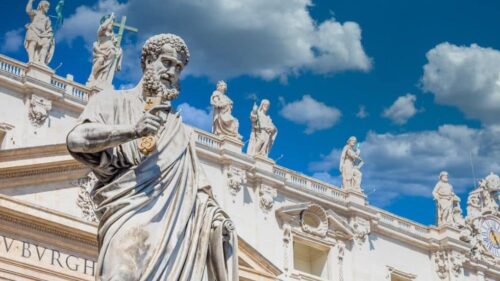
Readers of this column should by now have an idea of what I should honestly call the dramatis persona from whose script I am reading: the Devil’s Advocate, a historical function required for every canonization process submitted to the Vatican. Like every other professional role, it depends for its prosperity on the existence of a marketplace.
The job entails finding weaknesses and identifying serious reasons that could serve to invalidate a dossier for the canonization of a candidate for sainthood. Every generation has produced at least a few human beings who during the span of their lifetime demonstrated manifestly virtuous behavior reflecting what Catholic doctrine refers to as a “state of grace.” The numbers of candidates vary from generation to generation, producing what some might call marketplace variations. The simple truth is that the Devil’s Advocate can find gainful work only if there is a steady supply of potential saints.
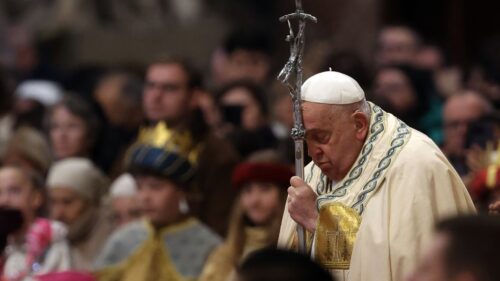
A quick glance at statistics might convince you that this should be a good moment in history for the Devil’s Advocate. Pope Francis, who died last year, canonized 942 saints, breaking all previous records. Until the reign of John Paul II in 1978, the modern church — since the creation of the office of Devil’s Advocate in 1583 — had only canonized 300 new saints. But the figures are deceptive. Not only because Francis canonized those known as the 813 Martyrs of Otranto as a single group. Far more significant, from my humble point of view, is the fact that in 1983 my office was abolished. Pope John Paul II overhauled the canonization laws (the Codex Juris Canonici), removing the “Devil’s Advocate” role to make the process faster and less expensive.
In other words, well before AI became poised to wipe out most jobs connected with administrative and legal matters, the first Polish pope, undoubtedly schooled by his firsthand experience of the inefficiency of Soviet bureaucracy, chose to apply modern Western managerial streamlining practices, accelerating outcomes and improving productivity. Those like myself who claim (symbolically) to inherit the function are condemned to rely on literary fiction to keep the office present in the public’s mind.
I do so for a reason. Despite the increase in the numbers of recently canonized saints (see the table below), very few people these days are even vaguely aware of the identities of the latest successful candidates. Even fewer have any sense of the inspiring stories their saintly lives represent. In the not-so-distant past, Catholic households possessed a book called, The Lives of the Saints. It reminded generation after generation of a diversity of examples of moral and spiritual heroism that might at some point influence their behavior.
| Pope | Years | Number of Saints Canonized |
| Leo XIV | 2025–Present | 9+ |
| Francis | 2013–2025 | 942 |
| Benedict XVI | 2005–2013 | 45 |
| John Paul II | 1978–2005 | 482 |
| Paul VI | 1963–1978 | 84 |
The real reasons sanctity has disappeared from our media landscape
It may be a coincidence, but at least since the moment John Paul II abolished the office of Devil’s Advocate, our society has tended to focus on other virtues than the ones we associate with traditional sainthood. Humility, for example, went out of fashion long ago, as did patience. That change of moral focus happened when an entire culture, reflecting on theoretical physicist Albert Einstein’s fourth dimension, decided on the metaphysical principle that “time is money.” This bold equation led to other interesting equivalences such as “money is speech” and “corporations are people” (the updated basis for understanding what the expression “We the people” means in the preamble to the United States Constitution).
Given such an obvious and brazen shift in the scale of values, I needn’t even comment on the standard expectation that saints would see the love of lucre as a path to be avoided, preferring poverty to wealth. Today’s culture has taught us to consider the poor as unworthy of respect, as the sign that they lack moral fiber. Anyone who fails to focus on becoming wealthy today risks being labeled a “loser.”
If you are not rich to begin with by choosing the right parents, enterprising Americans understand that their aim in life should be to create a brand, to be an influencer in their community or, even better, in the media. Everyone’s aim is to command the attention of those who have money to spend on them, whether it’s their employer who perceives them as contributing to the organization’s profitability or the public of a social media channel they manage to set up to sell their podcast. Being devoid not only of ambition but especially a visible dedication to the pursuit of wealth has come to be classified as a cardinal sin, a sign of moral weakness.
With such a set of values, how likely is it that today’s media and its audiences might even be curious about sainthood? Who today even retains a modicum of respect for what was traditionally understood to be saintly behavior?
To illustrate what has changed in the public’s notion of what constitutes even purely secular sainthood, Hollywood provides some crucial evidence. The mythology surrounding newly-elected Congressman Jefferson Smith, the hero of Frank Capra’s movie, Mr. Smith Goes to Washington, had by the end of the 20th century faded into the mists of history. Until the new millennium, Americans tended to see Capra’s “innocent everyman” as an ideal, an implicit model for all politicians in working inside the nation’s democratic institutions. Smith stands as a kind of modern American St. George who appears to slay the dragon of endemic corruption. Capra’s film stages a struggle between a nefarious, invisible political machine and a disorganized but virtuous populace, who in its democratic humility would have no voice were it not for saintly figures such as Mr. Smith.
Hollywood’s entertainment industry brought the 20th century to an end with one last but subtly transformed glance at the morality promoted by Capra’s Mr. Smith. The television series, West Wing, ran from 1999 to 2006. Actor Aaron Sorkin’s rapid-fire “walk-and-talk” dialogue contained a heavy dose of Capra-like idealism intended to offer Americans the hope of something that might surpass the deteriorating image of Washington, DC, politics provoked by US President Bill Clinton’s Monica Lewinsky scandal, followed by the insensitive militaristic cynicism of the George W. Bush–Dick Cheney administration. West Wing prolonged the ideal of a politician responsive to the real needs of the nation.
In 2013, seven years after West Wing’s final episode aired, a new series, House of Cards, offered a revised vision of Washington politics. Anti-hero Frank Underwood, played by Kevin Spacey — who, much like playwright William Shakespeare’s Richard III, shared his devious thoughts with the audience through the series’ innovative use of “the fourth wall” — allowed the audience to discover a more realistic perception of political reality upending Capra’s and Sorkin’s established mythology. Smith looks at the Lincoln Memorial and finds inspiration; Underwood looks at it and sees a man who was smart enough to get a statue.
Can US presidents be saints?
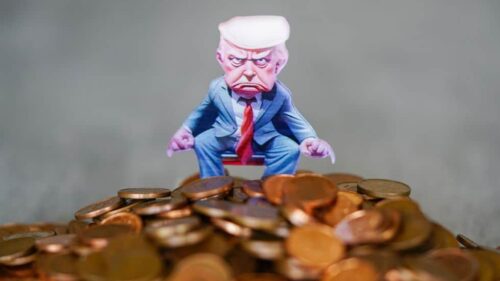
That shift in moral bearings is not the only thing that has changed. It’s been accompanied by a serious life-style change. Just think about the profiles of recent US presidents, all men who purported to be dedicated to the notion of public service. The certified narcissist Donald Trump may be an extreme example, but he only deviates from the pattern in the intensity of his egoism. Democrats Bill Clinton, Barack Obama and Joe Biden all came from modest backgrounds and referred to those modest origins to get elected. They all subsequently found clever ways to join the social stratum of the super-rich in their status, personal image and lifestyle. Republicans Bush (H.W. and W.) and Trump, conversely, were born into it and like skilled surfers simply rolled with the waves.
In contrast, US Presidents Harry Truman (1945–1953) and Dwight Eisenhower (1953–1961), a former general, retired to their modest homes and generally avoided any obvious form of media attention. While they never sought total seclusion, they deliberately avoided the worlds of Wall Street and Hollywood in an effort to preserve the dignity of the office. Truman returned to his modest family home in Independence, Missouri, far from anyone’s limelight. Eisenhower retired to a working farm in Gettysburg, Pennsylvania. Neither of them sought to “cash in.” Both viewed themselves as servants of the nation, not consultants for hire.
While Bush, having retired to his ranch in Crawford, Texas, could be seen as manifesting a throwback to the Capraesque pattern exemplified by Truman and Eisenhower, most Americans perceived his relative self-effacement as a reflection of the man’s severely limited capacity for serious analysis and compelling discourse. No one doubted that the Texas cowboy — who achieved electoral success as a “compassionate conservative” and man of the people, claiming to be allergic to nation-building — had the inflated ego and overweening ambition required to get elected. Moreover, he demonstrated his underlying, un-Capraesque cynicism once in office through his ill-thought-out and ineptly executed foreign policy, conducted at the service of the very military-industrial complex Eisenhower famously denounced days before leaving the White House.
In summary, in my (imagined) role as Devil’s Advocate, I have for some time noted with amusement the desire that has been instilled at the core of the secular US republic to seek the equivalent of sainthood among political figures, real or fictional. Hollywood didn’t create it, but transformed it into an artform. Actors in general performed more credibly than real politicians. But there was one potential exception: US President John F. Kennedy managed to partially achieve the status, but at the price of martyrdom. It seems that James Angleton’s CIA rather than Hollywood played the principal role in producing that unforgettable tragedy.
Serious candidates today see no value in cultivating Smith’s style of sanctity that would require them to stand up exclusively for the people’s interests. The American public appears to have given up searching for new Mr. Smiths. Instead, they understand, perhaps with some regret, that Underwood is closer to the now standardized model. Some observers might object that Democrat Bernie Sanders’s campaigns in 2016 and 2020 prove Capra’s mythology may still be alive in the world of actual politics. But the ease with which Bernie was marginalized by his own party helps to explain why a faux populist like Trump, totally dedicated to his own ego and indifferent to anything else (besides money), could be elected not once (an acceptable fluke) but twice… and three times by his own reckoning!
So, in my assumed role as Devil’s Advocate, I must draw a regretful conclusion: There is no returning to the past. It’s been clear for some time that no one today, and certainly not the media, is interested in the modern Catholic saints, who in any case no longer have to face the scrutiny of the official Devil’s Advocate. But the prospects are no better for any potential secular saints who may be seeking to climb the ranks in our political class. The hope Capra created and Sorkin prolonged, that we might one day be governed by such secular saints, has clearly disappeared from everyone’s radar.
Does that mean there are no candidates left, even outside politics? In my next column, I’ll propose a surprising one… before going on to uncover its seriously disqualifying weaknesses.
We are a rare nonprofit in the world news space. Most other organizations are owned by billionaires or governments. We are bottom-up, not top-down and bring you perspectives from around the world. So, sign up now for our free newsletters to hear from our 3,000+ voices from 90+ countries.
<label for=”Your email will be shared with fairobserver and subject to its Privacy Policy”>I agree to receive emails and other content from Fair Observer. I understand that I may repeal my consent at any time. You can review our Privacy Policy and Terms of Use for further information…</label>
*[The Devil’s Advocatepursues the tradition Fair Observer began in 2017 with the launch of our “Devil’s Dictionary.” It does so with a slight change of focus, moving from language itself — political and journalistic rhetoric — to the substantial issues in the news. Read more ofthe Fair Observer Devil’s Dictionary. The news we consume deserves to be seen from an outsider’s point of view. And who could be more outside official discourse than Old Nick himself?]
[Lee Thompson-Kolar edited this piece.]
The views expressed in this article are the author’s own and do not necessarily reflect Fair Observer’s editorial policy.
Comment
0 Comments
Newest
Oldest
Most Voted
Most Voted
Inline Feedbacks
View all comments
Commenting Guidelines
Please read our commenting guidelines before commenting.
1. Be Respectful: Please be polite to the author. Avoid hostility. The whole point of Fair Observer is openness to different perspectives from perspectives from around the world.
2. Comment Thoughtfully: Please be relevant and constructive. We do not allow personal attacks, disinformation or trolling. We will remove hate speech or incitement.
3. Contribute Usefully: Add something of value — a point of view, an argument, a personal experience or a relevant link if you are citing statistics and key facts.
<label style=”font-size: 18px;”>
I have read and agree to the above commenting guidelines.
</label>
Please agree to the guidelines before proceeding.
I
Agree, Proceed to Login
Cancel
Related Reading
In the Marketplace for Saints, the Pickings are Slim
Today’s culture has replaced traditional virtue with success-worship. Where saints and civic heroes once embodied shared ideals, today’s leaders proudly…
by
Peter Isackson,
December 5, 2025
Cheney, Trump and Billionaires Define Our Post-Ethics Era
The US political elite now inhabits a “post conflict-of-interest world.” The ultra-wealthy openly shape policies. From Lyndon B. Johnson to…
by
Peter Isackson,
November 7, 2025
A Saint (Charlie Kirk) and a Devil (Tony Blair) in the Headlines
Who today isn’t curious to learn about the diabolical processes at play around an assassination in Utah and a genocide…
by
Peter Isackson,
October 2, 2025
No Bones About It: The Canonization of Charlie Kirk
In our age of mass media, no event has more power to spontaneously produce a dominant narrative than the murder…
by
Peter Isackson,
September 25, 2025
Pope Francis Was a Misunderstood Visionary
Early on in his papacy, both supporters and detractors called Pope Francis a liberal or even a socialist. Later, commentators…
by
Anton Schauble,
April 22, 2025
Support Fair Observer
We rely on your support for our independence, diversity and quality.
For more than 10 years, Fair Observer has been free, fair and independent. No billionaire
owns us, no advertisers control us. We are a reader-supported nonprofit. Unlike many other
publications, we keep our content free for readers regardless of where they live or whether
they can afford to pay. We have no paywalls and no ads.
In the post-truth era of fake news, echo chambers and filter bubbles, we publish a plurality
of perspectives from around the world. Anyone can publish with us, but everyone goes through
a rigorous editorial process. So, you get fact-checked, well-reasoned content instead of
noise.
We publish 3,000+ voices from 90+ countries. We also conduct education and training programs
on subjects ranging from digital media and journalism to writing and critical thinking. This
doesn’t come cheap. Servers, editors, trainers and web developers cost
money.
Please consider supporting us on a regular basis as a recurring donor or a
sustaining member.
Will you support FO’s journalism?
We rely on your support for our independence, diversity and quality.
Donation Cycle
<label for=”donation_cycle_one_time”>One Time</label>
<label for=”donation_cycle_monthly”>Monthly</label>
<label for=”donation_cycle_yearly”>Yearly</label>
Donation Amount
<label for=”amount_11″>$11</label>
<label for=”amount_111″>$111</label>
<label for=”other”>Other</label>
$
The IRS recognizes Fair Observer as a section 501(c)(3) registered public charity
(EIN: 46-4070943), enabling you to claim a tax deduction.
Make Sense of the World
Unique Insights from 3,000+ Contributors in 90+ Countries
<label
for=”Your email will be shared with fairobserver and subject to its Privacy Policy”>I
agree to receive emails and other content from Fair Observer. I understand
that I
may repeal my consent at any time. You can review our Privacy Policy
and Terms of Use
for further
information .</label>
for=”Your email will be shared with fairobserver and subject to its Privacy Policy”>I
agree to receive emails and other content from Fair Observer. I understand
that I
may repeal my consent at any time. You can review our Privacy Policy
and Terms of Use
for further
information .</label>
Read more, think deeper and become smarter, perhaps even wiser, one article at a time. Sign up for our free newsletters now.
<label for=”Your email will be shared with fairobserver and subject to its Privacy Policy”>I agree to receive emails and other content from Fair Observer. I understand that I may repeal my consent at any time. You can review our Privacy Policy and Terms of Use for further information…</label>
</main>
Fair Observer, 461 Harbor Blvd, Belmont, CA 94002, USA
<footer class=”mart70 fo-black-bg padt50 padb30″>
Sections
PUBLICATION
Support Fair Observer
We rely on your support for our independence, diversity and quality.


</footer>

<footer id=”fixed-footer” class=”support-footer”>


Support
independent, crowdsourced, nonprofit
journalism.
Fair Observer is a 501(c)(3) independent nonprofit. We are not owned by billionaires or controlled by
advertisers. We publish nearly 3,000 authors from over 90 countries after fact-checking and editing each
piece. We do not have a paywall and anyone can read us for free. With your vital donations, we can
continue
to do our work.
Please make a recurring (or even one-time) donation today. Even $1 goes a long way because
a
million donors
like you mean one million dollars. Thank you for keeping us independent, free and fair.
One Time
Monthly
Yearly
Monthly
Yearly
Continue 

</footer>

Sign into your Fair Observer Account
<label class=”tml-label” for=”user_login”>Username or Email Address</label>
<label class=”tml-label” for=”user_pass”>Password</label>
<label class=”tml-label” for=”rememberme”>Remember Me</label>
Log In
Forgot
Password
Password
Forgot Password
Enter your registered email address or username. You will receive a
link to create a new password via email.
Please enter your username or email address. You will receive an email message with instructions on how to reset your password.
<label class=”tml-label” for=”user_login”>Username or Email Address</label>
Get New Password
Or
Return to
Login
Forgot Password
We have sent a link to your registered email address to reset your password.
<circle cx=”12.5″ cy=”12″ r=”12″ fill=”#414141″ />
Back to
Login
Become a Member & Enjoy Exclusive Benefits!
<circle cx=”12.5″ cy=”12″ r=”12″ fill=”#414141″ />
Access to comments feature
<circle cx=”12.5″ cy=”12″ r=”12″ fill=”#414141″ />
Bookmark your favorite articles
<circle cx=”12.5″ cy=”12″ r=”12″ fill=”#414141″ />
Exclusive invitations to FO° Talks & FO° Live
<circle cx=”12.5″ cy=”12″ r=”12″ fill=”#414141″ />
Access to all of our e-publications
Return to
Login
Login
NEWSLETTER
Make Sense of the World
Unique Insights from 2,500+ Contributors in 90+ Countries

<label
for=”Your email will be shared with fairobserver and subject to it’s Privacy Policy”>I
agree to receive emails and other content from Fair Observer. I understand
that I may repeal my consent at any time. You can review our Privacy Policy
and Terms of Use
for further information.</label>
for=”Your email will be shared with fairobserver and subject to it’s Privacy Policy”>I
agree to receive emails and other content from Fair Observer. I understand
that I may repeal my consent at any time. You can review our Privacy Policy
and Terms of Use
for further information.</label>
NEWSLETTER
Make Sense of the World
Unique Insights from 2,500+ Contributors in 90+ Countries
<label
for=”Your email will be shared with fairobserver and subject to it’s Privacy Policy”>I
agree to receive emails and other content from Fair Observer. I understand
that I may repeal my consent at any time. You can review our Privacy Policy
and Terms of Use
for further information.</label>
for=”Your email will be shared with fairobserver and subject to it’s Privacy Policy”>I
agree to receive emails and other content from Fair Observer. I understand
that I may repeal my consent at any time. You can review our Privacy Policy
and Terms of Use
for further information.</label>

Make Sense of the World
Unique Insights from 2,500+ Contributors in 90+ Countries
<label
for=”Your email will be shared with fairobserver and subject to its Privacy Policy”>I
agree to receive emails and other content from Fair Observer. I understand that I
may repeal my consent at any time. You can review our Privacy Policy and Terms of Use for further
information .</label>
for=”Your email will be shared with fairobserver and subject to its Privacy Policy”>I
agree to receive emails and other content from Fair Observer. I understand that I
may repeal my consent at any time. You can review our Privacy Policy and Terms of Use for further
information .</label>
We Need Your Consent
We use cookies to give you the best possible experience. Learn more about how we use cookies or edit your cookie preferences. Privacy Policy. My Options I Accept
Privacy & Cookies Policy
Close
Edit Cookie Preferences
The Fair Observer website uses digital cookies so it can collect statistics on how many visitors come to the site, what content is viewed and for how long, and the general location of the computer network of the visitor. These statistics are collected and processed using the Google Analytics service. Fair Observer uses these aggregate statistics from website visits to help improve the content of the website and to provide regular reports to our current and future donors and funding organizations. The type of digital cookie information collected during your visit and any derived data cannot be used or combined with other information to personally identify you. Fair Observer does not use personal data collected from its website for advertising purposes or to market to you.
As a convenience to you, Fair Observer provides buttons that link to popular social media sites, called social sharing buttons, to help you share Fair Observer content and your comments and opinions about it on these social media sites. These social sharing buttons are provided by and are part of these social media sites. They may collect and use personal data as described in their respective policies. Fair Observer does not receive personal data from your use of these social sharing buttons. It is not necessary that you use these buttons to read Fair Observer content or to share on social media.
Necessary
<label class=”form-check-label” for=”wt-cli-checkbox-necessary”>Necessary</label>
Always Enabled
These cookies essential for the website to function.
Social Media
<label for=”wt-cli-checkbox-social_media” class=”cli-slider” data-cli-enable=”Enabled” data-cli-disable=”Disabled”>Social Media</label>
These cookies are used to enable sharing or following of content that you find interesting on our website. These settings apply to third-party social networking and other websites.
Performance & Functionality
<label for=”wt-cli-checkbox-performance” class=”cli-slider” data-cli-enable=”Enabled” data-cli-disable=”Disabled”>Performance & Functionality</label>
These cookies are used to enhance the performance and functionality of our website. They provide statistics on how our website is used and help us improve by measuring errors. Certain functionalities on our website may become unavailable without these cookies.
Analytics
<label for=”wt-cli-checkbox-analytics” class=”cli-slider” data-cli-enable=”Enabled” data-cli-disable=”Disabled”>Analytics</label>
SAVE & ACCEPT
<textarea id=’wpd-editor-source-code’></textarea>Insert
</body></html>
Total Views:
Source: World Politics - fairobserver.com