<g id=”cross”>
<line class=”cls-1″ x1=”7″ x2=”25″ y1=”7″ y2=”25″ />
<line class=”cls-1″ x1=”7″ x2=”25″ y1=”25″ y2=”7″ />
</g>
The Emergence of the New World Order and the Decline of the US
<circle cx=”10.5″ cy=”10.5″ r=”7.5″ />
<line x1=”21″ x2=”15.8″ y1=”21″ y2=”15.8″ />
<nav class=”fo-navigation pos-r” itemscope itemtype=”http://schema.org/Navigation”>
Login
Sections <circle cx=”10.5″ cy=”10.5″ r=”7.5″ />
<line x1=”21″ x2=”15.8″ y1=”21″ y2=”15.8″ />
Search
<circle cx=”10.5″ cy=”10.5″ r=”7.5″ />
<line x1=”21″ x2=”15.8″ y1=”21″ y2=”15.8″ />
Search


PUBLICATION
Support Fair Observer
We rely on your support for our independence, diversity and quality.
</nav>
</header>

<main id=”main” class=”site-main” role=”main”> 



Thursday, January 01, 2026
<header class=”entry-header”>
The Emergence of the New World Order and the Decline of the US
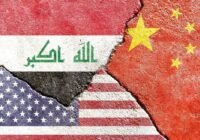
The current world order is undergoing several geopolitical upheavals that are reshaping world politics to carve out a new order led by powers such as China and India. The declining hegemony of the United States is exacerbating the situation. However, forthcoming geopolitical developments need to be analyzed to understand the dynamics shaping the New World Order.
By
Thursday, January 01, 2026
</header>

Via Shutterstock.

January 01, 2026 07:18 EDT

Check out our comment feature!
Saved Successfully.
This article saved into your bookmarks. Click here to view your bookmarks.


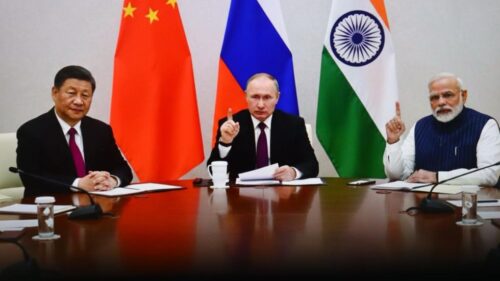
The current world order is constantly facing upheavals in geopolitics, geostrategy, the world economy and, most importantly, the effectiveness of international organizations, such as the United Nations and the World Health Organization (WHO), in fulfilling their mandates. These upheavals stem from ongoing frictions and tensions between the West, led by the United States, and the Global South, led by major countries such as India, China and Russia.
The rise of the global South and new institutions
These geopolitical developments produce a constant shifting of the epicenter of world order crafted by the West to the Global South. The recently concluded Shanghai Cooperation Organization (SCO) Summit in Tianjin is a demonstration of this shift in the global order, as Chinese President Xi Jinping announced the establishment of the SCO Development Bank, with $280 million in grants and an additional $ 1.4 billion in loans for SCO members.
China leveraged the SCO Summit to demonstrate its global ambition to lead the new world order, an alternative to the one led by the US. This new world order will, in addition to addressing the development needs of SCO member countries, serve as an antidote to unilateralism, hegemony and coercion of countries in the Global South. For instance, China pledged to deepen cooperation with Central Asian countries to meet their energy needs at the SCO Summit.
The underlying concern of either the SCO Summit or the BRICS Summits is to carve out a new world order that supports multilateralism and a rules-based, transparent order, with new governing institutions such as the SCO Development Bank and the BRICS Development Bank that could perfectly address the particular needs and aspirations of the countries of the Global South. In fact, to reduce the influence of the US Dollar as a means of transaction in the Global Economy, countries like India have proposed the idea of de-dollarization by commencing regional trade among the BRICS nations in their local currencies.
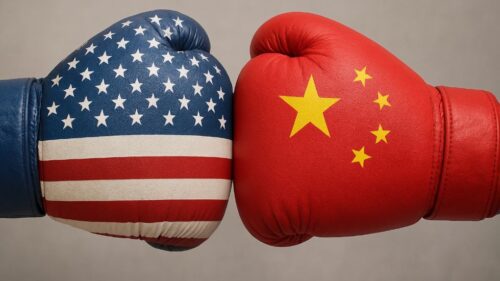
In a nutshell, the fundamental objective of these geopolitical initiatives is to counter the abrasive, threatening and hypocritical attitude of US President Donald Trump. By waging a tariff war against BRICS countries and imposing a 50% tariff on Indian goods recently as a penalty for importing crude oil from Russia, the US under Trump accorded strategic space to countries like China, especially, which has long awaited the opportunity to marginalize the US’s geopolitical and geostrategic influence in order to lead the world as a global superpower.
The decline of US hegemony and its global consequences
In addition to waging tariff wars against numerous countries without a second thought, other factors are contributing to the continuous decline of US hegemony in the world order. World history shows that whenever the US wages war against any country, be it Afghanistan in 2001 to quell Al-Qaeda in the wake of the 9/11 attack on the US, the Vietnam War (1955) or the Bay of Pigs Invasion (1961), it either loses the war or leaves it in the middle without any conclusion.
It is ironic for a country like the US, which claims to be a global superpower, that it lacks the diplomatic and military capabilities to win or conclude a war. Very recently, during the US elections, as part of his election manifesto, Trump claimed that he would end the Russia-Ukraine War, but miserably failed. He also failed to prevent the recent Indo-Pak conflict. Cumulatively, these incidents signal that the list of countries that do not obey, bow down to or recognize the US, which has been the global hegemon to date, is growing.
Additionally, the world’s political history is replete with examples demonstrating that the US has lost the trust of its allies due to its high level of hypocrisy. For instance, on the one hand, the US firmly supported Israel when it launched military action against Gaza. On the other hand, it condemned Russia for its invasion of Ukraine in the name of safeguarding democracy.
Factors such as Trump’s unpredictability, which led to a trade war with its strategic allies such as India, and the withdrawal from international organizations such as the UN Human Rights Council, the UN Educational, Scientific and Cultural Organization (UNESCO), and the Paris Agreement are also accelerating the decline of US hegemony in world politics.
Moreover, sharp criticism of many of its allies, such as France, Germany and even Canada, on issues like green energy and immigration, by the US at the recently concluded United Nations General Assembly (UNGA) session prompted the countries to pursue an independent foreign policy. In fact, dialogues among participating countries at the Munich Security Conference focused on developing their own security policies and defense capabilities independent of the US.
Cumulatively, these strategic and geopolitical developments signal the US’s rapid decline in stature within the current global order and the emergence of a new world order led by the troika, namely, India, Russia and China.
The challenges of forging a new world order
Further geopolitical upheavals must be analyzed to forecast the emergence of a new world order, as geopolitics is a function of continually shifting national interests. More crucially, the effectiveness and potential of any bloc, whether it be BRICS or SCO, depend on the degree of convergence of all national interests of its member countries to a common agenda, which is nothing but transforming the contours of the present global order, a task that is very difficult in the current geopolitics due to its constantly changing nature.
Read more, think deeper and become smarter, perhaps even wiser, one article at a time. Sign up for our free newsletters now.
<label for=”Your email will be shared with fairobserver and subject to its Privacy Policy”>I agree to receive emails and other content from Fair Observer. I understand that I may repeal my consent at any time. You can review our Privacy Policy and Terms of Use for further information…</label>
This is the point that the US is watching very patiently and calmly, maneuvering the strategic space that emerged from the long-standing dissensions and contradictions among the SCO or BRICS member countries. Most importantly, it is also watching China’s global power ambitions to lead the new world order by surpassing the US, by hook or by crook.
The views expressed in this article are the author’s own and do not necessarily reflect Fair Observer’s editorial policy.
Comment
0 Comments
Newest
Oldest
Most Voted
Most Voted
Inline Feedbacks
View all comments
Commenting Guidelines
Please read our commenting guidelines before commenting.
1. Be Respectful: Please be polite to the author. Avoid hostility. The whole point of Fair Observer is openness to different perspectives from perspectives from around the world.
2. Comment Thoughtfully: Please be relevant and constructive. We do not allow personal attacks, disinformation or trolling. We will remove hate speech or incitement.
3. Contribute Usefully: Add something of value — a point of view, an argument, a personal experience or a relevant link if you are citing statistics and key facts.
<label style=”font-size: 18px;”>
I have read and agree to the above commenting guidelines.
</label>
Please agree to the guidelines before proceeding.
I
Agree, Proceed to Login
Cancel
Related Reading
India’s Current Foreign Policy: Reinforcing Strategic Autonomy in a Rising Multipolar World Order
India’s foreign policy emphasizes a multipolar world, balancing independence with strategic partnerships, particularly through nonalignment and participation in multilateral forums….
by
Sudhanshu Tripathi,
December 25, 2025
The US and Its Incoming War With China
US defense spending favors aircraft carriers, tanks and fighter jets that China seeks to counter with cheaper missiles, drones and…
by
Alfredo Toro Hardy,
December 16, 2025
The New World Order Is Disorder
US power is declining and an Axis of Disorder is rising to take its place. The world order is becoming…
by
Zev Faintuch,
June 20, 2024
Support Fair Observer
We rely on your support for our independence, diversity and quality.
For more than 10 years, Fair Observer has been free, fair and independent. No billionaire
owns us, no advertisers control us. We are a reader-supported nonprofit. Unlike many other
publications, we keep our content free for readers regardless of where they live or whether
they can afford to pay. We have no paywalls and no ads.
In the post-truth era of fake news, echo chambers and filter bubbles, we publish a plurality
of perspectives from around the world. Anyone can publish with us, but everyone goes through
a rigorous editorial process. So, you get fact-checked, well-reasoned content instead of
noise.
We publish 3,000+ voices from 90+ countries. We also conduct education and training programs
on subjects ranging from digital media and journalism to writing and critical thinking. This
doesn’t come cheap. Servers, editors, trainers and web developers cost
money.
Please consider supporting us on a regular basis as a recurring donor or a
sustaining member.
Will you support FO’s journalism?
We rely on your support for our independence, diversity and quality.
Donation Cycle
<label for=”donation_cycle_one_time”>One Time</label>
<label for=”donation_cycle_monthly”>Monthly</label>
<label for=”donation_cycle_yearly”>Yearly</label>
Donation Amount
<label for=”amount_11″>$11</label>
<label for=”amount_111″>$111</label>
<label for=”other”>Other</label>
$
The IRS recognizes Fair Observer as a section 501(c)(3) registered public charity
(EIN: 46-4070943), enabling you to claim a tax deduction.
Most Popular
From Roads to Reform: China and Pakistan’s Expanding Economic Alliance
Pakistan’s Vision 2035, which aims to build a $1 trillion economy, is closely tied to its deepening friendship with China….
by
Dr. Sahibzada Muhammad Usman,
October 10, 2025
Power Beneath the Sands: The Investment Approaches of the US and China in Iraq
Iraq is central in the US–China rivalry, balancing US-led security and reforms with China’s rapid, state-driven infrastructure investments. As China…
by
Claire Astrid Fuchs,
October 4, 2025
FO° Talks: Donald Trump’s Tariffs Could Boomerang and Unite the BRICS Nations
In this episode of FO° Talks, Rohan Khattar Singh and Kyle Moran discuss US President Donald Trump’s tariff policies, arguing…
by
Kyle Moran & Rohan Khattar Singh,
September 23, 2025
Make Sense of the World
Unique Insights from 3,000+ Contributors in 90+ Countries
<label
for=”Your email will be shared with fairobserver and subject to its Privacy Policy”>I
agree to receive emails and other content from Fair Observer. I understand
that I
may repeal my consent at any time. You can review our Privacy Policy
and Terms of Use
for further
information .</label>
for=”Your email will be shared with fairobserver and subject to its Privacy Policy”>I
agree to receive emails and other content from Fair Observer. I understand
that I
may repeal my consent at any time. You can review our Privacy Policy
and Terms of Use
for further
information .</label>
Read more, think deeper and become smarter, perhaps even wiser, one article at a time. Sign up for our free newsletters now.
<label for=”Your email will be shared with fairobserver and subject to its Privacy Policy”>I agree to receive emails and other content from Fair Observer. I understand that I may repeal my consent at any time. You can review our Privacy Policy and Terms of Use for further information…</label>
</main>
Fair Observer, 461 Harbor Blvd, Belmont, CA 94002, USA
<footer class=”mart70 fo-black-bg padt50 padb30″>
Sections
PUBLICATION
Support Fair Observer
We rely on your support for our independence, diversity and quality.


</footer>

<footer id=”fixed-footer” class=”support-footer”>


Support
independent, crowdsourced, nonprofit
journalism.
Fair Observer is a 501(c)(3) independent nonprofit. We are not owned by billionaires or controlled by
advertisers. We publish nearly 3,000 authors from over 90 countries after fact-checking and editing each
piece. We do not have a paywall and anyone can read us for free. With your vital donations, we can
continue
to do our work.
Please make a recurring (or even one-time) donation today. Even $1 goes a long way because
a
million donors
like you mean one million dollars. Thank you for keeping us independent, free and fair.
One Time
Monthly
Yearly
Monthly
Yearly
Continue 

</footer>

Sign into your Fair Observer Account
<label class=”tml-label” for=”user_login”>Username or Email Address</label>
<label class=”tml-label” for=”user_pass”>Password</label>
<label class=”tml-label” for=”rememberme”>Remember Me</label>
Log In
Forgot
Password
Forgot Password
Enter your registered email address or username. You will receive a
link to create a new password via email.
Please enter your username or email address. You will receive an email message with instructions on how to reset your password.
<label class=”tml-label” for=”user_login”>Username or Email Address</label>
Get New Password
Or
Return to
Login
Forgot Password
We have sent a link to your registered email address to reset your password.
<circle cx=”12.5″ cy=”12″ r=”12″ fill=”#414141″ />
Back to
Login
Become a Member & Enjoy Exclusive Benefits!
<circle cx=”12.5″ cy=”12″ r=”12″ fill=”#414141″ />
Access to comments feature
<circle cx=”12.5″ cy=”12″ r=”12″ fill=”#414141″ />
Bookmark your favorite articles
<circle cx=”12.5″ cy=”12″ r=”12″ fill=”#414141″ />
Exclusive invitations to FO° Talks & FO° Live
<circle cx=”12.5″ cy=”12″ r=”12″ fill=”#414141″ />
Access to all of our e-publications
Return to
Login
Login
NEWSLETTER
Make Sense of the World
Unique Insights from 2,500+ Contributors in 90+ Countries

<label
for=”Your email will be shared with fairobserver and subject to it’s Privacy Policy”>I
agree to receive emails and other content from Fair Observer. I understand
that I may repeal my consent at any time. You can review our Privacy Policy
and Terms of Use
for further information.</label>
for=”Your email will be shared with fairobserver and subject to it’s Privacy Policy”>I
agree to receive emails and other content from Fair Observer. I understand
that I may repeal my consent at any time. You can review our Privacy Policy
and Terms of Use
for further information.</label>
NEWSLETTER
Make Sense of the World
Unique Insights from 2,500+ Contributors in 90+ Countries
<label
for=”Your email will be shared with fairobserver and subject to it’s Privacy Policy”>I
agree to receive emails and other content from Fair Observer. I understand
that I may repeal my consent at any time. You can review our Privacy Policy
and Terms of Use
for further information.</label>
for=”Your email will be shared with fairobserver and subject to it’s Privacy Policy”>I
agree to receive emails and other content from Fair Observer. I understand
that I may repeal my consent at any time. You can review our Privacy Policy
and Terms of Use
for further information.</label>

Make Sense of the World
Unique Insights from 2,500+ Contributors in 90+ Countries
<label
for=”Your email will be shared with fairobserver and subject to its Privacy Policy”>I
agree to receive emails and other content from Fair Observer. I understand that I
may repeal my consent at any time. You can review our Privacy Policy and Terms of Use for further
information .</label>
for=”Your email will be shared with fairobserver and subject to its Privacy Policy”>I
agree to receive emails and other content from Fair Observer. I understand that I
may repeal my consent at any time. You can review our Privacy Policy and Terms of Use for further
information .</label>
We Need Your Consent
We use cookies to give you the best possible experience. Learn more about how we use cookies or edit your cookie preferences. Privacy Policy. My Options I Accept
Privacy & Cookies Policy
Close
Edit Cookie Preferences
The Fair Observer website uses digital cookies so it can collect statistics on how many visitors come to the site, what content is viewed and for how long, and the general location of the computer network of the visitor. These statistics are collected and processed using the Google Analytics service. Fair Observer uses these aggregate statistics from website visits to help improve the content of the website and to provide regular reports to our current and future donors and funding organizations. The type of digital cookie information collected during your visit and any derived data cannot be used or combined with other information to personally identify you. Fair Observer does not use personal data collected from its website for advertising purposes or to market to you.
As a convenience to you, Fair Observer provides buttons that link to popular social media sites, called social sharing buttons, to help you share Fair Observer content and your comments and opinions about it on these social media sites. These social sharing buttons are provided by and are part of these social media sites. They may collect and use personal data as described in their respective policies. Fair Observer does not receive personal data from your use of these social sharing buttons. It is not necessary that you use these buttons to read Fair Observer content or to share on social media.
Necessary
<label class=”form-check-label” for=”wt-cli-checkbox-necessary”>Necessary</label>
Always Enabled
These cookies essential for the website to function.
Social Media
<label for=”wt-cli-checkbox-social_media” class=”cli-slider” data-cli-enable=”Enabled” data-cli-disable=”Disabled”>Social Media</label>
These cookies are used to enable sharing or following of content that you find interesting on our website. These settings apply to third-party social networking and other websites.
Performance & Functionality
<label for=”wt-cli-checkbox-performance” class=”cli-slider” data-cli-enable=”Enabled” data-cli-disable=”Disabled”>Performance & Functionality</label>
These cookies are used to enhance the performance and functionality of our website. They provide statistics on how our website is used and help us improve by measuring errors. Certain functionalities on our website may become unavailable without these cookies.
Analytics
<label for=”wt-cli-checkbox-analytics” class=”cli-slider” data-cli-enable=”Enabled” data-cli-disable=”Disabled”>Analytics</label>
SAVE & ACCEPT
<textarea id=’wpd-editor-source-code’></textarea>Insert
</body>
</html>
Total Views:
Source: World Politics - fairobserver.com