<g id=”cross”>
<line class=”cls-1″ x1=”7″ x2=”25″ y1=”7″ y2=”25″ />
<line class=”cls-1″ x1=”7″ x2=”25″ y1=”25″ y2=”7″ />
</g>
Somalia Must Confront Israeli Neocolonial Exploitation of “Somaliland”
<circle cx=”10.5″ cy=”10.5″ r=”7.5″ />
<line x1=”21″ x2=”15.8″ y1=”21″ y2=”15.8″ />
<nav class=”fo-navigation pos-r” itemscope itemtype=”http://schema.org/SiteNavigationElement”>
Login
Sections <circle cx=”10.5″ cy=”10.5″ r=”7.5″ />
<line x1=”21″ x2=”15.8″ y1=”21″ y2=”15.8″ /> Search
<line x1=”21″ x2=”15.8″ y1=”21″ y2=”15.8″ />
Search


PUBLICATION
Support Fair Observer
We rely on your support for our independence, diversity and quality.
</nav>
</header>

<main id=”main” class=”site-main” role=”main”> 


Monday, January 05, 2026
<header class=”entry-header”>
Africa
Somalia Must Confront Israeli Neocolonial Exploitation of “Somaliland”
Israel’s recognition of Somaliland is a neocolonial exploitation project that serves Israel’s security interests and threatens to unravel a delicate peace, order and balance of power in Somalia. There are major regional powerplays at hand, but the move provokes Somali internal rivalries and accelerates radicalization and extremism. Ultimately, Israel’s decision has major implications for order and cohesion in post-colonial Africa.
By
Monday, January 05, 2026
</header>
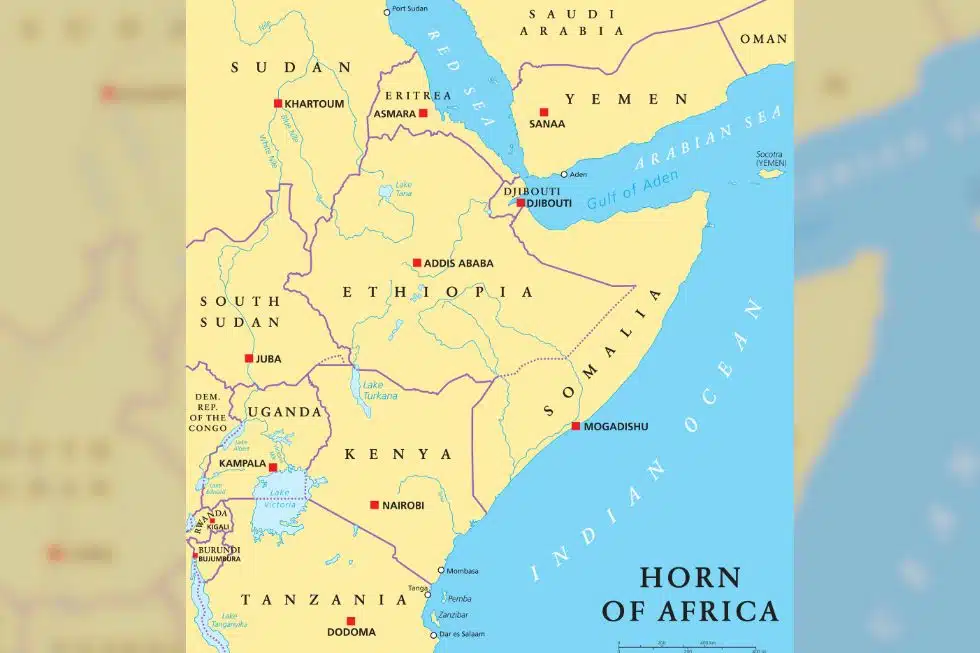
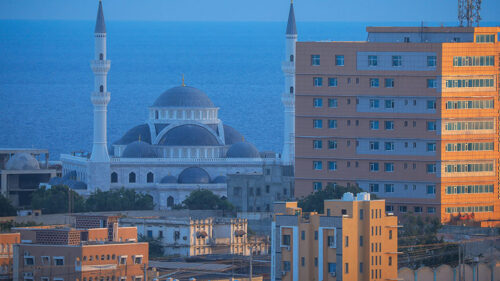
Via Shutterstock.

January 05, 2026 07:23 EDT

Check out our comment feature!
Saved Successfully.
This article saved into your bookmarks. Click here to view your bookmarks.


This is not merely about “Somaliland”. This is about Africa and the principle that Somalia’s borders cannot be altered without the consent of its people and institutions.
Israel’s recognition of the self-declared “Republic of Somaliland” is a neocolonial exploitation project of a complex, deeply divided region in northwestern Somalia. It is a violation of Somalia’s sovereignty, unity, political independence and territorial integrity, as Somali President Hassan Sheikh Mohamud rightly declared during an address to a special joint session of the two Houses of Federal Parliament in Mogadishu. President Mohamud further noted how Israel’s controversial and unilateral decision was a “threat to the security and stability of the world and the region.”
Another senior Somali Cabinet official demanded that Israel “abide by international law,” as international and regional organizations, including the UN, the League of Arab States, the Organization of Islamic Conference and the African Union — all of which Somalia is a Member State — as well as the European Union and the Gulf Cooperation Council (GCC), strongly declared opposition to Israel’s decision.
The Israeli move was also widely rejected across the globe, including in China, Nigeria, Pakistan, the UK and the US, where the State Department declared the US recognizes one Somalia “which includes the territory of Somaliland”. Israel’s tactical decision overlooks the inconsistency of its foreign policy, particularly when juxtaposed with Israel’s own refusal to recognize an independent Palestinian state. The UN called for an emergency session to discuss Israeli recognition of “Somaliland”, in a discussion entitled “Threats to International Peace and Security”.
No political observer of Somalia missed the underlying irony of Israel’s recognition of Somaliland. After 35 years searching for international recognition, Israel became the first and only UN Member State to recognize Somaliland, a sub-national entity in Somalia that unilaterally declared independence in 1991 after claiming that the former Barre dictatorship in Somalia committed the Isaaq genocide in the 1980s. The Isaaq are the predominant Somali clan group in the central regions of Somaliland, surrounded by Darod clan groups to the east and south and Dir clan groups to the west.
In October 2025, a UN inquiry found that Israel had committed four acts of genocide in Gaza. A demonstrably ironic political act is that the proclaimed victims of the Isaaq genocide celebrated recognition from a state that committed genocide in Palestine.
Israel’s motivating factors
Somalia’s greatest asset has always been one of its greatest curses. The country’s geographic location, at the crossroads of global shipping lines that connect Africa, Asia and Europe, continues to attract regional and global competition for power. Even before Israel’s unilateral recognition of Somaliland, which did not come as a surprise to political observers aware of Somaliland’s long quest for Israeli validation as a sovereign state, Taiwan had recognized Somaliland and established a de facto embassy in Hargeisa. So, why is Israel interested in setting up a foothold in Somaliland? To unpack this, we must first understand the regional context.
In their response, international actors sought to emphasize the importance and relevance of international law, grounded in legal and political principles that aim to prevent the recognition of separatist states in Africa, which could lead to deeper instability, ongoing secessionist claims, and the undermining of order and political cohesion, thereby destabilizing the entire African continent.
In addition, Africa has never allowed an external actor, Israel or otherwise, to lead formal recognition of any new African state, including the only two nation-states to gain independence in post-colonial Africa, namely Eritrea and South Sudan. In this respect, it is highly unlikely that African nations would follow Israel’s decision, which is motivated by its own strategic considerations, such as ongoing military conflicts with a number of regional actors, including Hamas in Palestine, Hezbollah in Lebanon, Houthis in Yemen, Iran and even the new leadership in post-Assad Syria.
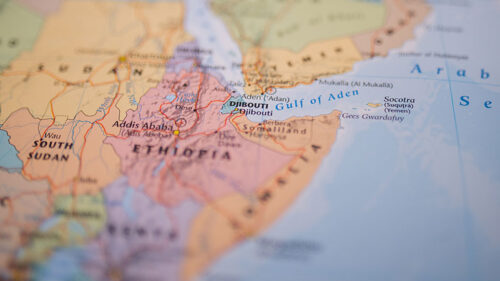
In particular, Houthi maritime operations in the Bab al-Mandab Strait, a strategic waterway connecting the Red Sea to the Indian Ocean, forced shipping lines to reroute around Africa, “driving up transit times, insurance premiums, and energy costs”. This is one of Israel’s top strategic objectives in recognizing the separatist Somali region. The strategic location of northwestern Somalia’s proximity to the Bab al Mandab Strait, across from Yemen, provides Israel a military foothold to confront and potentially neutralize Houthi forces who have targeted the Israeli economy through maritime military operations.
Second, as voiced by Somali government official Ali Omar, one of Israel’s motivating factors is its pursuit of “the displacement of Palestinians from Gaza”. After two years of Israeli bombardment, targeted killings, and the destruction of critical infrastructure and the local economy of Palestinians in Gaza, leading to starvation, Israel proposed to relocate Palestinians to Somaliland as part of a wider strategy to forcefully dispossess Palestinians of their rightful homelands.
A third and equally important reason for Israel’s recognition of Somalia’s separatist region is to use Somaliland as a bargaining chip in negotiations with the Kingdom of Saudi Arabia to join the Abrahamic Accords; recently, the Saudi leadership expressed openness to join the Accords, conditional on a “clear path” to the emergence of a Palestinian state. In future negotiations, it is entirely plausible for Israel to rescind its recognition of Somaliland if Saudi Arabia reverses its principled position in defense of a Palestinian state.
Israel’s decision also aims to use Somaliland as leverage against Turkish influence in Syria and East Africa. Türkiye has invested massively in Somalia since 2011, with Ankara and Mogadishu signing strategic military and commercial partnerships.
Fourth, Israel is also betting on capitalizing on existing infrastructure in the Port of Berbera, expanded under an investment agreement with the United Arab Emirates (UAE) in 2017, and on attracting American support by leveraging Berbera as a base to counter the Chinese military presence in neighboring Djibouti. Others have proposed that India can use Somaliland to also counter Chinese interests in Africa. Clearly, this is not about recognizing Somaliland as a self-governing “beacon of democracy” in an erstwhile volatile region, but rather as a pawn in a broader geopolitical war involving global and regional powers vying for strategic dominance, competing economic interests, and control over vital maritime routes and natural resources.
President Mohamud’s incoherent foreign policy has continually sent mixed signals to global capitals. While his administration maintains close relations with Türkiye and Qatar, unpredictable relations with Ethiopia, Egypt, the US, UK, EU and the UAE have been characterized by a lack of a principled and strategic foreign policy.
Somalia’s failed leadership
Hassan Sheikh Mohamud must resign in shame. A day before Israel’s unilateral recognition of “Somaliland”, President Mohamud’s administration organized the first direct municipal elections, which occurred peacefully in Mogadishu for the first time in nearly 60 years, celebrating a major political milestone. Israel recognized Somaliland the next day, abruptly curtailing President Mohamud’s celebratory mood. Mohamud has served as President of Somalia for eight of the last 13 years, wielding significant influence over the country’s political trajectory, including its foreign policy. He was first elected in 2012 and re-elected in 2022 after losing to Mohamed Abdullahi Farmajo in the 2017 election.
In 2020, then-President Mohamed Abdullahi Farmajo was on the verge of arriving in Hargeisa to meet the Somaliland leadership as part of a mediation effort led by the Ethiopian prime minister, Abiy Ahmed. The former Farmajo administration had offered a number of concessions to Somaliland, including constitutional reforms, joint management of aviation and even the position of Prime Minister uncontested for a period of ten years.
Unfortunately, President Mohamud did not continue those efforts, which began in 2012 and were mediated by the UK, Djibouti and Türkiye during different rounds of political negotiations; instead, since 2022, President Mohamud chose to ignore Somaliland or use empty words about brotherhood and unity, without any substance. As such, President Mohamud will bear major responsibility for failing to lead Somalia and uphold the country’s fragile unity and territorial integrity.
Domestically, President Mohamud’s strategy of empowering Mogadishu and ignoring other domestic stakeholders, including Puntland, Galmudug and Jubaland states, further deepened the political fragmentation in Somalia that facilitated exploitation by foreign powers, at the expense of the Somali people. Instead of fostering a consultative national process and embedding federalism, President Mohamud’s Mogadishu-centric political approach alienated key domestic stakeholders and propelled clan competition. His administration mismanaged and utilized international donor support as a political tool to empower political entities that support him and weaken opposition domestic actors.
Political representation and accountability were severely eroded, as his administration co-opted the two Houses of Federal Parliament, nominated ambassadors along clan lines and used military force in an attempt to dismantle the Jubaland state leadership, a move that failed with catastrophic consequences.
President Mohamud also failed to capitalize on the Las Anod uprising, when the Somaliland military launched indiscriminate attacks on civilian infrastructure in Las Anod in 2023, sparking an eight-month conflict that led to the defeat of the Somaliland army, including the capture of Somaliland prisoners and seizure of military equipment. Mogadishu later recognized the Northeast State in 2025, which reduced “Somaliland’s territory to about 45% of the former British Somaliland” and has considerably weakened Somaliland’s claim to independence.
This was a moment for President Mohamud to reaffirm Somali unity, show the world that the territories Somaliland’s separatist leaders claim were not a monolithic entity, support pro-union forces in Las Anod, and condemn the military aggression and violence against civilians by the Somaliland forces. President Mohamud failed to make strategic decisions, remained indecisive, politically weak and lacked a clear vision on how to handle a national crisis, perhaps with his decision-making judgment clouded by political considerations and foreign influence. All these efforts weakened political cohesion, undermined the united front against armed extremist groups such as Al Shabaab, and deepened clan distrust and hostilities.
Danger ahead
Israel does not understand the Somali people, nor can it be expected to. Israel reached a decision purely assessed through the prism of its own survivalist and security considerations, aiming to expand territorially through a process of violent colonialism in the name of self-defense. The Somalis are an ancient civilization that inhabits four countries in the Horn of Africa. There are conflicting historical, social, political, economic and security factors at play, both visible and invisible — not only within Somalia, but also within the boundaries Somaliland claims.
Israel’s narrow focus on the Bab al-Mandab, the Port of Berbera and regional powerplays fails to take a full view of the surrounding complexities: a legacy of dictatorship and civil war; clan boundaries; political conflicts; and extremist violence. Already, we are witnessing how global competitions, such as Ethiopia vs Egypt, China vs the US/India/Taiwan, Qatar vs the UAE and now, Türkiye vs Israel, just to name a few, are impacting and worsening internal rivalries. The loser on all sides is the Somali people, betrayed by a self-serving political class and blinded by ancient clan animosities.
This is not merely about Somaliland. This is about Africa and the principle that Somalia’s borders cannot be altered without the consent of its people and institutions. Upholding this principle is essential for long-term peace, national unity and democratic legitimacy — failure to do so risks creating new generations of radicalized youth, in Somaliland, most prominently. If not addressed correctly and urgently, we will witness worsening internal fractures and fragmentation, deeper economic decline and institutional instability unseen in the past 35 years.
The calls to defend Somalia’s dignity and boundaries are growing — being heard in every Somali-speaking household, that the enemies who seek to further divide and weaken this ancient nation are at the gates. This strategically failed approach undermines decades of US-led intervention learned and shaped through experience since the 1990s UN peacekeeping mission, founded on the policies of pragmatic engagement, tailored support and a hands-off approach to Somali internal politics, clan dynamics and balance of power.
We’re independent, nonprofit and powered by 3,000+ voices from around the world — not billionaires or governments. Enjoy real journalism, sign up for our free newsletters.
<label for=”Your email will be shared with fairobserver and subject to its Privacy Policy”>I agree to receive emails and other content from Fair Observer. I understand that I may repeal my consent at any time. You can review our Privacy Policy and Terms of Use for further information…</label>
Above all, the issue of “Somaliland” is a Somali issue before it is an African or regional issue. It is an unresolved, dormant volcano waiting to explode. Without a doubt, unless reversed, Israel’s move threatens to accelerate further instability, embolden clan violence, undermine regional security, and deepen radicalization and extremism unseen since the Ethiopian invasion of Mogadishu in 2006. We cannot predict the future, but we are certain of one thing: Somalis will violently reject colonialist exploitation in all its forms, as they have done in the past.
[Kaitlyn Diana edited this piece.]
The views expressed in this article are the author’s own and do not necessarily reflect Fair Observer’s editorial policy.
Comment
0 Comments
Newest
Oldest
Most Voted
Most Voted
Inline Feedbacks
View all comments
Commenting Guidelines
Please read our commenting guidelines before commenting.
1. Be Respectful: Please be polite to the author. Avoid hostility. The whole point of Fair Observer is openness to different perspectives from perspectives from around the world.
2. Comment Thoughtfully: Please be relevant and constructive. We do not allow personal attacks, disinformation or trolling. We will remove hate speech or incitement.
3. Contribute Usefully: Add something of value — a point of view, an argument, a personal experience or a relevant link if you are citing statistics and key facts.
<label style=”font-size: 18px;”>
I have read and agree to the above commenting guidelines.
</label>
Please agree to the guidelines before proceeding.
I
Agree, Proceed to Login
Cancel
Related Reading
Making Sense of Rising Tensions in the Horn of Africa
Tensions in the Horn of Africa are escalating, driven by disputes over Ethiopia’s Grand Renaissance Dam, which threatens Egypt’s vital…
by
Martin Plaut & Atul Singh,
October 25, 2024
Why Is Somalia’s Political Crisis So Difficult to Solve?
Underlying constitutional, economic and international factors drive the power struggle that is undermining Somalia’s state-building efforts.
by
Corrado Cok,
May 24, 2021
Israel’s Comeback in the Horn of Africa
The Horn of Africa mirrors the Middle East in many aspects, and the recognition of Israel might be yet another…
by
Corrado Cok,
November 17, 2020
Support Fair Observer
We rely on your support for our independence, diversity and quality.
For more than 10 years, Fair Observer has been free, fair and independent. No billionaire
owns us, no advertisers control us. We are a reader-supported nonprofit. Unlike many other
publications, we keep our content free for readers regardless of where they live or whether
they can afford to pay. We have no paywalls and no ads.
In the post-truth era of fake news, echo chambers and filter bubbles, we publish a plurality
of perspectives from around the world. Anyone can publish with us, but everyone goes through
a rigorous editorial process. So, you get fact-checked, well-reasoned content instead of
noise.
We publish 3,000+ voices from 90+ countries. We also conduct education and training programs
on subjects ranging from digital media and journalism to writing and critical thinking. This
doesn’t come cheap. Servers, editors, trainers and web developers cost
money.
Please consider supporting us on a regular basis as a recurring donor or a
sustaining member.
Will you support FO’s journalism?
We rely on your support for our independence, diversity and quality.
Donation Cycle
<label for=”donation_cycle_one_time”>One Time</label>
<label for=”donation_cycle_monthly”>Monthly</label>
<label for=”donation_cycle_yearly”>Yearly</label>
Donation Amount
<label for=”amount_11″>$11</label>
<label for=”amount_111″>$111</label>
<label for=”other”>Other</label>
$
The IRS recognizes Fair Observer as a section 501(c)(3) registered public charity
(EIN: 46-4070943), enabling you to claim a tax deduction.
Make Sense of the World
Unique Insights from 3,000+ Contributors in 90+ Countries
<label
for=”Your email will be shared with fairobserver and subject to its Privacy Policy”>I
agree to receive emails and other content from Fair Observer. I understand
that I
may repeal my consent at any time. You can review our Privacy Policy
and Terms of Use
for further
information .</label>
for=”Your email will be shared with fairobserver and subject to its Privacy Policy”>I
agree to receive emails and other content from Fair Observer. I understand
that I
may repeal my consent at any time. You can review our Privacy Policy
and Terms of Use
for further
information .</label>
You can read the CIA Factbook and listen to MI6 people for your analysis, or you could read perspectives from our 3,000+ authors from 90+ countries and make sense of the world. Sign up for our free newsletters now.
<label for=”Your email will be shared with fairobserver and subject to its Privacy Policy”>I agree to receive emails and other content from Fair Observer. I understand that I may repeal my consent at any time. You can review our Privacy Policy and Terms of Use for further information…</label>
</main>
Fair Observer, 461 Harbor Blvd, Belmont, CA 94002, USA
<footer class=”mart70 fo-black-bg padt50 padb30″>
Sections
PUBLICATION
Support Fair Observer
We rely on your support for our independence, diversity and quality.


</footer>

<footer id=”fixed-footer” class=”support-footer”>


Support
independent, crowdsourced, nonprofit
journalism.
Fair Observer is a 501(c)(3) independent nonprofit. We are not owned by billionaires or controlled by
advertisers. We publish nearly 3,000 authors from over 90 countries after fact-checking and editing each
piece. We do not have a paywall and anyone can read us for free. With your vital donations, we can
continue
to do our work.
Please make a recurring (or even one-time) donation today. Even $1 goes a long way because
a
million donors
like you mean one million dollars. Thank you for keeping us independent, free and fair.
One Time
Monthly
Yearly
Monthly
Yearly
Continue 

</footer>

Sign into your Fair Observer Account
<label class=”tml-label” for=”user_login”>Username or Email Address</label>
<label class=”tml-label” for=”user_pass”>Password</label>
<label class=”tml-label” for=”rememberme”>Remember Me</label>
Log In
Forgot
Password
Password
Forgot Password
Enter your registered email address or username. You will receive a
link to create a new password via email.
Please enter your username or email address. You will receive an email message with instructions on how to reset your password.
<label class=”tml-label” for=”user_login”>Username or Email Address</label>
Get New Password
Or
Return to
Login
Forgot Password
We have sent a link to your registered email address to reset your password.
<circle cx=”12.5″ cy=”12″ r=”12″ fill=”#414141″ />
Back to
Login
Become a Member & Enjoy Exclusive Benefits!
<circle cx=”12.5″ cy=”12″ r=”12″ fill=”#414141″ />
Access to comments feature
<circle cx=”12.5″ cy=”12″ r=”12″ fill=”#414141″ />
Bookmark your favorite articles
<circle cx=”12.5″ cy=”12″ r=”12″ fill=”#414141″ />
Exclusive invitations to FO° Talks & FO° Live
<circle cx=”12.5″ cy=”12″ r=”12″ fill=”#414141″ />
Access to all of our e-publications
Return to
Login
Login
NEWSLETTER
Make Sense of the World
Unique Insights from 2,500+ Contributors in 90+ Countries

<label
for=”Your email will be shared with fairobserver and subject to it’s Privacy Policy”>I
agree to receive emails and other content from Fair Observer. I understand
that I may repeal my consent at any time. You can review our Privacy Policy
and Terms of Use
for further information.</label>
for=”Your email will be shared with fairobserver and subject to it’s Privacy Policy”>I
agree to receive emails and other content from Fair Observer. I understand
that I may repeal my consent at any time. You can review our Privacy Policy
and Terms of Use
for further information.</label>
NEWSLETTER
Make Sense of the World
Unique Insights from 2,500+ Contributors in 90+ Countries
<label
for=”Your email will be shared with fairobserver and subject to it’s Privacy Policy”>I
agree to receive emails and other content from Fair Observer. I understand
that I may repeal my consent at any time. You can review our Privacy Policy
and Terms of Use
for further information.</label>
for=”Your email will be shared with fairobserver and subject to it’s Privacy Policy”>I
agree to receive emails and other content from Fair Observer. I understand
that I may repeal my consent at any time. You can review our Privacy Policy
and Terms of Use
for further information.</label>

Make Sense of the World
Unique Insights from 2,500+ Contributors in 90+ Countries
<label
for=”Your email will be shared with fairobserver and subject to its Privacy Policy”>I
agree to receive emails and other content from Fair Observer. I understand that I
may repeal my consent at any time. You can review our Privacy Policy and Terms of Use for further
information .</label>
for=”Your email will be shared with fairobserver and subject to its Privacy Policy”>I
agree to receive emails and other content from Fair Observer. I understand that I
may repeal my consent at any time. You can review our Privacy Policy and Terms of Use for further
information .</label>
We Need Your Consent
We use cookies to give you the best possible experience. Learn more about how we use cookies or edit your cookie preferences. Privacy Policy. My Options I Accept
Privacy & Cookies Policy
Close
Edit Cookie Preferences
The Fair Observer website uses digital cookies so it can collect statistics on how many visitors come to the site, what content is viewed and for how long, and the general location of the computer network of the visitor. These statistics are collected and processed using the Google Analytics service. Fair Observer uses these aggregate statistics from website visits to help improve the content of the website and to provide regular reports to our current and future donors and funding organizations. The type of digital cookie information collected during your visit and any derived data cannot be used or combined with other information to personally identify you. Fair Observer does not use personal data collected from its website for advertising purposes or to market to you.
As a convenience to you, Fair Observer provides buttons that link to popular social media sites, called social sharing buttons, to help you share Fair Observer content and your comments and opinions about it on these social media sites. These social sharing buttons are provided by and are part of these social media sites. They may collect and use personal data as described in their respective policies. Fair Observer does not receive personal data from your use of these social sharing buttons. It is not necessary that you use these buttons to read Fair Observer content or to share on social media.
Necessary
<label class=”form-check-label” for=”wt-cli-checkbox-necessary”>Necessary</label>
Always Enabled
These cookies essential for the website to function.
Social Media
<label for=”wt-cli-checkbox-social_media” class=”cli-slider” data-cli-enable=”Enabled” data-cli-disable=”Disabled”>Social Media</label>
These cookies are used to enable sharing or following of content that you find interesting on our website. These settings apply to third-party social networking and other websites.
Performance & Functionality
<label for=”wt-cli-checkbox-performance” class=”cli-slider” data-cli-enable=”Enabled” data-cli-disable=”Disabled”>Performance & Functionality</label>
These cookies are used to enhance the performance and functionality of our website. They provide statistics on how our website is used and help us improve by measuring errors. Certain functionalities on our website may become unavailable without these cookies.
Analytics
<label for=”wt-cli-checkbox-analytics” class=”cli-slider” data-cli-enable=”Enabled” data-cli-disable=”Disabled”>Analytics</label>
SAVE & ACCEPT
<textarea id=’wpd-editor-source-code’></textarea>Insert
</body></html>
Total Views:
Source: World Politics - fairobserver.com