<g id=”cross”>
<line class=”cls-1″ x1=”7″ x2=”25″ y1=”7″ y2=”25″ />
<line class=”cls-1″ x1=”7″ x2=”25″ y1=”25″ y2=”7″ />
</g>
The Returning Nightmare: Europe’s Far Right and the Fading of Democratic Memory
<circle cx=”10.5″ cy=”10.5″ r=”7.5″ />
<line x1=”21″ x2=”15.8″ y1=”21″ y2=”15.8″ />
<nav class=”fo-navigation pos-r” itemscope itemtype=”http://schema.org/SiteNavigationElement”>
Login
Sections <circle cx=”10.5″ cy=”10.5″ r=”7.5″ />
<line x1=”21″ x2=”15.8″ y1=”21″ y2=”15.8″ /> Search
<line x1=”21″ x2=”15.8″ y1=”21″ y2=”15.8″ />
Search


PUBLICATION
Support Fair Observer
We rely on your support for our independence, diversity and quality.
</nav>
<circle cx=”10.5″ cy=”10.5″ r=”7.5″ />
<line x1=”21″ x2=”15.8″ y1=”21″ y2=”15.8″ />
<line x1=”21″ x2=”15.8″ y1=”21″ y2=”15.8″ />
Search
</header>

<main id=”main” class=”site-main” role=”main”> 






Tuesday, January 27, 2026
<header class=”entry-header”>
Europe
The Returning Nightmare: Europe’s Far Right and the Fading of Democratic Memory
The resurgence of far-right movements throughout Europe is a result of several converging issues: a decline in historical awareness, unchecked immigration and the ineffectiveness of established centrist parties. Democracy itself can become a vehicle for exclusionary ideologies if societies fail to confront the past with honesty and urgency.
By
Tuesday, January 27, 2026
</header>
Adolf Hitler and Benito Mussolini in Munich, Germany, June 1940. Eva Braun, Public domain, via Wikimedia Commons

January 27, 2026 06:54 EDT

Check out our comment feature!
Saved Successfully.
This article saved into your bookmarks. Click here to view your bookmarks.


In April 1945, on a surviving piece of wall amid the ruins of Berlin, someone had written a chilling message: “We will return.” For decades, neither Nazism nor fascism managed to take root again in Europe. Yet today, the rapid rise of far-right parties across the continent suggests that the shadows of that dark era are once again reappearing.
A past believed to be buried
For many years, far-right parties were either banned or severely punished by society, resulting in extremely low vote shares. In some cases, states dissolved them outright: Greece’s neo-Nazi Golden Dawn was shut down by judicial order, and the Workers’ Party in the Czech Republic was dissolved by the courts — reflecting Europe’s long-standing resistance to extremist movements in the post-war era. But in recent years, racism once thought to be buried has resurfaced — and in some European countries, has even translated into electoral and governmental power.
However, the postwar rejection of fascism was neither uniform nor absolute. In several European countries, pro-Nazi sympathies did not disappear with military defeat. Former Nazi officials continued to hold positions in West and East Germany, as well as in Austria, while Southern Europe remained under authoritarian rule for decades. Greece’s military junta of the late 1960s, for example, included figures with explicit fascist sympathies.
Cold War divisions further shaped this continuity. In Western Europe, anticommunism often took priority over full de-Nazification, leading to political compromises. In Eastern Europe, fascism was replaced not by liberal democracy but by Soviet-backed authoritarian regimes. What defined the postwar era, therefore, was not the eradication of fascist ideas, but their temporary political containment — one that weakened as historical memory faded.
Observers are now asking themselves this question: Under what conditions has the old nightmare returned?
After World War II, the devastation caused by racist ideologies like Nazism and fascism remained painfully vivid for surviving Europeans. For those who had witnessed concentration camps, gas chambers and inhuman atrocities, fascism was a horror meant to remain forever buried. But as time passed, this memory slowly faded.
Today, for younger generations who did not experience the war — and thus cannot fully grasp the consequences of such ideologies — fascism has transformed into a rhetoric of “strength” and “protection,” stripped of its true danger. Yet Europe’s far-right surge in the mid-2010s cannot be explained solely by this generational gap.
The migration wave that reshaped Europe
One of the strongest drivers of the far right’s rise is the issue of irregular migration. After the Arab Spring, a massive wave of migration from Africa and Asia reshaped Europe’s demographic landscape. With this shift came rising crime rates and social tension in several European capitals, fueling deep frustration among native populations.
Generous state support for migrants, citizenship policies and debates over voting rights — combined with rapid demographic change — have triggered widespread backlash. Many citizens believe they are “losing their country,” and this anger has helped elevate far-right parties to power through elections.
Far-right movements have successfully transformed these policy debates into narratives of cultural displacement and economic injustice. Welfare systems, housing shortages and labor market competition are frequently framed as zero-sum struggles, in which migrants are portrayed as beneficiaries at the expense of native citizens. This framing has proven particularly effective during periods of economic uncertainty and political fragmentation.
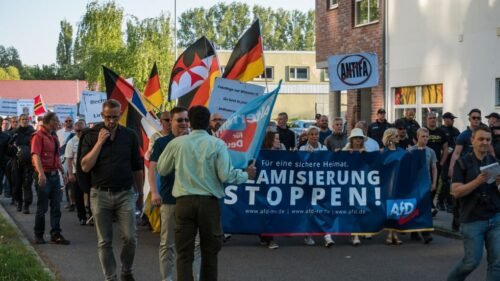
In recent elections, far-right parties have become governing forces or coalition partners in 14 of the EU’s 27 member states. Even more strikingly, Germany’s AfD (Alternative for Germany) has achieved record support, while traditionally social-democratic countries such as Sweden and Finland have seen far-right movements closer to power than ever before.
However, migration alone does not explain the far right’s growing appeal. Economic insecurity, rising living costs, housing shortages and declining trust in political institutions have also contributed to voter disillusionment across Europe. In many cases, far-right parties have capitalized on frustration with political elites rather than offering coherent ideological alternatives.
Moreover, Europe’s far-right landscape is far from unified. While these movements often share anti-immigration and nationalist rhetoric, they diverge sharply on issues such as relations with Russia, the EU and economic policy. Poland offers a clear example of this fragmentation, where right-wing forces compete with one another rather than forming a cohesive ideological bloc.
A resurgence of antisemitism
Another factor fueling the far right is the rise of antisemitism. Israel’s assault on Gaza has intensified negative perceptions of Israel and Jews across Europe. The scale of suffering in Gaza has reignited historical antisemitic undercurrents, which far-right parties have exploited for political gain.
However, the resurgence of antisemitism in Europe cannot be explained by the Gaza war alone. Multiple forces have converged to produce this trend, including the spread of online radicalization, conspiracy theories and political polarization. Social media platforms have accelerated the circulation of antisemitic narratives, often detached from historical context and amplified through algorithmic echo chambers.
Antisemitic dynamics in parts of Eastern Europe are also shaped by decades of Soviet rule. During the Cold War, the Soviet Union officially condemned antisemitism while promoting state-sponsored “anti-Zionism,” which often blurred into hostility toward Jewish identity itself. This rhetoric persisted after the collapse of the USSR, leaving behind a political culture where suspicion toward Jewish institutions, cosmopolitanism and liberal pluralism could be expressed indirectly. While contemporary far-right movements are not direct continuations of Soviet ideology, this legacy helps explain why antisemitic narratives in post-communist societies often differ from those in Western Europe.
Disturbingly, anger toward Israel has sometimes morphed into open sympathy for Nazi imagery, particularly among younger generations. Nazi salutes reappear in public spaces, from European cities to American schools, whereswastikas are drawn, Nazi gestures are replicated without understanding their meaning and fascist symbols are increasingly normalized.
The decline of the center
However, the erosion of centrist politics has not been uniform across Europe. While countries such as France, Italy, and parts of Eastern Europe have experienced significant polarization and the hollowing out of traditional center-left and center-right parties, others — such as Denmark and the Baltic states — have maintained relatively stable political systems despite growing pressures.
In some Nordic states, far-right parties have moved beyond fringe politics and now influence governing coalitions. In Finland, the nationalist Finns Party is part of the ruling coalition alongside the conservative National Coalition Party, giving it a direct role in shaping government policy. In Sweden, the Sweden Democrats, a party with a history of nationalist and anti-immigration politics, support the center-right government and help set its legislative agenda.
Where centrist politics has weakened most, it has often failed to address economic inequality, housing crises, and cultural anxieties in a credible way. In these environments, centrist parties are frequently perceived as technocratic, distant or overly aligned with elite interests, leaving space for populist actors to present themselves as authentic alternatives.
Rebuilding the political center will require more than rhetorical appeals to democratic values. It demands concrete policy responses to economic insecurity, clearer migration governance and renewed efforts to reconnect political institutions with everyday social concerns. Without such reforms, centrist politics risks further decline — even in countries where it has so far remained resilient.
Together, these developments reveal the steady collapse of centrist politics in Europe. Continued migration pressures, geopolitical crises and populist manipulation suggest that the far right’s momentum is unlikely to fade soon.
We are a nonprofit, truly independent media organization committed to delivering diverse, fact-based global analysis. If you like what you are reading, sign up for our free newsletters now.
<label for=”Your email will be shared with fairobserver and subject to its Privacy Policy”>I agree to receive emails and other content from Fair Observer. I understand that I may repeal my consent at any time. You can review our Privacy Policy and Terms of Use for further information…</label>
As Umberto Eco once warned, “Fascism is still around us, and it sometimes appears wearing civilian clothes. Fascism can return under the most innocent disguises. Our duty is to unmask it and point out its new forms wherever they may appear.”
[Patrick Bodovitz edited this piece]
The views expressed in this article are the author’s own and do not necessarily reflect Fair Observer’s editorial policy.
Comment
0 Comments
Newest
Oldest
Most Voted
Most Voted
Inline Feedbacks
View all comments
Commenting Guidelines
Please read our commenting guidelines before commenting.
1. Be Respectful: Please be polite to the author. Avoid hostility. The whole point of Fair Observer is openness to different perspectives from perspectives from around the world.
2. Comment Thoughtfully: Please be relevant and constructive. We do not allow personal attacks, disinformation or trolling. We will remove hate speech or incitement.
3. Contribute Usefully: Add something of value — a point of view, an argument, a personal experience or a relevant link if you are citing statistics and key facts.
<label style=”font-size: 18px;”>
I have read and agree to the above commenting guidelines.
</label>
Please agree to the guidelines before proceeding.
I
Agree, Proceed to Login
Cancel
Related Reading
How the Far-Right is rewriting Germany’s 2015 “Refugee Summer”
Ten years after Germany accepted nearly 900,000 refugees, politicians have rewritten the story of the 2015 “refugee summer” as a…
by
Kiran Bowry,
July 22, 2025
Can You See Fascism Taking Hold on America?
US leaders are expanding executive power while wealthy donors shape elections. Trump is testing legal and political limits with support…
by
Mehdi Alavi,
April 26, 2025
Support Fair Observer
We rely on your support for our independence, diversity and quality.
For more than 10 years, Fair Observer has been free, fair and independent. No billionaire
owns us, no advertisers control us. We are a reader-supported nonprofit. Unlike many other
publications, we keep our content free for readers regardless of where they live or whether
they can afford to pay. We have no paywalls and no ads.
In the post-truth era of fake news, echo chambers and filter bubbles, we publish a plurality
of perspectives from around the world. Anyone can publish with us, but everyone goes through
a rigorous editorial process. So, you get fact-checked, well-reasoned content instead of
noise.
We publish 3,000+ voices from 90+ countries. We also conduct education and training programs
on subjects ranging from digital media and journalism to writing and critical thinking. This
doesn’t come cheap. Servers, editors, trainers and web developers cost
money.
Please consider supporting us on a regular basis as a recurring donor or a
sustaining member.
Will you support FO’s journalism?
We rely on your support for our independence, diversity and quality.
Donation Cycle
<label for=”donation_cycle_one_time”>One Time</label>
<label for=”donation_cycle_monthly”>Monthly</label>
<label for=”donation_cycle_yearly”>Yearly</label>
Donation Amount
<label for=”amount_11″>$11</label>
<label for=”amount_111″>$111</label>
<label for=”other”>Other</label>
$
The IRS recognizes Fair Observer as a section 501(c)(3) registered public charity
(EIN: 46-4070943), enabling you to claim a tax deduction.
Most Popular
Militant Democracy in Germany: Balancing Protection and Freedom
Germany’s militant democracy aims to protect democratic values against far-right extremism and antisemitism, rooted in its post-World War II constitution….
by
Tara Yarwais,
December 6, 2025
Is Diane Abbott Right?
The UK Labour Party faced a political crisis after Member of Parliament Diane Abbott wrote a letter distinguishing racism against…
by
Ellis Cashmore,
July 18, 2025
FO° Talks: From MAGA to Gaza — How Trump Changed US–Israel Relations Forever
In the final episode of this four-part series, Professor Josef Olmert examines the transformation of US–Israel relations under US President…
by
Josef Olmert,
July 10, 2025
Make Sense of the World
Unique Insights from 3,000+ Contributors in 90+ Countries
<label
for=”Your email will be shared with fairobserver and subject to its Privacy Policy”>I
agree to receive emails and other content from Fair Observer. I understand
that I
may repeal my consent at any time. You can review our Privacy Policy
and Terms of Use
for further
information .</label>
for=”Your email will be shared with fairobserver and subject to its Privacy Policy”>I
agree to receive emails and other content from Fair Observer. I understand
that I
may repeal my consent at any time. You can review our Privacy Policy
and Terms of Use
for further
information .</label>
We’re independent, nonprofit and powered by 3,000+ voices from around the world — not billionaires or governments. Enjoy real journalism, sign up for our free newsletters.
<label for=”Your email will be shared with fairobserver and subject to its Privacy Policy”>I agree to receive emails and other content from Fair Observer. I understand that I may repeal my consent at any time. You can review our Privacy Policy and Terms of Use for further information…</label>
</main>
Fair Observer, 461 Harbor Blvd, Belmont, CA 94002, USA
<footer class=”mart70 fo-black-bg padt50 padb30″>
Sections
PUBLICATION
Support Fair Observer
We rely on your support for our independence, diversity and quality.


</footer>

<footer id=”fixed-footer” class=”support-footer”>


Support
independent, crowdsourced, nonprofit
journalism.
Fair Observer is a 501(c)(3) independent nonprofit. We are not owned by billionaires or controlled by
advertisers. We publish nearly 3,000 authors from over 90 countries after fact-checking and editing each
piece. We do not have a paywall and anyone can read us for free. With your vital donations, we can
continue
to do our work.
Please make a recurring (or even one-time) donation today. Even $1 goes a long way because
a
million donors
like you mean one million dollars. Thank you for keeping us independent, free and fair.
One Time
Monthly
Yearly
Monthly
Yearly
Continue 

</footer>

Sign into your Fair Observer Account
<label class=”tml-label” for=”user_login”>Username or Email Address</label>
<label class=”tml-label” for=”user_pass”>Password</label>
<label class=”tml-label” for=”rememberme”>Remember Me</label>
Log In
Forgot
Password
Password
Forgot Password
Enter your registered email address or username. You will receive a
link to create a new password via email.
Please enter your username or email address. You will receive an email message with instructions on how to reset your password.
<label class=”tml-label” for=”user_login”>Username or Email Address</label>
Get New Password
Or
Return to
Login
Forgot Password
We have sent a link to your registered email address to reset your password.
<circle cx=”12.5″ cy=”12″ r=”12″ fill=”#414141″ />
Back to
Login
Become a Member & Enjoy Exclusive Benefits!
<circle cx=”12.5″ cy=”12″ r=”12″ fill=”#414141″ />
Access to comments feature
<circle cx=”12.5″ cy=”12″ r=”12″ fill=”#414141″ />
Bookmark your favorite articles
<circle cx=”12.5″ cy=”12″ r=”12″ fill=”#414141″ />
Exclusive invitations to FO° Talks & FO° Live
<circle cx=”12.5″ cy=”12″ r=”12″ fill=”#414141″ />
Access to all of our e-publications
Return to
Login
Login
NEWSLETTER
Make Sense of the World
Unique Insights from 2,500+ Contributors in 90+ Countries

<label
for=”Your email will be shared with fairobserver and subject to it’s Privacy Policy”>I
agree to receive emails and other content from Fair Observer. I understand
that I may repeal my consent at any time. You can review our Privacy Policy
and Terms of Use
for further information.</label>
for=”Your email will be shared with fairobserver and subject to it’s Privacy Policy”>I
agree to receive emails and other content from Fair Observer. I understand
that I may repeal my consent at any time. You can review our Privacy Policy
and Terms of Use
for further information.</label>
NEWSLETTER
Make Sense of the World
Unique Insights from 2,500+ Contributors in 90+ Countries
<label
for=”Your email will be shared with fairobserver and subject to it’s Privacy Policy”>I
agree to receive emails and other content from Fair Observer. I understand
that I may repeal my consent at any time. You can review our Privacy Policy
and Terms of Use
for further information.</label>
for=”Your email will be shared with fairobserver and subject to it’s Privacy Policy”>I
agree to receive emails and other content from Fair Observer. I understand
that I may repeal my consent at any time. You can review our Privacy Policy
and Terms of Use
for further information.</label>

Make Sense of the World
Unique Insights from 2,500+ Contributors in 90+ Countries
<label
for=”Your email will be shared with fairobserver and subject to its Privacy Policy”>I
agree to receive emails and other content from Fair Observer. I understand that I
may repeal my consent at any time. You can review our Privacy Policy and Terms of Use for further
information .</label>
for=”Your email will be shared with fairobserver and subject to its Privacy Policy”>I
agree to receive emails and other content from Fair Observer. I understand that I
may repeal my consent at any time. You can review our Privacy Policy and Terms of Use for further
information .</label>
We Need Your Consent
We use cookies to give you the best possible experience. Learn more about how we use cookies or edit your cookie preferences. Privacy Policy. My Options I Accept
Privacy & Cookies Policy
Close
Edit Cookie Preferences
The Fair Observer website uses digital cookies so it can collect statistics on how many visitors come to the site, what content is viewed and for how long, and the general location of the computer network of the visitor. These statistics are collected and processed using the Google Analytics service. Fair Observer uses these aggregate statistics from website visits to help improve the content of the website and to provide regular reports to our current and future donors and funding organizations. The type of digital cookie information collected during your visit and any derived data cannot be used or combined with other information to personally identify you. Fair Observer does not use personal data collected from its website for advertising purposes or to market to you.
As a convenience to you, Fair Observer provides buttons that link to popular social media sites, called social sharing buttons, to help you share Fair Observer content and your comments and opinions about it on these social media sites. These social sharing buttons are provided by and are part of these social media sites. They may collect and use personal data as described in their respective policies. Fair Observer does not receive personal data from your use of these social sharing buttons. It is not necessary that you use these buttons to read Fair Observer content or to share on social media.
Necessary
<label class=”form-check-label” for=”wt-cli-checkbox-necessary”>Necessary</label>
Always Enabled
These cookies essential for the website to function.
Social Media
<label for=”wt-cli-checkbox-social_media” class=”cli-slider” data-cli-enable=”Enabled” data-cli-disable=”Disabled”>Social Media</label>
These cookies are used to enable sharing or following of content that you find interesting on our website. These settings apply to third-party social networking and other websites.
Performance & Functionality
<label for=”wt-cli-checkbox-performance” class=”cli-slider” data-cli-enable=”Enabled” data-cli-disable=”Disabled”>Performance & Functionality</label>
These cookies are used to enhance the performance and functionality of our website. They provide statistics on how our website is used and help us improve by measuring errors. Certain functionalities on our website may become unavailable without these cookies.
Analytics
<label for=”wt-cli-checkbox-analytics” class=”cli-slider” data-cli-enable=”Enabled” data-cli-disable=”Disabled”>Analytics</label>
SAVE & ACCEPT
<textarea id=’wpd-editor-source-code’></textarea>Insert
</body></html>
Total Views:
Source: World Politics - fairobserver.com